
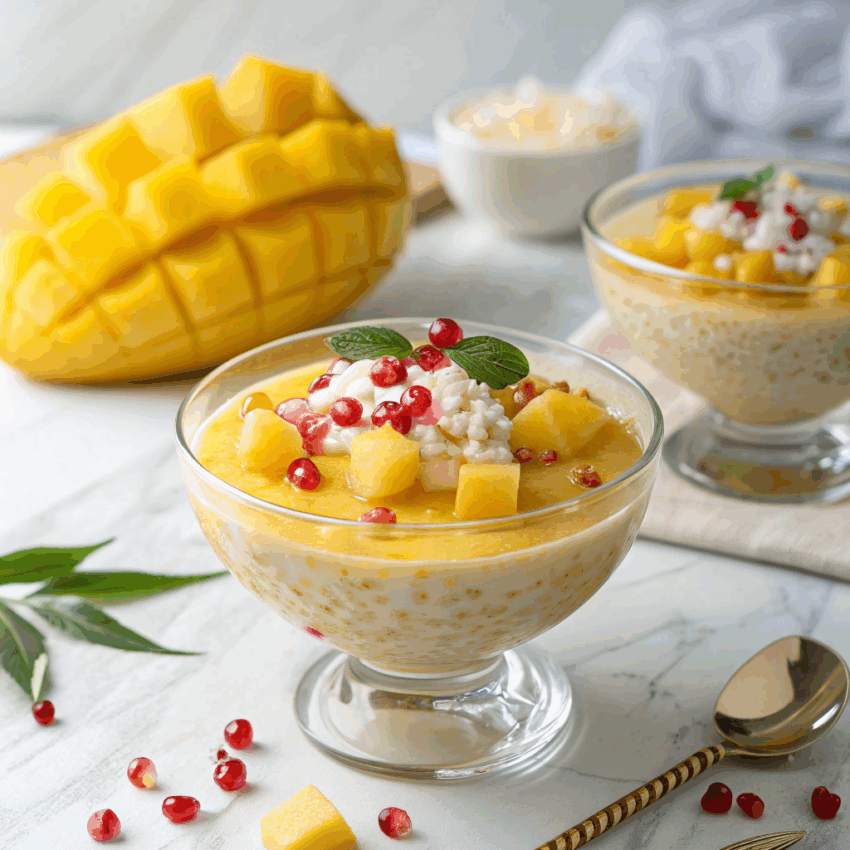
If there’s one dessert that feels like sunshine in a bowl, it’s mango sago pomelo dessert. This classic Asian sweet soup combines juicy mangoes, chewy sago (tapioca), and zesty pomelo into a light, creamy pudding that’s perfect for any season. And I can’t wait to show you how I make it in my own kitchen.
I first tasted this fruit-filled delight on a trip through Southeast Asia. I remember sitting at a street-side cart, tasting something cold, sweet, and slightly tangy — a bite of mango, a burst of pomelo, and chewy sago pearls dancing on my tongue. I knew I had to recreate it when I got home.
What Is Mango Sago Pomelo Dessert?
This Chinese dessert (often called yu mi tang, though not always with pomelo) is a type of sweet soup that’s part tropical fruit salad, part creamy pudding. The base is made of light coconut milk or evaporated milk, sweet mango puree, and little sago pearls (tiny tapioca). Then, when you stir in fresh pomelo, it adds an uplifting citrus pop that balances the richness of the mango.
It’s often served cold, which makes it feel like a tropical escape in a bowl. At the same time, it’s gentle and soothing — like a cool breeze after a hot day.
Why You’ll Love This Mango Sago Recipe
- Easy to make: Just a few simple ingredients, and no special skills needed.
- Customizable: Want it dairy-free? Swap in coconut milk. Prefer extra fruit? Double the mango puree or toss in strawberries.
- Make-ahead friendly: Prepare the pudding ahead of time, and stir in pomelo right before serving.
- Crowd-pleasing: It works as a dessert, a snack, or even a light breakfast treat.
Ingredients
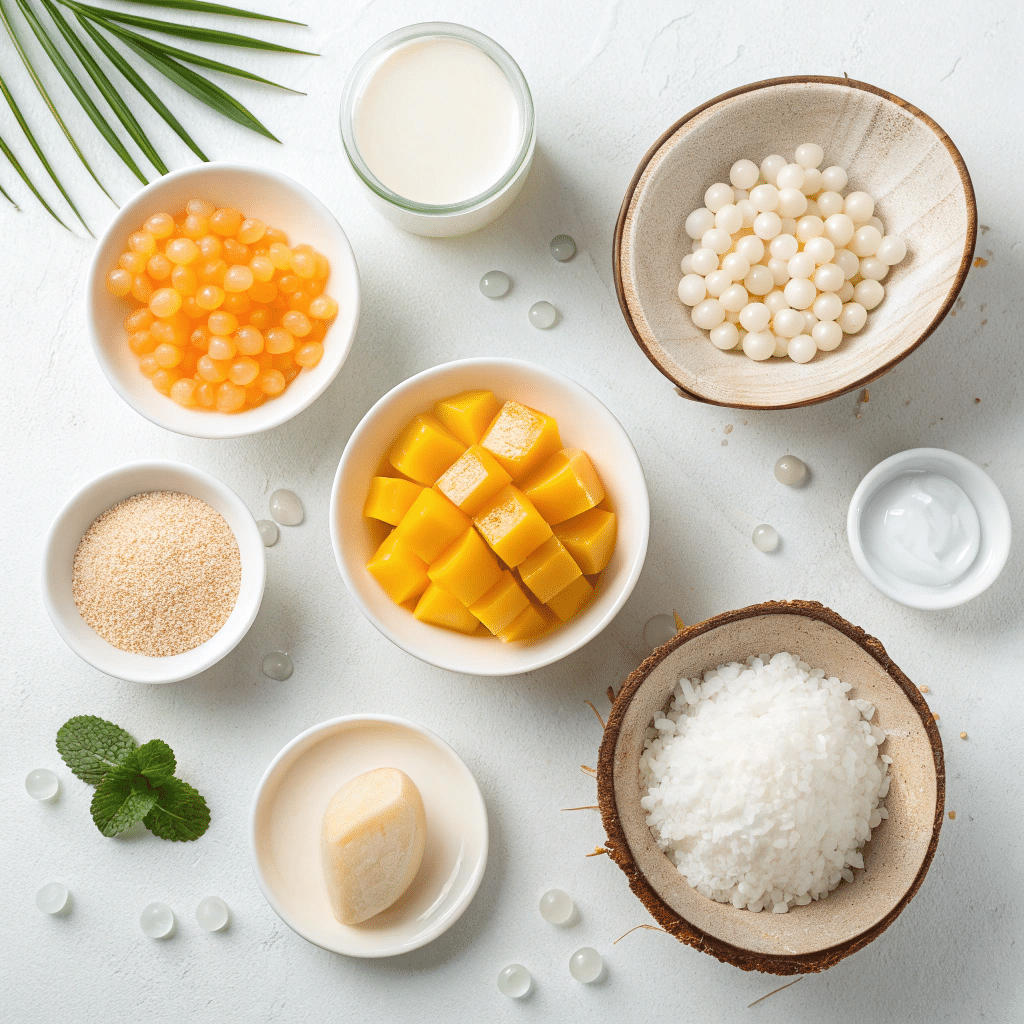
Here’s what you need for about 4–5 servings:
- 2 large ripe mangoes (or about 2 cups of mango puree)
- ½ cup sago pearls (small tapioca pearls)
- 1 cup coconut milk (or evaporated milk, depending on your preference)
- ½ cup water (for cooking the sago)
- ¼ to ⅓ cup sugar (adjust to taste)
- 1 cup pomelo segments (peeled, pith removed, and chopped lightly)
- ½ cup ice cubes or cold water (to cool down the pudding)
Optional: a pinch of salt (to balance the sweetness), a dash of vanilla extract, or even a squeeze of lime for extra zing.
Step-by-Step Instructions
- Cook the sago
- Bring a pot of water (about 4 cups) to boil.
- Add the sago pearls and stir gently so they don’t stick.
- Boil for 8–10 minutes, or until the pearls turn mostly translucent with a tiny white dot in the center.
- Turn off the heat, cover the pot, and let it sit for 10 minutes (carryover cooking softens them fully).
- Drain the sago in a fine mesh strainer, then rinse under cold water until they stop sticking together.
- Prepare the mango puree
- Peel and pit the mangoes.
- Blend the mango flesh until smooth. If needed, you can add a tablespoon or two of water to help the blender.
- Taste the puree to check sweetness; add a bit of sugar if your mangoes are tart.
- Sweeten the milk base
- In a bowl, combine coconut milk (or evaporated milk) with sugar.
- Stir until the sugar dissolves fully.
- (Optional) Add a pinch of salt or a splash of vanilla for depth.
- Mix everything together
- Add the cooked, cooled sago into the milk mixture.
- Pour in the mango puree and stir gently but thoroughly.
- If the pudding feels too thick, stir in cold water or crushed ice to reach your desired consistency.
- Add the pomelo
- Gently fold in the pomelo segments last so they don’t break apart.
- Taste and adjust sweetness if needed.
- Chill
- Cover the bowl and refrigerate for at least 2 hours.
- Serve cold, topped with a few extra mango cubes or pomelo bits for garnish.
Tips & Variations
- Dairy-free version: Use coconut cream or almond milk instead of regular milk.
- Swapped fruit: If mango isn’t in season, try papaya or cantaloupe for a similar feel.
- Texture play: Add chia seeds for extra body, or use larger tapioca pearls to create more chew.
- Make it boozy: Stir in a splash of rum or coconut liqueur — beachy, and adult-friendly.
- Sweeter tone: For a very creamy pudding, use half coconut milk and half heavy cream.
- Lighter option: Use skim milk or a plant-based milk diluted with water.
Why This Dessert Is Healthy (or at Least Guilt-Reducing)
- Mangoes are packed with vitamins A and C, plus antioxidants.
- Pomelo adds fiber and a bright citrus note without bombarding you with sugar.
- Sago pearls are a source of slow-digesting carbs — they fill you gently.
- If you use coconut milk, you get healthy fats that feel indulgent but are plant-based.
When & How to Serve
- Serve as a cool dessert after a spicy or greasy meal.
- Use as a sweet snack on hot afternoons.
- Bring it to a potluck — it’s easy to transport and always a crowd favorite.
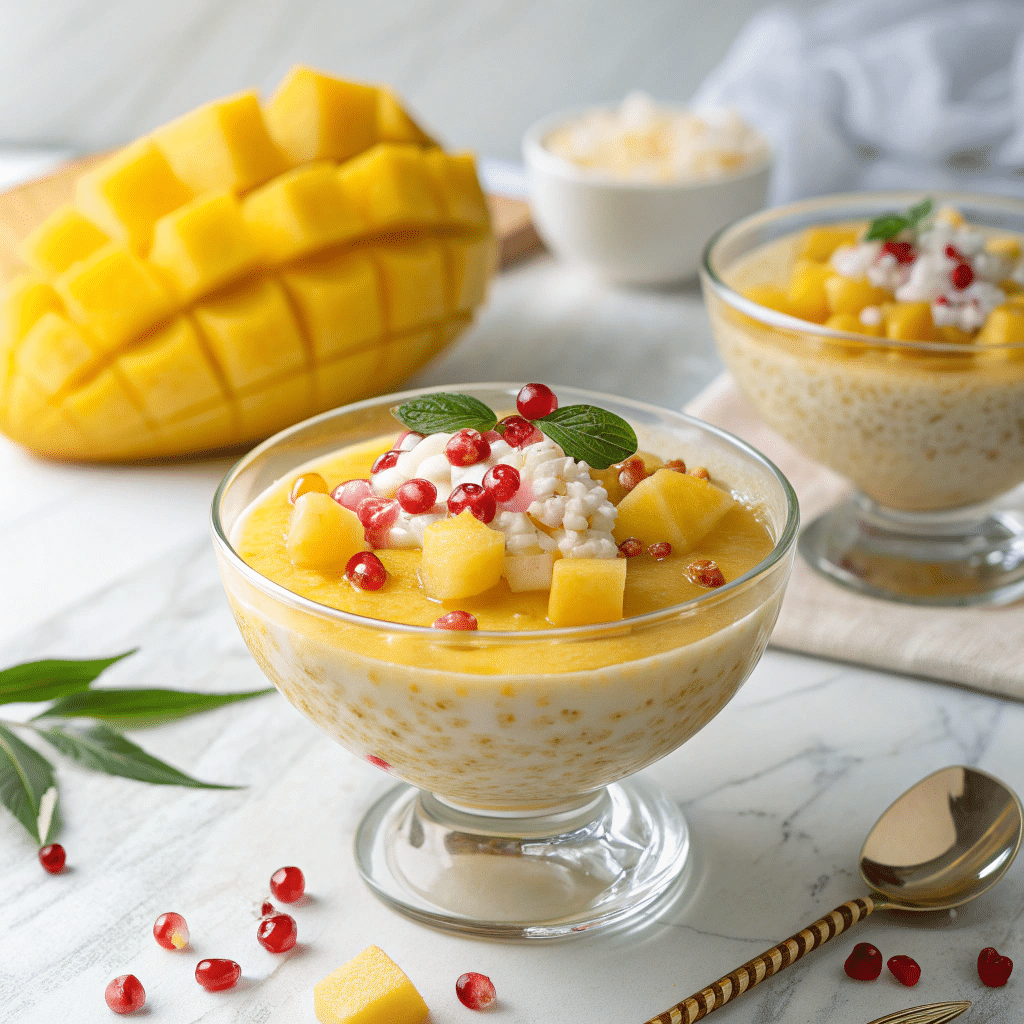
- For presentation, serve in small glass cups or mason jars to show off the bright mango-gold color and floating pomelo bits.
Trouble-Shooting Tips
- Sago clumps: Rinse under cold water right after cooking to prevent sticking.
- Too sweet? Use less sugar in the milk base, or add more pomelo to balance.
- Too thick: Stir in extra cold water or milk.
- Sago too hard: Let it sit covered off the heat for the full resting time after cooking.
- Mango pulp too watery: Chill it so it thickens a bit, or strain some of the juice.
Mango Sago Pomelo Dessert
Ingredients
Method
- Bring 4 cups of water to a boil. Add the sago pearls and stir so they don’t stick. Cook 8–10 minutes until mostly clear. Turn off the heat, cover the pot, and let it sit for 10 minutes. Drain and rinse under cold water.
- Peel and pit the mangoes. Blend until smooth. Add a splash of water only if the blender needs help. Taste and adjust sweetness if the mango is a bit tangy.
- In a large bowl, stir coconut milk with sugar until the sugar melts. Add a pinch of salt or vanilla if you want a deeper flavor.
- Add the rinsed sago pearls into the milk base. Pour in the mango puree and mix gently. Add cold water or ice if you want it looser.
- Fold the pomelo in last so it stays chunky and fresh.
- Cover the bowl and chill for at least 2 hours. Serve cold with extra mango on top.
Notes
- If your mangoes are not sweet enough, add a little more sugar to the puree.
- Pomelo can be replaced with grapefruit, but the flavor will be a bit sharper.
- Coconut milk gives the dessert a richer taste. If you want it lighter, use evaporated milk or half milk and half water.
- This dessert tastes best the same day because sago can soften too much overnight.
Frequently Asked Questions (FAQ)
Q: Can I make this mango sago pomelo dessert vegan?
A: Absolutely! Use coconut or almond milk, and sweeten with maple syrup or agave if you like.
Q: How long can I store this dessert?
A: In the fridge, up to 24 hours is ideal. After that, the sago can soften too much.
Q: Can I freeze it?
A: I don’t recommend freezing once mixed — the texture gets grainy. Freeze mango puree separately if you want to.
Q: What size of sago pearls should I use?
A: Small or “pearl” tapioca works best. Larger tapioca balls will require longer cooking and change the mouthfeel.
Q: Do I have to use fresh mango?
A: Fresh is best for flavor, but you can use frozen mango chunks (thawed) or even canned mango if you’re in a pinch.
Q: Where can I find pomelo?
A: Asian grocery stores usually carry it. You can also substitute with grapefruit or orange, though the flavor will shift.
Q: Can I turn this into a drink?
A: Yes! Use a higher ratio of liquid, blend part of the mango puree, then serve over ice. You’ll have a mango pomelo sago drink that’s like a slushy.
Final Thoughts
This mango sago pomelo dessert is one of my favorite recipes to share because it captures the cheerful spirit of tropical fruit, with a comforting creamy base. It’s elegant, yet easy to make. And it feels like a small celebration in every spoonful.
Whether you’re an experienced home baker or someone who just wants a simple, fresh dessert — you’ll find joy in making (and eating) this mango sago recipe. Give it a try, tweak it how you like, and let me know how your version turns out. I love hearing about your twists and experiments.
