
Jump to Recipe
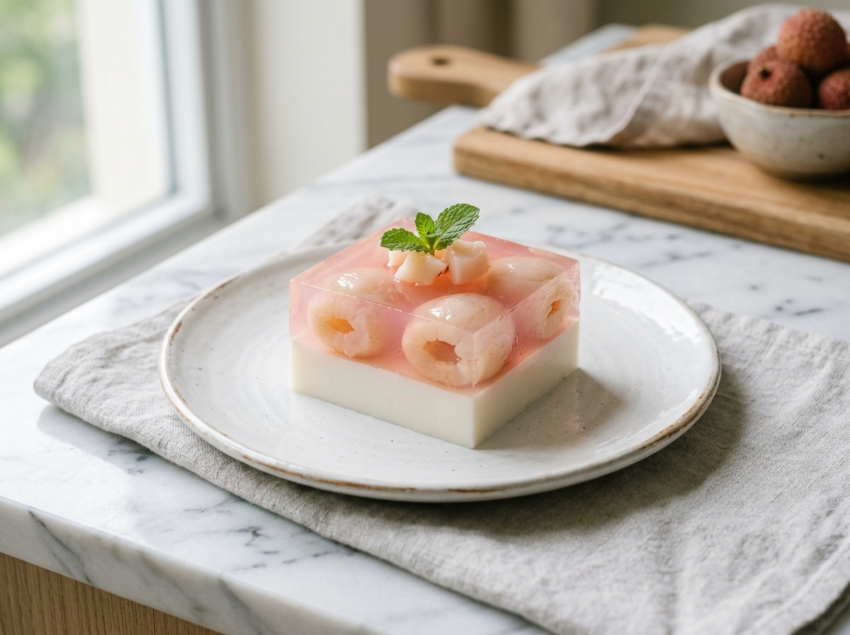
There’s something about a chilled, wobbly jelly that feels both nostalgic and a little impressive at the table. This lychee coconut version does exactly that with very little effort.
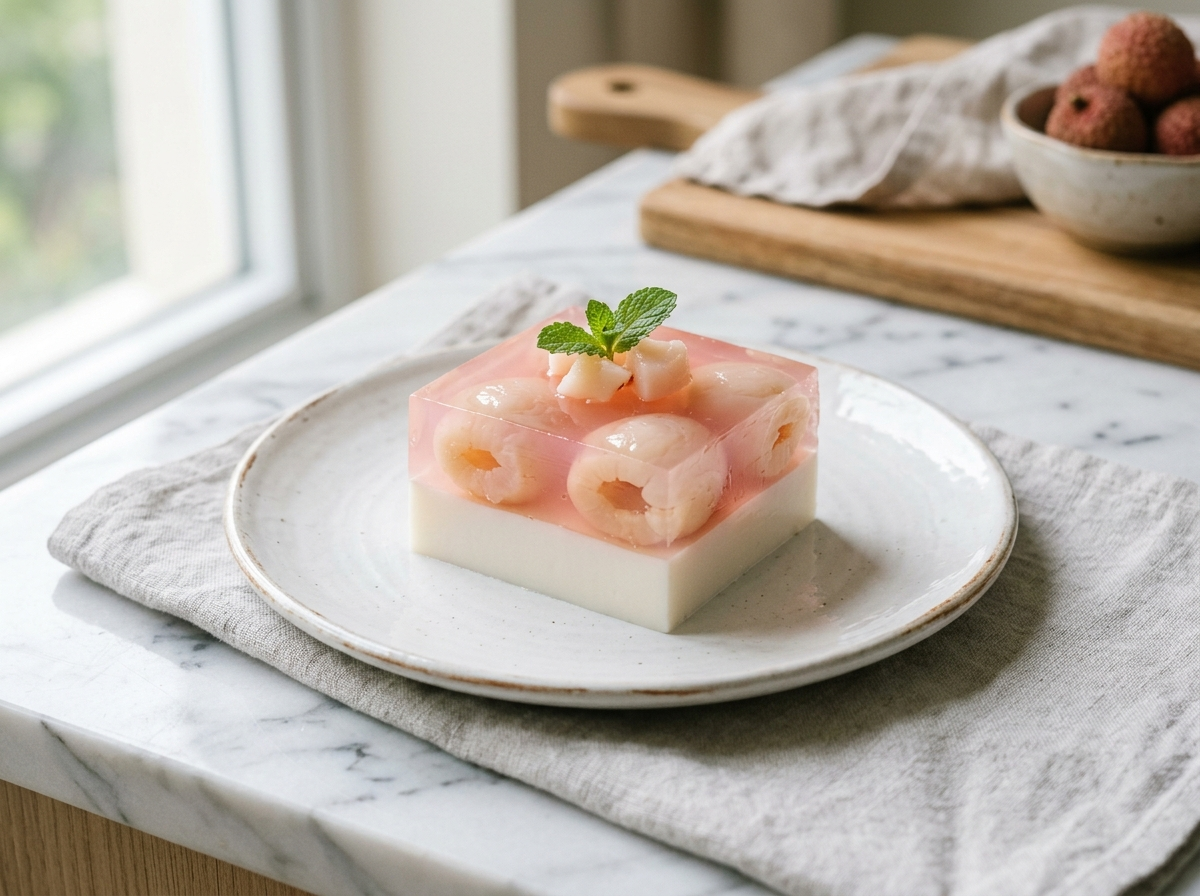
The lychee layer is light and floral, almost translucent. The coconut layer underneath is rich and milky. Together they taste like a Southeast Asian dessert shop in your own kitchen.
I first made this after buying a tin of lychees I wasn’t sure what to do with. One batch later, it became a regular in my fridge every summer.
You’ll need four main ingredients and a few hours of patience while it sets. No oven, no mixer, no stress.
Why You’ll Love This Recipe
- Only 4 core ingredients, no baking needed
- Two distinct layers set firm and slice cleanly
- Make it a day ahead for stress-free entertaining
- Naturally dairy-free and vegan as written
Ingredient Notes
- Canned lychees in syrup: The syrup from the can becomes your lychee jelly base, so don’t drain it. Fresh lychees work too, but you’ll need to make a light sugar syrup to replace the canned syrup.
- Coconut milk (full-fat): Full-fat gives a creamy, opaque layer. Light coconut milk will set but the layer looks thin and watery. Shake the can well before opening.
- Agar-agar powder: Agar sets firmer and faster than gelatin and holds at room temperature, which matters in warm climates. Do not substitute gelatin one-for-one, as the ratios differ. Agar-agar powder dissolves more evenly than agar flakes.
- Caster sugar: Add a little to the coconut layer to balance its slight bitterness. Taste first since the lychee syrup is already sweet, so the lychee layer rarely needs more.
- Pandan extract (optional): A few drops stirred into the coconut layer add a grassy, vanilla-like flavor common in Thai and Malaysian versions of this dessert. Leave it out if unavailable.
Lychee Coconut Jelly Dessert
Ingredients
Method
- Drain the lychees and reserve the syrup. Measure 350 ml of syrup into a saucepan, topping up with water if needed to reach 350 ml total. Add 150 ml of water.
- Whisk in 1 tsp of agar-agar powder and 1 tbsp of caster sugar while the liquid is cold. Stir until dissolved.
- Bring the mixture to a gentle boil over medium heat, stirring constantly. Simmer for 2 minutes until the agar-agar is fully activated and the liquid is clear. Skim any foam from the surface.
- Halve the lychees and arrange them in the bottom of a lightly rinsed 8x8 inch dish or divide among individual cups.
- Pour the hot lychee syrup mixture over the lychees through a fine-mesh sieve. Let the layer cool at room temperature for 20 to 25 minutes until it holds a finger impression but is not fully firm.
- Combine the coconut milk, 100 ml water, 1 tsp agar-agar powder, and 3 tbsp caster sugar in a clean saucepan while cold. Whisk well to combine.
- Heat over medium heat, stirring constantly, until the mixture reaches a gentle boil. Simmer for 2 minutes until the agar-agar is fully dissolved and the coconut milk is smooth. Add pandan extract if using and stir through.
- Remove from heat and let it cool for 3 to 4 minutes, stirring occasionally, until it is warm but not scorching.
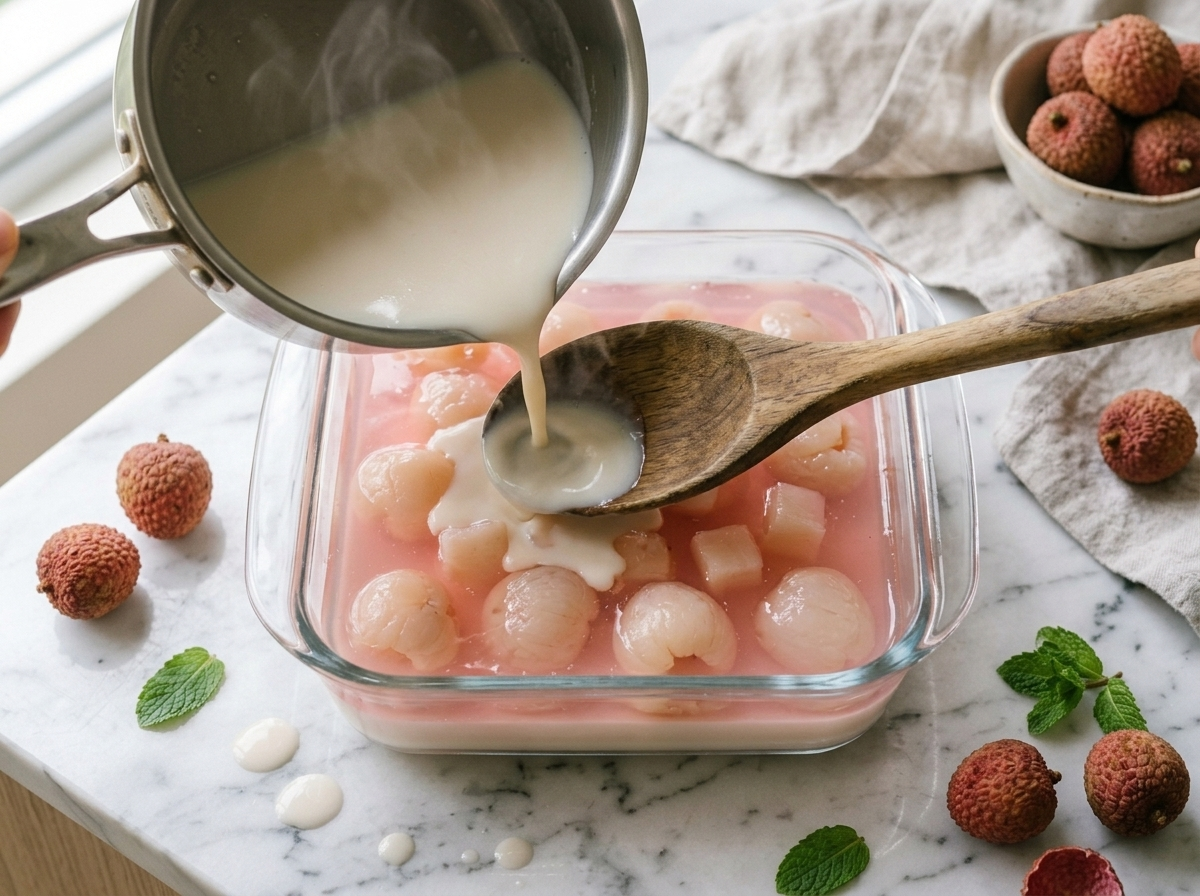
- Check the lychee layer is partially set. Place a spoon just above the surface and pour the coconut mixture slowly over the back of the spoon to disperse the liquid gently. This prevents the two layers from mixing.
- Let the assembled jelly sit at room temperature for 10 minutes, then transfer to the fridge uncovered for at least 2 hours, or until completely firm throughout.
- Once fully set, run a thin knife around the edges of the dish. Slice into rectangles or cubes and lift out with a flat spatula. Serve cold.
Notes
Tips for Success
- Dissolve agar-agar in cold liquid first, then bring it to a boil so it activates fully without lumps.
- Let the lychee layer cool until just barely set before pouring the coconut layer, or the two layers will merge.
- Use a shallow rectangular dish if you plan to slice and serve in cubes rather than individual cups.
- Press lychee halves into the lychee layer while it is still slightly warm so they suspend evenly rather than sinking.
- Run a thin knife around the edge of the mold before inverting so the jelly releases without tearing.
Variations
- Swap half the coconut milk for coconut cream for a denser, richer white layer with more body.
- Add a drop of butterfly pea flower tea to the lychee layer for a natural purple-blue tint.
- Set the jelly in small silicone molds and serve individually for a clean plated dessert presentation.
Storage and Reheating
Cover the set jelly with plastic wrap or transfer slices to an airtight container. It keeps in the fridge for up to 4 days without losing its texture.
Do not freeze this dessert. Agar-agar jelly turns grainy and weeps liquid after thawing, and the layers won’t recover their original texture.
Serve straight from the fridge. This jelly is meant to be eaten cold, and it holds its shape well on the plate even at room temperature for about 30 minutes.
Serving Suggestions
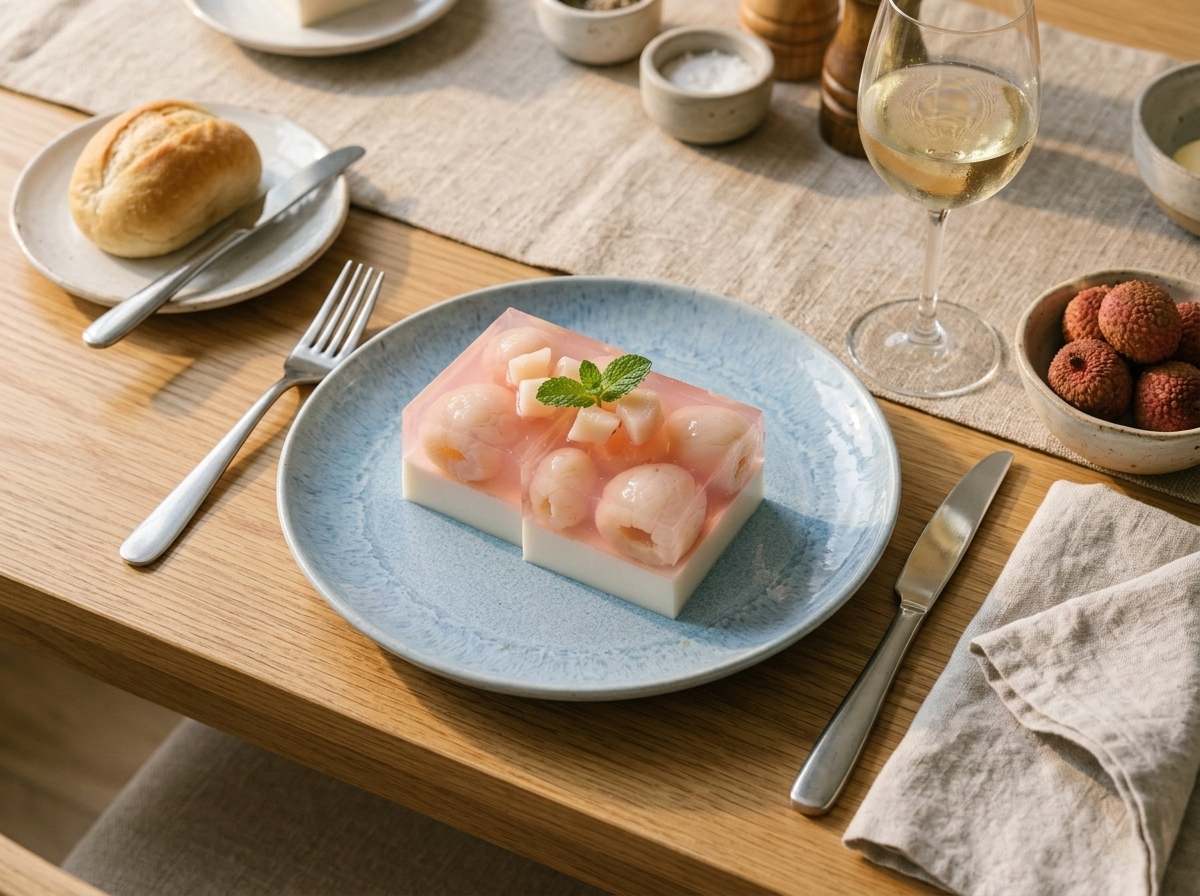
Cut into neat rectangles or cubes and arrange on a chilled plate. A few extra canned lychees on the side and a small mint sprig keep it simple and fresh-looking.
For a fuller dessert spread, pair it with mango sticky rice or a coconut milk dessert alongside it on the table. The mild sweetness of the jelly sits well next to richer, stickier sweets.
This also works well as a party dessert. Set it in a large tray, cut it into small bite-sized cubes, and serve on toothpicks or in shot glasses for easy sharing.
FAQ
Why is my lychee coconut jelly cloudy instead of clear?
The lychee layer turns cloudy when the lychee syrup is boiled too hard or for too long. Keep the heat at a gentle simmer once the agar-agar is dissolved, and skim any foam that rises to the surface before pouring.
Can I use gelatin instead of agar-agar in this coconut jelly?
You can, but the ratio is different. Use about 2.5 teaspoons of unflavored gelatin powder per 500 ml of liquid as a starting point. Note that gelatin-based jelly will melt at room temperature, so it needs to stay refrigerated right up until serving.
How do I keep the two layers from mixing together when I pour the coconut layer?
Wait until the lychee layer has set enough to hold your finger impression without sinking, which usually takes 15 to 20 minutes at room temperature. Then pour the coconut mixture slowly over the back of a spoon to cushion the impact.
Is lychee coconut jelly gluten-free?
Yes, this recipe is naturally gluten-free. Agar-agar is derived from seaweed, lychees and coconut milk contain no gluten, and no flour or thickeners with gluten are used.
What desserts pair well with lychee coconut jelly at a dinner party?
A scoop of mango sorbet, a small portion of fresh tropical fruit, or a ginger coconut custard works well alongside it. The jelly is light and not too sweet, so it pairs with richer Southeast Asian sweets without competing.
What is the difference between this lychee coconut jelly and a Thai woon maprao?
Thai woon maprao is typically made with fresh coconut water and coconut cream and set in a coconut shell. This lychee version uses canned lychee syrup as the flavored layer and is more commonly found in Chinese and Vietnamese-influenced dessert shops rather than traditional Thai recipes.
