
Jump to Recipe
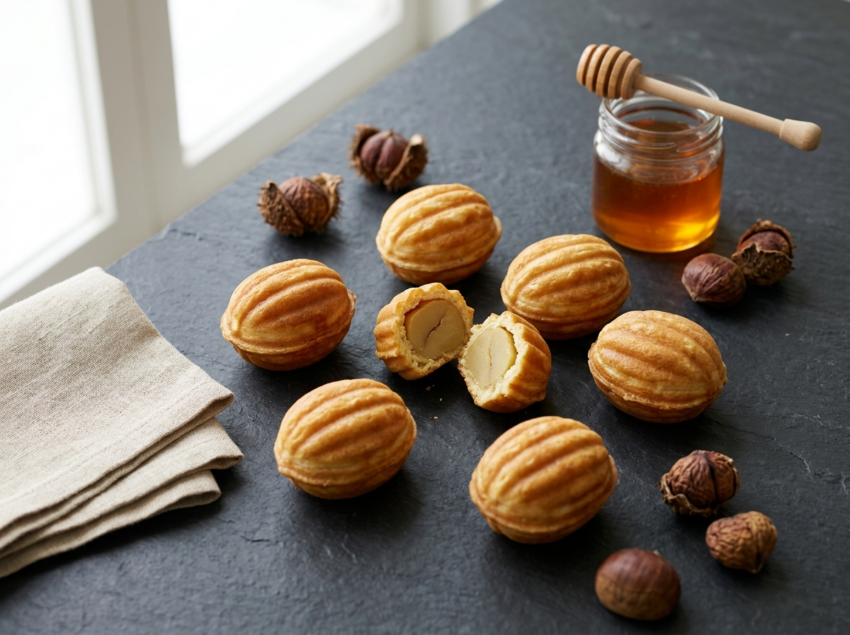
There’s something quietly satisfying about biting into a small pastry shaped like a chestnut and finding a smooth, earthy filling inside that actually tastes like one.
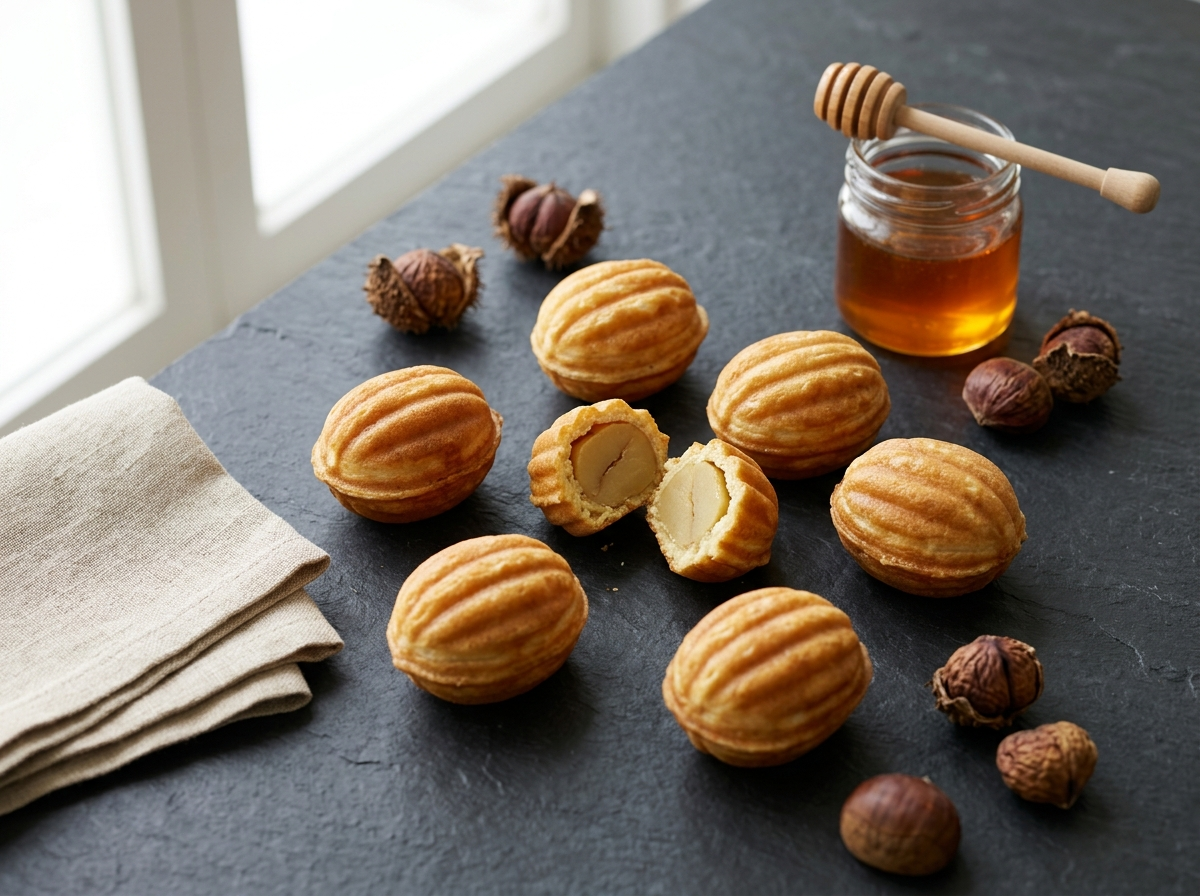
Bam gwaja are a classic Korean confection, often sold at traditional markets and bakeries during fall. The shell is soft and slightly crumbly, the filling dense but not heavy. They’re modest, precise, and genuinely good.
I first had these at a small shop near Insadong in Seoul. The outside was pressed into a ridged chestnut mold, the filling just sweet enough. I spent a while figuring out how to replicate that texture at home without a specialty mold.
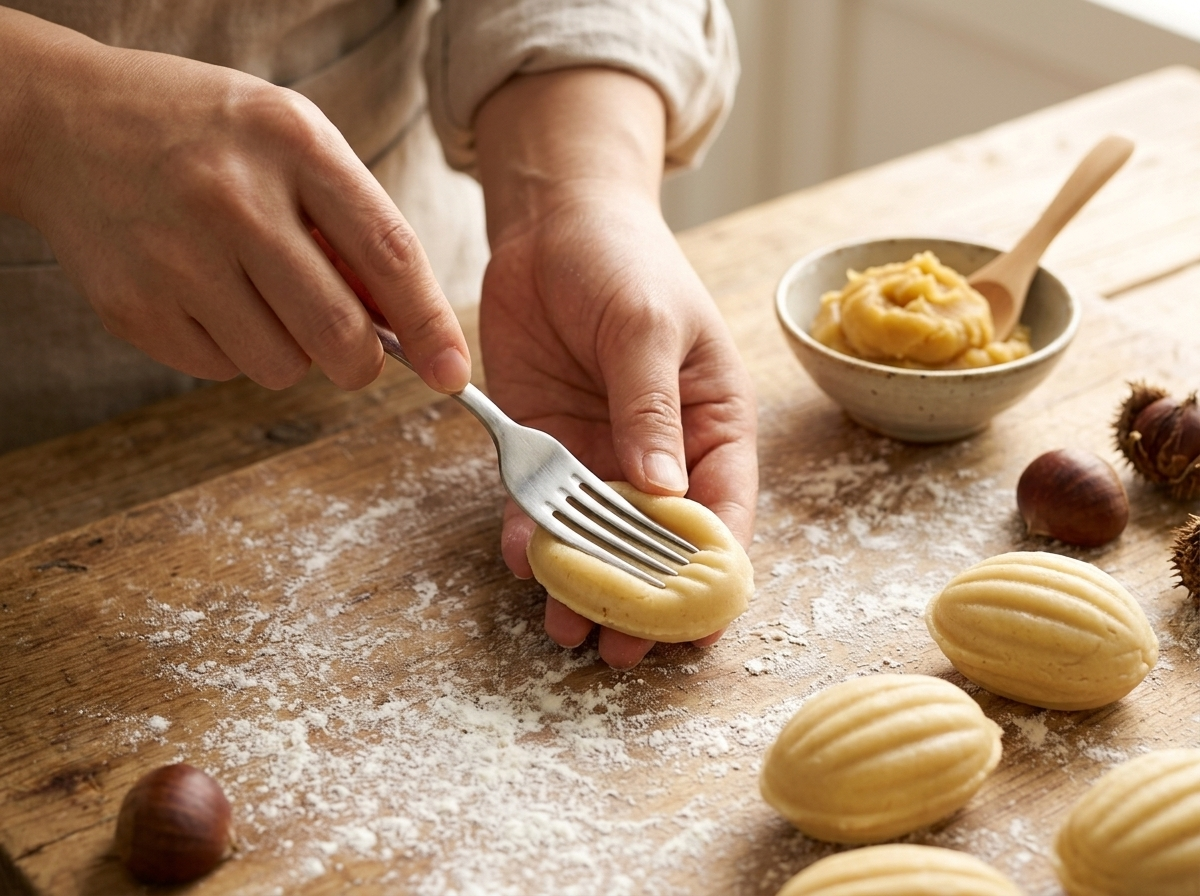
You don’t need a mold. A fork or your hands will do the job. What matters most is the chestnut paste, and getting that right is straightforward once you know the ratio.
Why You’ll Love This Recipe
- Real chestnut filling, not artificial flavoring
- No special mold needed, just your hands
- Make the filling a day ahead to save time
- Compact pastries that travel and store well
Ingredient Notes
- peeled cooked chestnuts: Vacuum-packed or jarred chestnuts work perfectly here. Fresh roasted chestnuts give slightly more depth but require peeling, which adds time.
- honey: I use a mild acacia honey so it doesn’t overpower the chestnut flavor. Maple syrup is a fine swap if you prefer a less floral sweetness.
- unsalted butter (for pastry): Cold butter is important for a tender, crumbly shell. Cut it into small cubes and keep it in the fridge until you’re ready to mix.
- all-purpose flour: Standard all-purpose flour gives the right balance of tenderness and structure. Cake flour makes the dough too soft to shape cleanly.
- egg yolk: One egg yolk in the dough adds richness and helps bind the shell without making it tough. A whole egg makes the dough stickier and harder to shape.
- ground cinnamon: Just a pinch in the filling is enough. Too much cinnamon masks the chestnut. Skip it entirely if you want a more neutral, classic filling.
Korean Chestnut Pastry (Bam Gwaja)
Ingredients
Method
- Place chestnuts in a small saucepan with 3 tbsp of water over medium-low heat. Cook for 5 minutes, stirring occasionally, until warmed through and slightly softened.
- Transfer warm chestnuts to a food processor. Add honey, softened butter, cinnamon, and salt. Blend until smooth and paste-like, scraping down the sides as needed.
- Taste and adjust honey if needed. Transfer filling to a bowl, press plastic wrap directly onto the surface, and refrigerate for 30 minutes until firm enough to shape.
- Combine flour, powdered sugar, and salt in a large mixing bowl. Add cold butter cubes and rub together with your fingertips until the mixture resembles coarse breadcrumbs.
- Add egg yolk and cold milk. Mix with a fork, then knead briefly just until the dough comes together into a smooth ball. Do not overwork it.
- Flatten the dough into a disc, wrap in plastic wrap, and refrigerate for 30 minutes.
- Heat the oven to 180 C / 355 F. Line a sheet pan with parchment paper.
- Divide the chilled dough into 18 equal portions, about 15 g each. Roll each piece into a ball, then flatten into a disc about 5 cm wide.
- Divide the chestnut filling into 18 portions, about 10 g each. Roll each portion into a small ball.
- Place a filling ball in the center of a dough disc. Bring the edges up around the filling and pinch firmly to seal, then roll gently between your palms to form a smooth oval.
- Use the back of a fork to press ridges along the length of each pastry, mimicking a chestnut shape. Place on the prepared tray, spaced 2 cm apart.
- Refrigerate the shaped pastries on the tray for 15 minutes while the oven finishes preheating.
- Whisk egg yolk with milk to make the egg wash. Brush each pastry lightly with egg wash using a pastry brush.
- Bake for 18 to 20 minutes until the shells are light golden brown on top and slightly deeper on the base.
- Remove from the oven and cool on the tray for 10 minutes before transferring. The shells will firm up as they cool.
Notes
Tips for Success
- Blend chestnuts while still warm for a smoother, lump-free paste with less effort.
- Rest the pastry dough in the fridge for at least 30 minutes before shaping to prevent cracking.
- Keep portions consistent, about 15 g of dough and 10 g of filling per pastry, for even baking.
- Seal the pastry edge firmly by pressing and rolling the seam between your palms before shaping.
- Brush with egg wash just before baking, not before resting, to avoid a gummy surface on the shell.
Variations
- Add 1 tsp of sesame oil to the chestnut filling for a nutty, slightly savory depth.
- Replace butter with coconut oil in the pastry shell to make a dairy-free version.
- Mix 2 tbsp of sweet red bean paste into the chestnut filling for a classic Korean flavor combination.
Storage and Reheating
Store baked pastries in an airtight container at room temperature for up to 3 days. The shell stays tender without refrigeration.
For longer storage, refrigerate for up to 7 days. Bring them to room temperature before eating, or warm in a 160 C / 320 F oven for 5 minutes to refresh the shell.
The unbaked shaped pastries can be frozen on a lined tray, then transferred to a bag and kept frozen for up to 2 months. Bake straight from frozen at 185 C / 365 F, adding 3 to 5 extra minutes.
Serving Suggestions
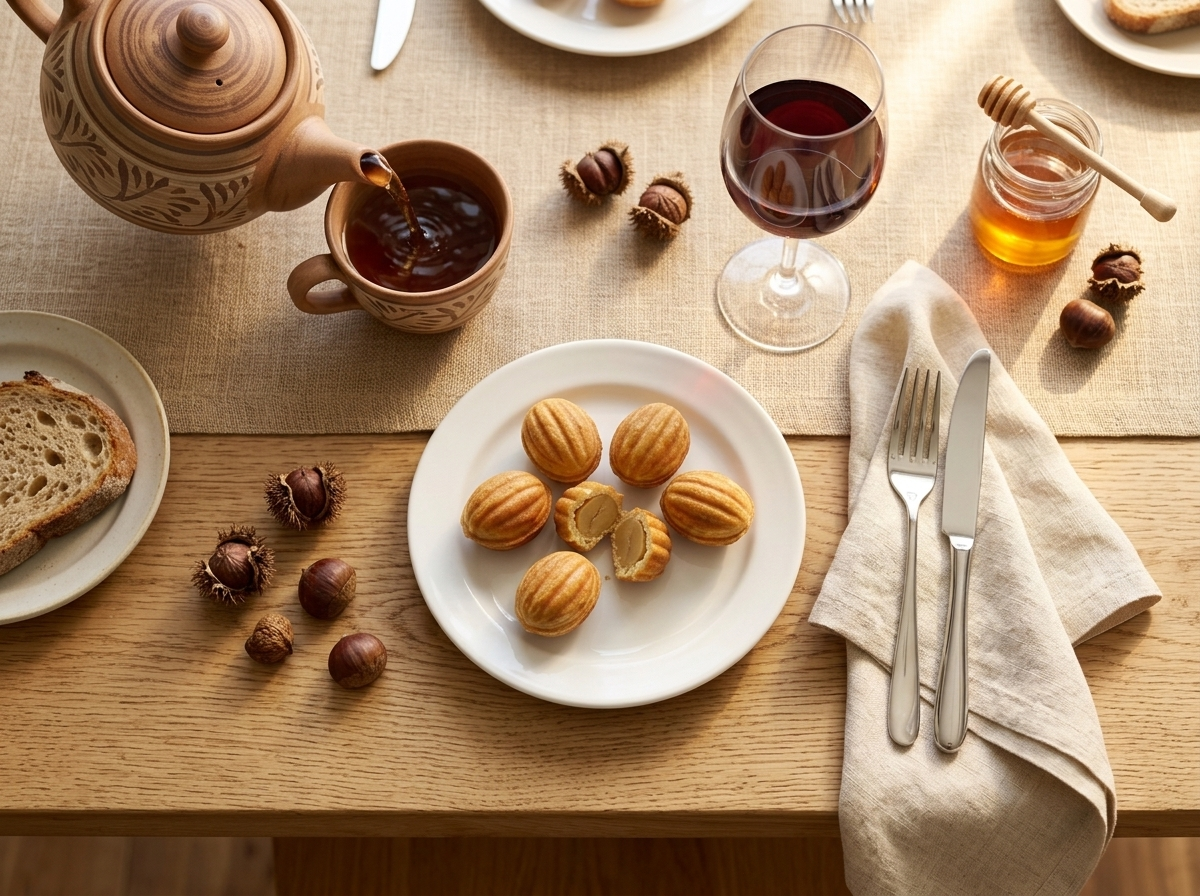
These pastries are a natural fit for a Korean tea service. Pair them with a pot of omija tea or roasted barley tea (boricha), both of which cut through the sweetness of the chestnut filling.
For a dessert spread, arrange them alongside other Korean sweets like yakgwa or tteok, or add a plate of delicate bite-sized petit fours to round out the spread. The contrast in textures makes a simple plate look considered.
They also pack well for gifting, much like mini tartlets with buttery shells, which hold their shape just as reliably in a lined box. Line a small box with parchment and stack them two deep. They hold their shape without crumbling, which makes them a practical homemade gift during fall or the Lunar New Year.
FAQ
Why is my chestnut filling grainy instead of smooth?
The chestnuts weren’t blended long enough, or they were too cold when processed. Blend warm chestnuts with a tablespoon of water or honey added gradually until the paste is completely smooth before mixing in the other ingredients.
Can I use chestnut puree from a can instead of cooking whole chestnuts?
Yes, unsweetened chestnut puree works well and cuts your prep time significantly. Just check the label – if it’s already sweetened, reduce the honey in the filling by half to avoid an overly sweet result.
Can I freeze the chestnut pastry dough before shaping?
Yes. Wrap the dough tightly in plastic wrap and freeze for up to 6 weeks. Thaw overnight in the fridge, then bring it to room temperature for 15 minutes before rolling and shaping.
What drinks pair well with Korean chestnut pastries?
Roasted barley tea or omija tea are classic pairings in Korean tea culture. A mild green tea also works if you want something lighter and less earthy to contrast the filling.
Are these bam gwaja the same as Japanese chestnut cakes (kuri manju)?
They’re related but distinct. Japanese kuri manju typically use a softer, more pillowy dough and often include a coarser chestnut and bean paste mixture. Korean bam gwaja have a shorter, more crumbly pastry shell and a purer chestnut filling.
How do I know when the pastries are fully baked?
The shells should be a light golden brown on top with a slightly deeper color on the base. If you press the side gently, it should feel firm and dry, not soft or doughy.
