
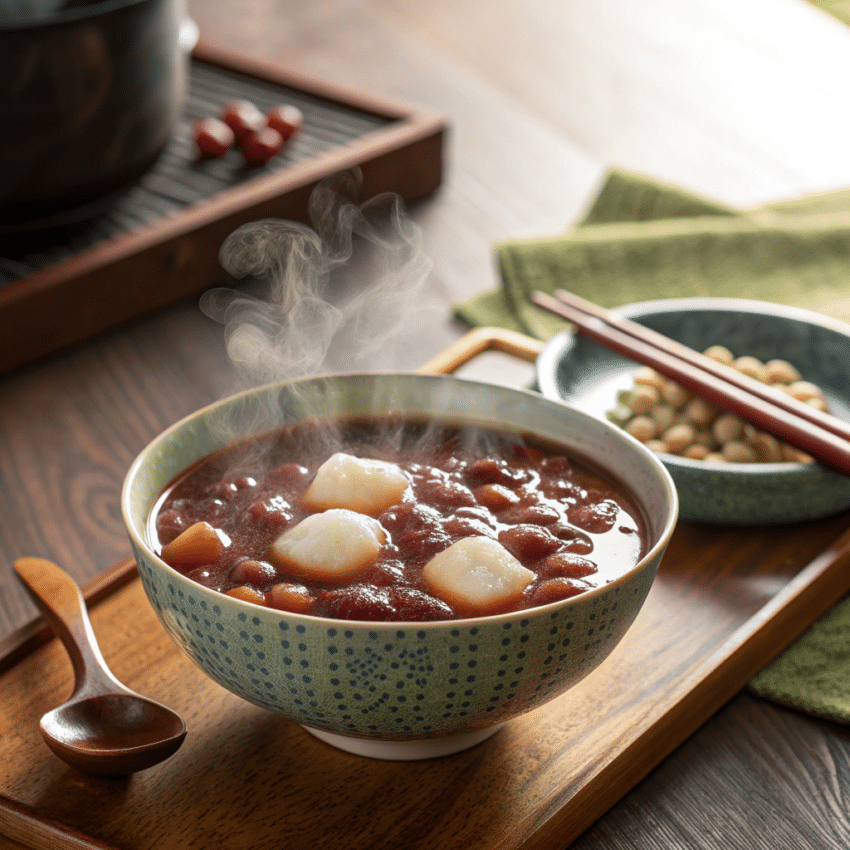
There are desserts you eat quickly.
And then there are desserts you slow down for.
This Japanese zenzai sweet mochi soup recipe belongs to the second kind.
Warm. Cozy. Gently sweet.
It’s the sort of dish you hold with both hands and sigh after the first spoonful. I fell in love with zenzai during winter travels, when cold days demanded something soft, soothing, and quietly indulgent.
Zenzai is a Japanese sweet soup with mochi, made from azuki beans and chewy rice cakes. Simple ingredients. Big comfort. No drama in the kitchen.
If you’ve never made sweet red bean soup with mochi, don’t worry. This is forgiving food. The kind that meets you where you are.
What Is Zenzai?
Zenzai is a traditional Japanese sweet soup built around slow-cooked adzuki beans. The beans soften, split, and melt into a naturally thick broth. Toasted or boiled mochi goes in last.
That’s it.
Some versions are chunky. Others are smooth.
Some use red bean paste for soup. Others cook beans from scratch. Families argue about sugar levels the way others debate tea strength.
You’ll see it served during winter and especially around New Year. In many homes, mochi soup New Years style is non-negotiable.
It’s comfort food with history.
Zenzai vs Ozoni: Not the Same Thing
This trips people up.
Zenzai recipe = sweet.
Ozoni soup recipe = savory.
Both include mochi.
Both show up at New Year.
But ozoni soup recipe mochi uses dashi, soy sauce, vegetables, and sometimes chicken or fish. Zenzai stays firmly on the dessert side of life.
Different moods. Same chewy joy.
Ingredients You’ll Need
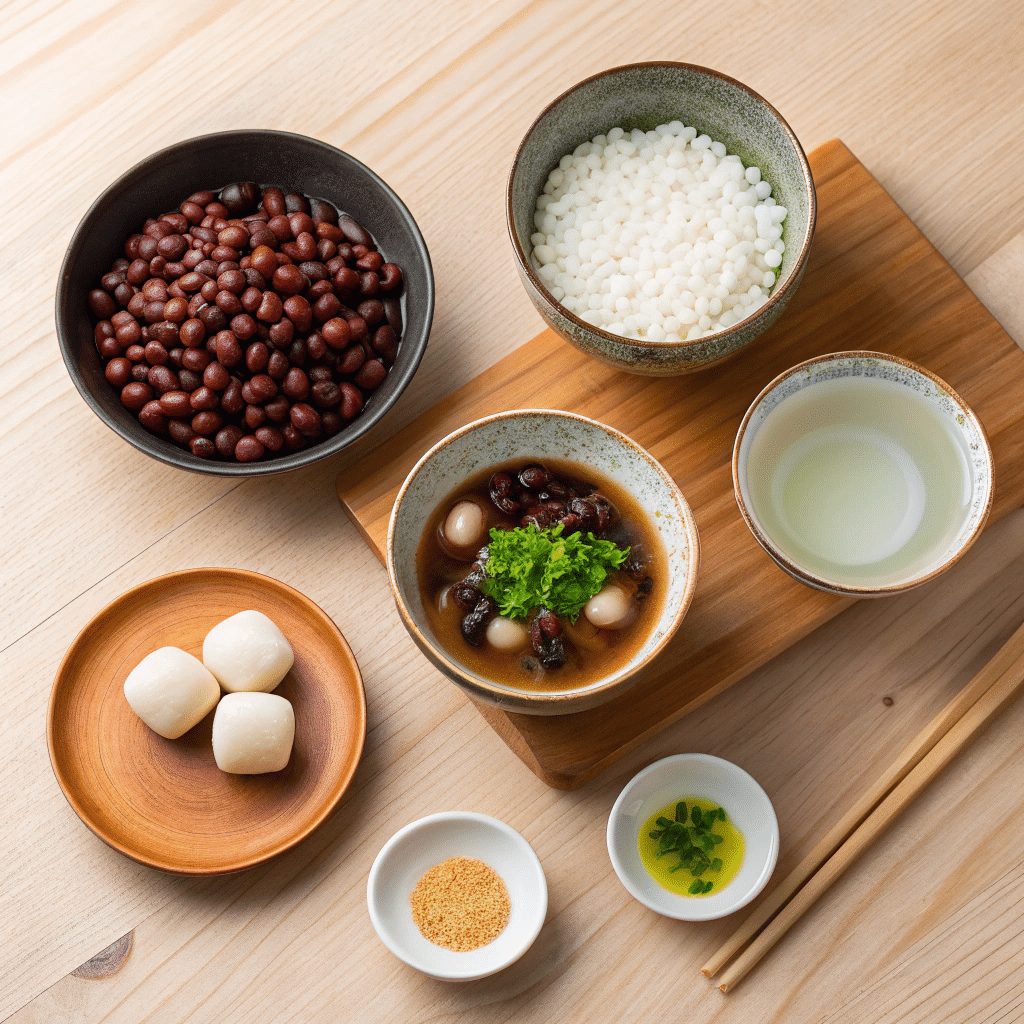
This recipe sticks close to tradition while staying home-cook friendly.
For the Sweet Red Bean Soup
- 1 cup dried azuki beans
- 4 cups water (plus more as needed)
- ½ to ¾ cup sugar (adjust to taste)
- Pinch of salt
For the Mochi
- 4 to 6 pieces Japanese mochi (kirimochi preferred)
Optional additions:
- A splash of coconut milk (not traditional, but lovely)
- Black sesame seeds for topping
- Mandarin orange segments for contrast
How to Make Sweet Red Bean Soup from Scratch
Step 1: Prep the Beans
Rinse the azuki beans under cold water. Pick out any debris.
No soaking required. Small beans. Big convenience.
Step 2: First Boil
Add beans and water to a pot. Bring to a rolling boil.
Boil for 10 minutes.
Drain completely. This step helps clean the flavor.
Step 3: Simmer
Return beans to the pot. Add fresh water to cover by two inches.
Simmer gently for 45–60 minutes.
Stir now and then. Add water if things look dry.
The beans should crush easily between your fingers.
Step 4: Sweeten
Add sugar gradually. Stir. Taste. Adjust.
Add salt at the end. Just a pinch. It wakes everything up.
You now have a classic sweet red bean soup base.
Chunky? Perfect.
Smooth? Mash lightly or blend part of it.
This also doubles as sweet red bean paste if cooked thicker.
Making Mochi for the Soup
You’ve got two solid options.
Option 1: Toasted Mochi (My Favorite)
Toast mochi in a dry pan or oven until puffed and lightly golden.
Crisp outside. Stretchy inside.
This adds texture and personality.
Option 2: Boiled Mochi
Drop mochi into simmering water. Cook until soft and floating.
Drain and add straight to the soup.
This version leans gentle and traditional.
Assemble the Zenzai
Ladle hot Japanese sweet bean paste soup into bowls.
Add one or two pieces of mochi.
Top if you like. Or don’t.
Serve immediately.
Mochi waits for no one.
Flavor Notes (What It Tastes Like)
This isn’t a sugar bomb.
The sweetness is calm. Earthy. Bean-forward.
The mochi brings chew and stretch, like dessert meets memory foam.
Every spoonful feels steady.
Nothing flashy. Nothing loud.
That’s the magic.
Tips From My Kitchen
- If your soup thickens too much, add hot water. Never cold.
- Sugar choices matter. White sugar keeps it clean. Brown adds depth.
- Leftover soup thickens overnight. It reheats beautifully.
- Mochi should be added fresh. Always.
Variations You Can Try
Smooth Zenzai
Blend the cooked beans fully. Strain if you want silkiness.
This version often uses red bean paste for soup.
Extra Rustic
Leave beans whole. Less stirring. More texture.
Coconut Twist
Add coconut milk for a soft, tropical note.
Not traditional. Still delicious.
Citrus Finish
A little orange peel zest cuts through sweetness like a charm.
Is Zenzai Healthy?
Zenzai sits in that pleasant middle ground.
Adzuki bean dessert recipes bring:
- Plant protein
- Fiber
- Iron
Sugar is present, yes. But portion sizes stay sensible.
It’s filling without feeling heavy.
A bowl goes a long way.
Cultural Note: Why Mochi Matters at New Year
In Japan, mochi symbolizes strength and continuity.
That’s why Japanese New Year food often includes it.
Eating Japanese mochi with red bean paste during winter isn’t just tradition. It’s reassurance in edible form.
Cold outside. Warm inside.
Repeat as needed.
Storage and Reheating
- Store soup (without mochi) in the fridge up to 4 days.
- Reheat gently on the stove.
- Add fresh mochi every time.
Microwaving works. Stir often. Respect the beans.
Common Mistakes to Avoid
- Skipping the first boil. Flavor matters.
- Over-sweetening early. Beans mellow sugar.
- Letting mochi sit too long in soup. Texture suffers.
- Cooking on high heat. Slow wins here.
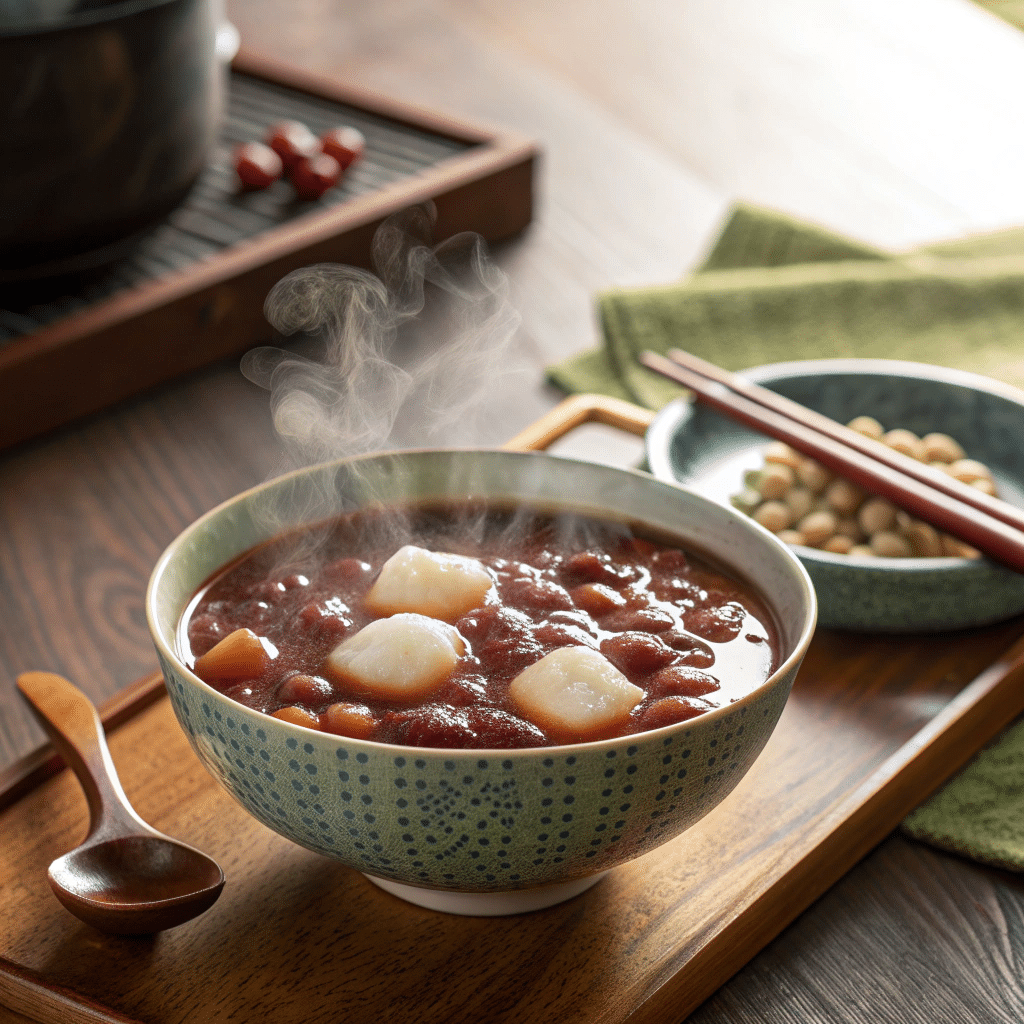
Japanese Zenzai Sweet Mochi Soup
Ingredients
Method
- Rinse the azuki beans under cold water and remove any debris.
- Add the beans and 4 cups water to a pot. Bring to a rolling boil for 10 minutes. Drain the water.
- Add fresh water to cover beans by 2 inches. Simmer gently for 45–60 minutes, stirring occasionally. Beans should be soft and easily mashable.
- Gradually stir in sugar. Taste and adjust sweetness. Add a pinch of salt at the end.
- Toasted: Toast mochi in a dry pan or oven until golden and puffed.
- Boiled: Drop mochi in simmering water until soft and floating, then drain.
- Ladle the hot sweet red bean soup into bowls. Add 1–2 pieces of mochi per bowl. Add optional toppings if desired. Serve immediately.
Notes
- Soup thickens if left overnight; reheat gently and add water if needed.
- Mochi is best added fresh to preserve chewy texture.
- Adjust sugar based on your taste preference; some prefer a lightly sweet soup, others richer.
- Optional coconut milk or citrus can add new flavors but aren’t traditional.
Frequently Asked Questions
Can I use canned red bean paste?
Yes. Choose plain sweet red bean paste without additives. Thin it with water to make red bean paste for soup consistency.
Is this the same as oshiruko?
Close cousins. Some regions use the names interchangeably. Texture and sweetness vary.
Can I make this vegan?
It already is. Just stick to plant-based toppings.
What mochi works best?
Kirimochi is ideal. Fresh mochi also works if you can get it.
Can I freeze zenzai?
The soup, yes. Mochi, no. Freeze beans only.
Is this served cold?
Rarely. This dish shines hot.
Can I reduce sugar?
You can. Just know the flavor shifts from dessert to snack.
Is this considered a dessert or a snack?
Both. Time of day decides.
Final Spoonful
This Japanese zenzai sweet mochi soup recipe isn’t about perfection.
It’s about warmth. Familiarity. A quiet moment with a bowl.
Some days call for cake.
Others ask for something slower.
This is that something.
