
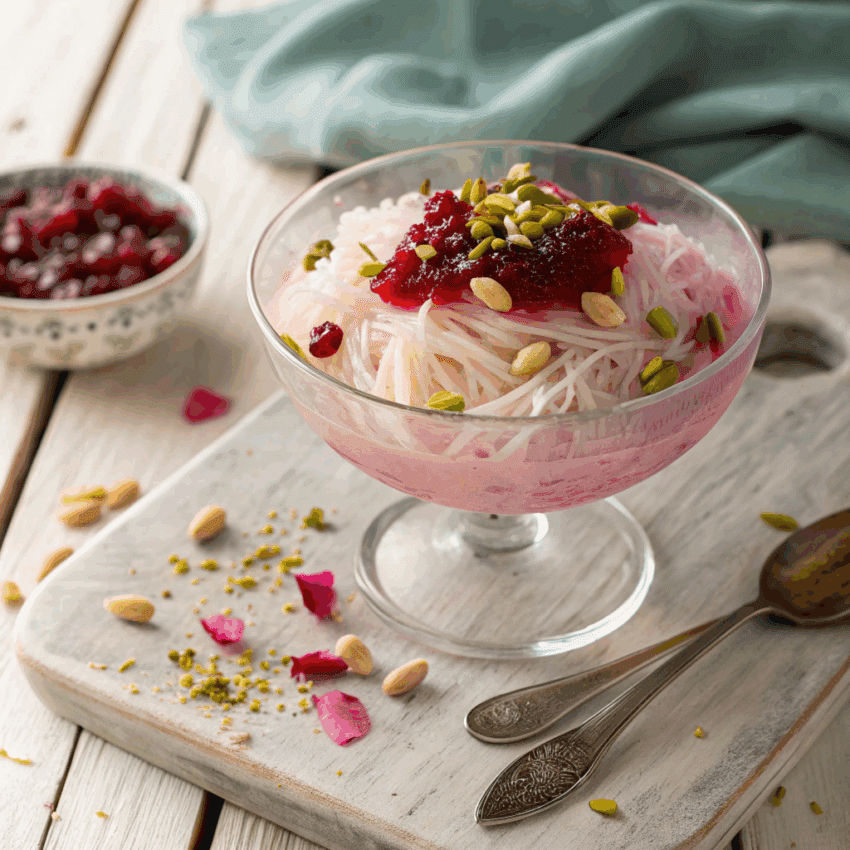
If you’ve ever wandered through the vibrant world of Persian desserts, you might have stumbled upon faloodeh. This chilled, vermicelli-based dessert is a crown jewel of Iranian cuisine, blending delicate flavors and textures that make it unlike any treat you’ve tasted before. Today, I’m going to guide you through how to make Iranian faloodeh with rosewater—a traditional recipe with a fragrant floral twist.
What is Faloodeh?
At its core, faloodeh is a Persian sweet vermicelli dessert made from thin rice noodles frozen in a semi-syrupy mixture of sugar and rosewater. The noodles themselves are subtle in taste, serving as the perfect canvas for the aromatic rosewater, lime juice, and sometimes even saffron. It’s a traditional Persian beverage and dessert rolled into one—a slushy, icy delight that is both refreshing and indulgent.
Persians often enjoy faloodeh during hot summer months, sometimes paired with Persian saffron ice cream, creating a divine duo that dances on your tongue.
Ingredients for Iranian Faloodeh with Rosewater
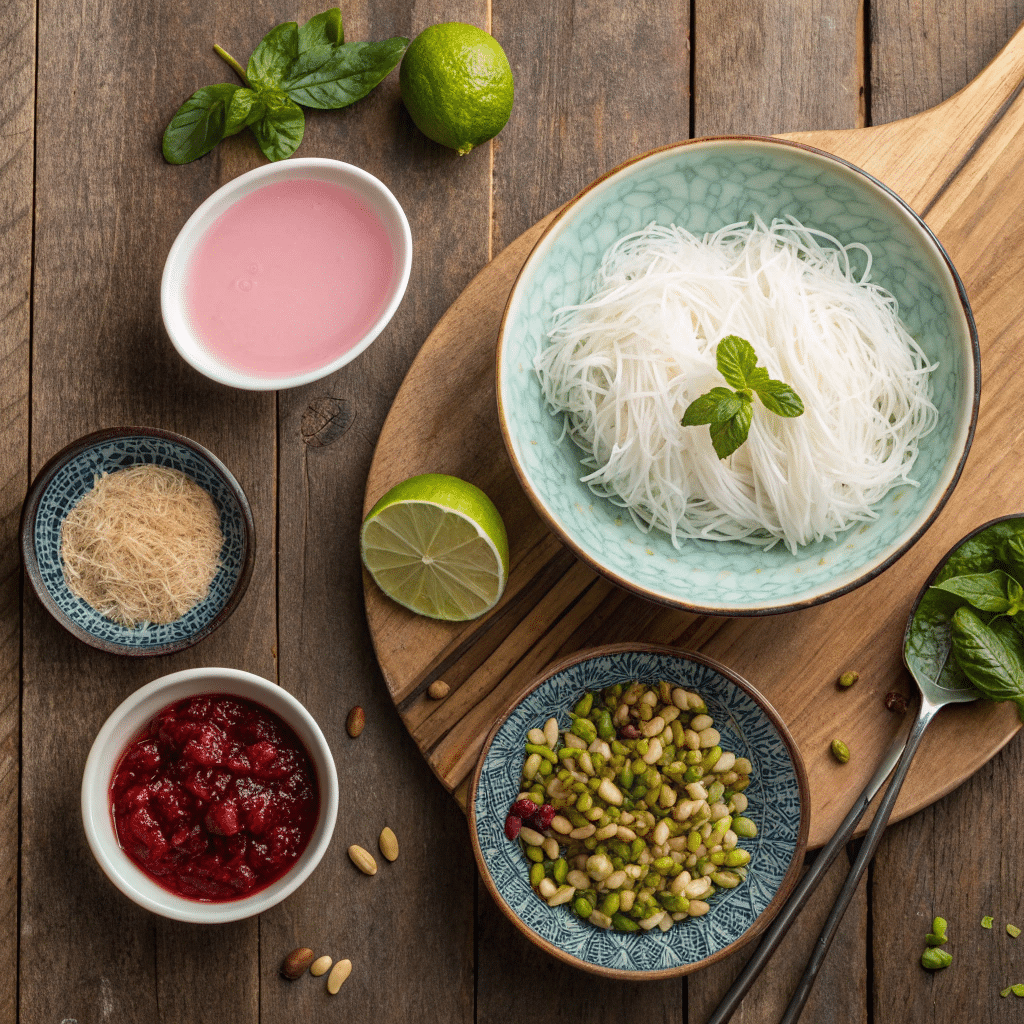
Before you start, make sure you have everything you need. This isn’t a dessert you rush—you want to treat it with a little love. Here’s what I typically use for a batch serving 4-6 people:
For the Faloodeh Noodles:
- 1 cup rice noodles (thin variety)
- 4 cups water
- A pinch of salt
For the Syrup:
- 1 cup sugar
- 1 cup water
- 2 tablespoons rosewater
- 1 teaspoon lime juice (balances sweetness)
Optional Garnishes:
- Crushed pistachios
- Fresh rose petals
- Sour cherry jam
- Basil seeds (for a slightly crunchy texture)
Step-by-Step Faloodeh Recipe
1. Preparing the Rice Noodles
Start by boiling the rice noodles in salted water until just soft. Be careful—they should be tender but not mushy. Once cooked, drain them and rinse under cold water to stop the cooking process. Spread the noodles on a flat tray and place them in the freezer for about an hour. This helps the noodles maintain their texture when you mix them with the syrup.
2. Making the Rosewater Syrup
While the noodles chill, it’s time to craft the syrup. Combine sugar and water in a saucepan. Heat gently until the sugar dissolves completely—no crystals allowed. Remove from heat and stir in the rosewater and lime juice. Let the syrup cool slightly; it should be fragrant and sweet, with just a hint of tang.
3. Combining Noodles and Syrup
Once your noodles are chilled, gently mix them with the syrup. Spread everything evenly in a shallow dish and place it back in the freezer. About 2-3 hours later, your faloodeh should be lightly frozen but still slushy—think icy strands, not a solid block.
4. Serving Suggestions
Scoop the faloodeh into small bowls. Sprinkle with crushed pistachios, add a drizzle of sour cherry jam, or scatter some fresh rose petals for a visually stunning presentation. Pairing it with a scoop of Persian saffron ice cream turns this dessert into a lavish Persian experience.
Tips for Perfect Persian Faloodeh
- Use high-quality rosewater. The flavor is delicate but powerful, and cheap substitutes can overwhelm or taste artificial.
- Chill your noodles properly. If they’re too warm, they’ll clump together in the syrup.
- Don’t over-sweeten. Faloodeh is meant to be lightly sweetened—lime juice balances the sugar beautifully.
- Experiment with garnishes. Basil seeds, crushed pistachios, or even tiny bits of sour cherry jam create texture and visual appeal.
Persian Dessert Variations
Faloodeh is versatile. You’ll find regional variations across Iran and the Middle East:
- Some recipes include saffron, which adds a warm, golden hue and subtle floral aroma.
- Certain traditions top faloodeh with sour cherry jam or lime slices, enhancing the tangy contrast to the syrup.
- Persian ice cream (bastani) on the side is not just delicious—it’s practically a ritual in many Persian households.
You might also enjoy exploring related Persian treats like Persian jeweled rice tahdig or traditional Persian desserts with rose petals, which highlight the fragrant elegance of rosewater in different ways.
A Brief History of Faloodeh
Faloodeh isn’t just a dessert—it’s a piece of Iranian heritage. Tracing its roots back hundreds of years, it was often enjoyed in Persian gardens during summer feasts. Traditionally, families would prepare it by hand, using hand-pulled rice noodles and rosewater harvested from local gardens.
Interestingly, faloodeh also has connections to Middle Eastern desserts with rose petals, showcasing the shared culinary love for floral flavors across the region. Today, it remains a staple at weddings, celebrations, and simply as a refreshing treat to beat the heat.
Healthier Twists on Traditional Faloodeh
While faloodeh is naturally lighter than many desserts, you can make subtle adjustments to suit modern tastes:
- Use natural sweeteners: Swap refined sugar with honey or date syrup for a slightly richer, wholesome flavor.
- Add chia or basil seeds: These not only add an interesting texture but boost fiber content.
- Reduce syrup quantity: Keeping the noodles slightly less sweet allows the rosewater and lime juice to shine.
- Serve with fresh fruit: Top your faloodeh with raspberries, pomegranate seeds, or a slice of lime for a refreshing contrast.
Even with these tweaks, the dessert maintains its signature slushy, floral elegance.
How to Serve Iranian Faloodeh
Faloodeh is as much about the experience as it is about flavor. Here’s how I like to present it:
- Chilled bowls: Small glass bowls highlight the delicate pink or translucent noodles.
- Garnish generously: Crushed pistachios, a few rose petals, or a spoonful of sour cherry jam make it visually inviting.
- Pairings: Serve alongside Persian saffron ice cream or a small cup of rose tea. The floral and creamy notes complement each other beautifully.
- Presentation tip: Layer a few noodles over crushed ice before drizzling syrup to maintain the “slushy” texture.
Persian Faloodeh Variations
Faloodeh has evolved over time, and different regions bring subtle twists:
- Traditional Hatay Dessert Style: This version sometimes includes lemon juice and a lighter syrup, offering a sharper tang.
- Persian Saffron Faloodeh: Adding saffron threads infuses a golden hue and fragrant depth.
- Modern Interpretations: Some chefs pair faloodeh with Persian ice cream, creating a fusion between a frozen vermicelli dessert and creamy ice cream.
Each version is a celebration of Iranian food and Persian cuisine, but all honor the original principles: thin noodles, floral syrup, and icy refreshment.
Common Mistakes to Avoid
Even experienced bakers can trip up when making faloodeh:
- Overcooking noodles: Mushy noodles ruin the texture. Keep them al dente.
- Too much syrup: Faloodeh should be lightly sweetened, not cloying.
- Skipping the chill: Noodles must be cold before mixing with syrup to avoid clumping.
- Neglecting garnish: Presentation is part of the experience—don’t skip pistachios or rose petals.
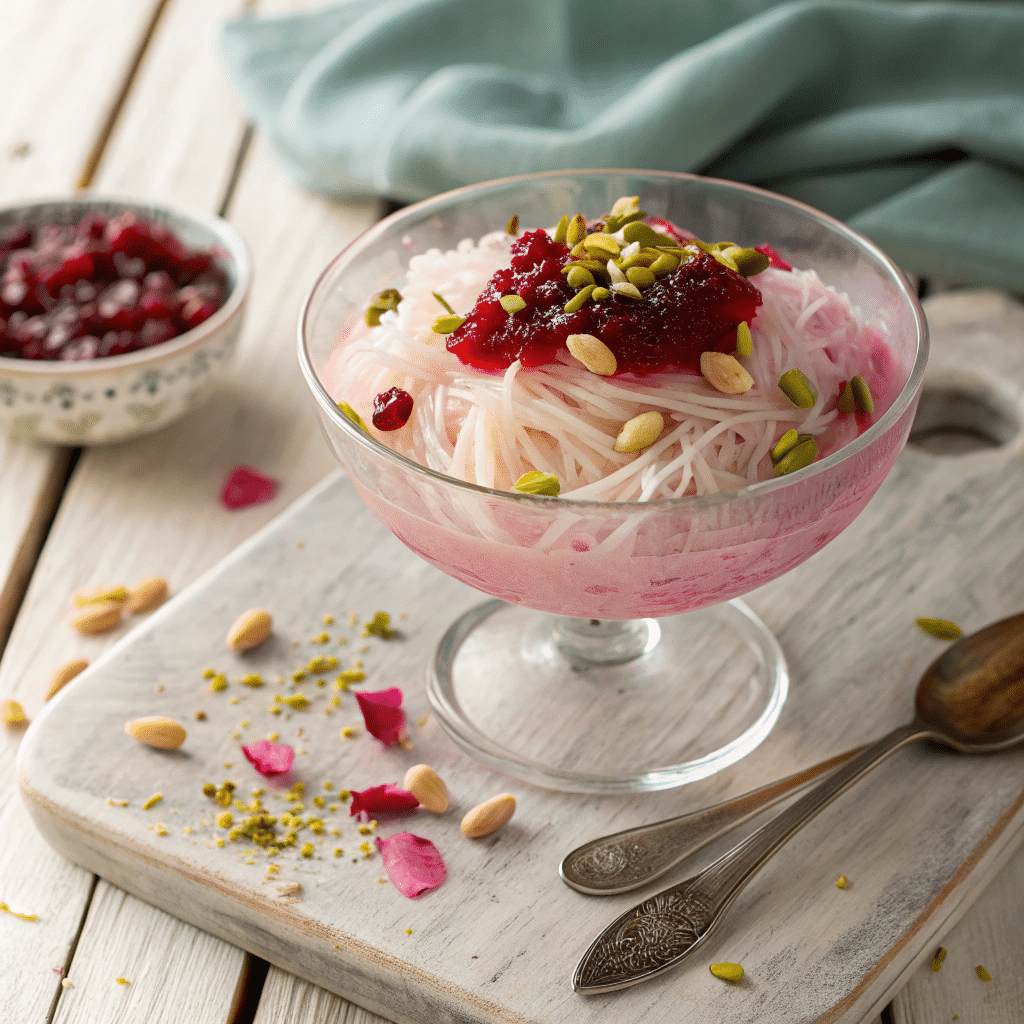
Iranian Faloodeh with Rosewater
Ingredients
Method
- Cook the noodles: Boil the rice noodles in salted water until tender but not mushy. Drain and rinse under cold water. Spread them on a tray and freeze for about 1 hour.
- Make the syrup: In a saucepan, combine sugar and water. Heat until the sugar dissolves. Remove from heat and stir in rosewater and lime juice. Let it cool slightly.
- Combine noodles and syrup: Gently mix the chilled noodles with the syrup. Spread evenly in a shallow dish and freeze for 2–3 hours until slushy but not solid.
- Serve: Scoop into bowls, and garnish with pistachios, rose petals, and sour cherry jam. Optional: serve with a scoop of Persian saffron ice cream.
FAQs About Iranian Faloodeh
Q1: Can I make faloodeh without rosewater?
Yes, but rosewater gives faloodeh its signature aroma. You could experiment with orange blossom water for a slightly different floral note.
Q2: What type of noodles should I use?
Use thin rice noodles. Some recipes call for starch-based vermicelli, but rice noodles give the best texture for a slushy dessert.
Q3: How long can I store faloodeh?
Store in an airtight container in the freezer for up to 3 days. It’s best enjoyed fresh, as the texture may change if frozen too long.
Q4: Can I serve it with ice cream?
Absolutely! Persian saffron ice cream is the classic pairing. Vanilla or cardamom ice cream also works.
Q5: Is faloodeh gluten-free?
Yes, traditional faloodeh made with rice noodles is naturally gluten-free.
Q6: Can I prepare it ahead of time for a party?
Yes, but add syrup just before serving to maintain the slushy consistency.
Final Thoughts
Making Iranian faloodeh with rosewater at home is like bringing a piece of Persian tradition into your kitchen. Its delicate noodles, lightly sweet syrup, and floral notes make it a dessert worth savoring. Whether you’re a home baker exploring Persian desserts for the first time or looking to wow your guests with a Persian sweet vermicelli dessert, faloodeh is simple, elegant, and unforgettable.
So grab your rice noodles, steep your rosewater, and let’s chill—literally! Faloodeh isn’t just a dessert; it’s a refreshing celebration of Iranian food and Persian cuisine.
