
Jump to Recipe
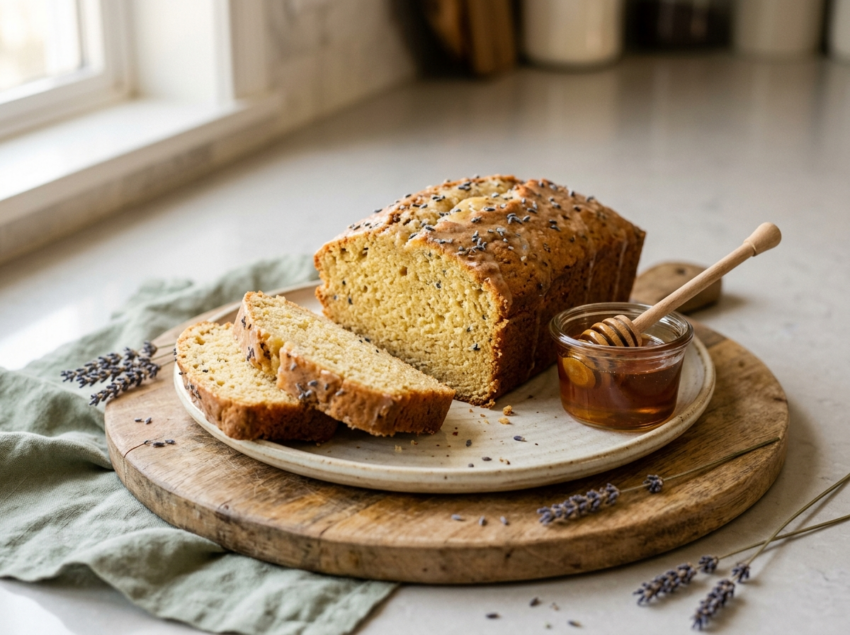
There’s something quietly satisfying about a loaf cake that smells like a garden and tastes like a proper afternoon treat.
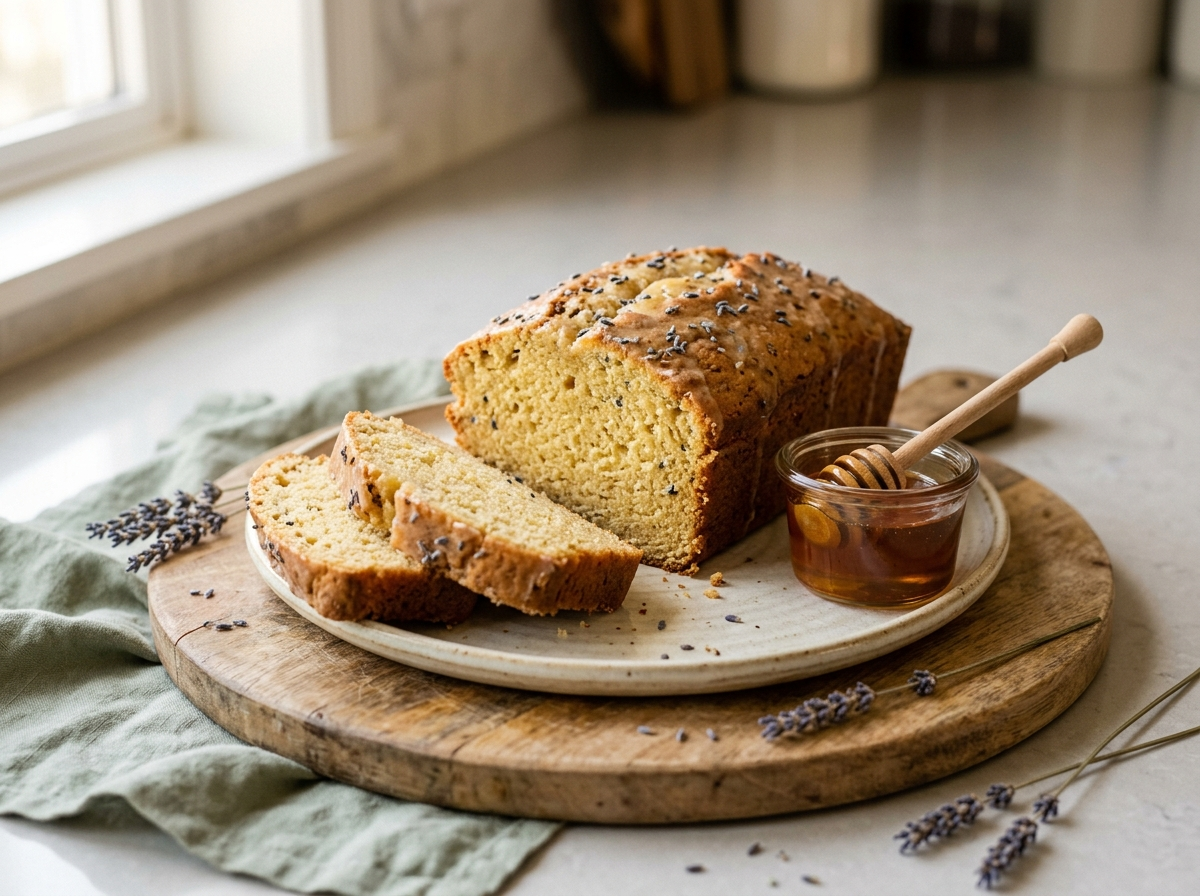
This honey lavender tea loaf uses dried culinary lavender steeped directly into warm milk, so the flavor runs through every slice rather than sitting on top. A generous pour of honey replaces most of the sugar, keeping the crumb dense enough to hold together but soft enough to pull apart with your hands.
I first made this on a rainy spring weekend when I had lavender left over from another project and a loaf pan that needed a reason. It worked on the first try, which almost never happens.
No mixer needed — it’s the same one-bowl approach as a quick snack cake, just a whisk and about an hour start to finish.
Why You’ll Love This Recipe
- One bowl, no mixer, minimal cleanup
- Lavender-steeped milk gives even floral flavor throughout
- Stays moist for 3 days without any special storage
- Elegant enough to gift, simple enough for a weeknight bake
Ingredient Notes
- Dried culinary lavender: Use food-grade culinary lavender, not ornamental. One teaspoon is the sweet spot – more than that tips into soapy. Steep it in the warm milk for at least 5 minutes before straining out.
- Honey: A mild floral honey like acacia or orange blossom works best. Strong buckwheat honey will overpower the lavender. Swap half the honey with maple syrup if you prefer a more earthy note.
- Sour cream: This keeps the crumb tender and moist. Full-fat plain yogurt or creme fraiche are direct swaps. Avoid low-fat versions, which can make the loaf gummy.
- All-purpose flour: Standard all-purpose flour gives the right structure. Cake flour will make the loaf too soft to slice cleanly. For a gluten-free version, a 1:1 gluten-free baking flour blend works well.
- Unsalted butter: Melted and slightly cooled. Using salted butter is fine but reduce the added salt by half. Brown the butter first for a deeper, nuttier loaf.
- Eggs: Two large eggs at room temperature. Cold eggs can cause the batter to seize when you add the melted butter. Rest them in warm water for 5 minutes if you forgot to take them out.
Honey Lavender Tea Loaf
Ingredients
Method
- Warm the milk in a small saucepan over low heat until steaming but not boiling, about 2 minutes.
- Remove from the heat, stir in the dried lavender, and steep for 5 minutes.
- Pour through a fine-mesh sieve, pressing the lavender firmly to extract all the liquid. Discard the buds and set the infused milk aside to cool slightly.
- Heat the oven to 170 C / 340 F. Grease a 9x5 inch loaf pan and line with parchment paper, leaving an overhang on both long sides.
- Whisk the flour, baking powder, and salt together in a large mixing bowl.
- In a separate bowl or large jug, whisk the melted butter, honey, and sugar until combined, about 1 minute.
- Add the eggs one at a time to the butter-honey mixture, whisking after each addition until smooth.
- Whisk in the sour cream, vanilla extract, and the cooled lavender milk until the wet mixture is uniform.
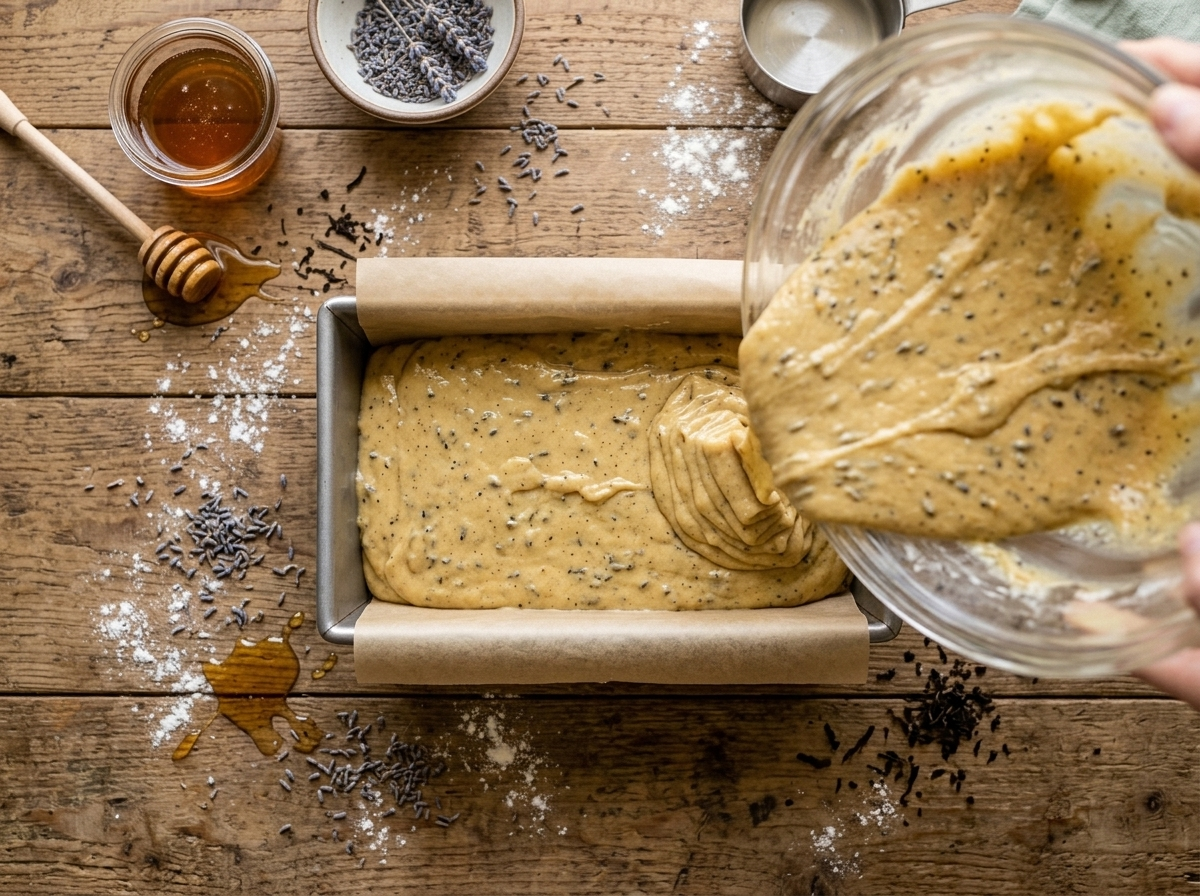
- Pour the wet mixture into the flour bowl and fold gently with a spatula until just combined - stop as soon as no dry streaks remain.
- Pour the batter into the prepared loaf pan and smooth the top with a spatula.
- Bake on the center rack for 50 to 55 minutes, until a skewer inserted in the center comes out with only a few moist crumbs. Tent loosely with foil after 30 minutes if the top is browning too quickly.
- Remove from the oven. If using the glaze, brush the surface immediately with warmed honey for a glossy finish.
- Cool in the pan for 10 minutes, then lift out using the parchment overhang and transfer to a wire rack. Cool for at least 30 minutes before slicing.
Notes
Tips for Success
- Steep lavender in milk off the heat for at least 5 minutes, then strain firmly to remove all buds.
- Measure honey by weight, not volume, to avoid adding too much liquid to the batter.
- Test doneness with a skewer at 50 minutes, not 60 – ovens vary and overbaking dries the crumb fast.
- Line the loaf pan with parchment that overhangs both sides so you can lift the loaf out cleanly.
- Cool the loaf completely before slicing or the crumb will tear – at least 30 minutes on a wire rack.
Variations
- Lemon honey lavender loaf: add 1 tbsp lemon zest and a lemon drizzle glaze over the cooled loaf.
- Lavender blueberry loaf: fold in 120 g fresh blueberries tossed in flour before pouring into the pan.
- Dairy-free version: swap sour cream for full-fat coconut yogurt and butter for melted coconut oil.
Storage and Reheating
Store the cooled loaf wrapped tightly in beeswax wrap or plastic wrap at room temperature for up to 3 days. The honey keeps the crumb from drying out faster than a sugar-only loaf would, much like the moisture that makes a tender loaf baked in one tin stay soft for days.
For longer storage, wrap individual slices in plastic wrap, place in a zip-lock bag, and freeze for up to 2 months. Thaw slices at room temperature for about 30 minutes.
If you want to refresh a slice, 10 seconds in the microwave brings back the soft texture. A low oven at 150 C / 300 F for 5 minutes also works and crisps the crust slightly.
Serving Suggestions
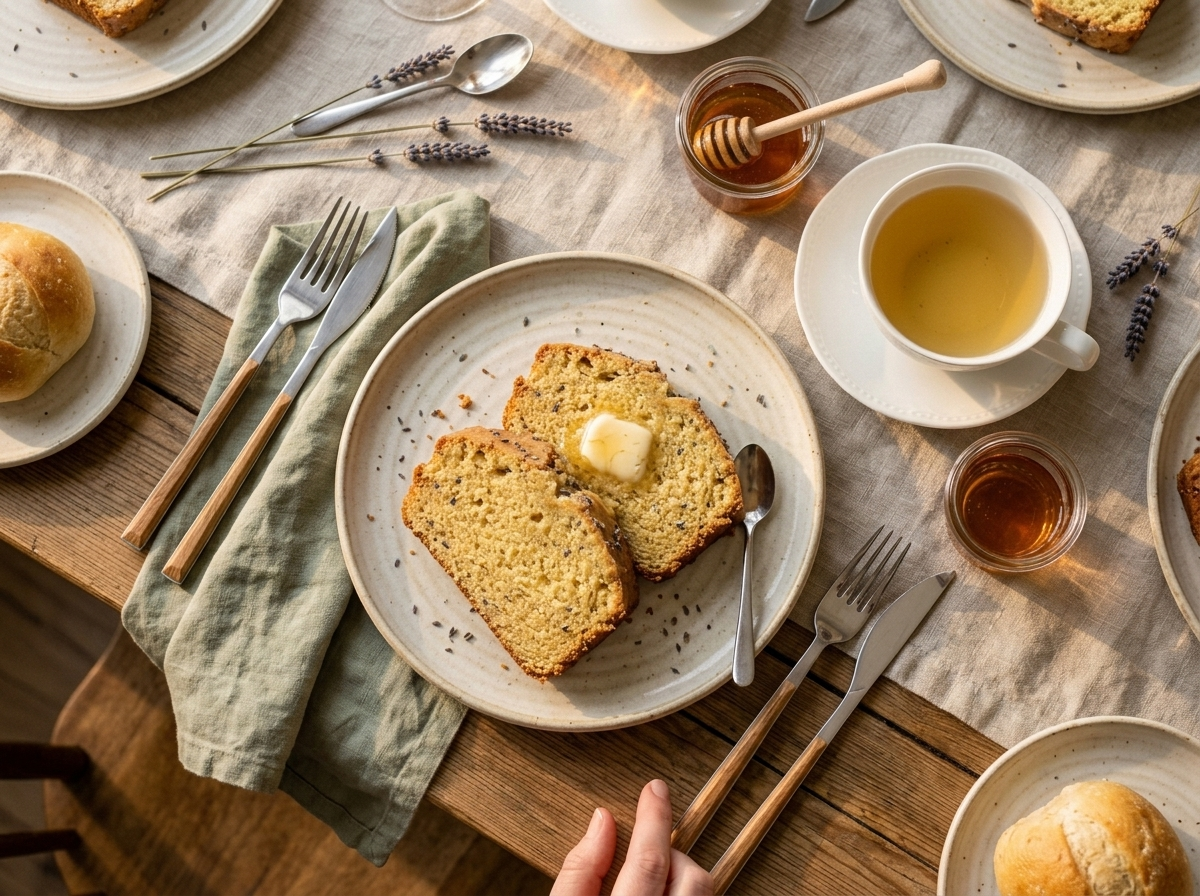
A plain slice with a cup of Earl Grey or chamomile tea is the obvious pairing and it holds up well. The floral note in the loaf echoes the bergamot in Earl Grey without competing.
For a slightly more dressed-up version, spread a thin layer of honey butter on each slice — the kind of move that also works with flaky pastries finished with honey — and add a few fresh berries on the side. It works as a brunch option alongside fruit salad.
If you want to serve it as a dessert, a small scoop of vanilla ice cream or a spoon of clotted cream next to a warm slice makes it feel more substantial without changing the recipe at all.
FAQ
Why does my honey lavender loaf taste like soap?
The usual cause is too much lavender. One teaspoon of dried culinary lavender is the maximum for a standard loaf – beyond that the floral compounds read as soapy to most palates. Also double-check you’re using culinary-grade lavender, not ornamental or potpourri lavender, which has a much more intense perfumed quality.
Can I use fresh lavender instead of dried in this tea loaf?
You can, but fresh lavender has a higher moisture content and a more volatile flavor, so use about 1.5 teaspoons of fresh florets for every 1 teaspoon of dried. Strip the flowers from the stems and steep them the same way. The flavor will be slightly greener and less concentrated.
Can I freeze honey lavender tea loaf with the glaze on?
It’s better to freeze it unglazed and add any honey drizzle or icing after thawing. Glazes tend to go sticky or weep during the freeze-thaw cycle. Wrap the plain loaf tightly in two layers before freezing.
How do I know when the honey lavender loaf is fully baked?
Insert a skewer into the center – it should come out with no wet batter, just a few moist crumbs. The top should be deep golden and springback slightly when you press it lightly. Because honey browns faster than sugar, the crust color alone isn’t a reliable indicator, so always use the skewer test.
Is honey lavender tea loaf suitable for a gluten-free diet?
The base recipe contains all-purpose flour, so it’s not gluten-free as written. Swap the all-purpose flour for a 1:1 gluten-free baking blend (one that includes xanthan gum) and the rest of the recipe stays the same. The texture will be slightly denser but still holds together well.
What is the difference between a tea loaf and a regular cake?
A tea loaf is baked in a standard loaf pan and is typically less sweet and less rich than a layer cake, with a firmer crumb that slices cleanly. Traditional British tea loaves also often use dried fruit soaked in tea. This honey lavender version is closer to a quick bread in texture, designed to be eaten in thin slices alongside a hot drink.
