
Jump to Recipe
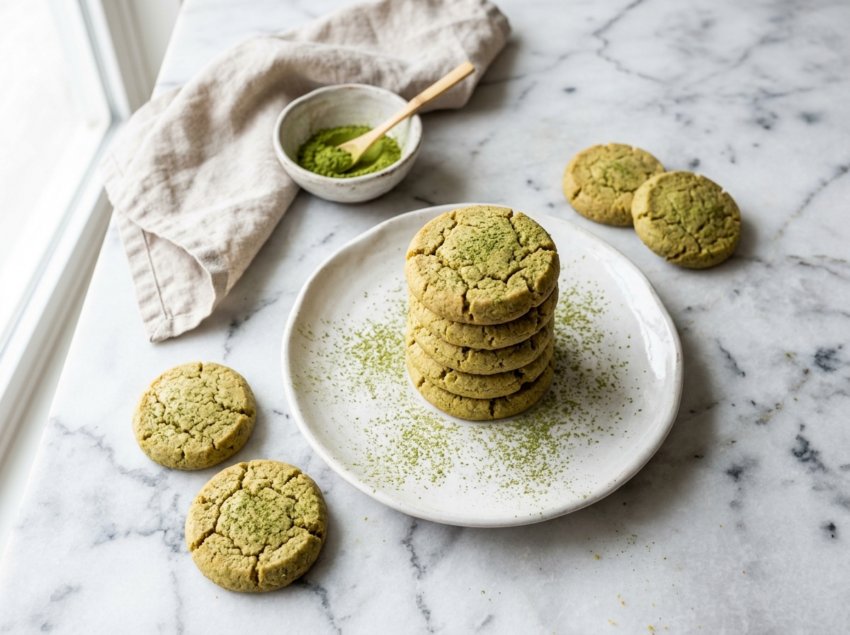
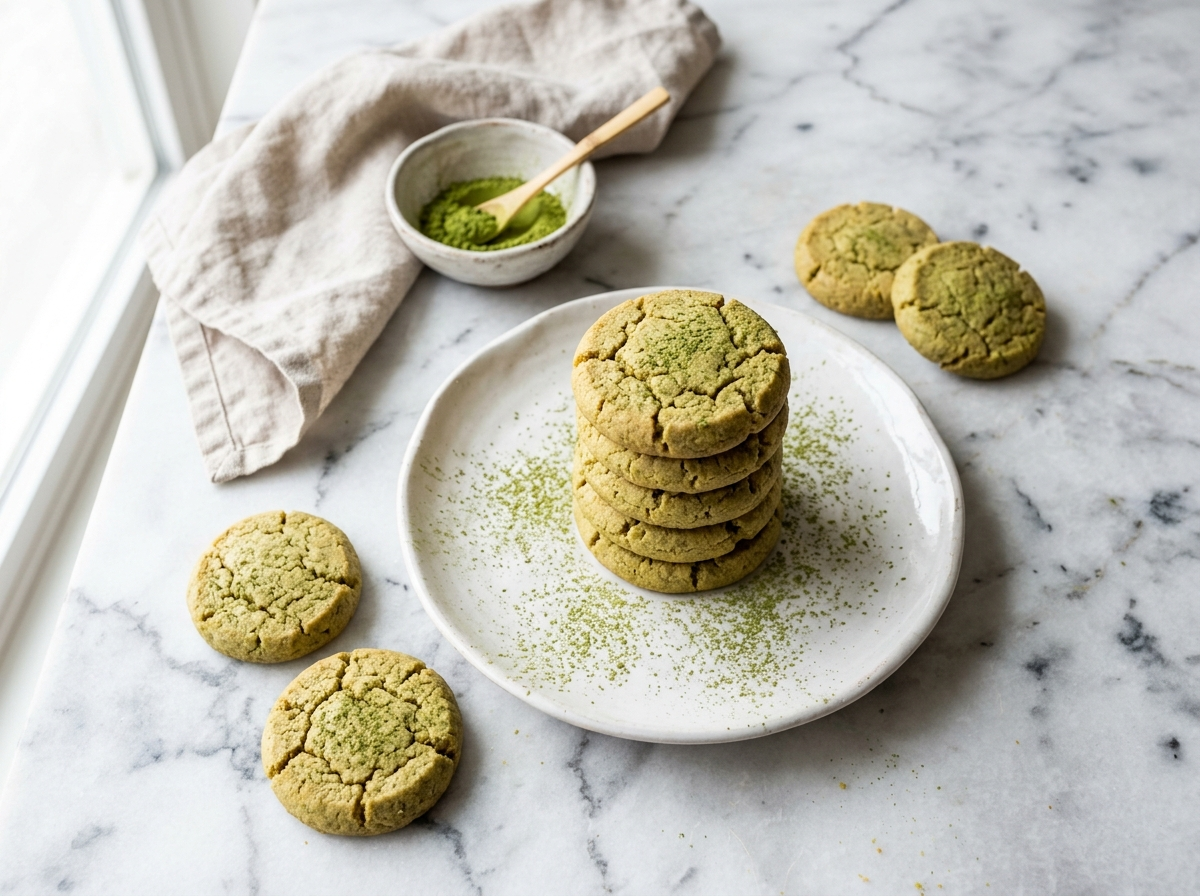
There’s something quietly satisfying about a cookie that doesn’t try too hard. No frosting, no filling, just clean layers of butter and matcha in every snap.
I first made these after buying a tin of matcha I wasn’t sure how to use. One batch in, they became a weekly staple. The bitterness of the green tea cuts through the richness in a way that keeps you reaching for the next one.
The dough comes together in one bowl with no chilling required, though resting it briefly gives you sharper edges if you’re cutting shapes. Either way, they bake in under 15 minutes and stay crisp for days.
Good matcha matters here. Cheap culinary-grade powder tends to turn dull and slightly yellow in the oven, while a mid-range ceremonial or premium baking matcha keeps that vivid green color and grassy depth.
Why You’ll Love This Recipe
- One bowl, no mixer needed for the dough
- Vivid green color from real matcha powder
- Stay crisp at room temperature for up to a week
- Balanced bitterness that cuts through the butter
Ingredient Notes
- matcha powder: Use ceremonial-grade or premium baking matcha for the best color and flavor. Culinary-grade works but produces a more muted, olive-green result.
- unsalted butter: It should be at room temperature, soft enough to press a finger in easily. Cold butter won’t cream properly; melted butter makes the dough too oily.
- all-purpose flour: Plain all-purpose flour gives the right structure. For a more tender crumb, swap up to 30 g with cornstarch.
- powdered sugar: Also called icing sugar. It dissolves faster than granulated sugar and produces a finer, more delicate texture in the finished cookie.
- egg yolk: One yolk adds richness and helps bind the dough without making it cakey. You can omit it for a slightly more crumbly, vegan-adjacent cookie if you also swap the butter.
- vanilla extract: A small amount rounds out the matcha without masking it. Pure extract is worth it here since the flavors are otherwise simple.
Green Tea Butter Cookies
Ingredients
Method
- Heat the oven to 170 C / 340 F. Line a rimmed baking sheet with parchment paper.
- In a large mixing bowl, beat the softened butter and powdered sugar together with a spatula until pale and smooth, about 2 minutes.
- Add the egg yolk and vanilla extract and mix until fully combined.
- Sift the flour, matcha powder, and salt together directly into the bowl. Fold with the spatula until a soft, cohesive dough forms with no dry streaks.
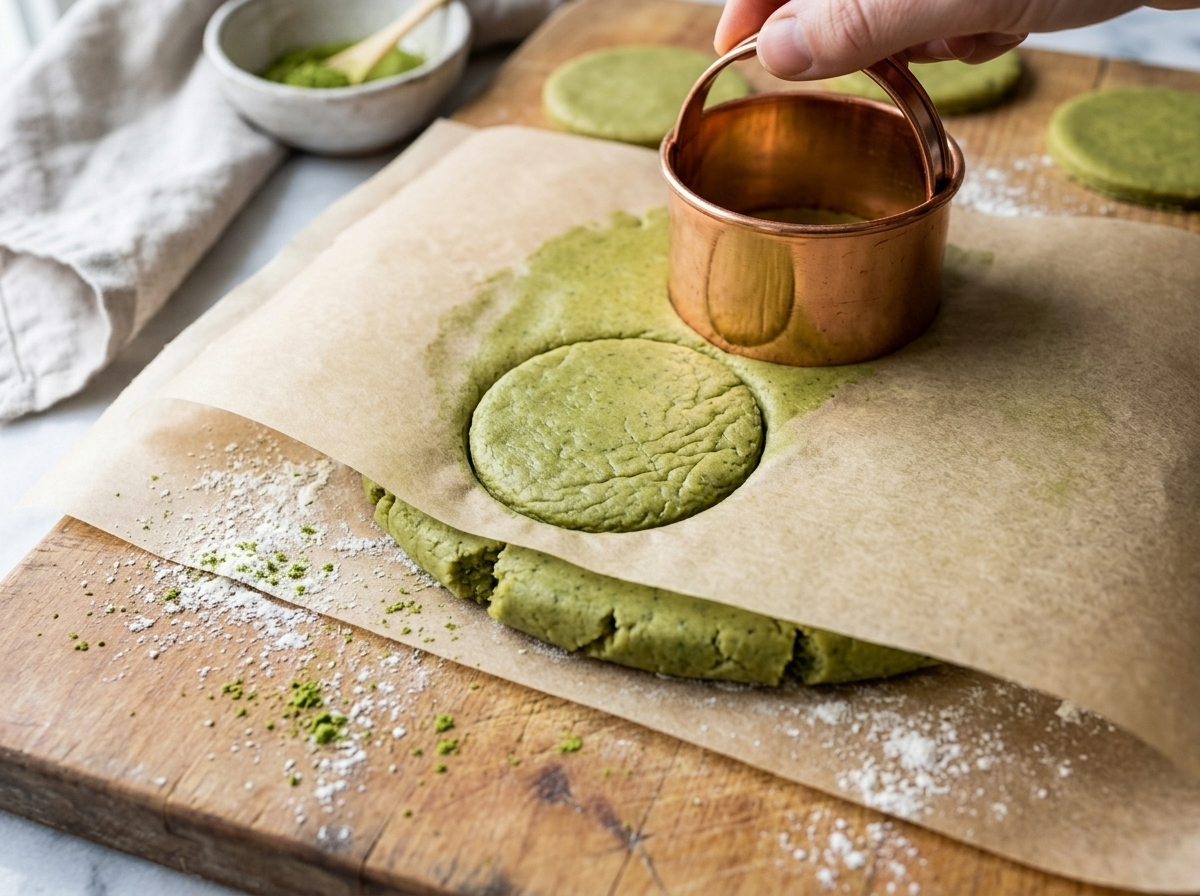
- Turn the dough out onto a lightly floured surface or between two sheets of parchment. Roll to about 6 mm / 1/4 inch thickness.
- Cut into rounds or desired shapes with a cookie cutter or sharp knife. Re-roll scraps once and cut again.
- Arrange cookies on the prepared baking sheet about 2 cm apart. If the dough feels warm and soft, refrigerate the cut cookies for 10 minutes before baking.
- Bake for 12 to 14 minutes until the edges are just barely pale gold. The centers will look slightly underdone.
- Remove from the oven and let cookies cool on the pan for 10 minutes before transferring. They firm up as they cool.
Notes
Tips for Success
- Sift the matcha with the flour to prevent green streaks in the finished cookies.
- Press the dough into a disc before wrapping, not a ball, so it chills evenly if you refrigerate it.
- Roll dough between two sheets of parchment to avoid sticking without adding extra flour, a technique that works just as well for any brown butter cookie dough.
- Pull the cookies from the oven when the edges just turn pale gold, even if the centers look soft.
- Let cookies cool fully on the pan before stacking, since they firm up as they cool.
Variations
- Add 50 g white chocolate chips for a sweet contrast against the bitter matcha.
- Press a whole pine nut or almond into the center of each cookie before baking.
- Mix 1 tsp black sesame seeds into the dough for a nutty, Japanese-inspired twist.
Storage and Reheating
Store cooled cookies in an airtight tin or container at room temperature for up to 7 days. Keep them away from moisture, which softens the crisp texture fast.
For longer storage, freeze the baked cookies in a single layer on a sheet pan, then transfer to a zip-lock bag. They keep well for up to 2 months and thaw at room temperature in about 20 minutes.
You can also freeze the raw dough as a log, wrapped tightly in plastic wrap, for up to 6 weeks. Slice and bake from frozen at 170 C / 340 F, adding 2 to 3 extra minutes to the bake time.
Serving Suggestions
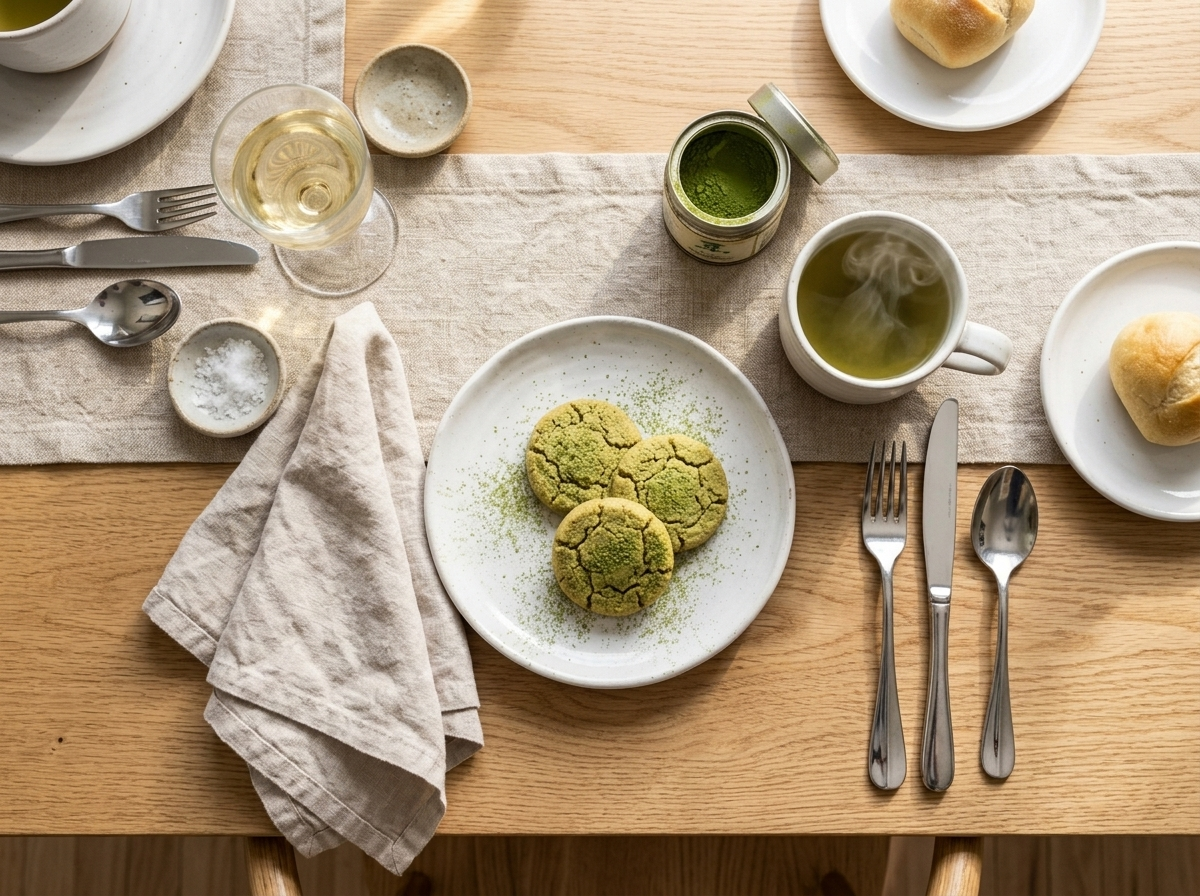
These cookies pair well with a pot of sencha or a bowl of hojicha, where the tea-on-tea combination feels intentional rather than redundant. A simple matcha latte works just as well.
For a small dessert plate, serve two or three alongside a scoop of vanilla or black sesame ice cream, the same way crisp buttery tart bites work as a low-effort plated finish. The contrast in temperature and richness makes a quick, low-effort plated dessert.
They also hold up well on a cookie tin for gifting. Layer them between sheets of parchment and they arrive intact, still crisp, still green.
FAQ
Why did my green tea butter cookies turn yellow instead of staying green?
That usually means the matcha oxidized in the heat, which happens more with lower-grade culinary matcha. Switching to a ceremonial or premium baking matcha, and not overbaking past 170 C, keeps the cookies a deeper, more vivid green.
Can I use ceremonial matcha instead of baking matcha in these cookies?
Yes, ceremonial matcha works and often gives a brighter green color and cleaner flavor. It’s more expensive, but since the recipe only uses 2 tablespoons, the cost difference per batch is small.
Can I freeze green tea butter cookie dough before baking?
Roll the dough into a log, wrap it tightly in plastic wrap, and freeze for up to 6 weeks. Slice directly from frozen and bake at 170 C / 340 F for 13 to 15 minutes, adding a couple extra minutes since the dough starts cold.
What drinks pair well with matcha shortbread cookies?
A plain hot sencha or a cold hojicha latte are natural matches since both have similar earthy, grassy notes. A lightly sweetened matcha latte works too, though black coffee cuts through the butter richness nicely as well.
Are green tea butter cookies gluten-free?
Not as written, since the recipe uses all-purpose flour. You can swap the flour 1:1 with a gluten-free all-purpose blend, though the texture may be slightly more crumbly and the edges less sharp.
How do I know when the green tea butter cookies are done baking?
Look for edges that are just barely pale gold, not brown. The centers will still look slightly underdone, but the cookies firm up as they cool on the pan, so pulling them a minute early is the right call.
