
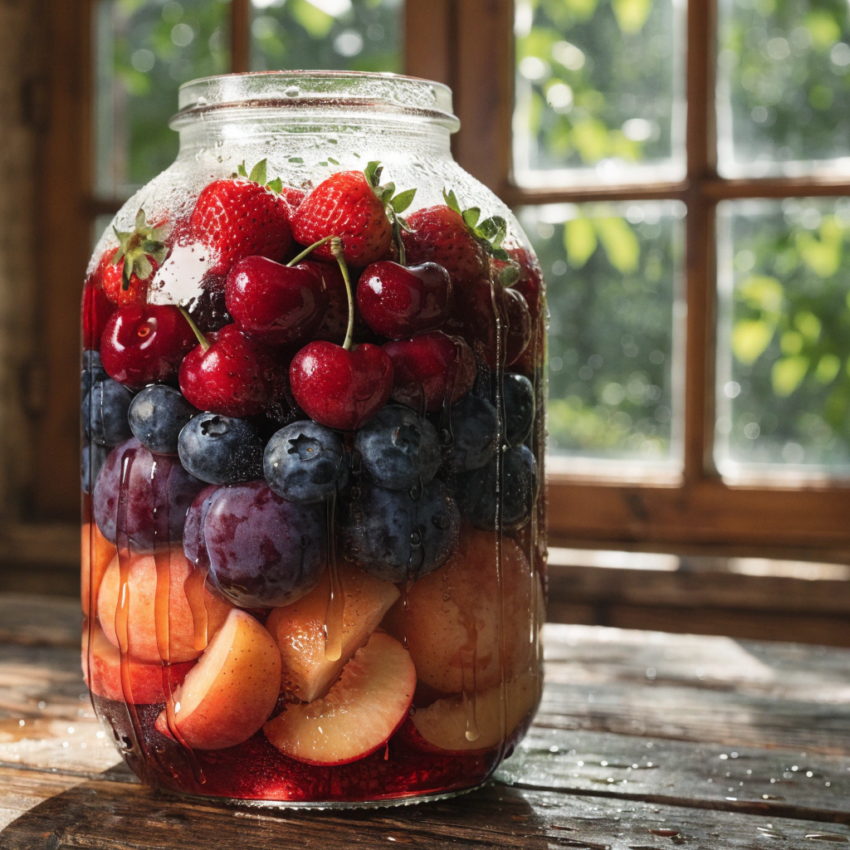
If you’ve ever wondered how Germans preserve summer fruit in a deliciously boozy way, you’re in for a treat. Rumtopf fruit dessert is a centuries-old tradition that turns fresh, ripe fruit into a sweet, rum-soaked indulgence. Think of it as a fruit preserve that doubles as a dessert and a conversation starter at any gathering.
What is Rumtopf?
Rumtopf (literally “rum pot”) is a traditional German fruit preserve. Each summer, fruit is layered in a large jar and drenched in rum and sugar. Over weeks and months, the flavors meld, creating a syrupy, boozy mixture. By winter, you have a rich, ready-to-serve treat perfect for topping ice cream, pancakes, or even enjoying by the spoonful.
Unlike jam, rumtopf doesn’t cook the fruit. It relies on the alcohol and sugar to naturally preserve the flavors. The result? Fruit that’s sweet, soft, and infused with a subtle kick of rum.
A Brief History of Rumtopf
This dessert has roots in German and Austrian households, where families would use the peak of summer fruit to craft something that could last all winter. Historically, rumtopf was a way to make fruit last longer before modern refrigeration. It was often prepared in large, vintage glass jars passed down through generations. Today, it’s still a festive treat during Christmas or special gatherings.
Ingredients You’ll Need
To make a traditional German rumtopf, here’s what you’ll need:
Fruit (choose ripe, firm options)
- Strawberries
- Raspberries
- Cherries
- Blueberries (for a beautiful blue rumtopf)
- Plums
- Peaches
Other essentials
- 750ml dark rum (a high-proof rum works best)
- Granulated sugar (roughly 100g per 500g of fruit)
- A large vintage glass rumtopf jar or crock
Optional additions include a splash of brandy for extra depth or spices like cinnamon or vanilla, though purists stick to just fruit, sugar, and rum.
Step-by-Step Rumtopf Recipe (Easy Version)
Making rumtopf is straightforward. Here’s a simple method for beginners:
- Prepare the jar or crock
Clean and dry your large vintage glass rumtopf jar. Make sure it’s airtight to avoid any unwanted fermentation. - Layer fruit and sugar
Start with strawberries, raspberries, or whichever fruit is in season. Sprinkle sugar over the fruit layer. - Add rum
Pour enough rum to cover the fruit completely. Seal the jar. - Repeat with seasonal fruits
Add more fruit as it comes into season. Each layer gets its sugar and rum, keeping the mixture balanced and flavorful. - Wait patiently
Store in a cool, dark place. Shake or stir gently every few days to help sugar dissolve and distribute flavors. After 6–8 weeks, your rumtopf will be ready.
Pro tip: Don’t rush it. Rumtopf improves with time. I always joke that it’s like letting a fruit cocktail marinate for months—patience really pays off.
Tips for Perfect Rum-Soaked Fruit
- Use firm, ripe fruit to avoid mushy layers.
- High-proof rum preserves fruit better and creates a richer syrup.
- Avoid overfilling the jar; leave room for the fruit to expand.
- Keep it away from heat or sunlight, which can alter the flavors.
- Shake gently rather than stirring vigorously to preserve fruit shape.
How to Serve Rumtopf
Rumtopf is versatile. You can:
- Spoon it over vanilla ice cream for a boozy sundae.
- Layer it with yogurt or whipped cream for a fancy dessert.
- Use it as a topping for pancakes or waffles.
- Enjoy straight from the jar as a sweet treat with friends.
You’ll notice the syrup is thick and flavorful, almost like a liquid candy. The fruit itself is tender and bursting with rum-soaked goodness.
Variations to Try
- Blue Rumtopf: Focus on blueberries for a visually striking dessert.
- Tropical Rumtopf: Include pineapple or mango for an exotic twist.
- Spiced Rumtopf: Add cinnamon sticks, star anise, or vanilla pods for warmth.
No matter the variation, the principle is the same: fruit + sugar + rum = happiness in a jar.
Why Rumtopf Works So Well
Alcohol and sugar act as natural preservatives. The layers of fruit develop complex flavors over time. The longer it sits, the richer the taste. Some families even have jars over a decade old, each layer a piece of history.
For home bakers, it’s a fun way to experiment with fruit combinations. I like trying different berries with stone fruit—each batch tastes like a little celebration of summer.
Common Mistakes to Avoid
- Using overripe or soft fruit (it turns mushy).
- Using cheap rum (quality matters for flavor).
- Forgetting to add sugar (fruit may ferment).
- Storing in direct sunlight (flavors can fade).
Keep it simple, keep it patient, and your rumtopf will shine.
Homemade Rum-Soaked Fruit vs. Store-Bought
While you can find pre-made rumtopf jars online, homemade always wins. You control the fruit, sugar, and rum. Plus, layering fruit as it comes into season creates a dynamic, evolving dessert. It’s like a living project in your kitchen—one that tastes amazing.
Rumtopf as a Gift
A jar of rumtopf makes a thoughtful gift. Vintage jars look stunning, and the recipient gets a dessert that improves over time. Pair it with homemade cookies or a bottle of rum for a complete festive package.
FAQ About German Rumtopf Fruit Dessert
Q: How long does rumtopf last?
A: Properly stored, it can last 6–12 months. The flavors often improve over time.
Q: Can I make rumtopf in a small jar?
A: Yes, but layer carefully and ensure the fruit is fully covered with rum.
Q: Can I use white rum?
A: Absolutely. Dark rum gives a richer flavor, but white rum works fine.
Q: Can children eat rumtopf?
A: The alcohol content is significant, so it’s best reserved for adults. For a kid-friendly version, soak the fruit in fruit juice instead.
Q: What fruit works best in rumtopf?
A: Berries, cherries, peaches, plums, and other firm fruits. Avoid overly soft fruit like bananas.
Q: Can I add spices?
A: Yes, cinnamon, cloves, and vanilla can add warmth, but classic recipes stick to fruit, sugar, and rum.
