
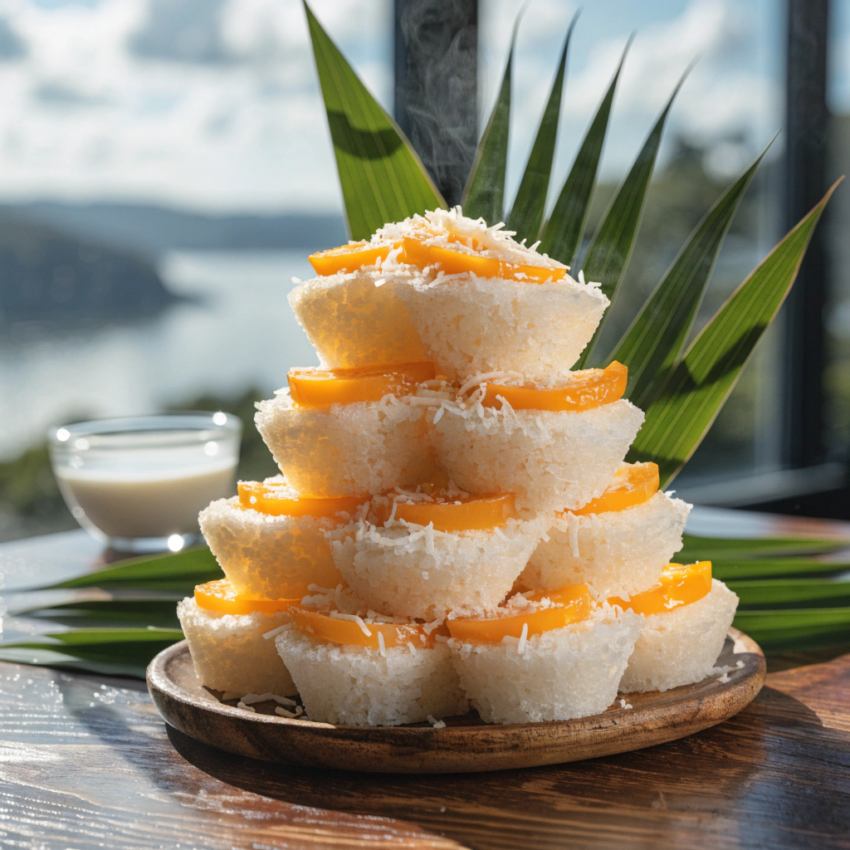
If there’s one dessert that brings back warm memories of Filipino celebrations, it has to be Filipino puto rice cakes. These soft, fluffy steamed cakes are simple, comforting, and perfect for any occasion—from birthdays to afternoon snacks. I still remember the first time I tried puto at a small market in Manila. The texture was so soft it almost melted in my mouth, and the subtle sweetness paired with salted egg toppings left me craving more. Today, I want to show you how to make these little clouds of joy right at home.
Whether you’re a seasoned baker or just starting out, this recipe for Filipino steamed rice cake is approachable, fun, and deeply satisfying. Plus, it’s a great introduction to traditional Filipino desserts without feeling intimidating.
What Are Puto Rice Cakes?
Puto is a traditional Filipino steamed rice cake made primarily with rice flour, sugar, and coconut milk. It’s often served as a snack, dessert, or alongside savory Filipino dishes like dinuguan (pork blood stew). Over the years, variations have emerged: some use glutinous rice flour for a chewier texture, others incorporate ube for a purple twist, and many are topped with salted egg slices or cheese.
The beauty of puto is in its simplicity. With just a few ingredients, you can create something soft, moist, and delightfully sweet. And because it’s steamed, you don’t have to worry about oven timing or burning—just patience and a steady hand.
Ingredients You’ll Need
To make authentic Filipino puto rice cakes, gather the following:
- 1 cup rice flour (for putong bigas recipe)
- 1/2 cup glutinous rice flour for added stickiness
- 3/4 cup sugar (adjust for sweetness preference)
- 1 cup coconut milk
- 1/2 cup water
- 1 tsp baking powder
- 1/4 tsp salt
- Toppings: salted egg slices, grated cheese, or shredded coconut
Optional variations include adding ube flavoring, pandan essence, or even Filipino sticky rice for a richer texture.
Step-by-Step Instructions: How to Make Filipino Rice Cakes
Making Filipino steamed rice cakes is easier than you might think. Here’s how I like to do it:
1. Prepare the Steamer
Fill a large pot with about 2 inches of water. Place a steamer rack inside and bring water to a gentle boil. Make sure the water doesn’t touch the base of your steamer tray.
2. Mix Dry Ingredients
In a bowl, combine rice flour, glutinous rice flour, sugar, baking powder, and salt. Stir until everything is evenly distributed.
3. Combine Wet Ingredients
In a separate bowl, mix coconut milk and water. Slowly add this mixture to the dry ingredients, stirring gently. The batter should be smooth but slightly thick. Avoid overmixing—it can make the puto dense.
4. Pour Into Molds
Grease small muffin cups or traditional puto molds lightly with oil. Pour batter until about 3/4 full. Top with a slice of salted egg or a sprinkle of cheese if you like.
5. Steam the Rice Cakes
Place the molds in the steamer. Cover with a clean kitchen towel before placing the lid—it prevents water droplets from dripping onto the cakes. Steam over medium heat for 15–20 minutes. Use a toothpick to check doneness; it should come out clean.
6. Cool and Serve
Allow the puto to cool for a few minutes before removing them from molds. Serve warm or at room temperature. They pair beautifully with Filipino sweet rice desserts or a cup of tea.
Tips for Perfect Filipino Puto
- Do not overfill molds: The cakes rise slightly, so leaving space prevents overflow.
- Check water level: Make sure the steamer doesn’t run dry.
- Texture tweaks: For a chewier cake, add more glutinous rice flour. For a lighter texture, reduce it slightly.
- Flavor variations: Mix in pandan juice, ube extract, or cocoa powder for different flavors.
- Rice cooker method: You can also make putong bigas recipe with rice cooker using the steaming function.
Popular Puto Variations
Filipino cooks love experimenting with puto. Here are some favorites:
- Putong Puti: Classic white rice cake using rice flour and coconut milk.
- Ube Puto: Purple yam version with vibrant color and sweet aroma.
- Cheese Puto: Topped with grated cheddar for a salty-sweet contrast.
- Salted Egg Puto: A Pinoy classic—adds a savory kick to each bite.
- Biko-Inspired Puto: Incorporates Filipino sticky rice and brown sugar for a caramelized touch.
Each version has its charm. I often switch between plain Filipino steamed rice and cheesy puto depending on the crowd.
Frequently Asked Questions (FAQ)
Q: Can I use regular flour instead of rice flour?
A: Not really. Regular flour won’t give the same soft, chewy texture. Stick to rice flour or a mix with glutinous rice flour.
Q: How long do puto cakes last?
A: Best eaten fresh, but you can refrigerate for 2–3 days. Re-steam before serving.
Q: Can I make vegan puto?
A: Yes! Replace regular milk with coconut milk and skip cheese or salted eggs.
Q: Can I bake puto instead of steaming?
A: Baking is possible but changes the texture. Steaming keeps them soft and fluffy.
Q: How do I make puto without molds?
A: You can use muffin tins or small ramekins. Just grease them well.
Why Filipino Rice Cakes Are Worth Making
Making Filipino rice cakes is more than just preparing a dessert—it’s a small celebration in itself. These cakes are easy to make, versatile, and bring a touch of Filipino culture to your kitchen. Whether you’re sharing them at a family gathering or enjoying a quiet afternoon snack, puto delivers comfort, sweetness, and a little adventure in every bite.
I love how they remind me of childhood birthdays, simple joys, and markets bustling with aroma and chatter. And the best part? You can personalize each batch. Add cheese for a party vibe, or go traditional for a nostalgic twist.
So, what are you waiting for? Grab your steamer, gather your ingredients, and make your own batch of Filipino puto rice cakes today. You might even find yourself sneaking a few straight from the mold—they’re that irresistible!
