
Jump to Recipe
There’s something quietly satisfying about a food that’s been eaten the same way for centuries. Kama is Estonia’s ancient roasted grain flour – a blend of barley, rye, oat, and pea flour, all toasted before grinding. The result smells like a warm bakery and tastes nutty, earthy, and slightly sweet on its own.
Stirred into cold kefir with a spoonful of honey, it becomes something else entirely. Thick, creamy, grainy in the best way. Estonians eat it for breakfast, as a snack, or as a simple dessert in summer.
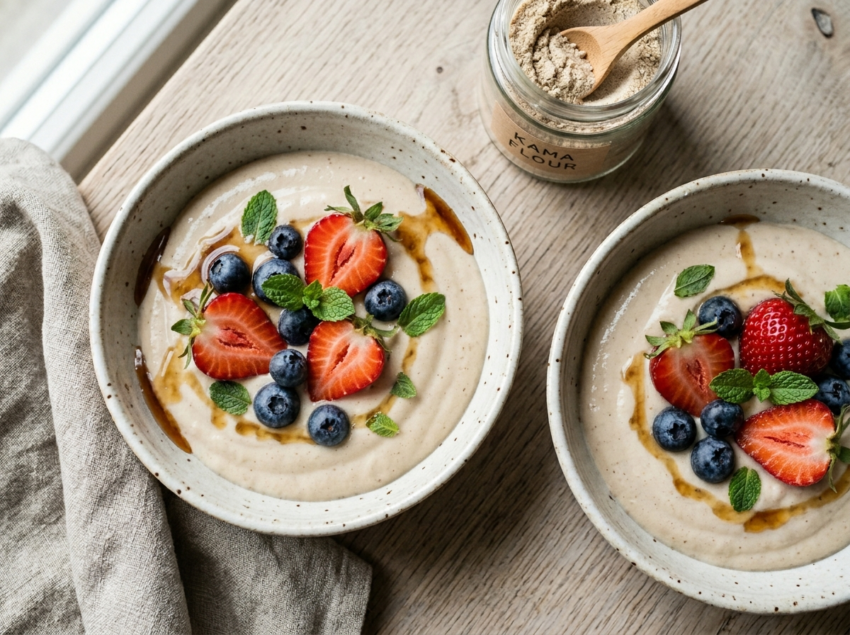
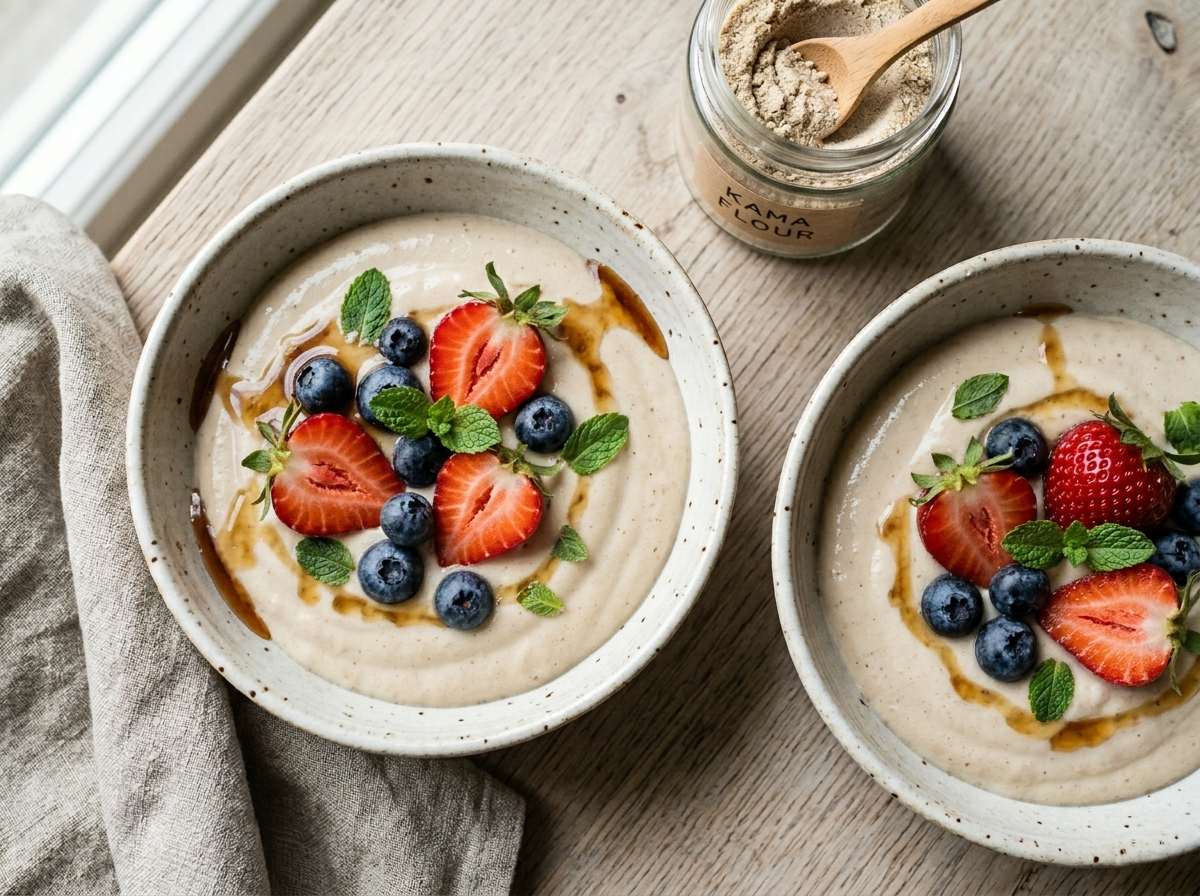
This bowl leans into the dessert side – kama mixed into whipped kefir, layered with fresh strawberries and blueberries, and finished with a drizzle of dark honey. It takes about 15 minutes start to finish and keeps well in the fridge for a day.
Why You’ll Love This Recipe
- Ready in 15 minutes with zero cooking required
- Nutty roasted grain flour adds flavor you won’t find elsewhere
- Naturally high in fiber and protein from ancient grain blend
- Works as breakfast, snack, or light summer dessert
Ingredient Notes
- kama flour: Traditional Estonian kama flour is a pre-roasted blend of barley, rye, oat, and pea flours. You can order it online from Baltic specialty shops or make a rough substitute by combining equal parts toasted oat flour and barley flour with a tablespoon of rye flour.
- kefir: Full-fat kefir gives the creamiest texture and the tang that balances the nutty kama. Plain whole-milk yogurt thinned slightly with milk works as a substitute, though you lose a little of the sharp fermented flavor.
- dark honey: Buckwheat honey is traditional and brings a molasses-like depth that pairs well with roasted grains. A mild wildflower honey is a gentler option if buckwheat honey is too strong for your taste.
- strawberries: Fresh ripe strawberries are ideal in summer. Out of season, use frozen and thawed strawberries, or swap for raspberries which also work well with the sour kefir base.
- brown sugar: A small amount added directly to the kefir-kama mixture helps offset the natural bitterness of rye. Leave it out if you prefer the dessert less sweet and let the honey do all the work.
- vanilla extract: Half a teaspoon rounds out the grainy flavor and makes the bowl smell more dessert-like. Not traditional, but a small addition that bridges kama toward a modern dessert context.
Estonian Kama Dessert Bowl with Whipped Kefir and Fresh Berries
Ingredients
Method
- Place the halved strawberries in a small bowl. Sprinkle over 1 tsp granulated sugar, toss gently, and set aside for 5 minutes until the juices start to run.
- Add the blueberries to the bowl and toss once to combine. Don't crush the blueberries.
- Pour the cold kefir into a large mixing bowl. Add the honey, brown sugar if using, vanilla extract, and salt.
- Whisk the kefir mixture until the honey is fully dissolved and the surface is slightly frothy, about 1 minute.
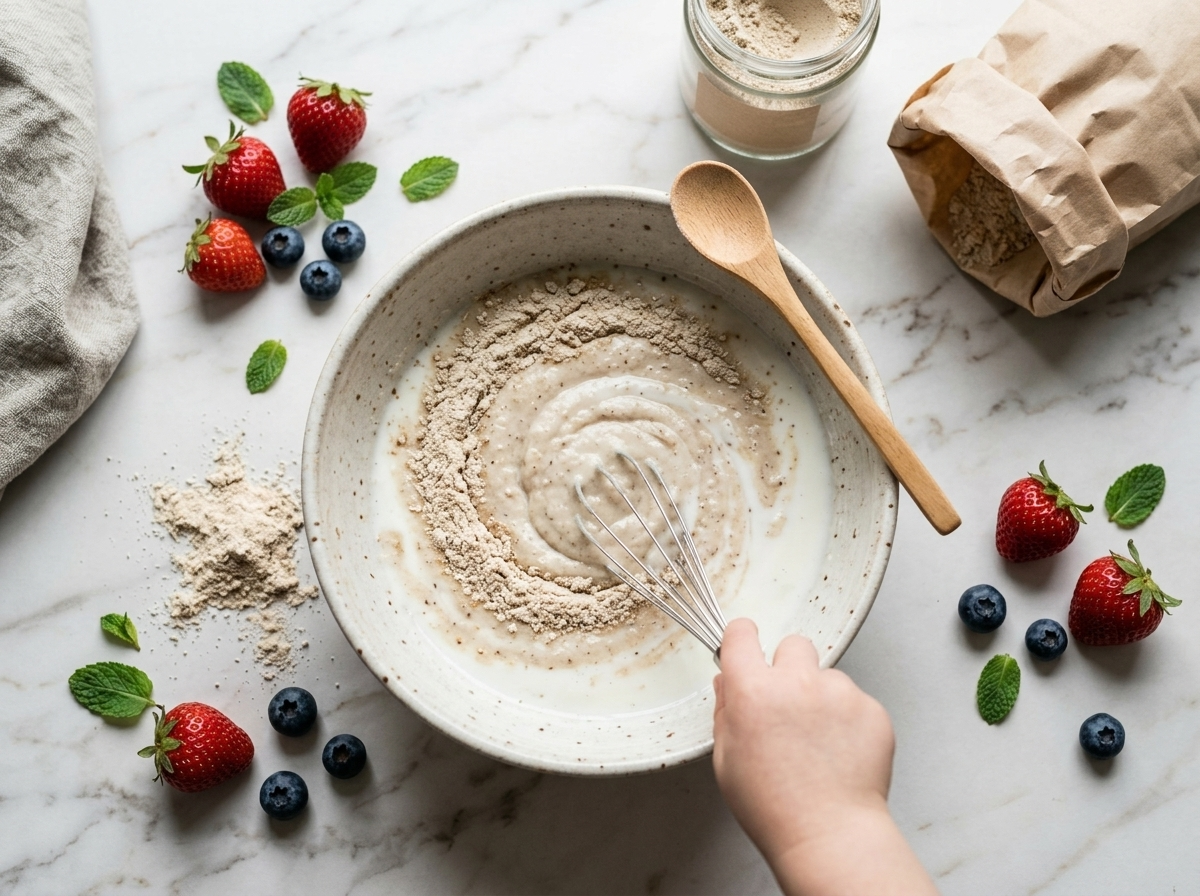
- Add the kama flour one tablespoon at a time, whisking constantly after each addition until smooth. The mixture should look thick and creamy with no dry clumps. It will thicken slightly as it sits.
- Taste and adjust sweetness with an extra teaspoon of honey if needed. The flavor should be tangy, nutty, and lightly sweet.
- Divide the kama kefir mixture evenly between 4 cold bowls, about 200 ml per bowl.
- Spoon the macerated berry mixture over the top, including any juice that has collected in the bowl.
- Drizzle each bowl with a little extra buckwheat honey. Add 2 fresh mint leaves per bowl if using. Serve immediately.
Notes
Tips for Success
- Add kama flour gradually to kefir and whisk constantly to avoid dry lumps forming at the bottom.
- Chill your bowls in the freezer for 10 minutes before serving to keep the kefir mixture cold longer.
- Taste the kama-kefir mix before adding honey – some kama blends have more sweetness from oat flour than others.
- Let strawberries macerate with a pinch of sugar for 5 minutes to draw out juice that soaks into the kama layer.
- Use a ratio of 3 tablespoons kama flour per 200 ml kefir as your baseline, then adjust thickness to your preference.
Variations
- Swap kefir for thick Estonian or Greek yogurt and fold in kama for a spoonable mousse-like texture.
- Layer kama kefir with lingonberry jam instead of fresh berries for a more traditional Nordic flavor profile.
- Stir a tablespoon of cocoa powder into the kama flour before mixing for a chocolate-roasted grain version.
Storage and Reheating
Store assembled kama bowls covered in the fridge for up to 24 hours. The kama flour continues to absorb liquid as it sits, so the texture thickens overnight – add a splash of cold kefir and stir before eating.
Don’t freeze the finished bowls. Kefir separates badly when frozen and thawed, and the berries turn watery. If you want to prep ahead, store the kama-kefir mixture and the berries separately in the fridge and assemble right before serving.
Kama flour on its own keeps at room temperature in a sealed jar for up to 6 months. Store it away from moisture, as it clumps fast once it absorbs any humidity.
Serving Suggestions
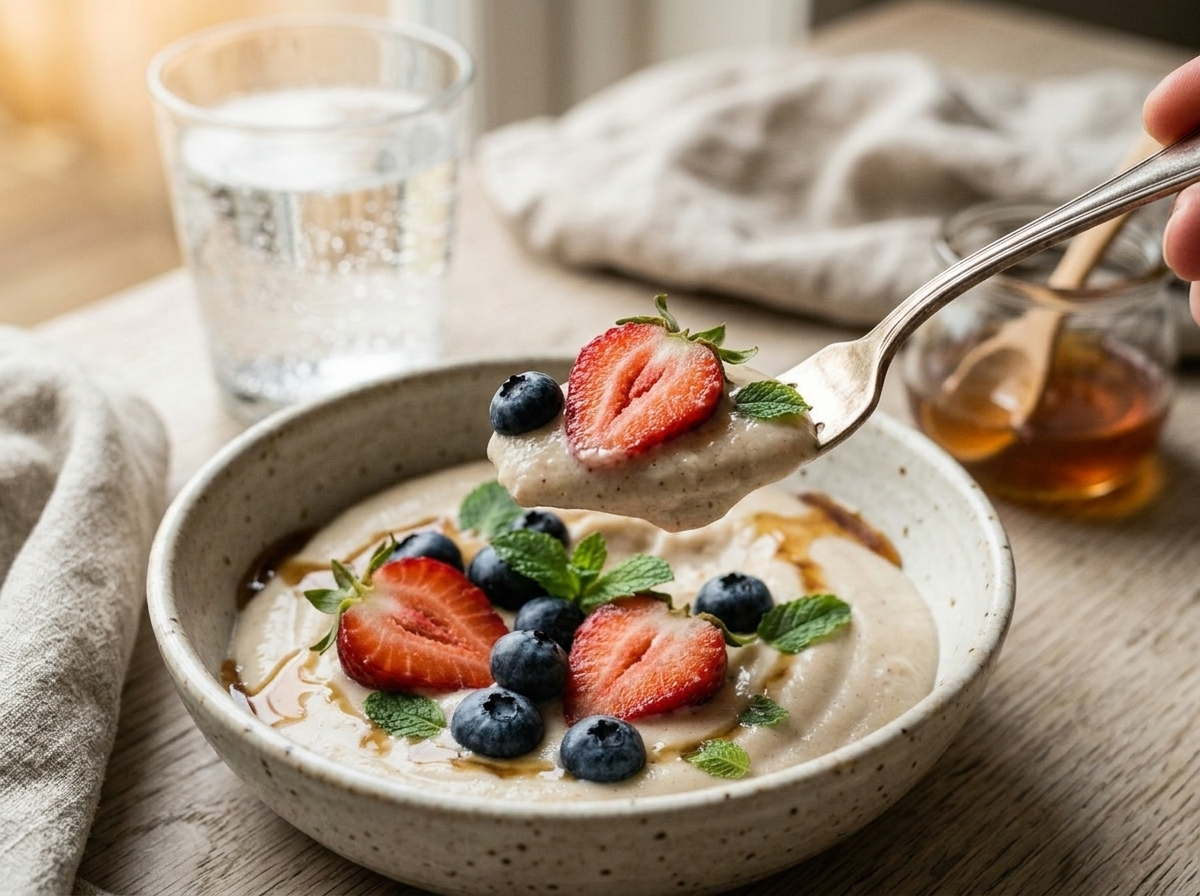
Serve kama bowls straight from the fridge in wide shallow bowls so the berry layer is visible. A final drizzle of buckwheat honey just before eating makes a visual difference and adds a last hit of sweetness.
For a more filling version, add a handful of granola or crushed rye crispbread on top for crunch. Some Estonians also add a knob of cold butter stirred into the kama mixture, which sounds unusual but gives the bowl a rich, silky finish.
Pair with strong black coffee or cold brew in summer, or serve alongside a Russian berry kissel pudding for a fuller spread of northern European flavors. The bitterness of the coffee plays off the tangy kefir and makes this feel like a complete breakfast as much as a dessert.
FAQ
Why does my kama kefir mixture taste bitter?
Rye flour in the kama blend has a natural bitterness that can come through, especially if the kama-to-kefir ratio is high. Add a little more honey or a pinch of brown sugar to balance it, or increase the kefir to dilute the grain flavor.
Can I use yogurt instead of kefir in a kama dessert bowl?
Yes, plain whole-milk yogurt works well and gives a thicker, spoonable texture. Thin it slightly with a tablespoon or two of milk if you want a consistency closer to traditional kama mixed with kefir.
Can I make the kama kefir base the night before and add berries in the morning?
Yes, the kama-kefir mixture actually improves after a few hours in the fridge as the grain flour fully hydrates. Store it covered and add the berries and honey just before serving so they stay fresh.
What berries go best with an Estonian kama dessert bowl?
Strawberries, blueberries, and raspberries are the most common choices and all work with the tangy kefir base. Lingonberries are deeply traditional if you can find them – their tartness is a natural match for roasted grain flour, much like in a Scandinavian lingonberry cream dessert.
Is Estonian kama dessert bowl gluten free?
No, traditional kama flour contains barley and rye, both of which have gluten. Some specialty producers make oat and buckwheat-based kama blends that are closer to gluten free, but check the label for cross-contamination warnings.
What is the difference between kama and regular oat flour?
Oat flour is made from oats alone, while kama is a blend of roasted barley, rye, oat, and pea flours – all toasted before grinding. The toasting step gives kama a deeper, nuttier flavor that plain oat flour doesn’t have.
