
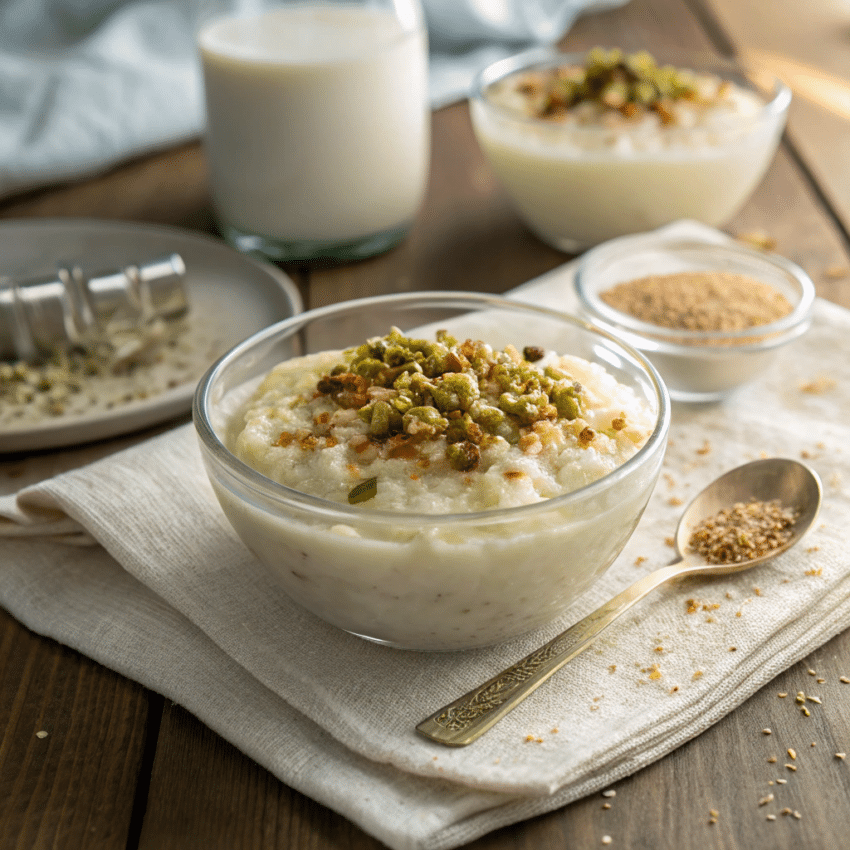
There’s something about a warm bowl of Egyptian roz bel laban pudding that feels like a hug after a long day.
I still remember the first time I tasted this Egyptian rice pudding recipe. It was served in a small glass bowl, lightly chilled, topped with crushed pistachios. One spoonful and I understood why Middle Eastern rice pudding holds such a special place in so many homes.
Simple ingredients. Gentle heat. Big comfort.
If you love Lebanese rice pudding, Syrian rice pudding, or even Iraqi rice pudding, this version will feel familiar. But it carries its own character. Creamier. Silkier. Deeply comforting.
What Is Egyptian Roz Bel Laban?
Roz bel laban literally means “rice with milk.” It’s a classic Egyptian milk pudding made by simmering rice slowly in milk until thick and creamy.
Across the region, you’ll find variations:
- Lebanese rice pudding recipe with milk often includes orange blossom water.
- Syrian rice pudding may lean into rose water.
- Iraqi rice pudding sometimes has a slightly thicker body.
- Egyptian rice pudding keeps things smooth and rich, often finished with cream.
It’s part of a larger family of Middle Eastern desserts that rely on pantry basics. Rice. Milk. Sugar. Patience.
That’s it.
And yet the result tastes far beyond those humble ingredients.
Ingredients You’ll Need
For authentic rice pudding Egyptian style, gather:
- 1 cup short-grain rice
- 4 cups whole milk
- 1 cup heavy cream
- ½ cup sugar (adjust to taste)
- 1 tablespoon cornstarch
- 2 tablespoons water (to dissolve cornstarch)
- 1 teaspoon vanilla extract
- Pinch of salt
Optional toppings:
- Ground cinnamon
- Crushed pistachios
- Shredded coconut
- Golden raisins
Short-grain rice works best. It releases starch and creates that luscious Egyptian creamy rice texture.
How to Make Egyptian Roz Bel Laban Pudding
This isn’t complicated. It just needs attention.
Step 1: Rinse the Rice
Rinse the rice under cold water until it runs mostly clear. This removes excess surface starch so the pudding thickens gradually instead of turning gluey.
Step 2: Cook the Rice
In a saucepan, combine rice with 2 cups of milk. Cook over medium heat.
Stir often.
Lower the heat once it starts simmering. Let it cook until the rice softens and most of the milk is absorbed. This usually takes 15–20 minutes.
Don’t walk away. Milk has a habit of boiling over the second you turn your back.
Step 3: Add Remaining Milk and Cream
Pour in the remaining milk and the heavy cream.
Keep stirring. The mixture will loosen at first. Then it slowly thickens.
Let it simmer gently for another 15 minutes.
Step 4: Sweeten and Thicken
Add sugar and a pinch of salt. Stir until dissolved.
In a small bowl, mix cornstarch with water. Pour it into the pot while stirring continuously.
Within minutes, you’ll see it transform. The pudding becomes silky and coats the back of your spoon.
Add vanilla at the end.
Taste. Adjust sweetness if needed.
Step 5: Serve Warm or Chilled
Pour into serving bowls.
You can enjoy it warm, which feels deeply comforting. Or chill it for a few hours for that classic Arabic dessert experience.
Top as you like.
And just like that, you’ve made Egyptian rice pudding.
What Makes Egyptian Rice Pudding Different?
People often ask me how this differs from Lebanese pudding or other Middle Eastern rice recipes.
Here’s the short answer:
Egyptian rice pudding uses cream more generously. The result is thicker and richer.
Lebanese sweet rice often includes floral notes like orange blossom water. Egyptian versions keep it simpler. Cream and milk do the heavy lifting.
It’s subtle. But once you taste them side by side, you’ll notice.
Tips for Perfect Egyptian Creamy Rice
I’ve made this more times than I can count. Here’s what really matters:
Use full-fat milk. Low-fat milk produces a thinner result.
Stir consistently. Rice sinks and milk scorches quickly.
Keep heat low. High heat ruins texture.
Don’t over-thicken. It will continue to set as it cools.
If it thickens too much, add a splash of warm milk and stir.
Simple adjustments. Big difference.
Flavor Variations
Once you master the base laban recipe, you can play with flavor.
1. Cinnamon Infusion
Add a cinnamon stick while simmering the milk. Remove before serving.
2. Rose or Orange Blossom
Add ½ teaspoon at the end. This leans closer to Lebanese rice pudding territory.
3. Baked Version
Pour into an oven-safe dish and bake until a golden top forms. Similar to Five Roses baked rice pudding.
4. Raisin Twist
Stir in soaked golden raisins for a subtle sweetness.
Egyptian Roz Bel Laban vs. Umm Ali
If you love this, you’ll probably enjoy Umm Ali too.
Umm Ali recipe variations are everywhere in Egyptian food culture. It’s often compared to Egyptian bread pudding.
Here’s the difference:
Roz bel laban is a rice dessert.
Umm Ali Egyptian dessert uses puff pastry or bread layered with milk, nuts, and sugar, then baked.
Think of Umm Ali recipe Middle Eastern style as the cousin of Om Ali recipe or Egyptian Om Ali. It’s richer. Crunchier on top. Creamy inside.
Both sit proudly among traditional Arabic pudding dishes.
But if you want something lighter and spoonable, rice pudding wins.
Storage and Make-Ahead Tips
This pudding stores well.
Refrigerate in an airtight container for up to 4 days.
If it thickens too much, stir in a bit of warm milk before serving.
You can also portion it into small jars. Perfect for gatherings.
It’s a make-ahead hero.
Serving Ideas
Egyptian desserts often appear after hearty meals. This pairs beautifully after grilled meats or spiced dishes.
Serve in:
- Small glass bowls
- Clay ramekins
- Dessert cups with layered toppings
Add pistachios and coconut for texture contrast.
Or keep it plain. Sometimes plain speaks loudest.
Why This Rice Pudding Works
Rice absorbs milk slowly. That creates body.
Cream adds depth.
Cornstarch stabilizes texture.
Sugar balances everything.
It’s straightforward kitchen chemistry. No tricks.
And yet every spoonful tastes nostalgic.
I’ve tried many rice pudding recipe variations over the years. Some too thick. Some bland. Some overly sweet.
This one lands right in the middle.
Comforting. Balanced. Familiar.
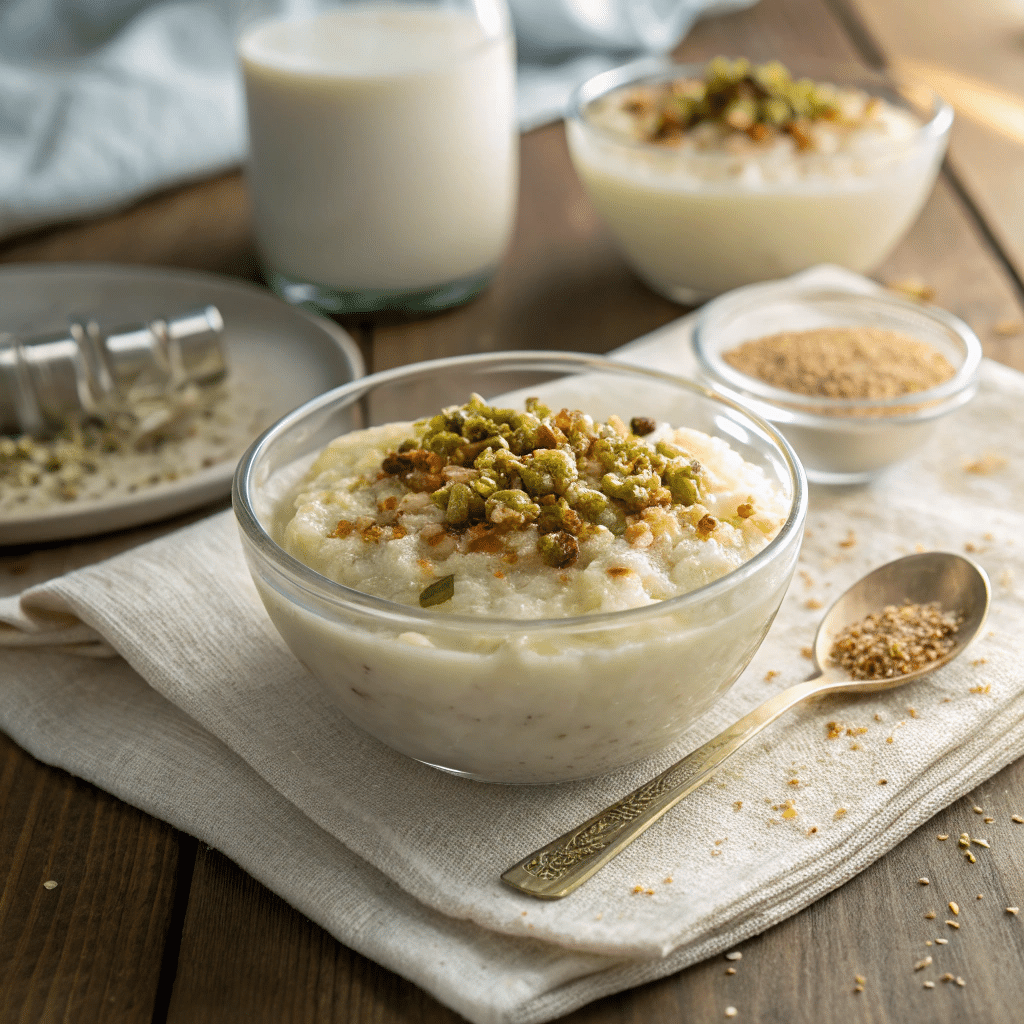
Egyptian Roz Bel Laban Pudding
Ingredients
Method
- Rinse the rice under cold water until the water runs mostly clear. Drain well.
- In a medium saucepan, add the rice and 2 cups of the milk. Cook over medium heat. Stir often so the milk doesn’t stick or burn.
- Once it starts to simmer, lower the heat. Let it cook for about 15–20 minutes until the rice is soft and most of the milk is absorbed.
- Add the remaining 2 cups of milk and the heavy cream. Stir well. Let it simmer gently for another 15 minutes. Keep stirring every few minutes.
- Add the sugar and a small pinch of salt. Stir until fully dissolved.
- In a small bowl, mix the cornstarch with 2 tablespoons of water. Stir until smooth.
- Slowly pour the cornstarch mixture into the pot while stirring constantly. Within a few minutes, the pudding will thicken and become creamy.
- Turn off the heat. Stir in the vanilla extract.
- Pour into serving bowls. Let it cool slightly, then serve warm or chill in the fridge for at least 2 hours.
- Top with pistachios, cinnamon, coconut, or raisins before serving.
Notes
• Stir often. Milk can burn quickly at the bottom of the pot.
• The pudding thickens more as it cools. If it gets too thick, stir in a splash of warm milk before serving.
• You can reduce the sugar slightly if you prefer a lighter sweetness.
• For a baked version, pour into an oven dish after cooking and bake at 375°F for about 10–15 minutes until the top lightly sets.
Frequently Asked Questions
What type of rice is best for Egyptian rice pudding?
Short-grain rice works best. It releases starch and creates creamy consistency. Long-grain rice won’t give the same texture.
Can I make this dairy-free?
Traditional Middle Eastern rice pudding uses milk. You can try coconut milk, but flavor and thickness will change.
Is this the same as Lebanese rice pudding?
They’re similar but not identical. Lebanese rice pudding recipe with milk often includes floral water. Egyptian versions rely more on cream for richness.
Can I bake Egyptian rice pudding?
Yes. After cooking on the stove, transfer to an oven dish and bake until the top sets and lightly browns.
How is this different from Umm Ali recipe?
Umm Ali uses pastry or bread, not rice. It’s closer to Egyptian bread pudding or Om Ali recipe variations.
Can I freeze rice pudding?
It’s possible, but texture may change. Fresh or refrigerated is best.
Why did my pudding turn too thick?
It likely cooked too long or cooled fully. Add warm milk and stir gently to loosen.
Can I reduce sugar?
Absolutely. Start with less and adjust to your taste.
