
Jump to Recipe
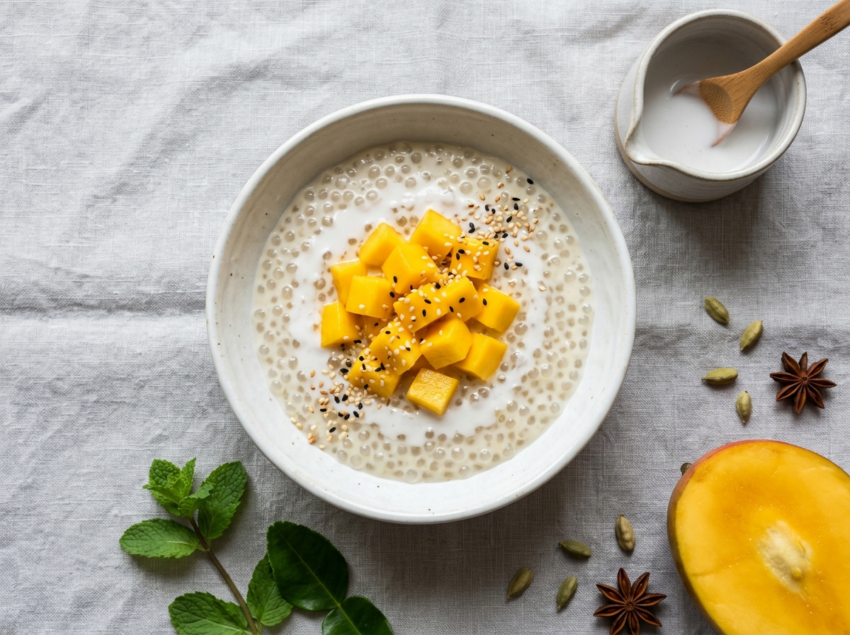
There’s something about a bowl of tapioca pudding that feels quietly nostalgic, the way a ginger coconut custard does. Not heavy. Not fussy. Just soft, chewy pearls in a creamy sauce that comes together in about 40 minutes.
I first had a version of this at a small Thai restaurant – coconut milk base, a few pandan leaves thrown in, cold mango slices on top. It was the kind of dessert you eat slowly.
This recipe keeps it simple. Full-fat coconut milk, small pearl tapioca, a touch of sugar, and ripe mango. No gelatin, no eggs, no special equipment.
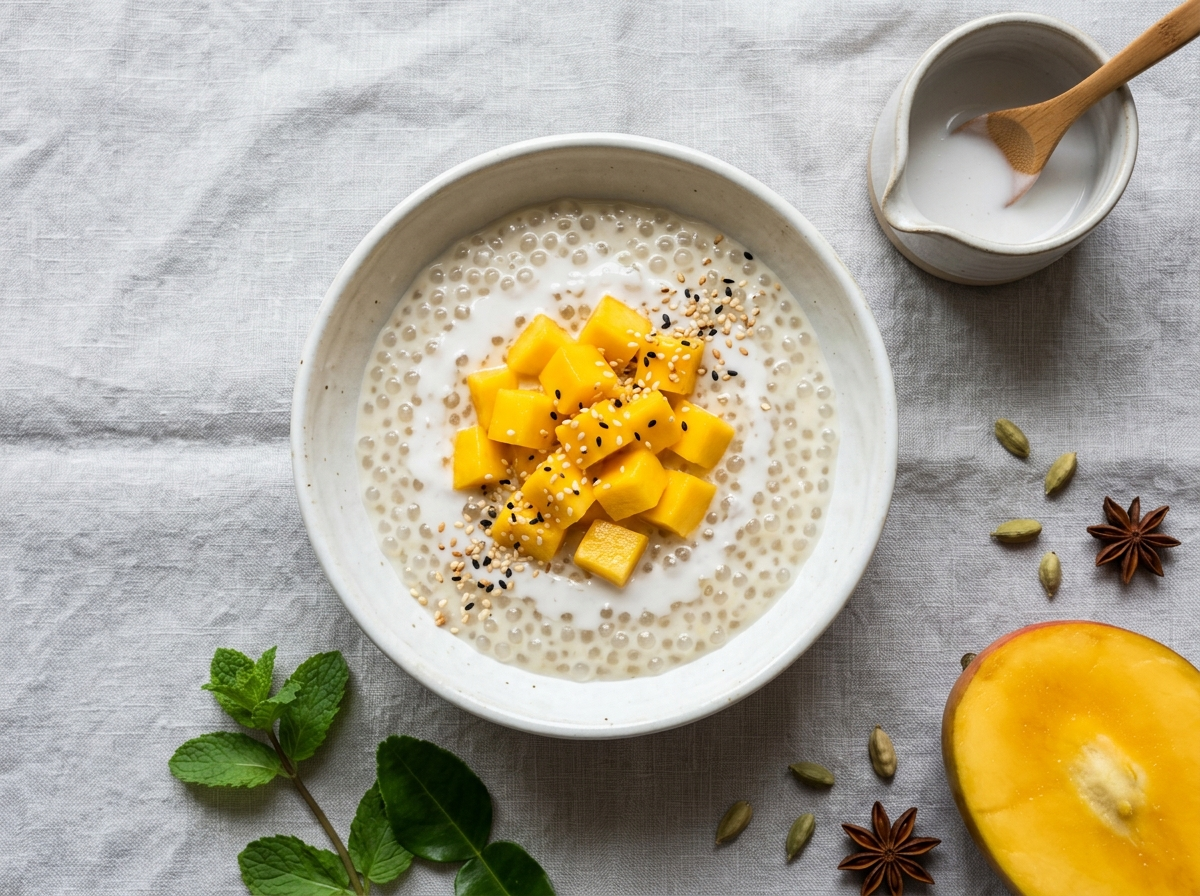
The texture is the whole point. Slightly thick, silky, with a gentle chew from the pearls. Serve it warm or chilled – both work.
Why You’ll Love This Recipe
- Dairy-free and naturally gluten-free with no swaps needed
- Ready in 40 minutes with minimal hands-on time
- Stays creamy cold – great made a day ahead
- Only 5 core ingredients, most already in your pantry
Ingredient Notes
- Small pearl tapioca: Use small white tapioca pearls (about 3mm), not instant or quick-cook tapioca. Large boba pearls need a longer soak and won’t give the same silky texture.
- Full-fat coconut milk: Canned full-fat coconut milk gives the creamiest result. Light coconut milk works but the pudding will be thinner and less rich.
- Coconut cream: A small amount stirred in at the end adds extra body. You can skip it if your coconut milk is already very thick.
- Granulated sugar: White sugar keeps the flavor clean and neutral. Palm sugar or coconut sugar can be used for a slightly caramel-like note.
- Ripe mango: Ataulfo (Champagne) mangoes are the best choice here – less fibrous and very sweet. Tommy Atkins works but is slightly more tart.
- Pandan extract (optional): A few drops add a subtle grassy sweetness typical of Southeast Asian puddings. Vanilla extract is a fine substitute.
Coconut Tapioca Mango Pudding
Ingredients
Method
- Place the tapioca pearls in a bowl and cover with cold water. Soak for 30 minutes, then drain through a fine-mesh sieve and rinse briefly under cold water.
- Combine the coconut milk and 250 ml water in a medium heavy-bottomed saucepan. Bring to a gentle simmer over medium heat, stirring occasionally.
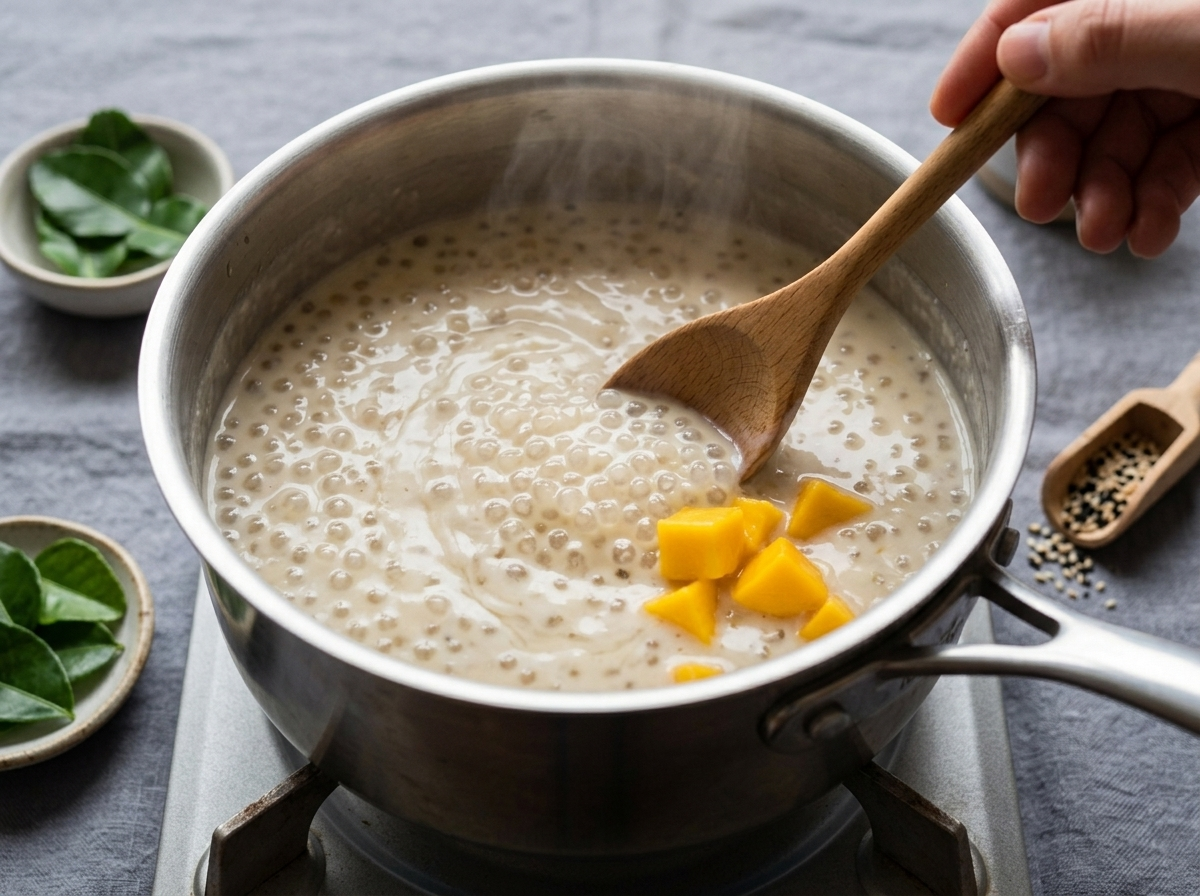
- Add the drained tapioca pearls and stir to distribute evenly. Reduce heat to low and cook for 15 to 18 minutes, stirring every 2 minutes, until the pearls are almost fully translucent with just a faint dot in the center.
- Stir in the sugar and salt. Cook for a further 3 minutes until the sugar dissolves and the pudding looks glossy and slightly thickened.
- Remove from heat. Stir in the coconut cream and pandan or vanilla extract. The pudding will look a little loose at this stage - it thickens as it cools.
- Let the pudding sit for 5 minutes off the heat, stirring once halfway through.
- Ladle into bowls. Top each serving with mango cubes, a drizzle of coconut cream, and a pinch of toasted sesame seeds if using. Serve warm, or let cool completely and refrigerate for 2 hours for a chilled version.
Notes
Tips for Success
- Soak tapioca pearls in cold water for at least 30 minutes before cooking to cut down total cook time.
- Stir the pudding every 2 minutes while it simmers or the pearls will stick to the bottom of the pot.
- Pull the pot off the heat when the pudding looks slightly underset – it thickens more as it cools.
- Score the mango cheeks and cube them while the pudding is still warm so they’re ready to plate immediately.
- Press plastic wrap directly onto the surface of chilled pudding to prevent a skin from forming.
Variations
- Add 2 kaffir lime leaves to the coconut milk while it heats for a floral, citrus-forward version.
- Swap mango for ripe papaya or lychee slices and finish with a squeeze of lime juice.
- Stir in 1 tablespoon of black sesame paste at the end for a nutty, contrast-colored version.
Storage and Reheating
Store leftover pudding in an airtight container in the fridge for up to 3 days. Keep the mango separate and add it fresh when serving – mango stored in the pudding releases juice and makes it watery.
To reheat, add 2 to 3 tablespoons of coconut milk or water to the pudding before warming it in a small saucepan over low heat. Stir constantly until loose and creamy again. Microwave works too – heat in 30-second bursts and stir between each.
This pudding does not freeze well. The tapioca pearls turn spongy and the texture breaks down after thawing.
Serving Suggestions
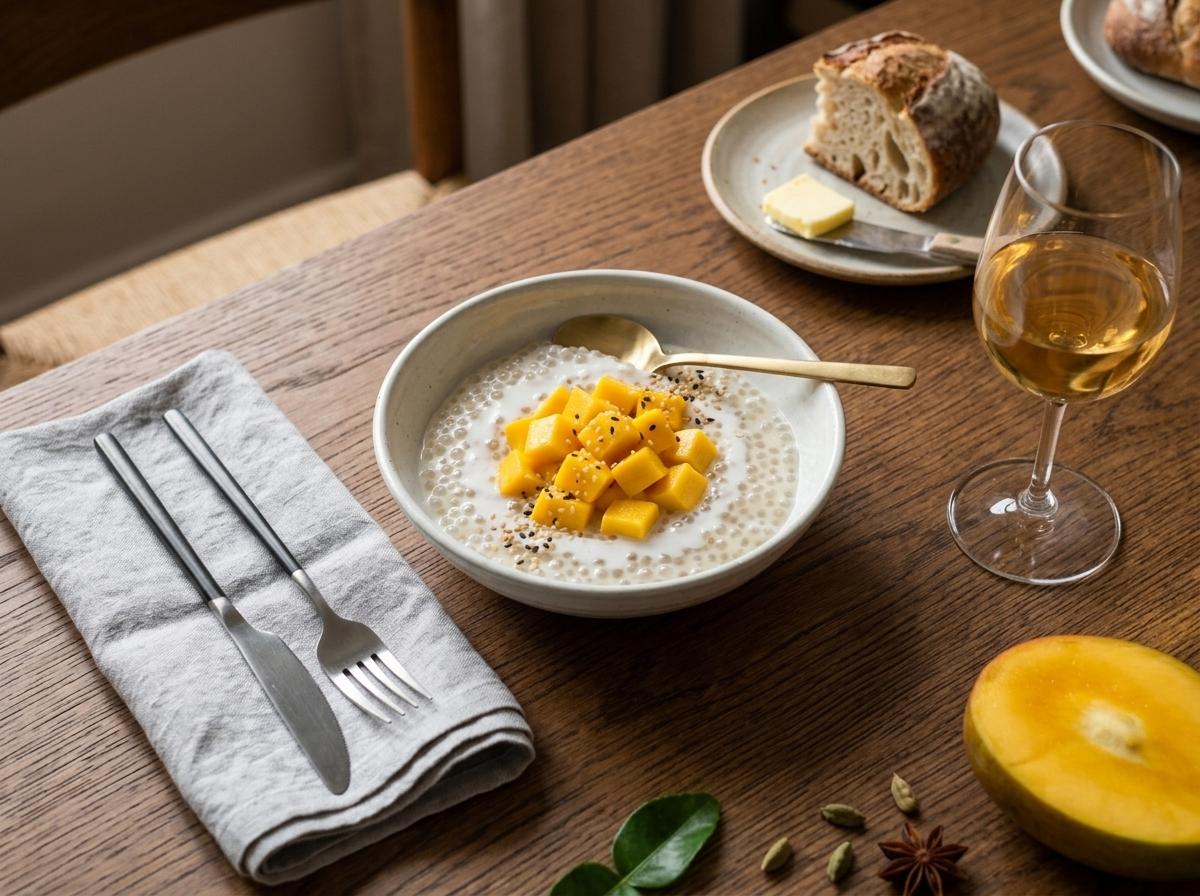
Serve the pudding warm in small bowls with mango cubes piled on top and a drizzle of coconut cream, the same way you’d finish small batch coconut cupcakes with a pour of coconut cream frosting. A few toasted sesame seeds or a pinch of flaky salt on top adds contrast.
For a chilled version, pour the pudding into individual glasses while still warm, let it cool to room temperature, then refrigerate for 2 hours. Layer the mango on top just before serving. It looks clean and set, almost like a parfait.
This pairs well after a Thai or Vietnamese meal. A cold glass of jasmine tea on the side keeps the flavor profile consistent.
FAQ
Why is my coconut tapioca pudding too thick or gluey?
The pudding thickens significantly as it cools, so pulling it off heat when it still looks loose is the right call. If it’s already too thick, stir in a splash of warm coconut milk until it loosens to the consistency you want.
Can I use frozen mango instead of fresh in this pudding?
Yes, but thaw it fully and pat the pieces dry with a paper towel first. Frozen mango releases a lot of water, which can make the pudding watery if you add it straight from the bag.
How do I know when the tapioca pearls are fully cooked?
Hold a pearl up to the light – it should be almost fully translucent with just a tiny opaque dot in the center. If the center is still white and chalky, keep cooking and stirring for another 5 minutes.
Can I make this coconut mango tapioca pudding a day ahead?
The pudding itself keeps well overnight in the fridge – the texture actually firms up nicely. Store the mango separately and slice it fresh right before you serve.
Is coconut tapioca mango pudding suitable for a vegan diet?
Yes, the recipe as written is fully vegan. Tapioca pearls come from cassava starch, and coconut milk replaces any dairy – no animal products involved.
What is the difference between coconut tapioca pudding and regular rice pudding?
Rice pudding — like a stovetop coffee cream rice pudding — uses starchy rice grains that break down into a thick, dense porridge. Tapioca pudding stays lighter with a distinct chew from the pearls, and the coconut milk base keeps it looser and silkier.
