
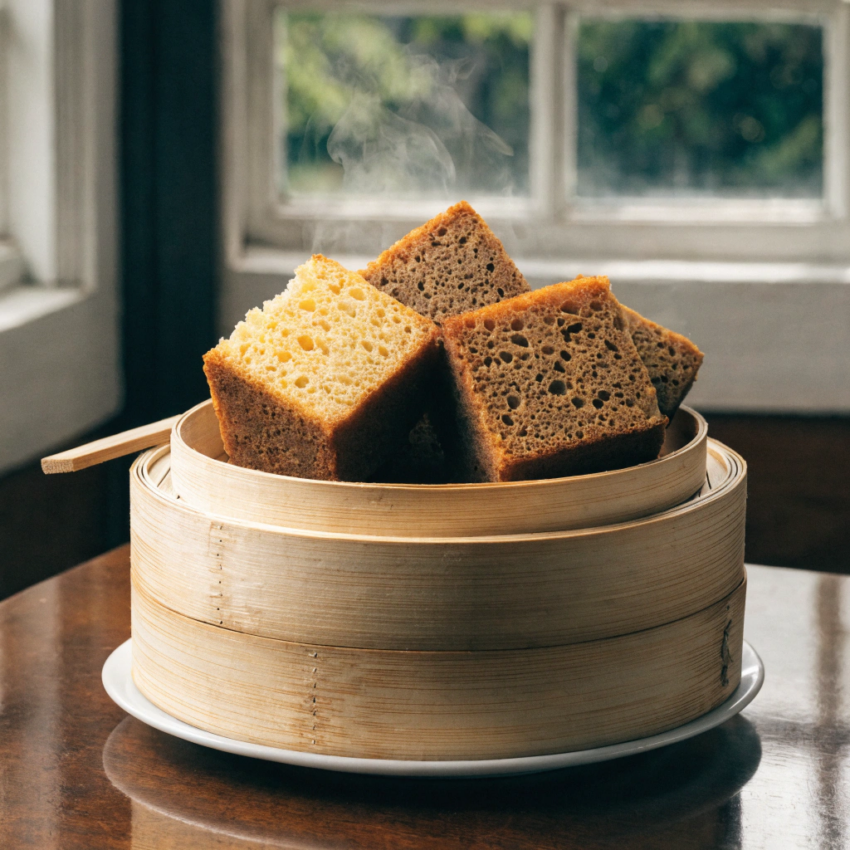
There’s something magical about dim sum mornings. Warm tea. Small plates. And that soft, slightly caramel-sweet sponge cake sitting quietly on the table.
I still remember the first time I tried Chinese ma lai go sponge cake. It looked simple. But one bite? Light, airy, gently sweet, with that deep brown sugar flavor. I was hooked.
Today, I’m sharing a Ma Lai Gao recipe easy enough for home bakers, with no complicated steps and options even if you don’t want to use yeast.
What Is Chinese Ma Lai Go Sponge Cake?
Ma Lai Go (马拉糕) is a Cantonese steamed sponge cake often served as part of dim sum. It’s known for its fluffy texture, rich molasses-like sweetness, and slightly bouncy crumb.
It sits somewhere between a Chinese steamed sponge cake and a caramel cake—but lighter.
Unlike baked cakes, this one is steamed. That’s what gives it that moist, cloud-like feel.
You might also hear it called:
- Dim sum sponge cake
- Chinese steamed sugar sponge cake
- Steamed Ma Lai sponge cake
- Cantonese steamed sponge cake
Why You’ll Love This Recipe
- No oven needed
- Soft, airy texture every time
- Deep brown sugar flavor
- Simple pantry ingredients
- Works as a Ma Lai Gao recipe without yeast too
And honestly? It’s one of those desserts that feels fancy but is surprisingly forgiving.
Ingredients You’ll Need
Here’s everything for a classic Chinese sponge cake recipe (steamed version):
- 1 cup all-purpose flour
- 2 large eggs
- ½ cup brown sugar
- ¼ cup milk
- 2 tbsp vegetable oil
- 1 tsp baking powder
- ½ tsp baking soda
- ½ tsp vanilla extract
- Pinch of salt
Optional (but recommended):
- 1 tbsp custard powder (adds color + flavor)
How To Make Chinese Ma Lai Go Sponge Cake
This is a simple steamed sponge cake recipe. No tricky steps.
Step 1: Dissolve the Sugar
In a bowl, mix brown sugar with warm milk. Stir until smooth. Let it cool slightly.
Step 2: Add Eggs and Flavor
Crack in the eggs. Add vanilla. Whisk until slightly frothy.
Step 3: Mix Dry Ingredients
In another bowl, combine flour, baking powder, baking soda, salt, and custard powder.
Step 4: Combine
Slowly fold dry ingredients into the wet mixture. Don’t overmix. A few small lumps are fine.
Step 5: Add Oil
Pour in the oil and gently mix. This keeps the cake soft.
Step 6: Rest the Batter
Let it sit for 10–15 minutes. This helps develop that signature texture.
Step 7: Steam
- Pour batter into a lined or greased pan
- Place in a preheated steamer
- Steam on medium heat for 25–30 minutes
Do not open the lid early. Steam is doing all the work here.
Step 8: Cool and Slice
Let it cool slightly before cutting. You’ll see that airy, honeycomb structure inside.
Tips for the Perfect Steamed Chinese Sponge Cake
I’ve made this more times than I can count. Here’s what actually matters:
1. Don’t overmix
Overworking the batter kills the fluffiness.
2. Use medium heat
Too high = uneven texture.
3. Cover the lid with cloth
Stops water droplets from falling onto the cake.
4. Let it rest before steaming
This small step makes a big difference.
5. Fresh baking powder matters
Flat cake? This is often the reason.
Ma Lai Gao Recipe Without Yeast
Traditional versions sometimes use fermentation. But let’s be honest—not everyone has time for that.
This version skips yeast completely. Baking powder and soda do the lifting.
Result? Still soft. Still airy. Much faster.
If you want a deeper flavor, you can let the batter sit longer (up to 30 minutes). That helps mimic a slightly fermented taste.
Texture: What to Expect
A good Chinese steamed sponge cake should be:
- Light but slightly bouncy
- Moist, never dry
- Evenly aerated inside
- Gently sweet, not overpowering
If it feels dense, something went off—usually overmixing or weak leavening.
Variations You Can Try
Once you’ve nailed the base, it’s fun to experiment.
1. Coconut Twist
Add 2 tbsp coconut milk. Subtle and delicious.
2. Chocolate Version
Mix in 1 tbsp cocoa powder. It becomes a fusion dessert.
3. Honey Flavor
Swap part of the sugar with honey for a softer taste.
4. Pandan Style
Add a few drops of pandan extract for a classic Asian touch.
How This Compares to Other Asian Cakes
If you’ve tried Japanese sponge cake, you’ll notice:
- Japanese cakes are baked
- Much lighter and airy
- Less dense than Ma Lai Go
Meanwhile, Ji Dan Gao cake recipe versions are also steamed but usually simpler and egg-forward.
And Fa Gao cake? That’s more festive, often split on top, and slightly denser.
Each has its charm. But Ma Lai Go sits right in the middle—rich yet fluffy.
Serving Ideas
Keep it simple. This cake doesn’t need much.
- Serve warm with tea
- Pair with jasmine or oolong
- Add fresh fruit on the side
- Light drizzle of condensed milk (optional)
Honestly, I love it plain. It shines on its own.
Storage Tips
- Room temp: 1 day (covered)
- Fridge: up to 3 days
- Reheat: steam for 5 minutes or microwave lightly
Avoid over-microwaving. It dries out quickly.
Common Mistakes (And Fixes)
Cake didn’t rise?
Your baking powder might be expired.
Too dense?
You mixed too much or skipped resting time.
Wet top surface?
Condensation dripped in. Wrap the lid next time.
Bitter taste?
Too much baking soda.
A Quick Personal Note
The first time I made this, I opened the steamer too early. Big mistake. The cake collapsed like a sad balloon.
Lesson learned.
Now I just let it steam, hands off, and trust the process. Works every time.
FAQ: Chinese Ma Lai Go Sponge Cake
What is Ma Lai Go made of?
It’s made with flour, eggs, sugar, and leavening agents. Some versions include custard powder or milk.
Is Ma Lai Go the same as Ji Dan Gao?
Not exactly. Ji Dan Gao recipe in English usually refers to a simpler egg-based steamed cake. Ma Lai Go has a richer flavor.
Can I make this without a steamer?
Yes. Use a large pot with a rack and lid. Just make sure steam can circulate.
Why is my steamed sponge cake dense?
Most likely overmixing or inactive baking powder.
Can I freeze Ma Lai Go?
You can, but texture changes slightly. Steam again before serving.
How do I know it’s done?
Insert a toothpick. If it comes out clean, you’re good.
Is this a traditional Chinese cake recipe?
Yes. It’s commonly served in Cantonese dim sum settings.
Final Thoughts
This Chinese ma lai go sponge cake is simple, comforting, and surprisingly easy to master.
No oven. No stress. Just a warm, fluffy Chinese steamed dessert that feels like a little treat from your favorite dim sum spot.
Once you try it, you’ll probably keep coming back to it. I know I did.
