
Jump to Recipe
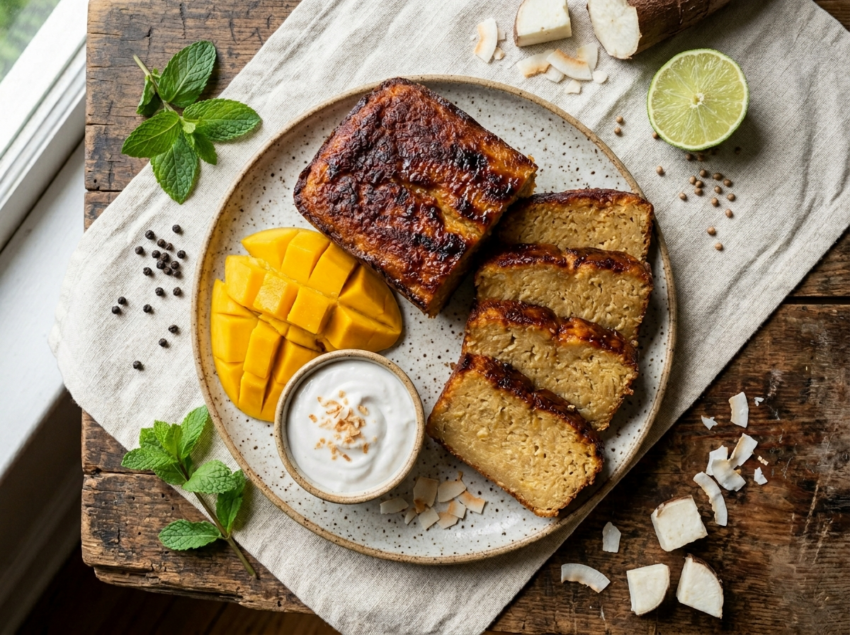
There’s something about cassava baked into a loaf that surprises people the first time. No flour, no leavening, just the natural starch of grated cassava doing all the structural work.
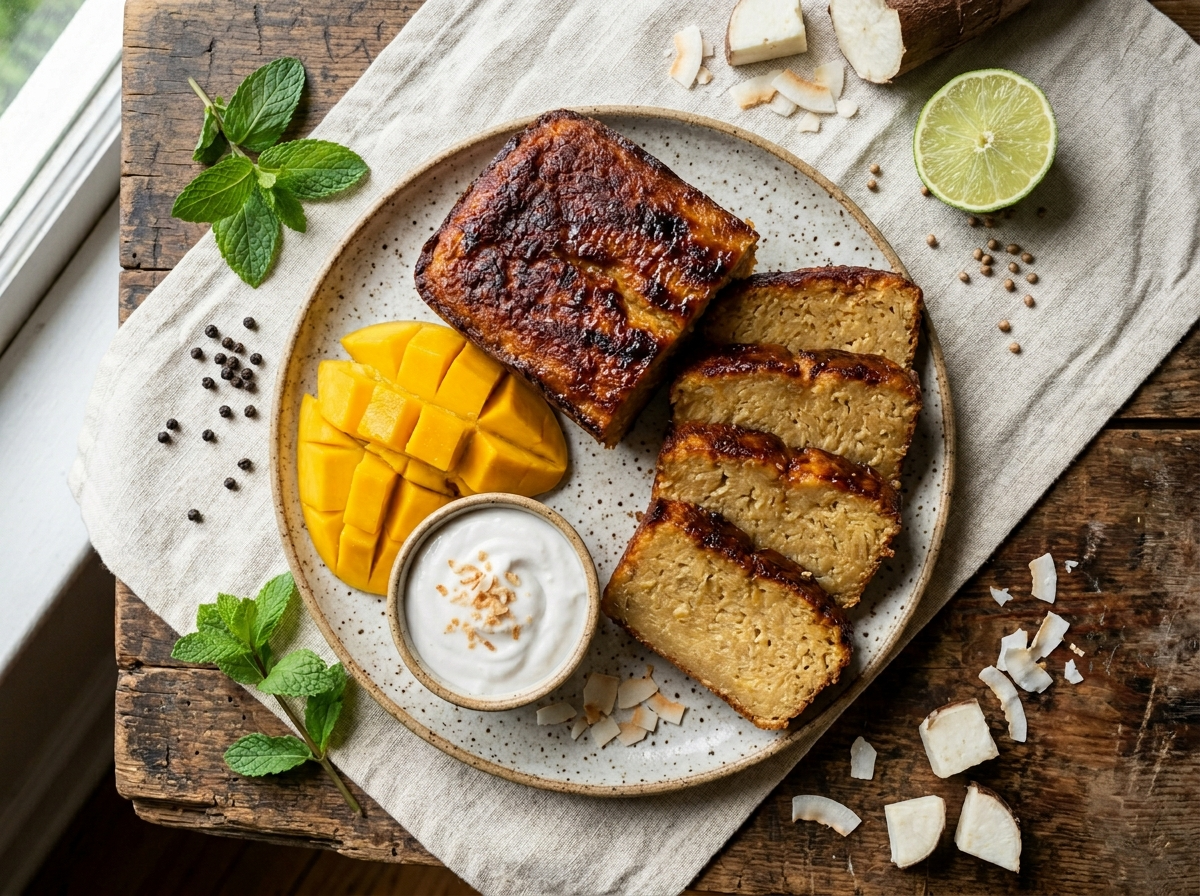
The result is dense and slightly chewy, with a golden top and a soft interior that slices cleanly. Brown sugar gives it a gentle caramel note. Coconut milk keeps it moist all the way through.
I first made this after seeing a version in a Filipino bakery. The loaf sat on the counter, plain and unadorned, and I couldn’t stop going back for another slice. It’s the kind of dessert that doesn’t need decoration to make an impression.
It’s also forgiving. Cassava batter is thick and sturdy, and the margin for error is wide.
Why You’ll Love This Recipe
- Naturally gluten-free with no flour substitutes needed
- Slices cleanly and holds shape at room temperature
- Coconut milk keeps the crumb moist for days
- Simple pantry-friendly ingredients, one mixing bowl
Ingredient Notes
- Grated cassava: Fresh or frozen grated cassava both work. If using frozen, thaw and squeeze out excess liquid with a clean towel before measuring – too much moisture makes the loaf gummy.
- Coconut milk: Full-fat canned coconut milk gives the richest texture. Light coconut milk produces a slightly drier loaf. Evaporated milk can substitute in a pinch but loses the coconut flavor.
- Brown sugar: Light or dark brown sugar both work. Dark brown sugar adds a stronger molasses note and a slightly darker crumb. White sugar gives a milder, cleaner sweetness.
- Eggs: Two large eggs bind the loaf and give it structure. No good egg-free substitute here – the cassava starch alone won’t hold without them.
- Butter: Melted unsalted butter adds richness and helps the top brown evenly. Coconut oil works as a dairy-free swap with no noticeable difference in texture.
- Vanilla extract: Just a small amount rounds out the sweetness. Pandan extract is a traditional variation that adds a floral, grassy note common in Southeast Asian versions.
Cassava Sugar Loaf Dessert
Ingredients
Method
- Heat the oven to 175 C / 350 F. Grease a 9x5 inch loaf pan with butter and line with parchment paper, leaving an overhang on the long sides.
- Place the grated cassava in the center of a clean kitchen towel. Twist and squeeze firmly over the sink until no more liquid drips out. Transfer to a large mixing bowl.
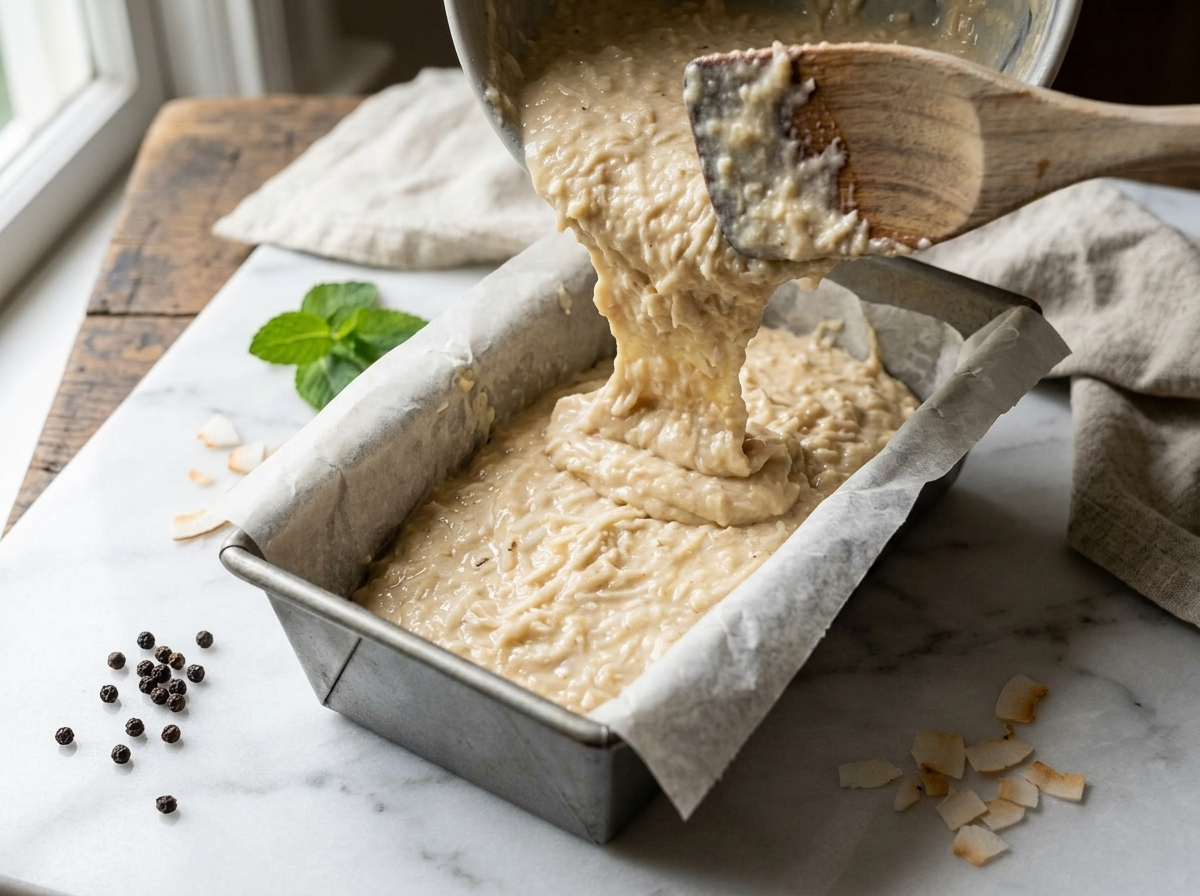
- Add the brown sugar, coconut milk, melted butter, eggs, vanilla extract, and salt to the cassava. Stir with a rubber spatula until the batter is uniform and thick, about 2 minutes.
- Pour the batter into the prepared loaf pan. Smooth the top flat with the spatula. Tap the pan on the counter twice to settle the batter.
- Bake for 55 to 65 minutes until the top is deep golden brown and the center feels firm when pressed gently with a finger. A skewer inserted in the center should come out clean with no wet batter.
- Remove from the oven and cool in the pan for 30 minutes. Use the parchment overhang to lift the loaf out onto a wire rack. Cool completely before slicing for clean edges.
Notes
Tips for Success
- Squeeze grated cassava in a clean towel to remove excess water before mixing – this prevents a gummy center.
- Line the loaf pan with parchment and grease the sides so the loaf releases cleanly without breaking.
- Tap the filled pan on the counter twice to settle the thick batter and eliminate air pockets before baking.
- Check doneness at 55 minutes by pressing the center – it should feel firm and spring back, not soft or wet.
- Cool the loaf completely in the pan before slicing, at least 30 minutes, or the slices will crumble.
Variations
- Stir in 60 g desiccated coconut for extra texture and a stronger coconut flavor throughout.
- Swirl 2 tbsp ube halaya into the batter before baking for a purple-streaked, earthy-sweet version.
- Brush the top with condensed milk in the last 10 minutes of baking for a sticky, lacquered glaze.
Storage and Reheating
Store the cooled loaf wrapped tightly in plastic wrap or in an airtight container at room temperature for up to 2 days. It stays moist and sliceable without refrigeration in a cool kitchen.
Refrigerate for up to 5 days. Cold slices firm up noticeably – bring them to room temperature for 15 minutes or warm briefly in a 160 C / 320 F oven for 8 minutes to restore that soft crumb.
This loaf freezes well. Slice first, wrap individual pieces in plastic wrap, and freeze for up to 2 months. Thaw at room temperature or reheat from frozen in the oven at 160 C for 12 to 15 minutes.
Serving Suggestions
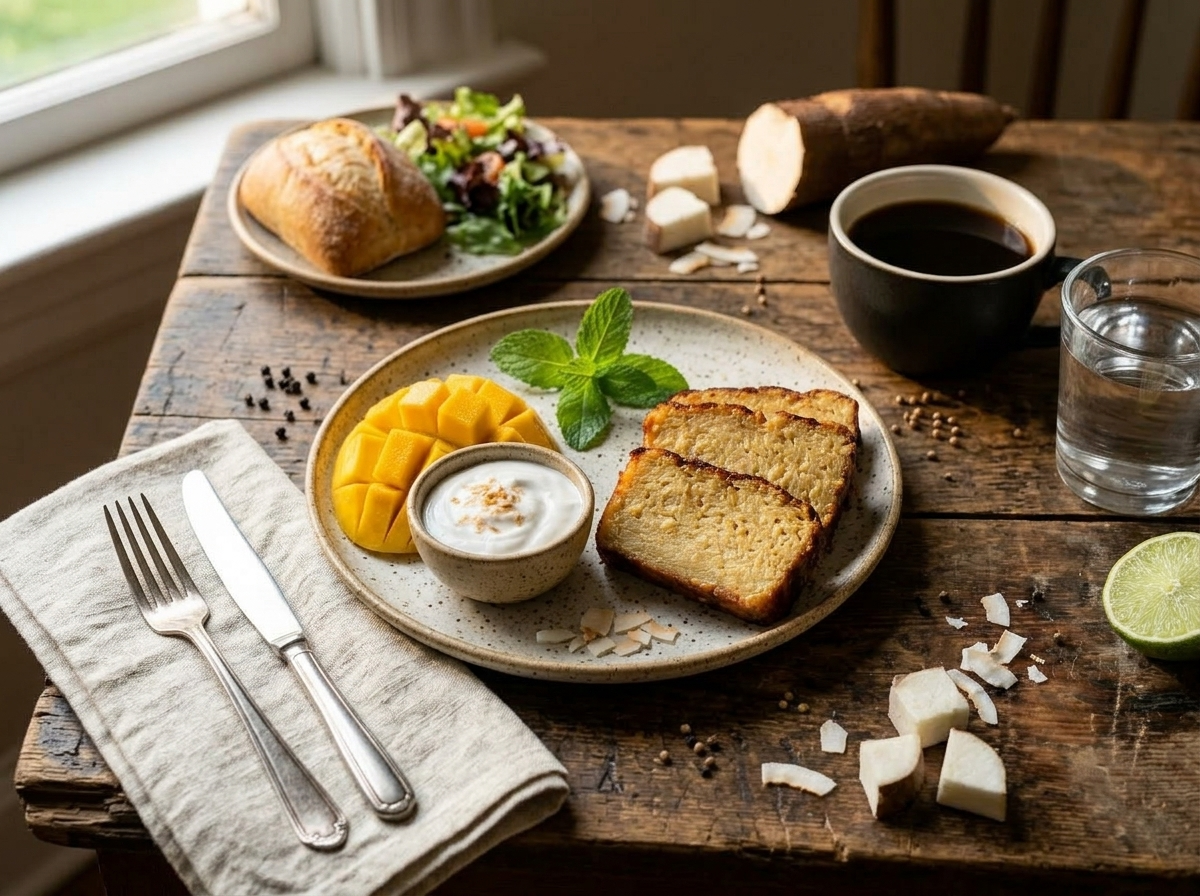
Serve slices plain with black coffee or strong tea – the mild sweetness of the loaf pairs well with bitter drinks. A dusting of toasted coconut flakes on top adds contrast without fuss.
For a more substantial dessert, top a warm slice with a spoonful of coconut cream dessert pairing and a few slices of fresh mango. The combination of starchy cassava, rich coconut, and sharp mango is the full Southeast Asian flavor profile in one plate.
Cut into small squares for a party platter. The loaf is firm enough to hold its shape on a tray without plates, which makes it practical for gatherings.
FAQ
Why is my cassava loaf gummy in the middle?
The most common cause is too much moisture in the grated cassava. Always squeeze frozen or freshly grated cassava in a towel before mixing. Underbaking is the other culprit – the center should feel firm and springy, not soft, before you pull it from the oven.
Can I use cassava flour instead of grated cassava in this loaf?
No, cassava flour and grated cassava behave completely differently. Grated cassava is raw and wet, and its starch gelatinizes during baking to create the loaf’s signature dense, chewy texture. Cassava flour is dried and processed, and it won’t produce the same result.
How far ahead can I bake this cassava sugar loaf?
You can bake the loaf up to 3 days ahead and store it wrapped at room temperature or refrigerated, much like a tender baked loaf recipe. It actually slices more cleanly on day two once the crumb has fully set. Avoid slicing until just before serving if you’re making it ahead.
What goes well with cassava sugar loaf as a dessert pairing?
Fresh tropical fruit – mango, pineapple, or jackfruit – cuts through the starchiness and brightens each bite. A small cup of thick coconut cream or condensed milk on the side for dipping is a common approach in Filipino households.
Is cassava sugar loaf gluten-free?
Yes, this loaf contains no wheat or gluten-containing ingredients. Grated cassava is the only starch, which is naturally gluten-free. Just confirm your baking pan and any equipment haven’t been used with flour if cross-contamination is a concern.
What is the difference between cassava sugar loaf and bibingkang cassava?
Bibingkang cassava is a Filipino rice cake-style dessert, often baked in a shallow pan and topped with a sweetened coconut custard layer. This sugar loaf is baked in a standard loaf pan, giving it a taller, bread-like shape that slices cleanly. The base ingredients overlap, but the texture and presentation are distinct.
