
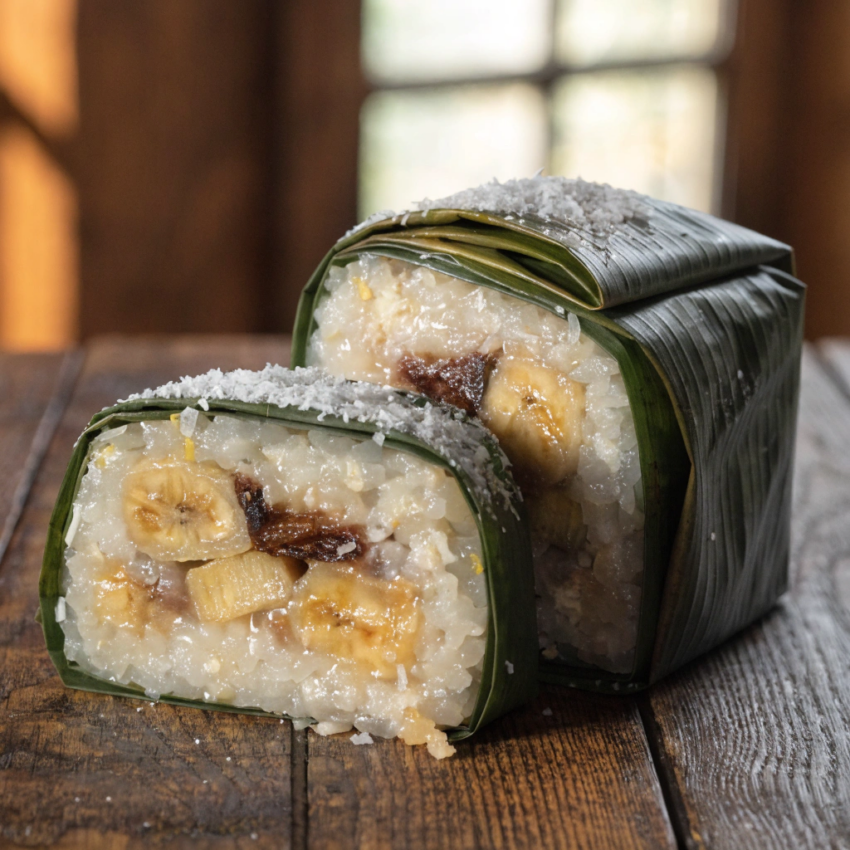
There’s something comforting about unwrapping a warm banana leaf dessert. The aroma hits first. Then the soft, sticky texture follows.
That’s exactly what Cambodian num ansom cheak banana cake delivers.
I still remember the first time I tried it. It wasn’t fancy. Just a simple bundle tied with string. But one bite in, and I got it. Sweet banana. Creamy coconut. Soft glutinous rice. It felt like home food, even though I was miles away.
If you love Cambodian desserts, this one deserves a spot in your kitchen.
What Is Num Ansom Cheak?
Num ansom cheak is a traditional Khmer rice cake made with:
- Glutinous rice
- Ripe bananas
- Coconut milk
- Banana leaves for wrapping
It’s steamed until soft and slightly sticky. The result? A mildly sweet, fragrant banana leaf dessert that’s filling but not heavy.
You’ll often see it during Cambodian festive food celebrations like weddings or Khmer New Year. It’s simple. Rustic. And deeply rooted in tradition.
Why You’ll Love This Cambodian Dessert
This isn’t your typical cake.
- No oven needed
- Naturally gluten-free
- Light sweetness
- Easy ingredients
- Great for make-ahead
It’s one of those traditional Cambodian desserts that feels wholesome. No frosting. No layers. Just honest flavors doing their thing.
Ingredients You’ll Need
Short list. Big flavor.
For the rice layer:
- 2 cups glutinous rice
- 1 ½ cups coconut milk
- 3 tbsp sugar
- ½ tsp salt
For the filling:
- 4–5 ripe bananas (small, firm ones work best)
For wrapping:
- Banana leaves (cut into rectangles)
- Kitchen string or toothpicks
How to Make Cambodian Num Ansom Cheak
Let’s keep this simple and practical.
Step 1: Soak the rice
Rinse your glutinous rice until the water runs clear.
Soak it for at least 4 hours. Overnight is better.
Drain it well.
Step 2: Mix coconut base
In a bowl, combine:
- Coconut milk
- Sugar
- Salt
Pour this into the rice. Mix until everything is coated.
Let it sit for 10–15 minutes so the rice absorbs some flavor.
Step 3: Prep banana leaves
Quick trick: pass the leaves over heat for a few seconds.
This softens them. No tearing. No frustration.
Wipe them clean. Cut into medium rectangles.
Step 4: Assemble
Place a small layer of rice on the leaf.
Add a whole banana in the center.
Cover it with more rice. Press gently.
Wrap tightly into a log shape. Fold the ends. Tie it up.
Don’t overthink it. Rustic is perfect here.
Step 5: Steam
Place all wrapped cakes in a steamer.
Steam for about 1.5 to 2 hours.
Yes, it takes time. But that slow steam is where the magic happens.
Step 6: Cool slightly and serve
Let them rest for a few minutes.
Unwrap. Slice. Enjoy warm or at room temp.
Texture and Flavor Notes
This isn’t fluffy cake. Don’t expect that.
Think:
- Sticky rice, but soft
- Banana, but richer
- Coconut, but subtle
It’s closer to a steamed banana dessert than a baked one.
Every bite feels dense, yet comforting. Like a quiet hug.
Tips That Actually Help
Let’s skip generic advice. Here’s what matters.
Use ripe but firm bananas
Too soft? They’ll turn mushy.
Too green? No sweetness.
You want that sweet spot—literally.
Don’t skip soaking
Dry rice = uneven texture.
Soaked rice = soft, cohesive cake.
Wrap tightly
Loose wraps fall apart during steaming.
Tight wraps hold shape and flavor.
Steam, don’t rush
This isn’t fast food.
Low heat and patience win here.
Variations You Can Try
Once you nail the basic version, play around.
Add black beans
Some Cambodian sweets include sweetened mung or black beans. Adds texture.
Try pandan flavor
Mix a little pandan extract into the coconut milk.
Now you’ve got a subtle pandan recipe twist. Light, floral, and fragrant.
Coconut topping
Drizzle extra coconut cream before serving.
It leans slightly into a coconut cake recipe feel.
How This Compares to Other Khmer Desserts
If you’ve explored Cambodian food desserts, you’ll notice patterns.
- Coconut shows up a lot
- Rice is the base
- Sweetness stays mild
For example, Nom Bak Bin Cambodia is another rice-based treat, but it’s baked and crispy on the outside.
Num ansom cheak? Soft and steamed all the way through.
Different texture. Same comfort.
Storage and Reheating
Good news—this stores well.
Fridge:
Keep wrapped cakes in the fridge for up to 3 days.
Freezer:
Freeze for up to a month. Just wrap well.
Reheat:
Steam again for 10–15 minutes.
Microwave works too, but steaming keeps texture better.
Serving Ideas
You can keep it simple or dress it up a bit.
- Slice into rounds for sharing
- Serve with coconut cream
- Pair with tea or coffee
- Light sprinkle of sesame seeds
Or just eat it straight from the leaf. Honestly, that’s the best way.
A Little Story From My Kitchen
The first time I made this, I messed up the wrapping.
Rice everywhere. Banana slipping out. Total chaos.
But here’s the thing—it still tasted amazing.
That’s what I love about Khmer dessert recipes. They don’t demand perfection. They reward effort.
So if your first batch looks a little rough? You’re doing it right.
Frequently Asked Questions
What does num ansom cheak taste like?
It’s mildly sweet with creamy coconut notes. The banana adds natural sweetness and softness.
Is this the same as a coconut cake?
Not really. It shares some flavor with coconut cake, but the texture is denser and more like sticky rice.
Can I bake it instead of steaming?
No. This recipe depends on steam. Baking will dry it out.
What kind of rice should I use?
Only glutinous rice. Regular rice won’t work for this Khmer cake.
Can I make it without banana leaves?
You can use foil, but you’ll miss that earthy aroma. Banana leaves add flavor.
Is this a healthy dessert?
It’s simple and uses natural ingredients. Compared to heavy desserts, it’s lighter and more balanced.
Can I add sugar to the bananas?
You don’t need to if they’re ripe. If they’re slightly bland, a light sprinkle works.
How is this different from other banana desserts?
Most banana desserts are baked or fried. This is steamed and wrapped, giving it a softer, richer texture.
Final Thoughts
If you’re exploring Cambodian dessert recipes, this is a great place to start.
It’s simple. It’s comforting. And it tells a story with every bite.
You don’t need fancy tools. Just a bit of time and curiosity.
And once you unwrap that first warm bundle, you’ll understand why this banana leaf dessert recipe has lasted for generations.
