
Jump to Recipe
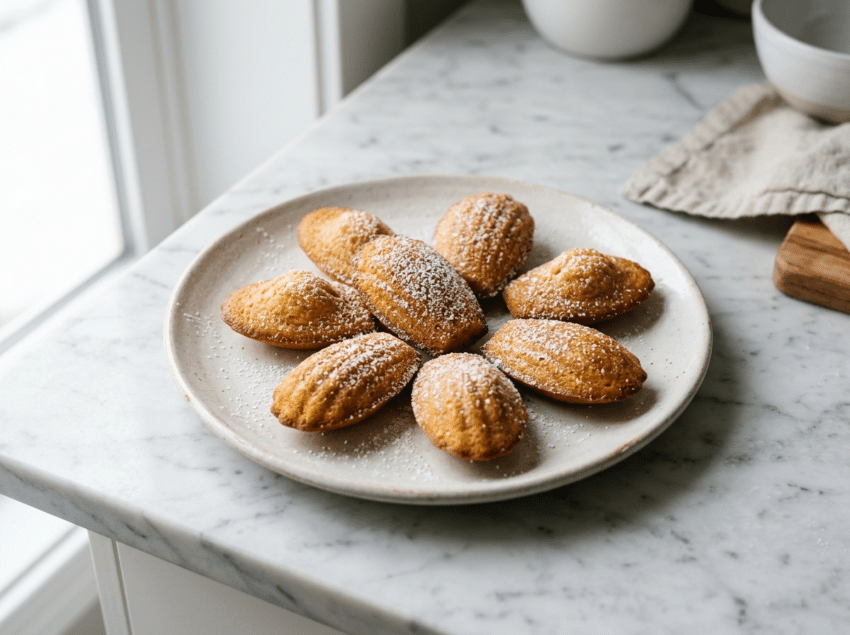
There’s something about pulling a tray of madeleines from the oven that feels disproportionately satisfying for how little effort they take.
The brown butter is the real move here. You cook the butter until the milk solids turn golden and the kitchen smells like hazelnuts, the same technique behind these brown butter toffee cookies, then you fold it into a simple sponge batter. That one step changes everything.
Resting the batter in the fridge is non-negotiable if you want the hump. The cold batter hitting a hot pan creates a burst of steam that pushes the center up. Skip the rest and you get flat cakes. Still tasty, but not what you’re after.
This recipe uses vanilla and a small amount of honey, which keeps the crumb moist for days longer than a plain sugar version.
Why You’ll Love This Recipe
- Brown butter adds deep nutty flavor with no extra ingredients
- One bowl batter comes together in under 15 minutes
- Batter keeps in the fridge for 2 days, bake on demand
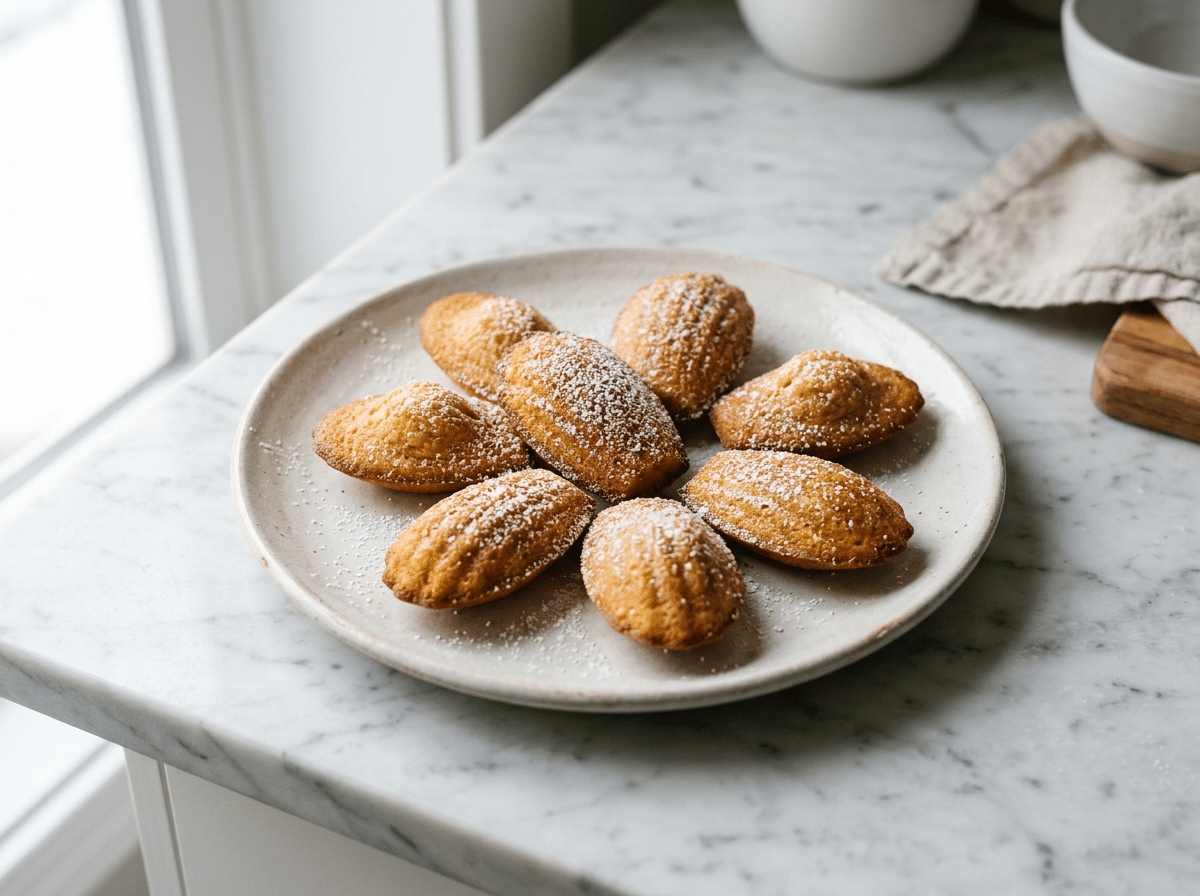
- Crisp shell edges, pillowy crumb, that signature dome
Ingredient Notes
- Unsalted butter: You need unsalted here so you control the salt level. Browning salted butter works but the foam makes it harder to see when the milk solids turn golden.
- All-purpose flour: Plain all-purpose gives the right structure. Cake flour makes them too delicate and they can collapse around the hump.
- Honey: Just 1 tablespoon keeps the crumb moist without making the madeleines sweet. Swap for golden syrup or light corn syrup if needed.
- Eggs: Use room-temperature eggs. Cold eggs don’t whip as well and the batter won’t hold as much air.
- Vanilla extract: Pure extract works well. Vanilla bean paste gives visible flecks and slightly more aroma if you want to use it instead.
- Baking powder: A small amount helps the rise alongside the cold-rest technique. Don’t skip it, but don’t add more, it changes the texture.
Brown Butter Madeleines
Ingredients
Method
- Place 115 g unsalted butter in a small saucepan over medium heat. Stir occasionally as it melts and begins to foam.
- Continue cooking until the foam subsides, the milk solids turn amber, and the butter smells nutty, about 4 to 5 minutes. Pour immediately into a heatproof bowl and set aside to cool to room temperature.
- Sift the flour, baking powder, and salt together into a bowl and set aside.
- In a large bowl, beat the eggs, sugar, and honey together with a hand mixer or stand mixer on medium-high speed for 3 to 4 minutes, until the mixture is pale, thick, and falls from the whisk in a slow ribbon.
- Add the vanilla extract and beat for 30 more seconds.
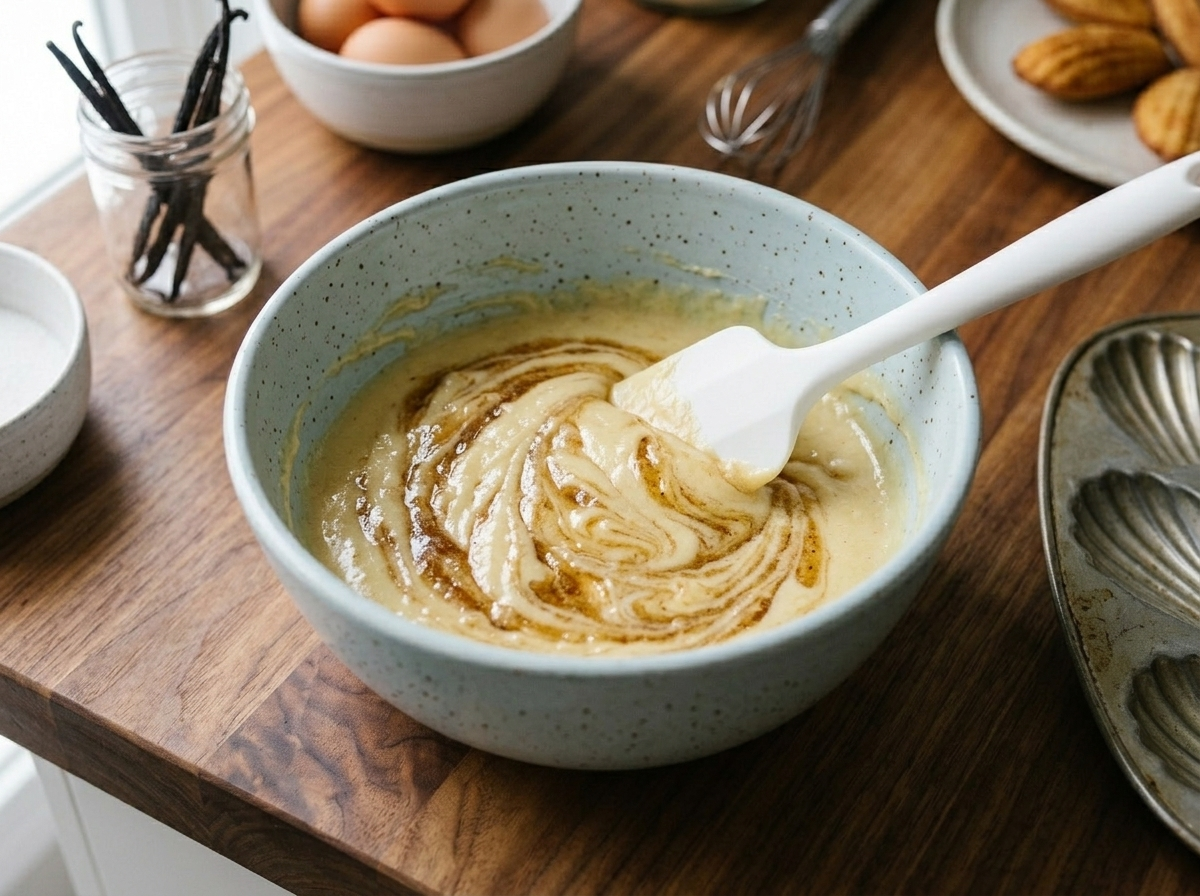
- Add the sifted flour mixture and fold gently with a spatula until just combined and no dry streaks remain.
- Pour in the cooled brown butter and fold again until smooth and glossy. Do not overmix.
- Press plastic wrap directly onto the surface of the batter and refrigerate for at least 1 hour, or overnight.
- Heat your oven to 200 C / 390 F. Brush the madeleine molds generously with softened butter and dust with flour, tapping out the excess.
- Place the prepared pan in the freezer for 10 minutes while the oven finishes preheating.
- Spoon or pipe the cold batter into the molds, filling each about three-quarters full. Do not spread it.
- Bake for 10 to 11 minutes, until the edges are deep golden, the centers are puffed into a dome, and the tops spring back when lightly pressed.
- Remove from the oven and immediately invert the pan onto a wire rack. Tap gently to release the madeleines. Let cool for 5 minutes before serving, or eat them straight away.
Notes
Tips for Success
- Brown the butter over medium heat and pull it off the moment the milk solids turn amber, then pour it into a cool bowl to stop cooking.
- Whisk the eggs and sugar for at least 3 minutes until the mixture is pale, thick, and falls off the whisk in a ribbon.
- Fold the flour in gently with a spatula, not a whisk, to keep the air you built into the eggs.
- Chill the filled madeleine pan in the freezer for 10 minutes before baking for an even more pronounced hump.
- Bake at 200 C / 390 F for exactly 10 to 11 minutes, not longer, pull them when edges are golden and center springs back to touch.
Variations
- Lemon zest madeleines: replace vanilla with zest of 1 large lemon and a teaspoon of lemon juice.
- Dark chocolate dipped: dip the cooled shell side in 100 g melted dark chocolate, set on parchment.
- Earl Grey madeleines: steep 1 tsp loose earl grey in the warm brown butter for 5 minutes, then strain before using.
Storage and Reheating
Store baked madeleines in an airtight container at room temperature for up to 2 days. After that the crumb tightens and the edges lose their crispness.
For longer storage, freeze them in a single layer on a tray, then transfer to a freezer bag. They keep well for up to 1 month. Thaw at room temperature for 20 minutes.
To refresh day-old madeleines, pop them in a 160 C / 320 F oven for 4 to 5 minutes. They come back close to fresh-baked.
Serving Suggestions
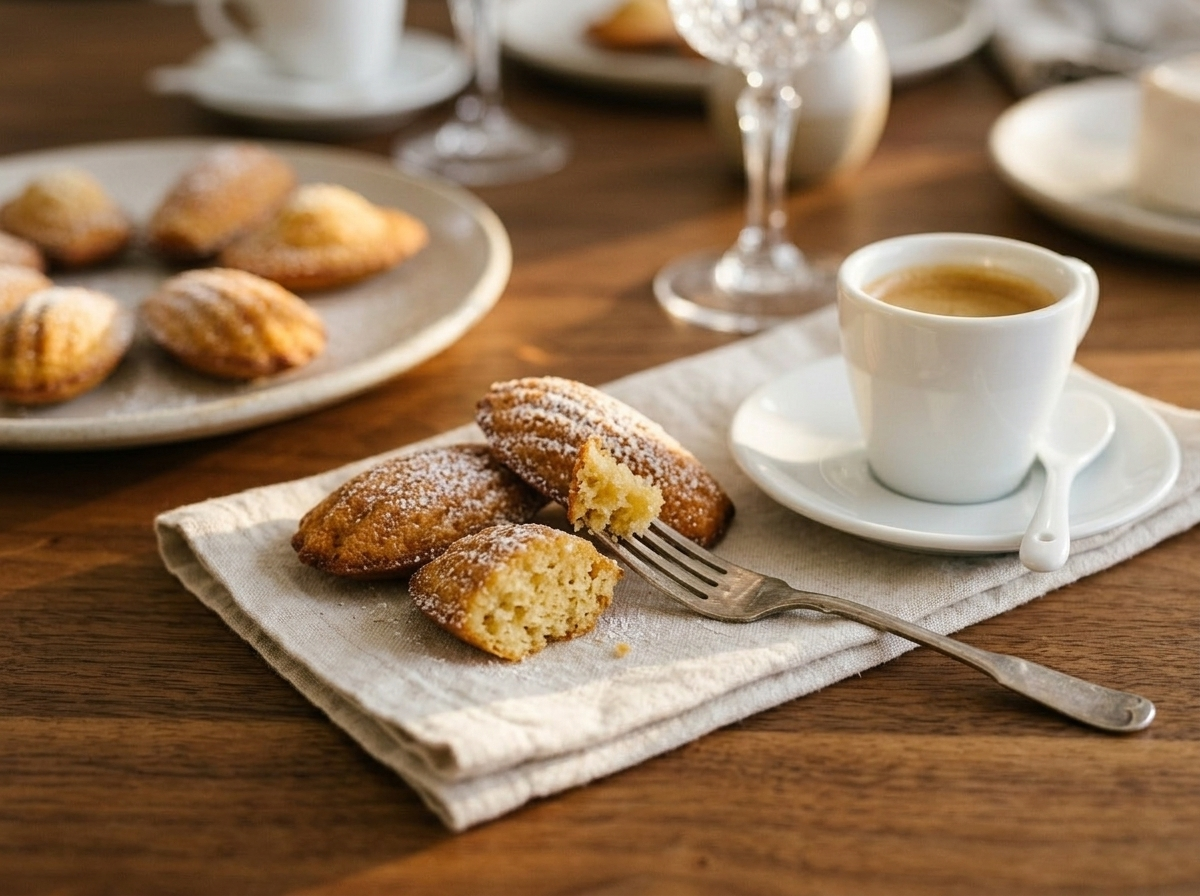
Madeleines are best eaten warm, within 10 minutes of leaving the oven, when the shell is still slightly crisp. A dusting of powdered sugar is all they need most of the time.
Serve them alongside a small cup of strong black coffee or a pot of Earl Grey. The bitterness cuts through the buttery sweetness in a way that makes both taste better.
For a more composed dessert, arrange warm madeleines on a board with a small bowl of creme fraiche and a few fresh raspberries. Simple, but it looks like something from a Paris patisserie.
FAQ
Why didn’t my brown butter madeleines get a hump?
The hump comes from cold batter hitting a very hot pan. If you skipped the fridge rest or your oven wasn’t fully preheated, the rise won’t happen the same way. Chill the batter for at least 1 hour, ideally overnight, and preheat the pan in the oven for 5 minutes before filling.
Can I use browned butter instead of melted butter in any madeleine recipe?
Yes, and it’s a direct swap in most standard recipes. Just use the same weight of butter and account for the small amount of water that evaporates during browning, which actually concentrates the flavor. Let it cool to room temperature before adding it to the eggs so you don’t scramble them.
How far ahead can I make the brown butter madeleine batter?
The batter keeps in the fridge, covered, for up to 48 hours. Anything beyond that and the baking powder starts to lose lift. I usually make the batter the night before so it’s ready to bake fresh in the morning.
What pairs well with brown butter madeleines for a French-style tea service?
Strong black coffee or brewed Earl Grey are the classic pairings. If you want something cold, a glass of sweet Sauternes or a light sparkling wine works surprisingly well with the nutty butter flavor.
Are brown butter madeleines gluten-free?
This recipe uses all-purpose flour, so no, they’re not gluten-free as written. You can substitute a 1:1 gluten-free baking flour blend, though the crumb will be slightly denser and the hump slightly less dramatic.
What’s the difference between madeleines and financiers?
Both are French brown butter cakes, but financiers use almond flour and egg whites only, giving them a chewier, denser texture closer to these mini almond butter cakes. Madeleines use whole eggs and all-purpose flour, which makes them lighter with a more delicate, sponge-like crumb. The shell shape is also specific to madeleines.
