
Jump to Recipe
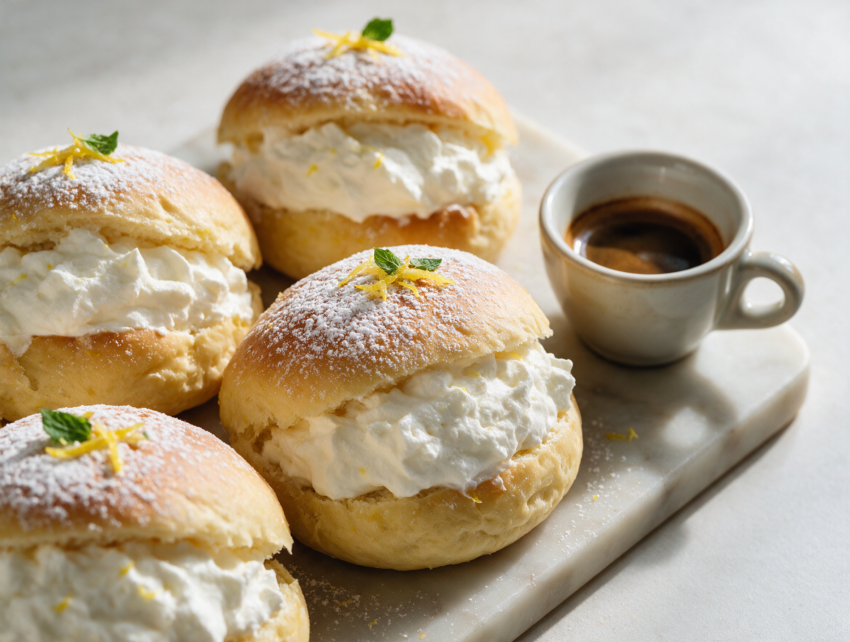
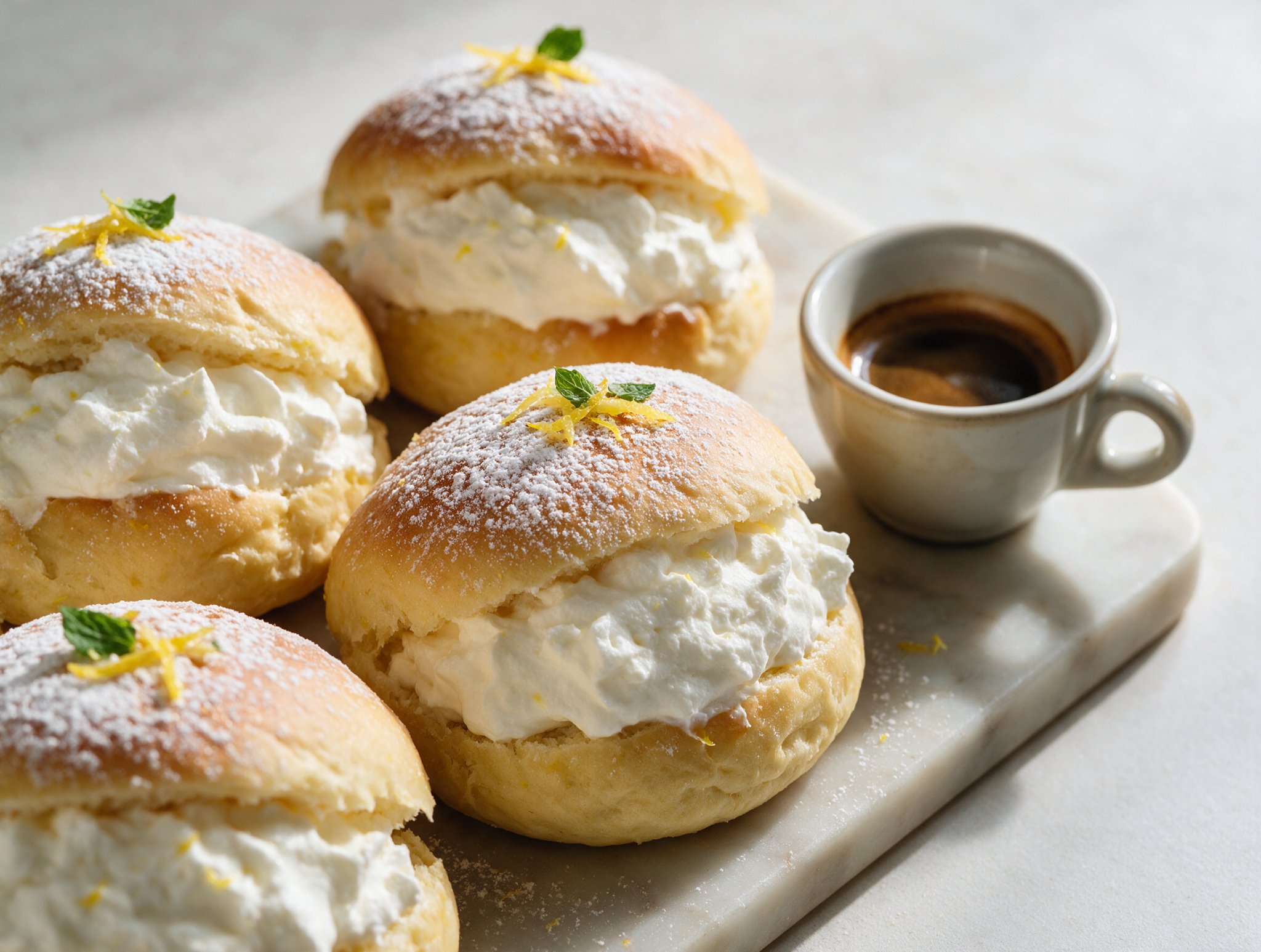
Maritozzi with whipped cream are soft Roman buns, split down the middle and stuffed with billowy whipped cream. Bakeries across Rome sell them for breakfast, next to a shot of espresso. They’re sweet enough to count as dessert but simple enough for a Sunday morning.
I first had one standing at a counter near Campo de’ Fiori. The bun was still faintly warm, and the cream had started to soften at the edges. That contrast, warm bread and cold cream, stuck with me.
This version uses a lightly sweetened brioche-style dough with lemon zest, so the buns taste bright instead of heavy. You whip the cream fresh right before serving, since that’s what makes or breaks the whole thing.
Give yourself a full afternoon. The dough needs two rises, but most of that time is hands-off.
Why You’ll Love This Recipe
- Bakery-style buns you can make at home in one afternoon
- Lemon zest keeps the dough bright instead of overly sweet
- Whipped cream filling takes minutes and needs no gelatin
- Freezes well unfilled for breakfast whenever you want one
Ingredient Notes
- flour: Bread flour gives more chew but all-purpose works fine here, just don’t overwork the dough.
- whole milk: Whole milk keeps the crumb soft. A lower-fat milk works but the buns turn slightly less rich.
- instant yeast: Instant yeast skips a separate proof step, but active dry yeast works if you dissolve it in the warm milk first.
- eggs: Room temperature eggs blend into the dough more evenly than cold ones straight from the fridge.
- butter: Soften butter until it dents easily with a finger. Melted butter makes the dough greasy instead of elastic.
- lemon zest: Zest only the yellow part of the peel, the white pith underneath tastes bitter.
- heavy cream: Use cream with at least 36% fat. Lower-fat cream won’t whip to stiff peaks.
- powdered sugar: Sift it before whipping into the cream to avoid lumps in the filling.
- vanilla extract: Pure vanilla extract tastes best since the filling has so few ingredients.
Pillowy Italian Maritozzi with Whipped Cream
Ingredients
Method
- Warm the milk to about 105°F / 40°C. Whisk in the yeast and 1 tablespoon of the sugar, then let it sit for 5 to 8 minutes until foamy.
- In a stand mixer bowl, combine the flour, remaining sugar, salt, and lemon zest. Add the yeast mixture and eggs, then mix with the dough hook on low speed until a shaggy dough forms, about 3 minutes.
- Increase to medium speed and knead for 8 minutes. Add the softened butter a few pieces at a time, kneading until fully absorbed and the dough turns smooth and elastic, about 5 more minutes. The dough should feel tacky but pull cleanly from the bowl.
- Shape the dough into a ball and place it in a lightly oiled bowl. Cover and let rise in a warm spot until doubled, about 60 minutes.
- Punch down the dough and divide it into 8 equal pieces, about 120 g each. Shape each piece into a tight oval log roughly 10 cm / 4 inches long.
- Arrange the buns on a parchment-lined sheet pan 33 x 46 cm / 13 x 18 inch, spacing them 5 cm apart. Cover loosely and let rise a second time for 30 minutes, until puffy.
- Heat the oven to 180°C / 356°F. Brush the buns gently with the beaten egg.
- Bake for 15 to 17 minutes, until deep golden brown and the buns reach 190°F / 88°C internally. Cool completely on a wire rack, about 20 minutes, before filling.
- While the buns cool, whip the cold heavy cream with the powdered sugar and vanilla extract using an electric hand mixer, until stiff peaks form, 3 to 4 minutes.
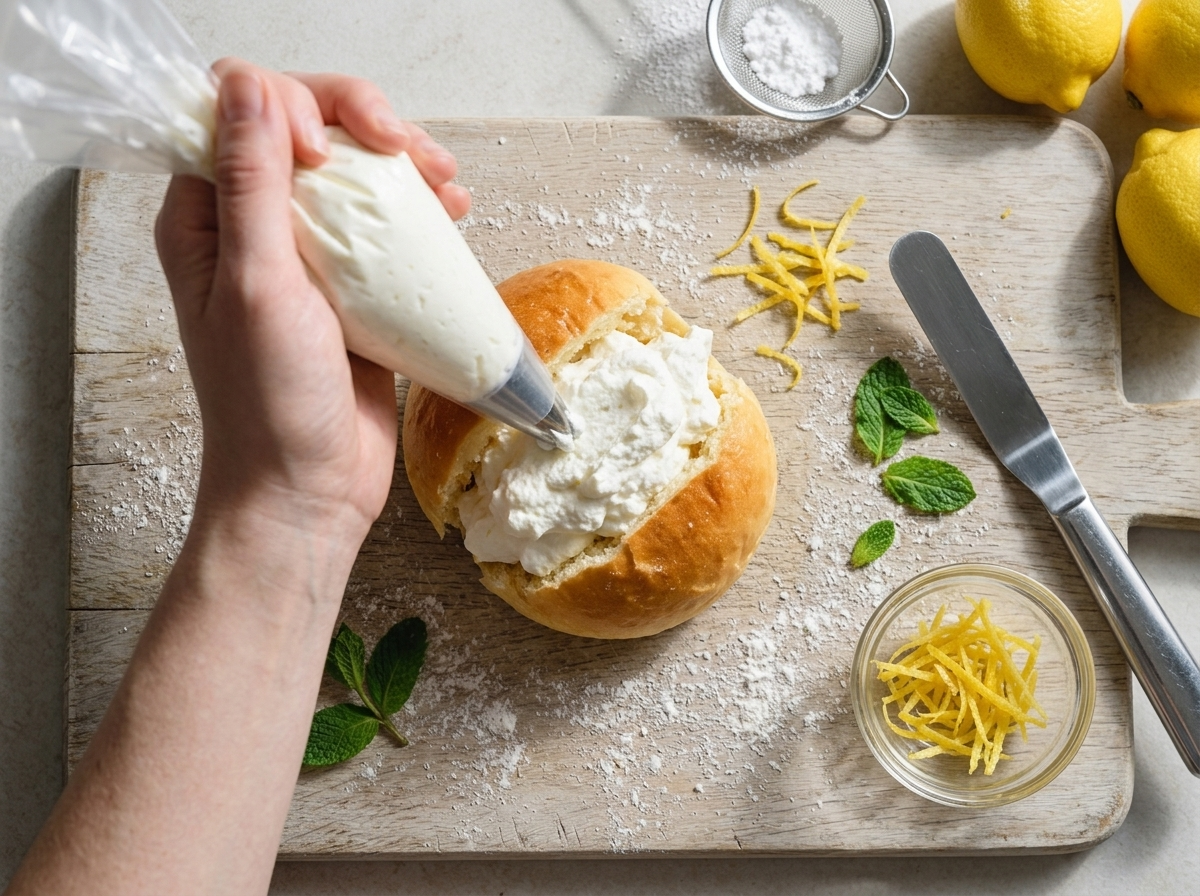
- Slice each cooled bun three-quarters of the way through lengthwise, leaving a hinge at the bottom.
- Pipe or spoon the whipped cream generously into each split bun, letting it mound over the top.
- Dust with powdered sugar just before serving.
Notes
- Weigh the flour for consistent dough texture every time.
- Don't skip the second rise, it keeps the buns light.
- Cool buns fully before slicing to avoid tearing the crumb.
- Whip cream just before filling, not hours ahead of serving.
Tips for Success
- Weigh your flour instead of scooping cups, dough turns dense with just 20g too much.
- Whip the cream right before filling, it loses its stiff peak within an hour at room temp.
- Cool the buns fully before splitting, warm bread tears instead of cutting clean.
- Slice buns three-quarters through, not all the way, so the cream stays tucked inside.
- Watch the second rise closely, buns should look puffy but not doubled or they collapse in the oven.
Variations
- Fold 2 tbsp mascarpone into the whipped cream for a firmer, less sweet filling that holds shape longer.
- Add 50g soaked raisins or chopped candied orange peel to the dough for the traditional Roman version.
- Swap lemon zest for orange zest and add a splash of orange liqueur to the cream for a citrusy twist.
Storage and Reheating
Maritozzi with whipped cream are best eaten the same day you fill them. Once the cream sits inside the bun, moisture starts softening the crumb within a few hours.
If you want to plan ahead, bake the plain buns up to 2 days in advance and store them at room temperature in an airtight container, or freeze them for up to 1 month wrapped tightly. Thaw at room temperature, then split and fill with freshly whipped cream right before serving.
Unfilled buns keep far better than filled ones, so don’t fill more than you’ll eat within 2 to 3 hours.
Serving Suggestions
Maritozzi with whipped cream are a breakfast food in Rome, served alongside a strong espresso or cappuccino to cut the sweetness.
For a dessert spread, add a bowl of fresh berries or sliced peaches on the side, their acidity balances the cream.
Cut them in half for a brunch platter so people can grab smaller pieces alongside other pastries and fruit.

FAQ
Why is my maritozzi dough too sticky to shape?
Enriched dough with butter, eggs, and milk is naturally tacky, so some stickiness is normal. If it’s sticking to your hands and won’t hold shape at all, add flour one tablespoon at a time during kneading. Don’t add more than 2 to 3 extra tablespoons or the buns turn dense instead of soft.
Can I use mascarpone instead of plain whipped cream in maritozzi?
Yes, folding 2 to 3 tablespoons of mascarpone into the whipped cream before filling gives it more structure. The filling holds its shape longer at room temperature and tastes slightly less sweet. Whip the cream to soft peaks first, then fold the mascarpone in gently so it doesn’t deflate.
Can I make maritozzi dough ahead and let it rise in the fridge overnight?
Yes, after the first knead, cover the dough and refrigerate it for up to 16 hours instead of rising at room temperature. Let it come back to room temp for about 30 minutes before shaping. The slow rise actually deepens the flavor from the lemon zest.
What goes well with maritozzi with whipped cream for breakfast?
Espresso or a cappuccino is the classic pairing in Rome, since the bitterness cuts through the sweet cream. Fresh berries or sliced stone fruit on the side add acidity if you’re serving them for brunch. A glass of cold milk works too for a simpler version.
Is maritozzi with whipped cream gluten free?
No, this recipe uses wheat flour in the dough, so it isn’t gluten free as written. You can try a 1:1 gluten-free flour blend, but the buns turn denser and less stretchy than the traditional version. The whipped cream filling itself is naturally gluten free.
What’s the difference between maritozzi and brioche buns?
Maritozzi are Roman buns made with a lighter, less buttery dough than French brioche, often flavored with lemon zest and split open for whipped cream. Brioche relies on a much higher ratio of butter and eggs and is usually eaten plain as bread. Maritozzi are built around the cream filling from the start.
If you enjoyed this, try
