
Jump to Recipe
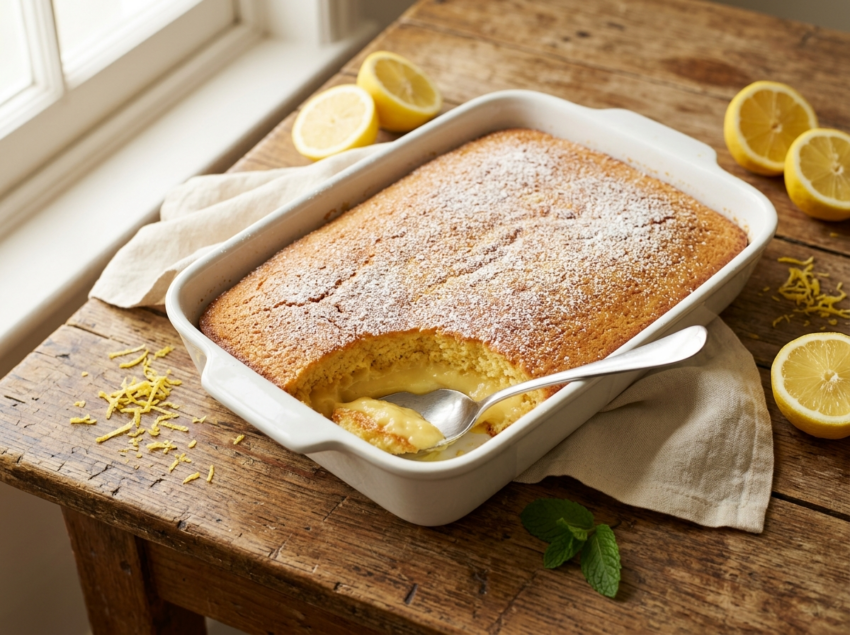
There’s something almost magical about pulling this cake from the oven. You pour in one thin batter and get two distinct layers back.
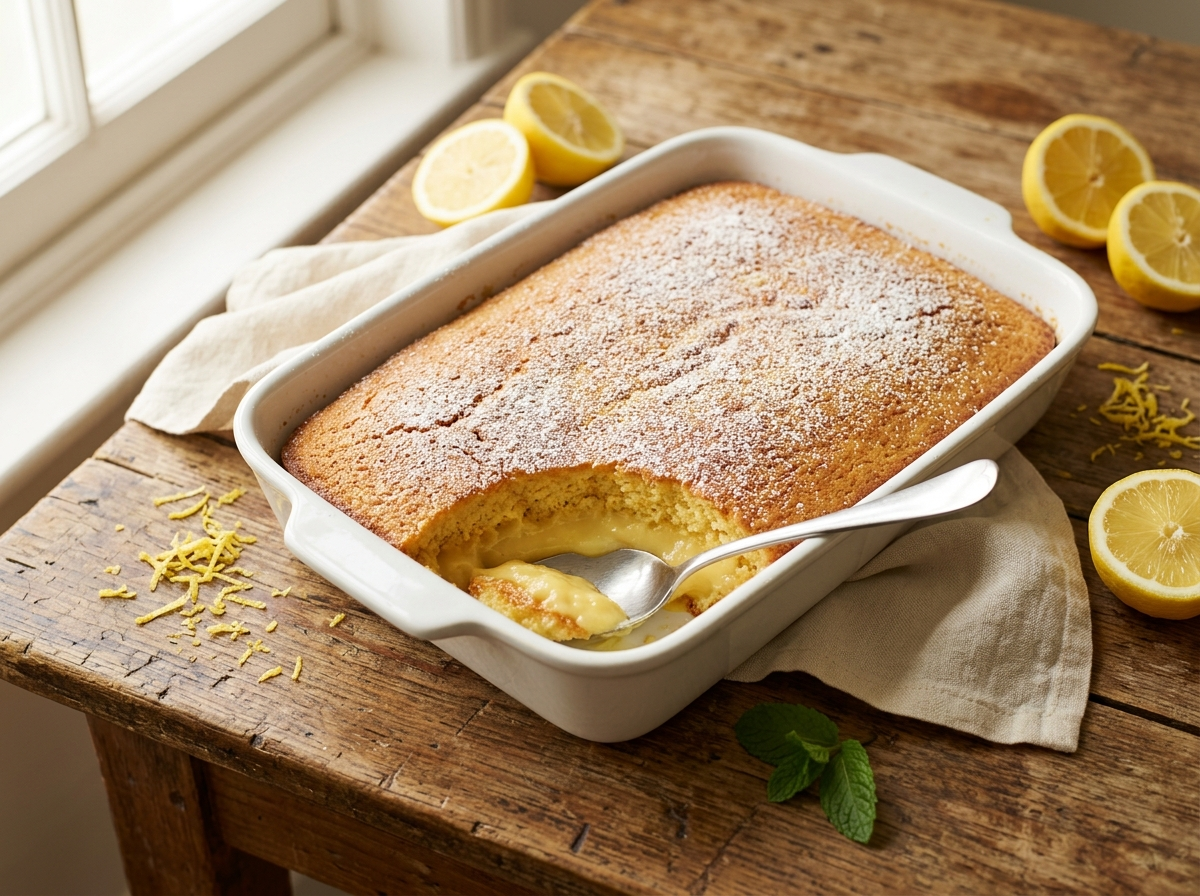
The top sets into a pale, springy sponge. Underneath, a warm lemon custard pools like a soft pudding. It happens every time, and it still surprises me.
This is the kind of recipe that lives on a handwritten card in a tin box. Simple pantry ingredients, a single bowl, and about 40 minutes start to finish.
I first made this from my grandmother’s actual recipe – no brand, no frills, just flour, eggs, lemon, and milk. It’s held up across decades for a reason.
Why You’ll Love This Recipe
- One batter creates two textures automatically while baking
- Bright lemon flavor without any artificial extracts
- Ready in under 45 minutes with pantry staples
- Serves warm or cold – both versions taste great
Ingredient Notes
- Fresh lemons: Use both zest and juice for the sharpest flavor. Bottled juice works in a pinch but the zest is non-negotiable.
- Whole milk: Full-fat milk keeps the custard layer creamy and rich. Low-fat milk makes it slightly thinner but still works.
- Unsalted butter: Melted and slightly cooled before mixing in. Salted butter works fine – just skip any added salt.
- All-purpose flour: Standard AP flour gives the sponge enough structure. Cake flour produces a slightly more delicate top layer.
- Eggs: You separate these – yolks go into the batter, whites get beaten and folded in last. Don’t skip this step.
- Granulated sugar: Plain white sugar is what the original recipe uses. Caster sugar dissolves slightly faster if you have it.
Grandma’s Lemon Pudding Cake
Ingredients
Method
- Heat the oven to 175 C / 350 F. Lightly butter a 1.5-quart ceramic baking dish and set it inside a larger roasting pan.
- In a large mixing bowl, whisk together the granulated sugar, sifted flour, and salt until combined.
- Add the melted butter, lemon zest, lemon juice, egg yolks, and milk to the flour mixture. Whisk until smooth with no dry pockets.
- In a separate clean bowl, beat the egg whites with an electric hand mixer on medium-high speed until stiff peaks form - the whites should hold their shape when you lift the beaters.
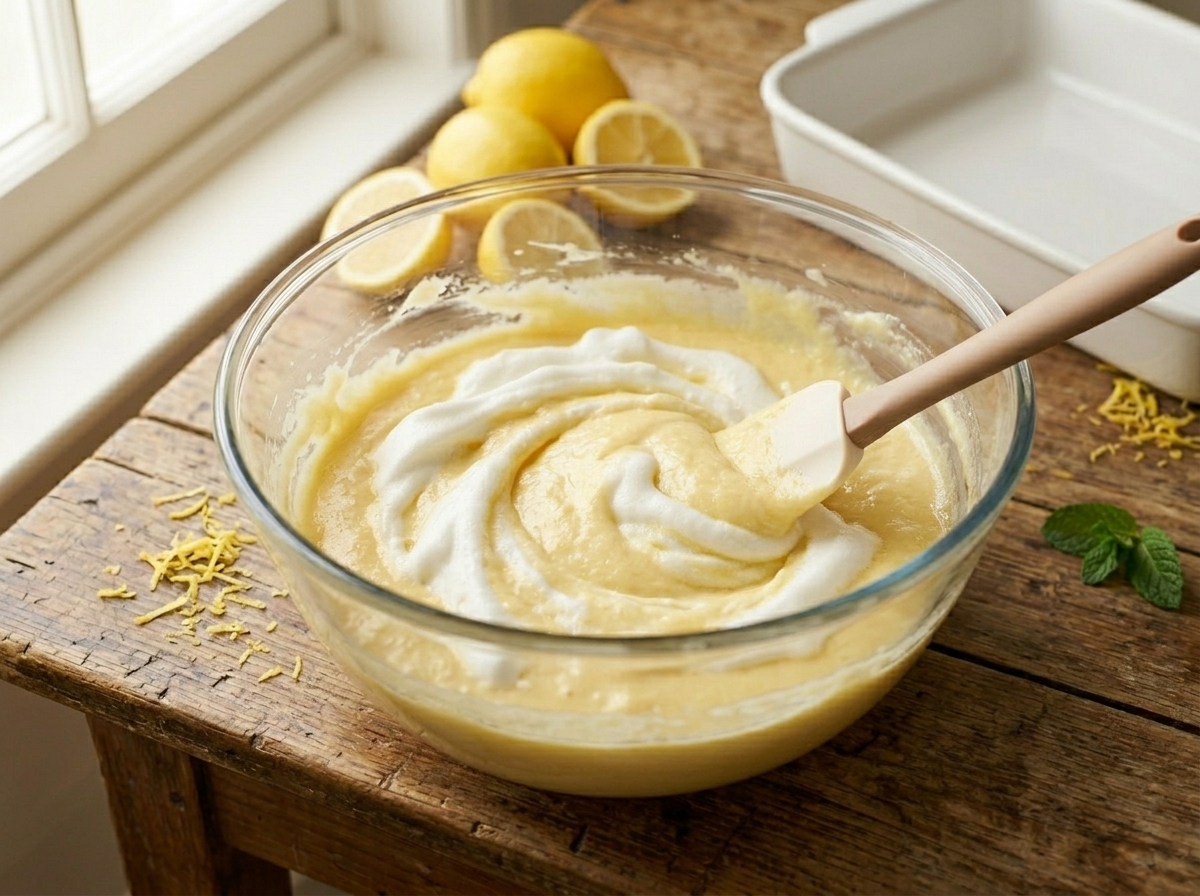
- Scoop about one-third of the beaten whites into the lemon batter and stir gently to loosen it. Add the remaining whites and fold with a rubber spatula in slow, wide strokes until just combined. A few white streaks are fine.
- Pour the batter into the prepared baking dish. Place the roasting pan with the dish into the oven, then carefully pour hot water into the roasting pan until it reaches halfway up the sides of the baking dish.
- Bake for 33 to 35 minutes, until the top is set and lightly golden and the center has a slight jiggle when gently shaken.
- Carefully remove the baking dish from the water bath. Let it cool for 5 minutes before serving. Dust with powdered sugar if using and spoon into shallow bowls, making sure each portion gets both the sponge top and the custard underneath.
Notes
Tips for Success
- Beat egg whites to stiff peaks before folding – this creates the sponge layer separation.
- Fold whites into the batter with a wide spatula in slow strokes to keep air in.
- Place the baking dish inside a larger pan of hot water – the water bath prevents the custard from curdling.
- Pull the cake when the top is set and lightly golden but the center still jiggles slightly.
- Zest lemons before juicing them – it’s far easier and you lose less zest.
Variations
- Swap half the lemon juice for blood orange juice for a rosier, slightly sweeter version.
- Add 1 tsp of fresh thyme zested into the batter for a floral herbal note.
- Stir 2 tbsp of poppy seeds into the batter for a lemon-poppy seed variation.
Storage and Reheating
Store leftovers covered in the baking dish in the fridge for up to 3 days. The custard layer firms a little overnight but softens again when warmed.
To reheat individual portions, microwave on 50% power for 60 to 90 seconds. Full dish reheating works at 150 C / 300 F for 10 minutes covered loosely with foil.
This cake doesn’t freeze well – the custard layer separates on thawing and the texture gets grainy. Stick to fridge storage.
Serving Suggestions
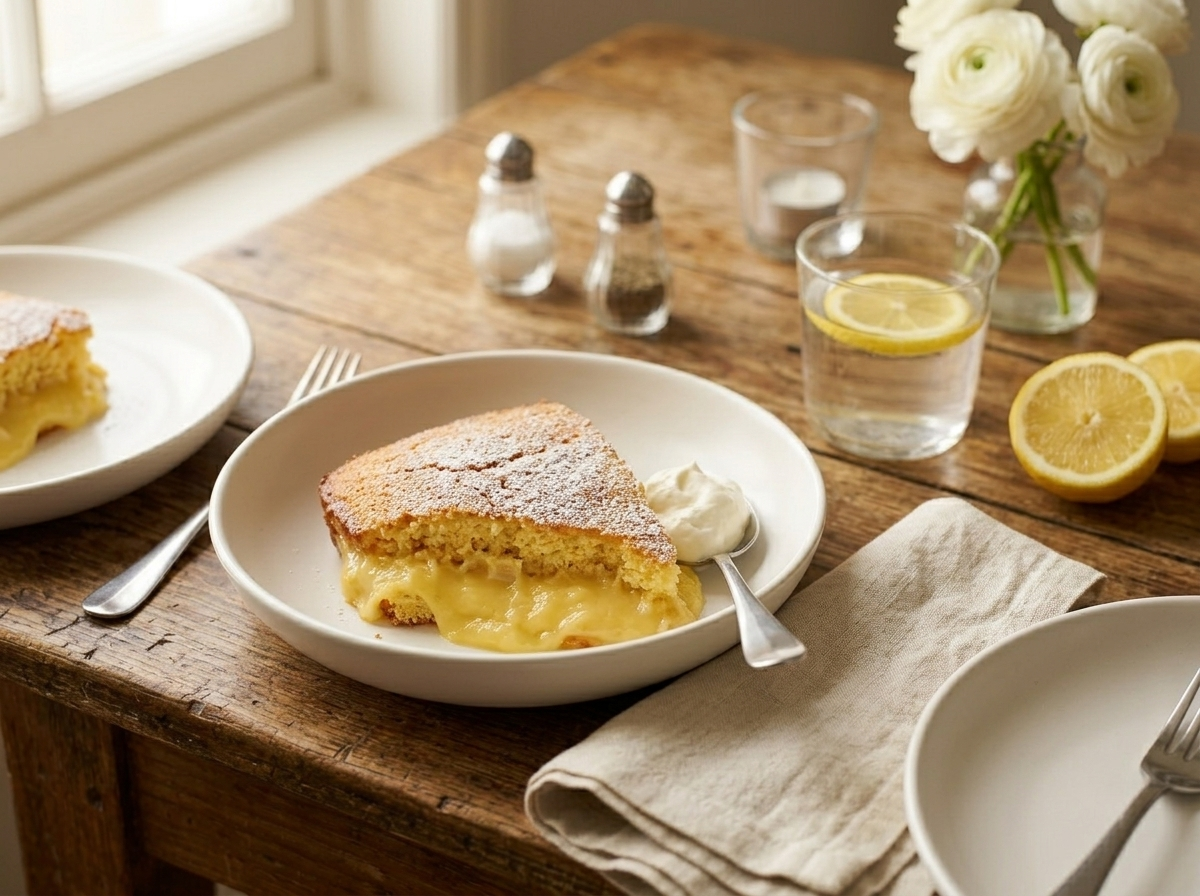
Serve warm, spooned into shallow bowls so each portion gets both layers. A dusting of powdered sugar right before serving adds a bit of visual contrast against the golden sponge.
A small spoonful of lightly whipped cream or a scoop of vanilla ice cream alongside cuts the tartness nicely. Neither is required, but both work.
For a spring or summer table, thin slices of fresh strawberry or a few raspberries — like those in bright, tart lemon glaze cakes — on the side echo the citrus without competing with it.
FAQ
Why does my lemon pudding cake not separate into two layers?
The most common reason is that the egg whites weren’t beaten firmly enough before folding in. You need stiff peaks, not just soft foam, to create that sponge layer. Skipping the water bath can also cause the batter to cook too fast and merge together.
Can I use Meyer lemons instead of regular lemons in this pudding cake?
Yes, Meyer lemons work well and produce a slightly sweeter, more floral result. The custard layer will be a touch less sharp, which some people prefer. Just use the same amount of zest and juice.
How do I know when the lemon pudding cake is done baking?
The top should be set and lightly golden, but the center should still have a gentle jiggle when you shake the dish – similar to a set panna cotta. A toothpick test doesn’t work here because the bottom layer is meant to be soft and custardy.
Can I make this lemon pudding cake dairy-free?
You can substitute oat milk or full-fat coconut milk for the whole milk and use a neutral-flavored vegan butter. The custard layer will be slightly thinner with oat milk and richer with coconut milk, which adds a faint coconut note.
What’s the difference between a lemon pudding cake and a lemon self-saucing pudding?
They’re closely related but not identical. A self-saucing pudding typically has a dry topping and a sauce made from liquid poured over before baking. A lemon pudding cake uses a single aerated batter that naturally separates into sponge and custard during baking.
Can I bake this lemon pudding cake in individual ramekins instead of one dish?
Yes, divide the batter among 4 to 6 ramekins and reduce the bake time to roughly 20 to 22 minutes. Keep them in the water bath and check for the same jiggly-center, set-top cue.
Loved this? Try these next
