
Jump to Recipe
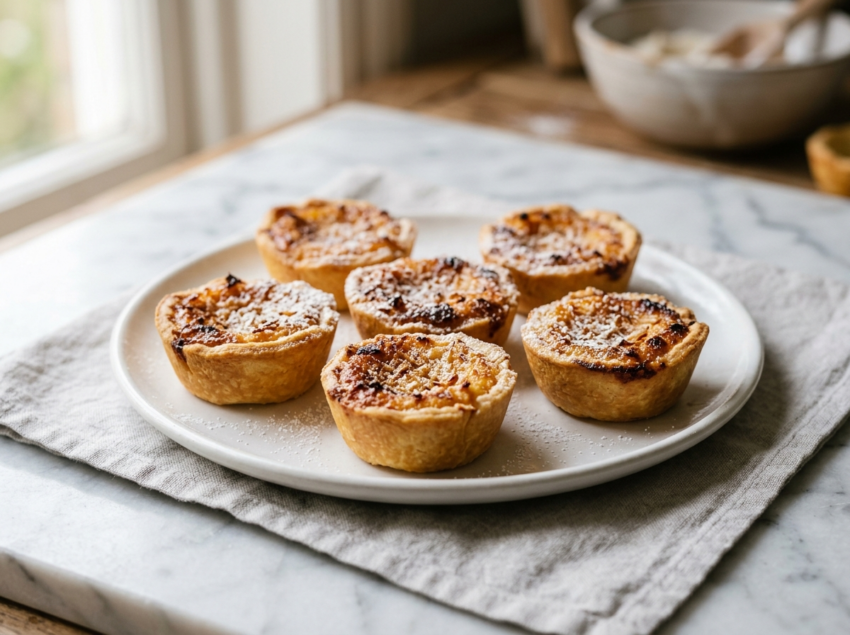
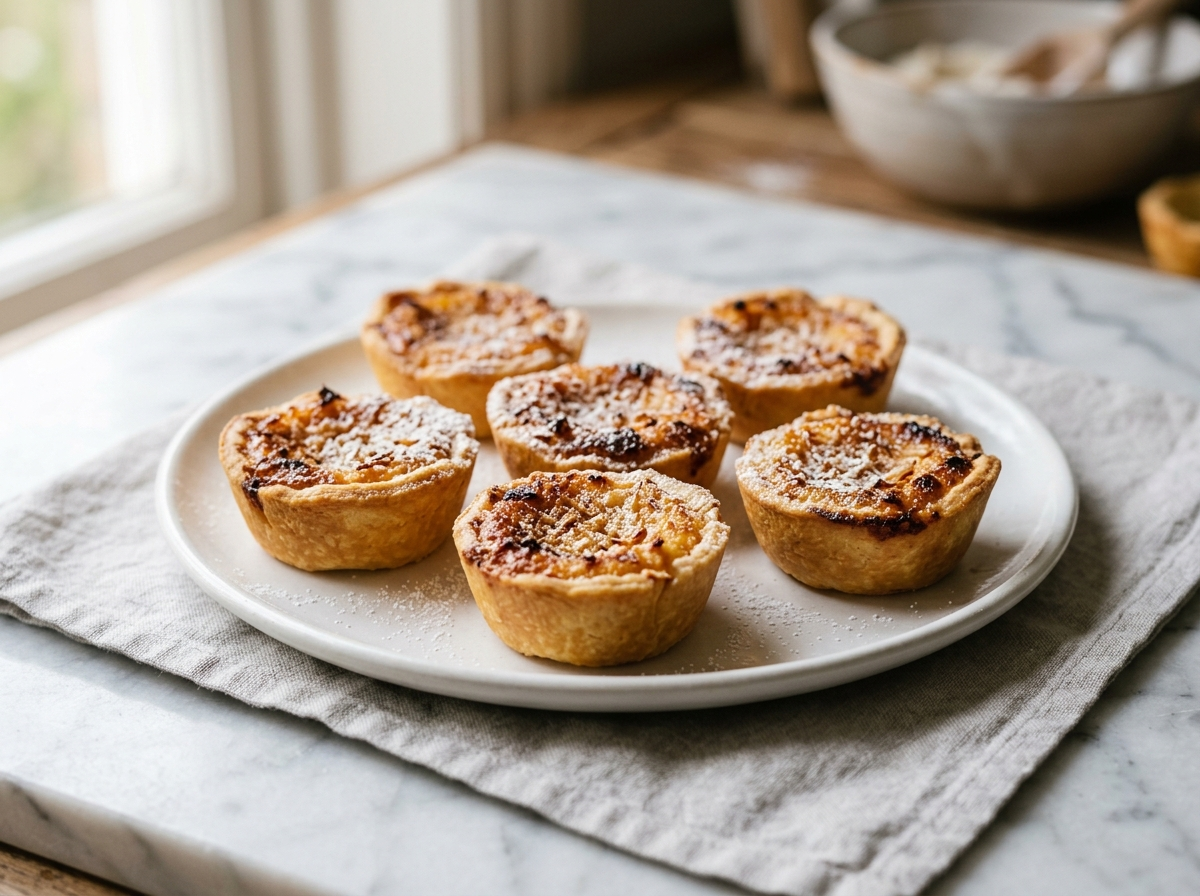
There’s something almost addictive about these small, unassuming tartlets. The pastry is thin and crisp. The filling is dense, sweet, and coconut-forward in the best way.
Queijadas de coco are a staple in Portuguese pastry shops, often sitting next to the more famous pastéis de nata. They don’t get as much attention, but regular visitors to Lisbon know to grab at least two.
The filling is a short list: coconut, eggs, condensed milk, butter — a dense custard not unlike the set filling in a slow-baked egg yolk custard. It bakes into a firm custard that puffs slightly and catches colour on top. That contrast – crisp shell, chewy filling – is the whole point.
You don’t need any special equipment. A standard 12-cup muffin tin works fine. These come together fast and store well, which makes them a smart choice when you need something to bring somewhere.
Why You’ll Love This Recipe
- Ready in 40 minutes with simple pantry staples
- Crisp pastry shell holds a firm coconut custard filling
- Keeps well for three days, making these ideal for baking ahead
- Authentic Portuguese flavour without a trip to a pastelaria
Ingredient Notes
- desiccated coconut: Use unsweetened desiccated coconut for the best texture. Sweetened shredded coconut can work but adds excess sugar and makes the filling slightly wet.
- sweetened condensed milk: A full 397 g tin is standard here. Don’t substitute evaporated milk – the sugar content is what sets the filling correctly.
- plain flour (shortcrust pastry): All-purpose flour works well. You want a low-protein flour to keep the pastry short and crumbly rather than tough.
- unsalted butter: Use cold butter for the pastry and melted butter for the filling. Salted butter is fine if that’s what you have – just skip any added salt.
- eggs: Three large eggs go into the filling. They provide structure and help the custard set firm. Room temperature eggs blend more smoothly.
- vanilla extract: Optional but worth adding – half a teaspoon rounds out the coconut flavour. Pure extract beats imitation here.
Portuguese Coconut Tartlets (Queijadas de Coco)
Ingredients
Method
- Combine the flour and icing sugar in a large mixing bowl. Add the cold cubed butter and rub it in with your fingertips until the mixture looks like coarse breadcrumbs.
- Add the egg yolk and 2 tbsp of cold water. Mix with a fork until the dough just comes together. If it still crumbles, add the third tablespoon of water. Don't overwork it.
- Shape the dough into a flat disc, wrap it in cling film, and refrigerate for 15 minutes.
- Heat the oven to 190 C / 375 F. Lightly grease a 12-cup muffin tin.
- Roll the chilled dough on a lightly floured surface to about 3 mm thickness. Cut out 12 rounds using a 7 cm cutter or a glass slightly wider than your muffin cups.
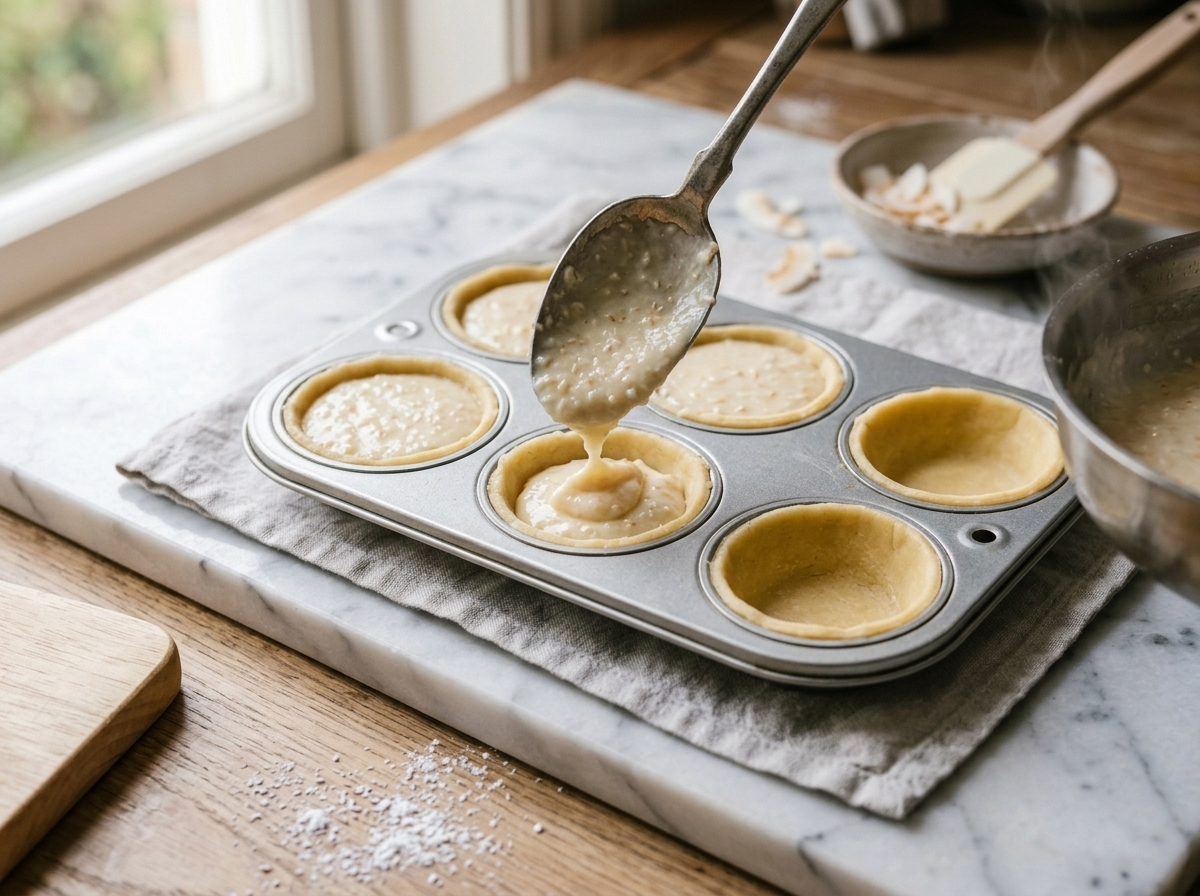
- Press each round into a muffin cup, pressing firmly up the sides to form a shell. Refrigerate the lined tin for 15 minutes.
- Whisk the eggs lightly in a bowl until the yolks and whites are just combined.
- Add the condensed milk, melted butter, desiccated coconut, vanilla extract, and salt. Stir gently until the mixture is smooth and the coconut is evenly distributed. Don't beat air into it.
- Spoon the coconut filling into the chilled pastry shells, filling each one to about 3 mm below the rim. The filling will puff slightly as it bakes.
- Bake at 190 C / 375 F for 15 minutes, then reduce the oven temperature to 175 C / 350 F and bake for a further 10 minutes, until the tops are golden brown and the filling is just set with a very slight wobble.
- Remove from the oven and immediately run a butter knife around the edge of each tartlet. Leave them in the tin for 10 minutes before transferring to a wire rack to cool completely.
- Dust with icing sugar just before serving.
Notes
Tips for Success
- Press the shortcrust pastry to an even 3 mm thickness so the shells bake through without shrinking too much.
- Chill the lined tartlet shells for 15 minutes before filling to prevent the pastry from sliding down the sides during baking.
- Mix the filling just until combined – overbeating the eggs creates air bubbles that cause uneven puffing in the oven.
- Bake at 190 C / 375 F for the first 15 minutes, then drop to 175 C / 350 F to finish – this sets the filling without burning the coconut on top.
- Run a butter knife around each tartlet immediately after removing from the oven so they release cleanly once cool.
Variations
- Add 1 tsp lime zest to the filling for a sharper, more tropical flavour that cuts through the sweetness.
- Swap the shortcrust shell for store-bought puff pastry squares pressed into muffin cups for a flakier base.
- Stir 2 tbsp toasted desiccated coconut into the filling for extra texture and a deeper coconut flavour throughout.
Storage and Reheating
Store cooled tartlets in an airtight container at room temperature for up to 2 days. After that, move them to the fridge where they’ll keep for another 2 days.
To serve from cold, let them sit at room temperature for 20 minutes. They’re at their best slightly cool or at room temp – the filling firms up when chilled and softens again as it warms.
These freeze well. Wrap individually in cling film and freeze for up to 6 weeks. Thaw overnight in the fridge, then bring to room temperature before serving. Don’t reheat in a microwave – it makes the pastry soft.
Serving Suggestions
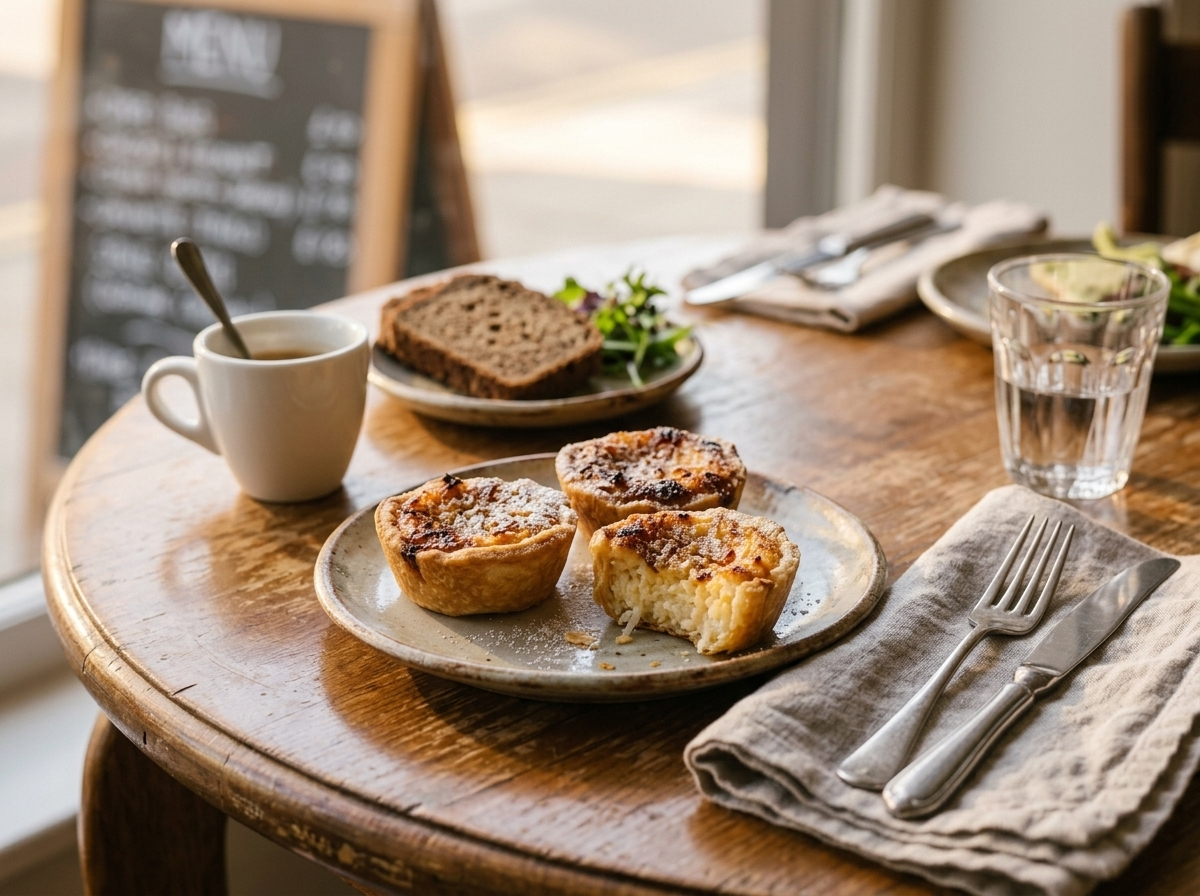
Serve these on a small plate alongside a strong espresso or a bica, which is the Portuguese term for a short black coffee — much like the pairing that makes crisp buttery tart shells work so well with coffee-forward fillings. The bitter coffee and the sweet coconut filling work well together.
For a gathering, arrange them on a flat board or tiered cake stand. A dusting of icing sugar just before serving makes them look finished without extra effort.
They also pair well with a scoop of vanilla ice cream if you’re serving them as a dessert course. The cold ice cream against the dense, room-temperature filling is a good contrast.
FAQ
Why is my queijadas de coco filling still wobbly after the recommended bake time?
A slight wobble in the centre when you pull them from the oven is normal – the filling sets fully as it cools. If it’s still liquid after 25 minutes, your oven may run cool, so give it another 5 minutes and check again.
Can I use fresh grated coconut instead of desiccated coconut in these tartlets?
Fresh grated coconut adds moisture that can prevent the filling from setting firmly, the way a firm ginger coconut custard relies on controlled liquid ratios to hold its shape. If you use it, reduce the amount slightly to about 80 g and expect a softer, less chewy result.
Can I make the shortcrust pastry for these coconut tartlets the day before?
Yes, the pastry dough can be wrapped in cling film and refrigerated for up to 24 hours. Let it sit at room temperature for 10 minutes before rolling so it doesn’t crack at the edges.
What’s the difference between queijadas de coco and pastéis de nata?
Pastéis de nata use a flaky laminated pastry and a loose, creamy egg custard that stays silky in the centre. Queijadas de coco use a firmer shortcrust shell with a dense, chewy coconut filling that sets solid.
Are Portuguese coconut tartlets gluten-free?
No, the shortcrust shell contains plain wheat flour. To make them gluten-free, substitute a 1:1 gluten-free plain flour blend – the texture will be slightly more crumbly but the filling won’t be affected.
How do I stop the pastry shells from puffing up or shrinking during blind baking?
Chilling the lined shells for at least 15 minutes before adding the filling helps the butter in the dough firm up and hold its shape. Pressing the pastry firmly against the sides of the muffin cups also reduces shrinkage.
