
Jump to Recipe
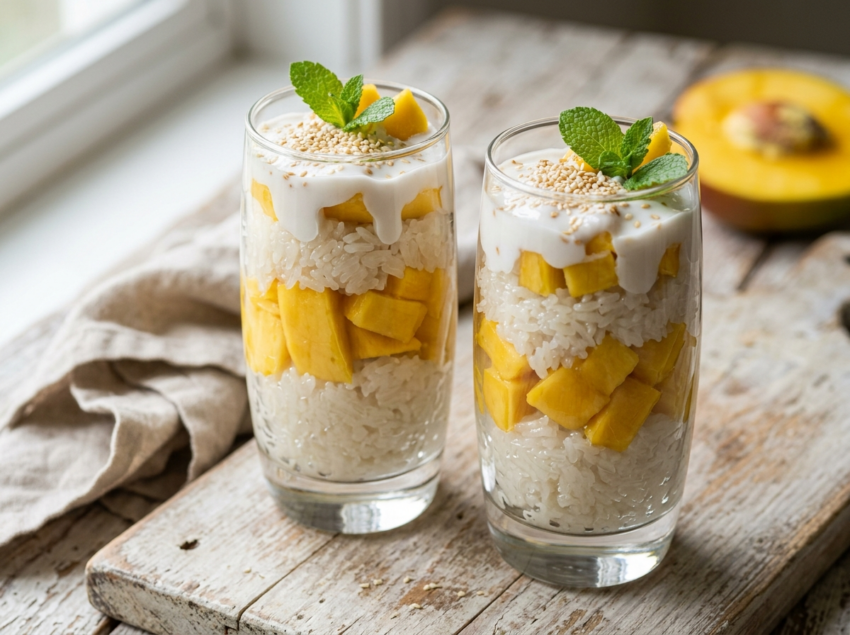
There’s something about mango sticky rice that feels like a reward. The warm coconut rice, the cold mango slices, the barely-sweet cream pooling at the edges. It’s one of those Thai street desserts that lands perfectly even when you make it at home.
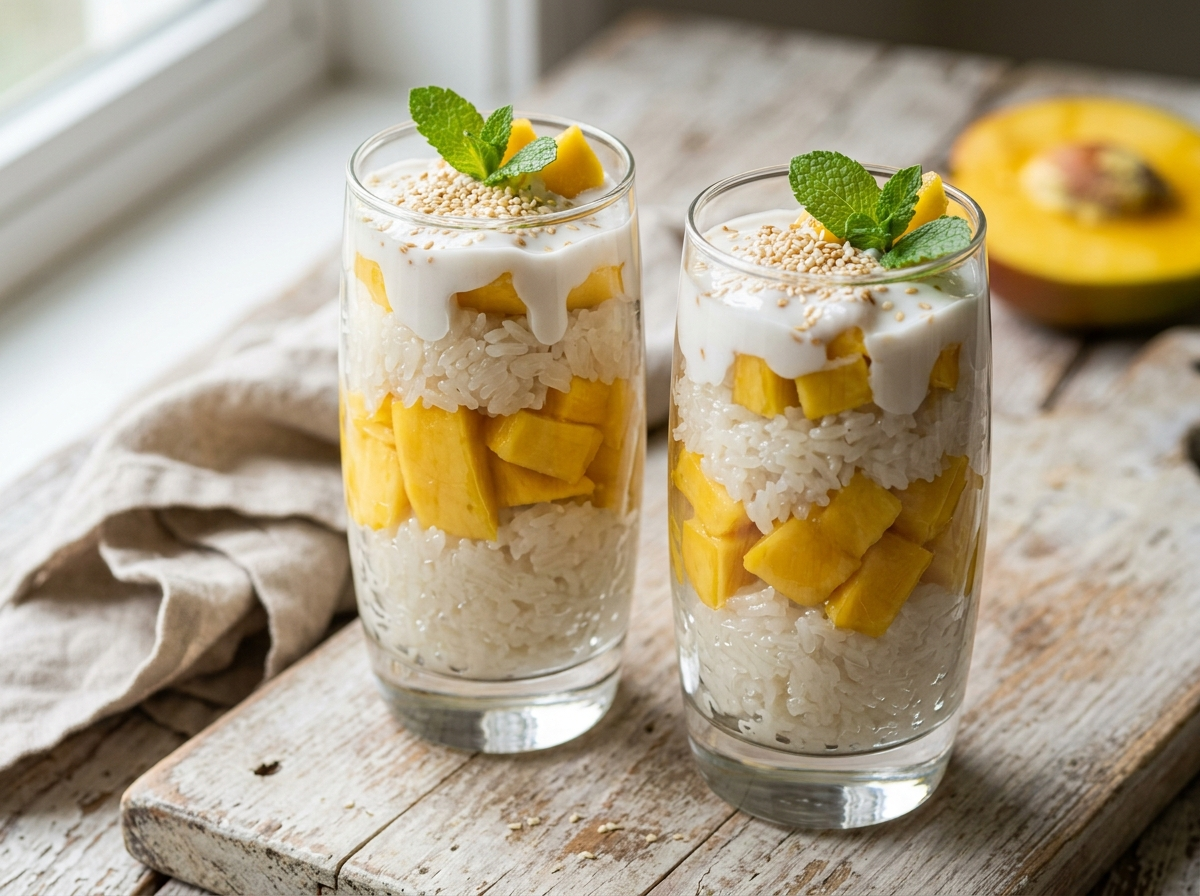
This parfait version takes the same flavors and stacks them in a glass. No special equipment. No fussy plating. Just clean layers that look as good as they taste.
I started making it this way when I had leftover sticky rice and two mangoes that needed using. Turns out the glass format makes portioning easier, the layers stay distinct, and it holds up in the fridge for a few hours before serving.
Use the ripest mangoes you can find. Nam Dok Mai or Ataulfo varieties are worth seeking out – their honey-like sweetness and low fiber make them ideal here.
Why You’ll Love This Recipe
- Make-ahead layers hold shape for hours in the fridge
- Only 6 core ingredients, no special equipment needed
- Salty-sweet coconut cream ties every layer together
- Works as a dinner-party dessert or a solo treat
Ingredient Notes
- glutinous rice: Also sold as sweet rice or sticky rice – do not substitute regular jasmine rice, as it won’t absorb the coconut milk the same way. Rinse and soak for at least 2 hours before cooking.
- full-fat coconut milk: Use a good-quality canned coconut milk with high fat content for a rich, creamy soak. Light coconut milk works in a pinch but produces a thinner result.
- ripe mango: Ataulfo or Nam Dok Mai mangoes have the best texture and sweetness here. Tommy Atkins mangoes tend to be fibrous and less sweet, so check ripeness carefully.
- palm sugar: Gives a slightly caramel, less sharp sweetness than white sugar. Light brown sugar is a fine substitute if palm sugar is unavailable.
- toasted sesame seeds: White sesame seeds toasted in a dry pan add a nutty crunch that contrasts the soft rice. Black sesame works too and looks striking against the yellow mango.
- salt: A small amount of salt in both the rice and the topping cream is not optional – it sharpens the coconut flavor and balances the sugar noticeably.
Mango Sticky Rice Parfait
Ingredients
Method
- Drain the soaked glutinous rice through a fine-mesh sieve and spread it into a bamboo steamer lined with cheesecloth, or a saucepan steamer insert.
- Steam over boiling water for 20 to 25 minutes, covered, until the grains are translucent and tender with no white core. Check by pressing a grain between your fingers.
- While the rice steams, combine 180 ml coconut milk, palm sugar, and 1/4 tsp salt in a small saucepan over low heat. Stir until the sugar dissolves, about 2 minutes. Remove from heat.
- Transfer the hot steamed rice to a mixing bowl. Pour the warm coconut milk mixture over the rice and fold gently to combine. Cover with a plate and let sit for 10 minutes so the rice absorbs the liquid.
- Combine the remaining 60 ml coconut milk with the remaining 1/4 tsp salt in a small saucepan over low heat. Stir for 1 to 2 minutes until just warmed through. Set aside.
- Allow the coconut rice to cool to room temperature, about 15 minutes. It should be slightly sticky and glossy, not wet.
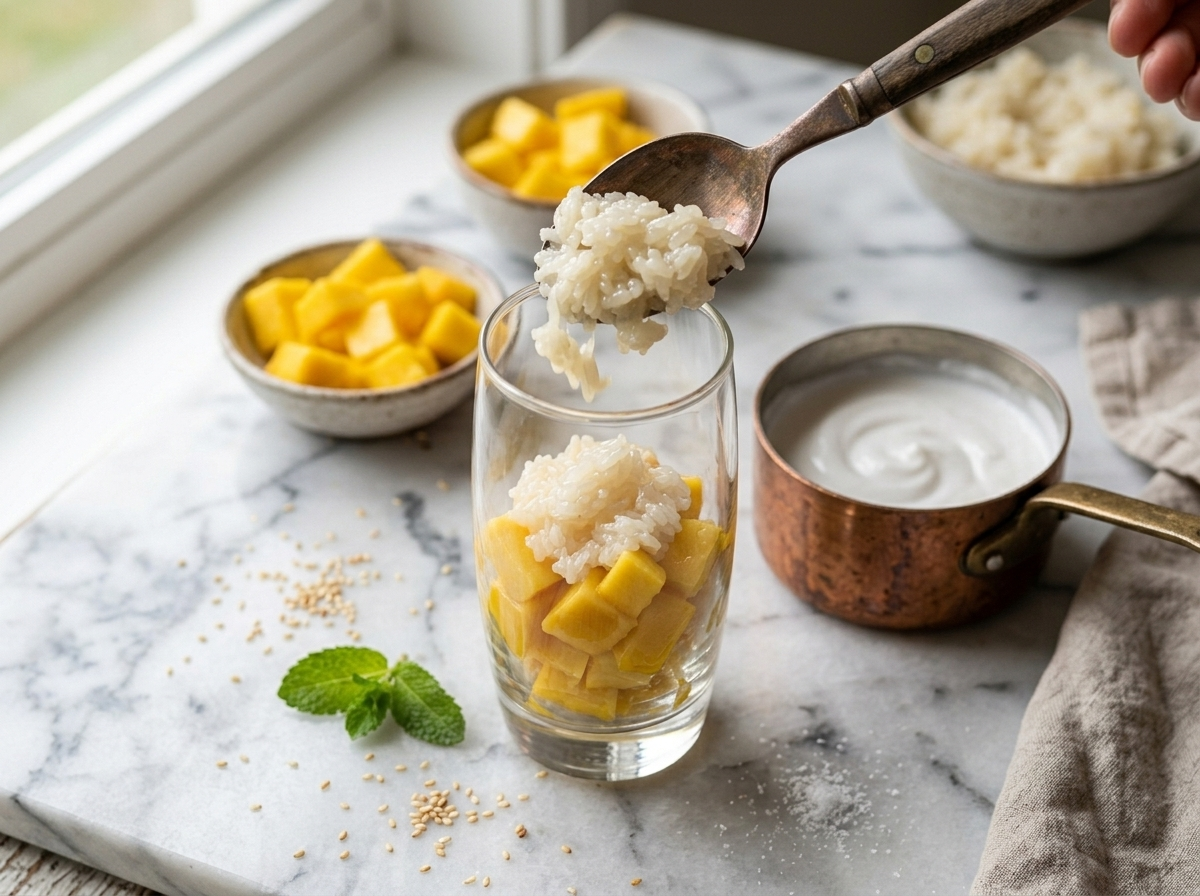
- Spoon a generous layer of coconut rice into the bottom of each glass, about 4 to 5 tbsp per glass. Press gently to level.
- Arrange a layer of mango planks on top of the rice, leaning them against the glass wall so they're visible from outside.
- Add another thinner layer of coconut rice on top of the mango, then finish with a final layer of mango planks at the top.
- Drizzle 1 to 2 tsp of the salted coconut topping cream over each parfait. Scatter toasted sesame seeds on top and add a mint sprig if using. Serve immediately or refrigerate for up to 4 hours before serving.
Notes
Tips for Success
- Soak glutinous rice in cold water for at least 2 hours before steaming to ensure even, tender grains.
- Season the coconut rice while it’s still hot so the grains absorb the sweetened coconut milk before cooling.
- Cool the rice to room temperature before layering – warm rice will steam the mango and make it watery.
- Make the salted coconut topping cream separately from the soaking liquid for a cleaner drizzle at serving.
- Slice mango into thin planks rather than chunks so each layer stays flat and visible through the glass.
Variations
- Swap mango for ripe papaya or jackfruit slices for a different tropical fruit layer.
- Add a thin layer of pandan jelly between the rice and mango for green color and floral aroma.
- Use black glutinous rice for half the base layer – it adds a nutty flavor and striking visual contrast.
Storage and Reheating
Store assembled parfaits covered with plastic wrap in the fridge for up to 4 hours before serving. Beyond that the rice starts to dry out and the mango releases liquid that softens the layers.
If you need to prep further ahead, store the coconut rice and sliced mango separately in airtight containers in the fridge for up to 24 hours. Assemble the glasses just before serving.
Do not freeze assembled parfaits – the mango turns watery on thawing and the rice becomes grainy. Cooked plain glutinous rice (without coconut milk) can be frozen for up to 1 month and resteamed before use, similar to how rice-based desserts store well when components are kept separate.
Serving Suggestions
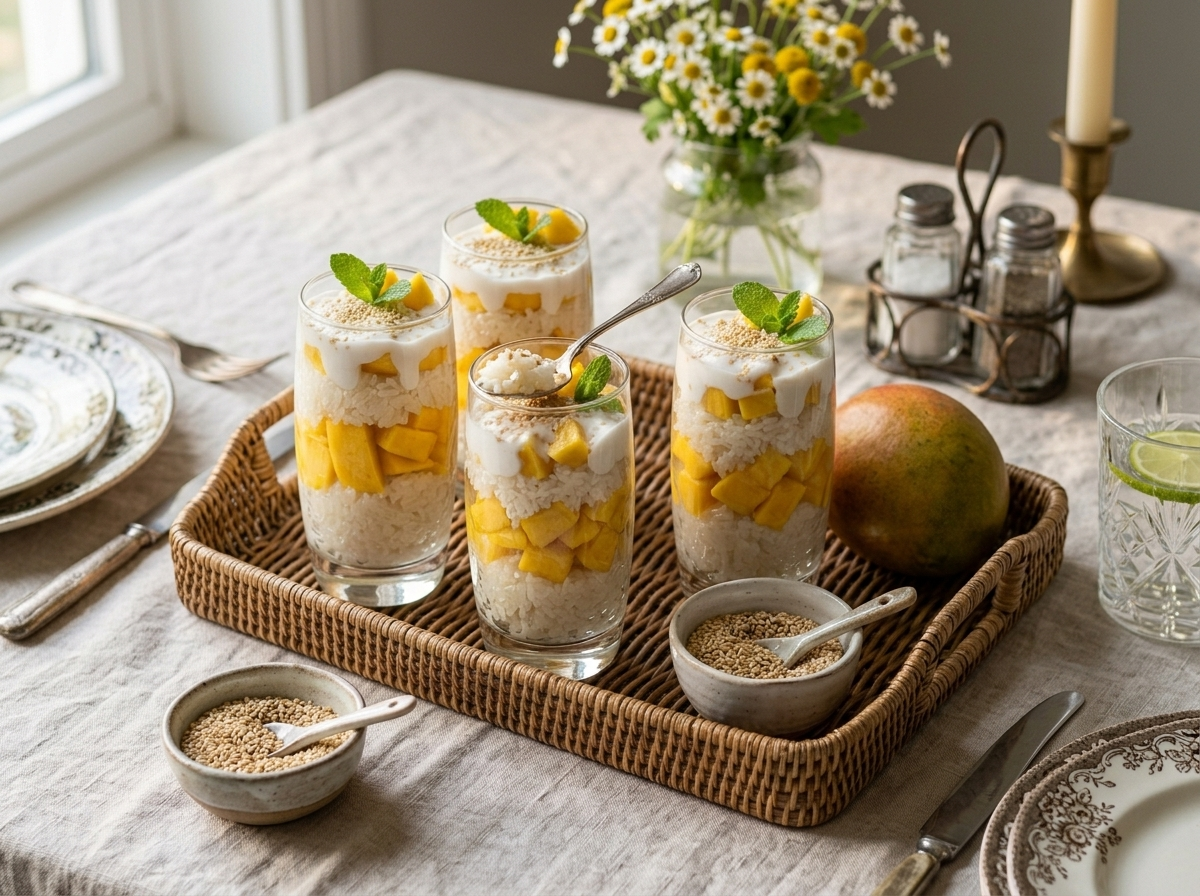
Serve the parfaits straight from the fridge with the salted coconut cream drizzled on top at the last moment. A small pinch of toasted sesame and a fresh mint leaf on the rim keeps the presentation clean without overcomplicating it.
These pair well after a Thai meal – green papaya salad, pad see ew, or a simple grilled fish. The cold, creamy dessert cuts through any residual heat from spicy mains.
For a casual gathering, set out the components buffet-style and let guests build their own glasses. It turns a simple dessert into a hands-on moment that works well at dinner parties.
FAQ
Why is my coconut sticky rice dry and crumbly in the parfait?
The rice likely wasn’t soaked long enough before steaming, or it cooled too long before being soaked in the coconut milk mixture. Make sure to soak the raw rice for at least 2 hours, and stir the warm coconut-sugar milk into the freshly steamed rice immediately so the grains absorb it while still hot.
Can I use canned mango instead of fresh mango in this parfait?
Fresh mango gives the best texture and flavor here – canned mango is often too soft and sweet, and the extra syrup makes the layers wet. If fresh mango isn’t available, well-drained frozen mango thawed in the fridge is a closer substitute than canned.
How far in advance can I assemble the mango sticky rice parfait glasses?
Assemble no more than 4 hours before serving for the best texture – the rice holds its shape well in the glass during that window. If making for a party, keep the rice, mango, and coconut topping cream in separate containers and layer them 30 minutes before guests arrive.
What’s the difference between mango sticky rice parfait and traditional Thai mango sticky rice?
Traditional Thai mango sticky rice is served on a flat plate with mango slices beside a mound of coconut rice, finished with a spoonful of salted coconut cream on top. The parfait version stacks the same components in a glass for individual portions, cleaner layers, and easier make-ahead prep – the flavor profile is identical.
Is this mango sticky rice parfait gluten-free?
Yes, all the core ingredients – glutinous rice, coconut milk, mango, palm sugar, and sesame seeds – are naturally gluten-free. Just confirm your coconut milk brand has no added thickeners that contain gluten, as some budget brands do.
What can I use instead of palm sugar in the coconut sticky rice?
Light brown sugar is the closest substitute and gives a similar mild caramel note. White granulated sugar works too but tastes sharper and less complex. Use the same weight as palm sugar called for in the recipe.
