
Jump to Recipe
There’s something quietly satisfying about a dessert built from leftover bread.
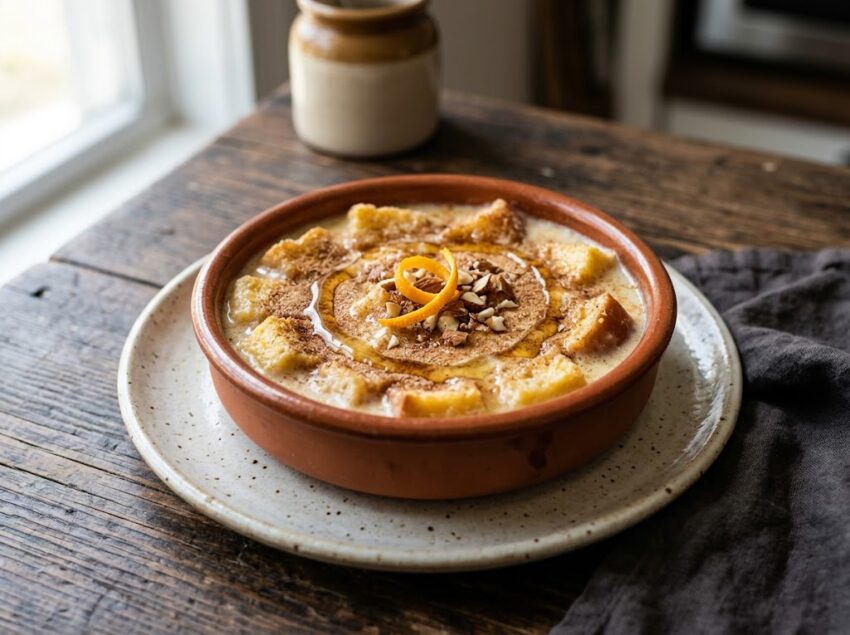
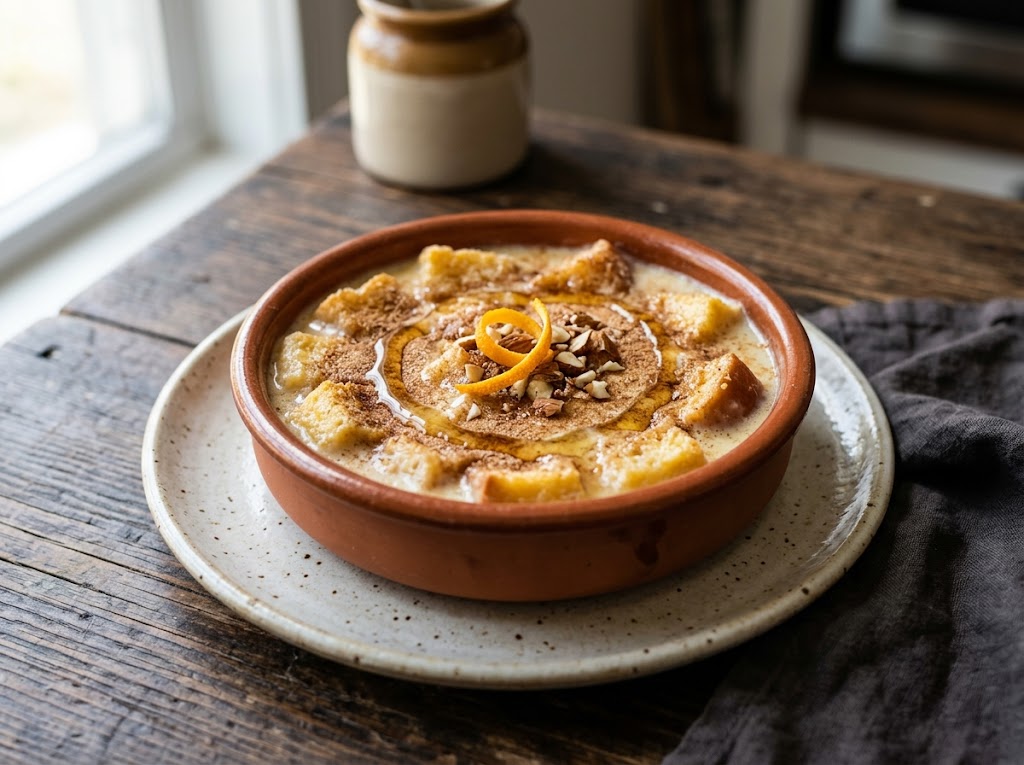
This is açorda de pão doce – a Portuguese bread soup made sweet. Chunks of dense, slightly stale pão doce absorb a warm broth of milk, honey, and cinnamon until they’re soft but still holding shape. A couple of egg yolks stirred in at the end thicken everything into something between a pudding and a porridge.
It’s old-fashioned food. Farmhouse food. The kind of thing Portuguese grandmothers made on a Tuesday because nothing went to waste.
I had a version of it at a small café in Sintra, served in a terracotta bowl with a dusting of cinnamon sugar. I’ve been making it at home ever since.
Why You’ll Love This Recipe
- Uses up stale pão doce or brioche in 40 minutes
- Egg yolks create a silky, custard-like texture without baking
- Warm cinnamon and orange zest flavors that deepen as it sits
- Flexible sweetness – adjust honey to taste at the table
Ingredient Notes
- Portuguese sweet bread (pão doce): Day-old or slightly stale bread works best because it absorbs the milk without falling apart completely. Brioche or Hawaiian rolls are the closest substitutes if you can’t find pão doce.
- Whole milk: Full-fat milk gives the soup body. You can use 2% but the result will be thinner. Oat milk works for a dairy-free version but won’t thicken quite as well with the egg yolks.
- Egg yolks: These are the thickening agent. Add them off the heat or over very low heat to avoid scrambling. Two yolks give a light set; three give something closer to a soft custard.
- Honey: A floral honey like orange blossom or acacia suits the citrus notes in this recipe. Substitute with light brown sugar if you prefer a less pronounced honey flavor.
- Cinnamon: Ground cinnamon goes in during cooking and a cinnamon stick can be added to the simmering milk for a more fragrant, rounded spice note.
- Orange zest: Fresh zest only – the bottled kind lacks the bright, sharp oils that lift the whole dish. Lemon zest works as a substitute and gives a slightly sharper finish.
Portuguese Sweet Bread Soup Dessert (Açorda de Pão Doce)
Ingredients
Method
- Spread the cubed pão doce on a baking tray and leave at room temperature for at least 1 hour, or overnight, until the surface feels slightly dry to the touch.
- Pour the milk into a medium saucepan. Add the cinnamon stick, ground cinnamon, orange zest, and a pinch of salt. Set over medium heat and warm until steam rises and small bubbles form at the edges, about 5 to 6 minutes. Do not boil.
- Stir in the honey until fully dissolved. Remove the cinnamon stick.
- Add the cubed bread to the warm milk. Stir gently to coat, then reduce heat to low. Simmer for 8 to 10 minutes, stirring occasionally, until the bread is soft and has absorbed most of the liquid. The mixture should look loose and porridge-like.
- In a small bowl, whisk the egg yolks together. Add a large spoonful of the hot bread mixture to the yolks and whisk quickly to temper them.
- Pour the tempered yolk mixture back into the saucepan in a slow stream, stirring constantly over low heat for 3 to 4 minutes until the soup thickens slightly and coats the back of a spoon. Do not let it boil.
- Remove from heat and stir in the butter until melted and glossy.
- Ladle into shallow bowls. Dust with cinnamon sugar, drizzle with a little extra honey, and serve immediately.
Notes

Tips for Success
- Cut bread into 2 to 3 cm cubes and leave uncovered overnight so they dry out enough to absorb milk without dissolving.
- Warm the milk with the cinnamon stick before adding honey so the spice has time to infuse properly.
- Temper the egg yolks by whisking a spoonful of hot milk into them first, then stream the mixture back slowly to avoid curdling.
- Pull the pot off the heat the moment the soup coats the back of a spoon – it firms up more as it cools.
- Serve within 10 minutes of finishing for the best texture, as the bread continues to absorb liquid and the dish thickens considerably on standing.
Variations
- Stir in a tablespoon of port wine with the honey for a deeper, adult-only version.
- Add a handful of dried raisins or chopped dried figs to the simmering milk for a fruit-forward variation.
- Swap the cinnamon and orange for vanilla bean and lemon zest for a lighter, more delicate flavor profile.
Storage and Reheating
Store leftovers in an airtight container in the fridge for up to 2 days. The bread will absorb the remaining liquid overnight so the texture becomes much thicker — closer to a creamy coconut bread pudding in consistency.
Reheat gently on the stovetop over low heat, stirring in a splash of warm milk to loosen it back to a soup-like consistency. Don’t microwave on high or the egg yolks can turn grainy.
This recipe doesn’t freeze well. The bread texture breaks down on thawing and the egg-thickened base tends to split.
Serving Suggestions
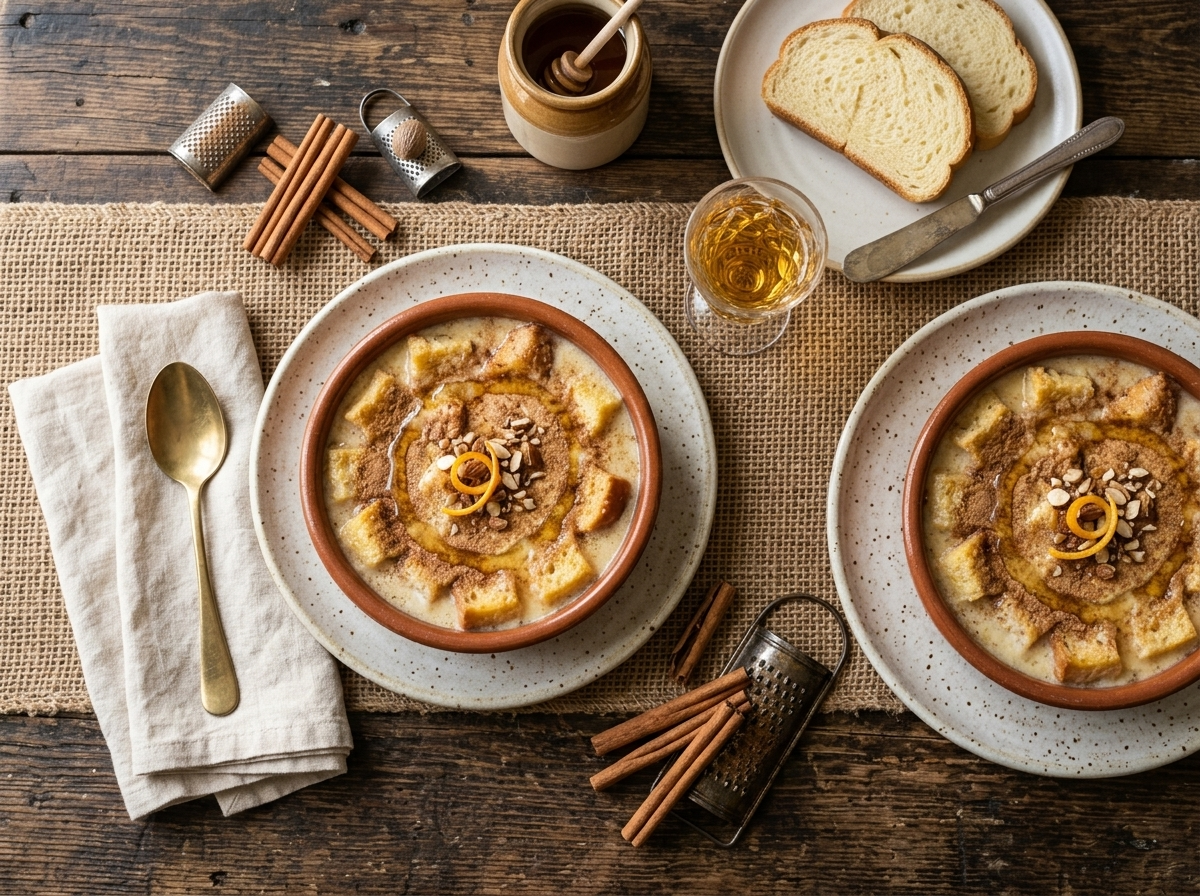
Serve it hot in shallow bowls or terracotta cups with a dusting of cinnamon sugar and a thin drizzle of honey on top. The contrast between the warm custard-soaked bread and the slightly crunchy sugar on the surface is what makes it.
A small scoop of vanilla ice cream alongside turns it into a more composed dessert for guests. The cold against the warm bread soup works well.
For a more traditional presentation, lay a strip of lemon zest across the top and serve with a small glass of Moscatel or late-harvest Vinho Verde on the side.
FAQ
Why is my Portuguese sweet bread soup watery instead of thickened?
The egg yolks need enough heat to thicken the milk but not so much that they scramble. Keep the heat on medium-low when you add them and stir constantly until the mixture coats a spoon. If it’s still thin, let it sit for 5 minutes off the heat – it thickens as it cools.
Can I use brioche instead of pão doce in this bread soup?
Yes, brioche is the closest match in texture and richness — much like the enriched dough used in French pain perdu stuffed toast. Hawaiian rolls also work. Avoid very crusty breads like sourdough or ciabatta – they absorb the milk unevenly and the texture ends up unpleasant.
Can I make this Portuguese bread soup dessert ahead and reheat it for a dinner party?
You can make it up to a day ahead and store it covered in the fridge, but plan to reheat it gently on the stovetop with a splash of extra milk to bring it back to the right consistency. Don’t fully cook it the night before and expect it to taste the same – the bread keeps soaking overnight.
What’s the difference between açorda de pão doce and a regular Portuguese açorda?
Traditional savory açorda uses stale crusty bread, garlic, olive oil, eggs, and fresh coriander – it’s closer to a garlicky bread porridge. This sweet version swaps those savory elements for milk, honey, cinnamon, and orange zest, much like a Portuguese quince marmalade tart leans on simple pantry warmth to become a dessert rather than a starter or light meal.
Is this Portuguese sweet bread soup gluten free?
Not as written, since pão doce contains wheat flour. You can try it with a dense gluten-free brioche-style bread, though the texture will be slightly different. Make sure the bread is firm enough to hold up in warm liquid before using it.
How do I know when the egg yolk mixture is thick enough to stop cooking?
Drag a spoon through the soup and run your finger across the back of it – if the line holds clean without the liquid running back, it’s ready. It should look glossy and just slightly thicker than heavy cream at this point.
