
Jump to Recipe
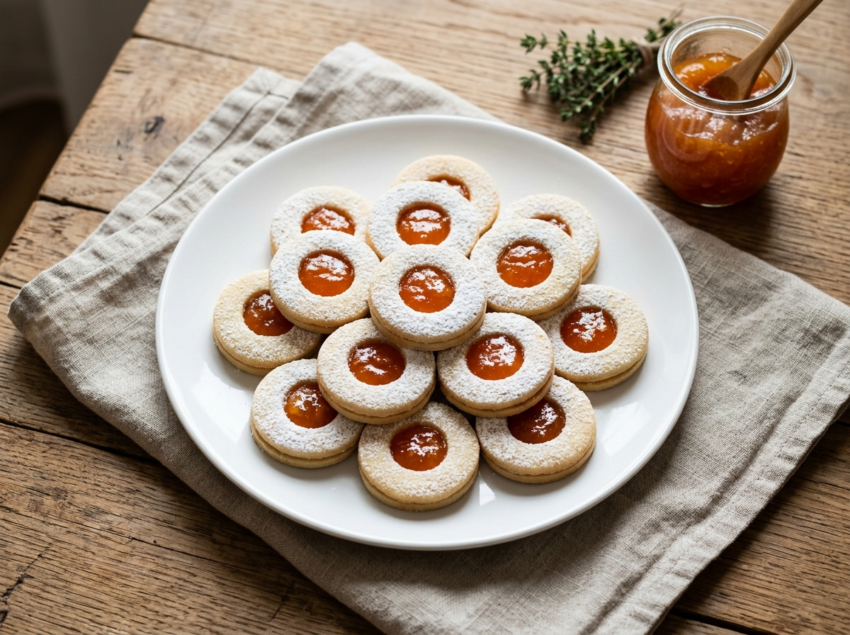
There’s something about a jar of apricot jam and a block of cold butter that feels like a promise. These cookies – known in Hungary as linzer tallér or lekvárral töltött sütemény depending on which grandmother you ask – are a staple on every Hungarian holiday table from Christmas to Easter.
The dough is a simple shortcrust enriched with egg yolk and a little sour cream. It rolls out cleanly, cuts precisely, and bakes to a pale golden color with slightly crisp edges and a soft center.
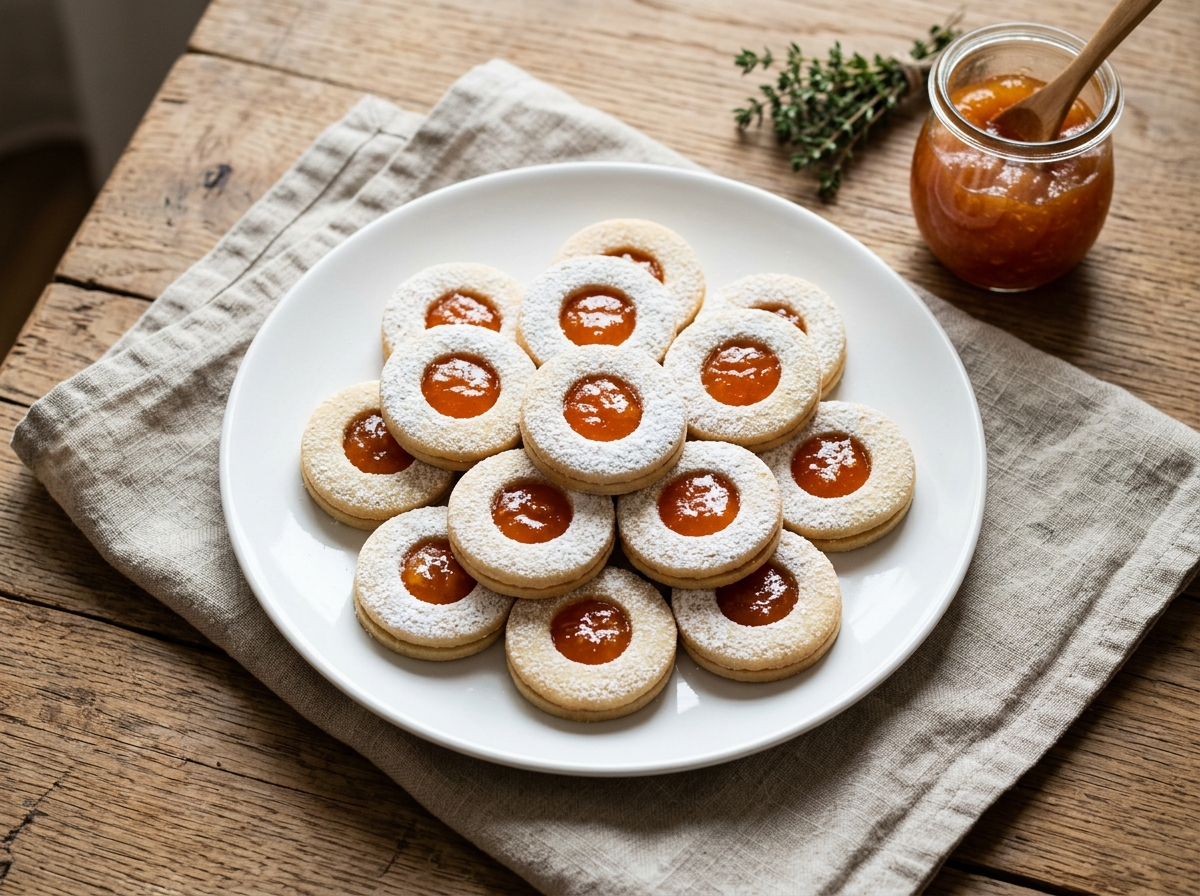
What sets these apart from a standard jam thumbprint is the sandwich construction. Two rounds, one plain and one with a small cut-out window, pressed together around a spoonful of thick jam. The jam shows through the top like stained glass.
Apricot is traditional. Rose hip is equally classic in Hungary. Sour cherry works. Whatever jam you use, it needs to be thick enough to hold its shape after baking.
Why You’ll Love This Recipe
- Dough rests overnight for easier rolling and cleaner cuts
- Works with any thick jam – apricot, rose hip, sour cherry
- Cookies stay tender for up to five days in a tin
- A classic Hungarian recipe that looks impressive with minimal effort
Ingredient Notes
- plain flour: All-purpose flour works well here. For a slightly more tender crumb, replace 30 g of the flour with fine almond flour – a common Hungarian variation.
- unsalted butter: Use cold butter straight from the fridge and cut it into small cubes before rubbing into the flour. Warm butter makes the dough greasy and hard to handle.
- egg yolks: Yolks only keep the dough tender and give it a slightly golden color. Don’t substitute whole eggs or the dough will be tougher.
- sour cream: Adds slight tang and keeps the crumb soft. Full-fat Greek yogurt works as a swap if that’s what you have.
- icing sugar: Also called powdered sugar. Using icing sugar instead of caster sugar gives a smoother, more delicate dough with no graininess.
- apricot jam: Use a thick, low-moisture jam. If yours is runny, warm it briefly in a small pan and stir until it reduces slightly before filling the cookies. Rose hip jam is a traditional alternative.
- vanilla extract: A small amount goes in the dough. Real vanilla extract or vanilla sugar (the Hungarian standard) both work fine.
Hungarian Jam Filled Cookies
Ingredients
Method
- Combine the flour, icing sugar, and salt in a large mixing bowl. Add the cold butter cubes and rub the mixture between your fingertips until it resembles coarse breadcrumbs with no large butter chunks remaining.
- Add the egg yolks, sour cream, and vanilla extract. Mix with a fork, then bring the dough together with your hands until it forms a smooth ball. Do not overwork it.
- Flatten the dough into a disc, wrap in plastic wrap, and refrigerate for at least 2 hours or overnight.
- Heat the oven to 180 C / 355 F. Line two baking sheets with parchment paper.
- Place the dough between two sheets of parchment and roll out to about 3 mm thickness. Keep the second half of the dough in the fridge while you work with the first.
- Cut an even number of rounds using a 6 cm round cutter. From half of the rounds, cut a small window in the center using a 2 cm cutter - these will be the tops.
- Transfer all cut cookies to the prepared baking sheets. If the dough has softened, refrigerate the sheets for 15 minutes before baking.
- Bake for 10 to 12 minutes until the edges are just pale golden and the surface looks set and dry. Cool completely on a wire rack before filling.
- If the jam is very runny, warm it in a small saucepan over low heat and stir for 3 to 4 minutes until thickened. Let it cool slightly before using.
- Dust the window-cut top cookies lightly with icing sugar.
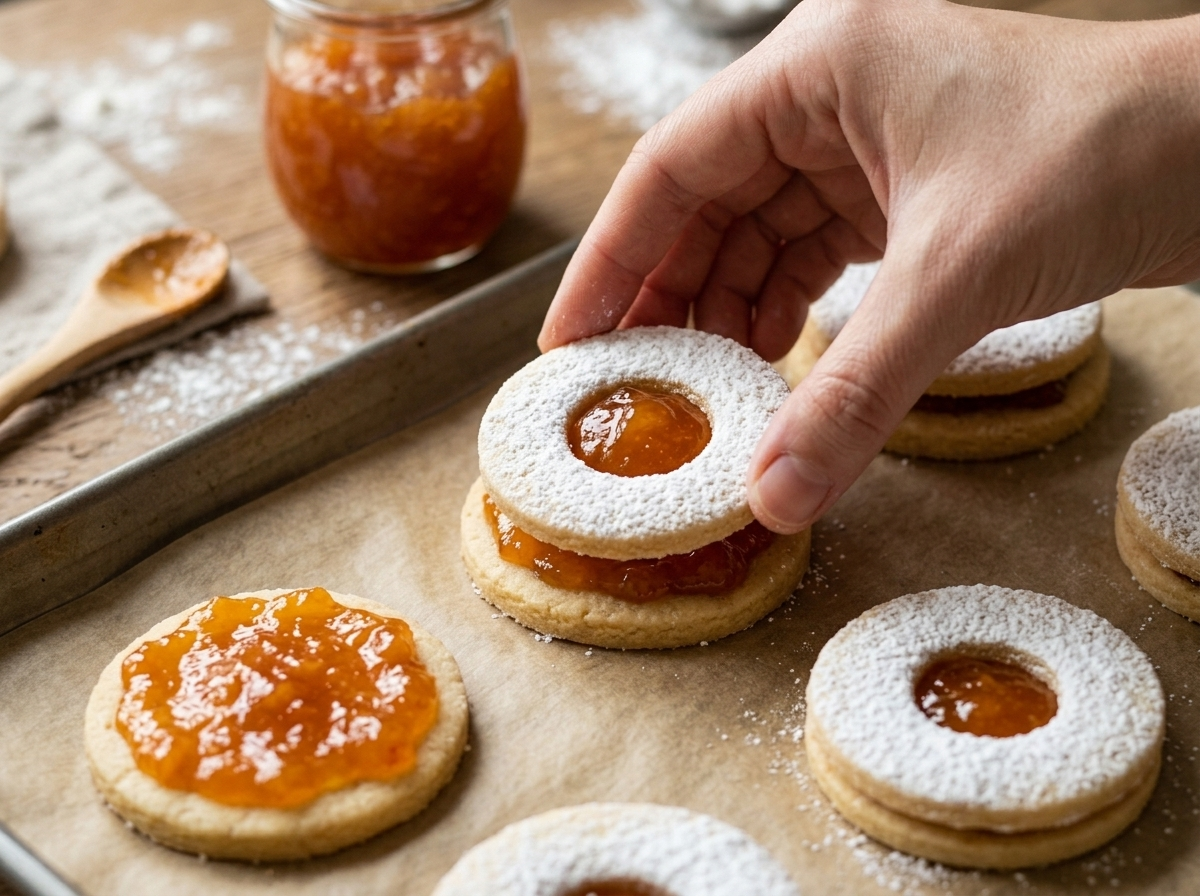
- Spread about 1 tsp of jam onto each plain bottom cookie, spreading just to the edges. Press a dusted top cookie gently on top, aligning the edges. Let the cookies sit for 20 minutes before serving so the jam firms up slightly.
Notes
Tips for Success
- Chill the dough for at least 2 hours, ideally overnight, so it rolls without sticking or tearing.
- Roll the dough between two sheets of parchment to avoid adding extra flour, which toughens the cookies.
- Use a small round or star cutter for the center window – no bigger than half the diameter of the cookie.
- Bake until just set and barely golden at the edges, roughly 10 to 12 minutes at 180 C – overbaking dries them out fast.
- Dust only the top cookies with icing sugar before sandwiching, not after, so the sugar doesn’t dissolve into the jam.
Variations
- Almond version: replace 40 g flour with ground almonds for a nuttier, slightly denser cookie.
- Chocolate jam cookies: add 1 tbsp cocoa powder to the dough and fill with sour cherry jam.
- Lemon zest dough: add the zest of one lemon for a brighter flavor that pairs well with rose hip jam.
Storage and Reheating
Store the finished cookies in an airtight tin at room temperature. They keep well for 4 to 5 days. Layer them between sheets of parchment so the jam windows don’t stick together.
For longer storage, freeze the unassembled baked cookies (plain rounds and window rounds separately) in a zip-lock bag for up to 2 months. Thaw at room temperature, then fill and sandwich just before serving.
Don’t refrigerate assembled cookies – the dough absorbs moisture from the fridge and turns soft and slightly tacky rather than crisp.
Serving Suggestions
Arrange them on a flat ceramic plate with a light dusting of icing sugar. The cut-out windows showing the jam are the whole visual here, so keep the presentation simple and don’t pile them up.
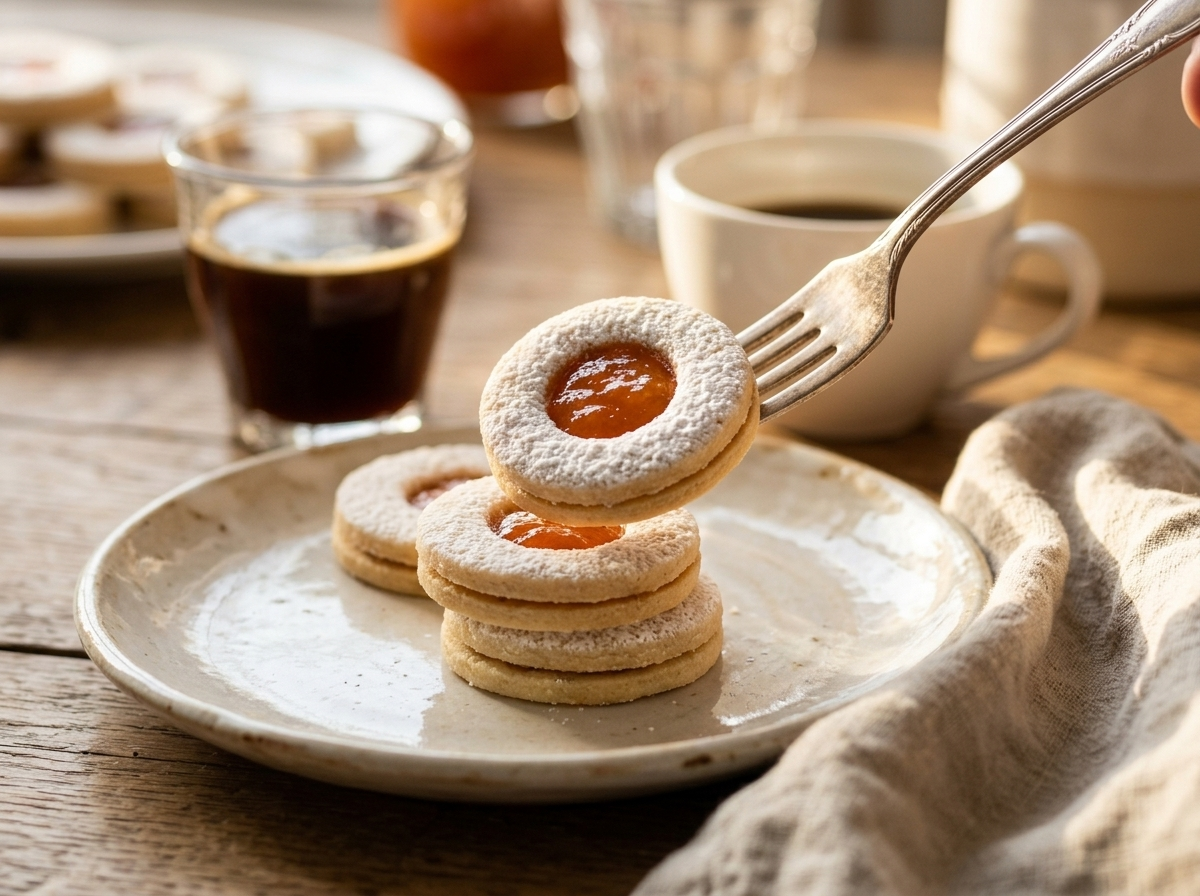
These cookies are a natural fit for afternoon coffee or tea. In Hungary they’d appear alongside a strong espresso or a cup of black tea, much like these crisp buttery espresso-filled bites. A small glass of Tokaji Aszú or an apricot brandy turns them into a proper dessert.
For a holiday cookie box, pair them with walnut rolls (beigli), poppy seed crescents, and buttery jam-filled cookie cups. The jam windows add color contrast that makes the whole tin look festive.
FAQ
Why do my Hungarian jam cookies spread and lose their shape in the oven?
The dough wasn’t cold enough when it went into the oven. After cutting, place the unbaked cookies on the sheet pan and refrigerate for 15 minutes before baking. Cold fat holds the edges sharp.
Can I use strawberry jam instead of apricot in these Hungarian sandwich cookies?
You can, but strawberry jam tends to be wetter than apricot or rose hip, so it may bubble out and spread. Cook it down in a small saucepan first until it’s thick enough to hold a spoon upright.
How do I know when the jam filled cookies are done baking?
Pull them out when the edges are just turning pale gold and the surface looks dry and set – around 10 to 12 minutes at 180 C. They firm up more as they cool, so don’t wait for a deep golden color.
Can I freeze assembled Hungarian linzer cookies with jam?
Freezing assembled cookies works, but the jam can make the dough slightly soft after thawing. It’s better to freeze the baked rounds separately and fill them once thawed.
Is there a gluten-free version of Hungarian jam filled cookies?
A 1:1 gluten-free flour blend works reasonably well here since the dough is high in butter and egg yolk, which hold structure independently. The texture will be slightly more crumbly, so handle the rolled dough gently.
What is the difference between Hungarian linzer cookies and Austrian linzer cookies?
Austrian linzer cookies often include ground hazelnuts or almonds in the dough and use raspberry jam. Hungarian versions typically use a plain butter shortcrust with apricot or rose hip jam, and the dough tends to be slightly richer with sour cream added.
