
Jump to Recipe
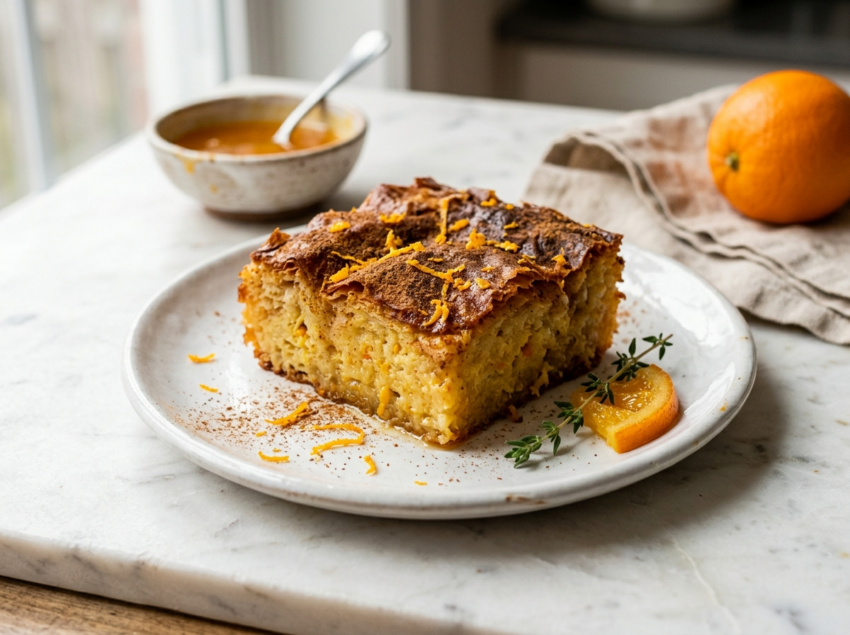
There’s something surprising about this cake the first time you make it. You crumple the phyllo like scrap paper, fold it into a yogurt batter, and bake it into something that looks almost rustic. Then the syrup goes on hot, and the whole thing transforms.
Portokalopita is a classic Greek dessert from the mainland. The name breaks down simply: portokali means orange, and pita means pie. It sits somewhere between a cake and a syrup pastry, closer to a cousin of baklava than a cake like this orange cinnamon pudding cake.
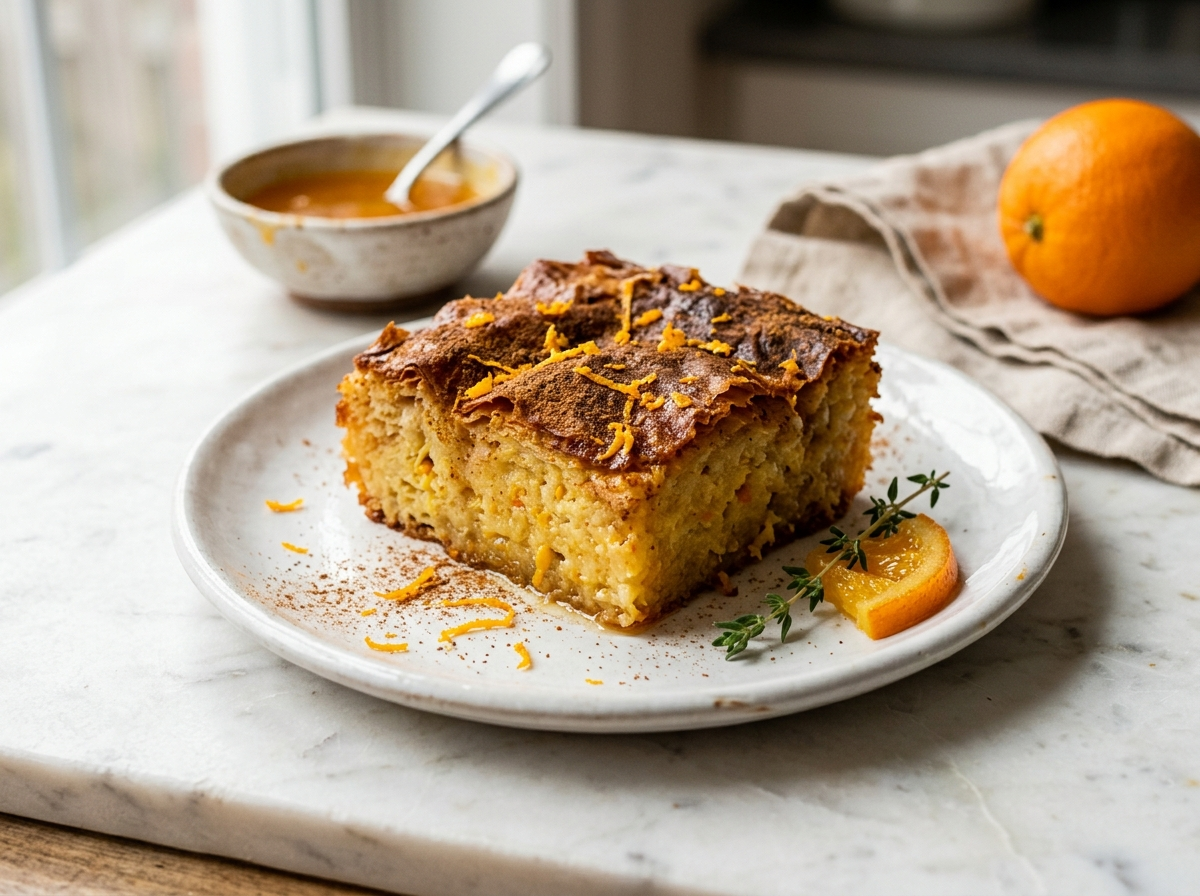
The texture is the reason people keep making it. Not cakey, not flaky, but dense and syrup-soaked with a top that stays slightly golden. A single orange gives you both zest and juice, and the yogurt holds everything together.
It keeps well for days. In fact, it’s better on day two.
Why You’ll Love This Recipe
- One bowl batter with no special equipment required
- Phyllo gets scrunched, not layered, so no skill needed
- Orange syrup keeps it moist for three to four days
- Warm cinnamon and citrus flavor in every bite
Ingredient Notes
- phyllo dough: Use standard thin phyllo sheets (not thick). Let the package thaw fully in the fridge overnight before using. Dry it out uncovered for about an hour so it crumbles easily into the batter.
- full-fat Greek yogurt: Thick, strained yogurt gives the batter structure. Low-fat versions make the cake loose and wet. Sour cream works in a pinch.
- fresh orange: You need both the zest and the juice here. One large navel orange gives enough of both. Bottled orange juice lacks the oils from fresh zest.
- vegetable oil: A neutral oil keeps the cake light. Light olive oil also works and adds a subtle Mediterranean note without overpowering the orange.
- baking powder: This is what lifts the batter slightly around the phyllo. Make sure yours is fresh, especially if the container has been open more than six months.
- cinnamon: Ground cinnamon goes in both the batter and the syrup. It’s subtle but rounds out the orange. Skip it if you prefer a cleaner citrus flavor.
Greek Orange Phyllo Cake (Portokalopita)
Ingredients
Method
- Unwrap the thawed phyllo sheets and lay them out on a clean work surface or sheet pan. Leave them uncovered at room temperature for 45 to 60 minutes until they feel dry and papery, not soft or pliable.
- Once dry, crumble the sheets roughly into small, uneven pieces about 3 to 5 cm across. They should feel like crinkled paper. Set aside.
- Heat the oven to 180 C / 355 F. Grease a 9x13 inch deep baking pan with a little oil.
- In a large mixing bowl, whisk together the eggs, sugar, and vegetable oil until pale and slightly thickened, about 2 minutes.
- Add the Greek yogurt, orange zest, orange juice, baking powder, cinnamon, and vanilla extract. Whisk until fully combined and smooth.
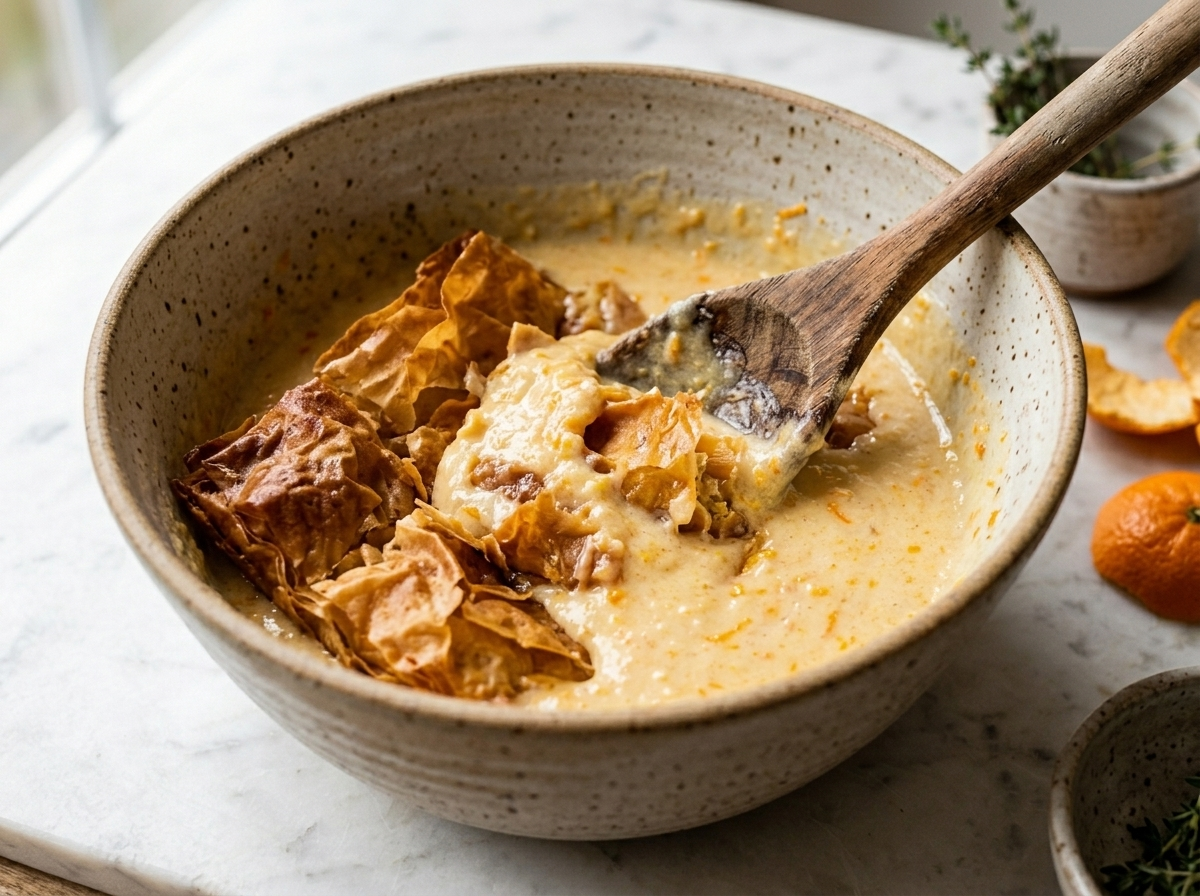
- Add the crumbled phyllo pieces to the batter. Use a wooden spoon to fold them in gently until every piece is coated. The batter will look rough and lumpy. That is correct.
- Pour the batter into the prepared pan and spread it out evenly with the spoon.
- Bake for 45 to 50 minutes until the top is deep golden and a toothpick inserted in the center comes out clean. The edges should pull slightly from the sides of the pan.
- About 15 minutes before the cake finishes baking, combine the sugar, water, orange juice, orange zest strips, and cinnamon in a small saucepan over medium heat.
- Stir until the sugar dissolves, then bring to a gentle boil. Simmer for 5 minutes until slightly thickened. Remove from heat and discard the zest strips.
- As soon as the cake comes out of the oven, pour the hot syrup slowly and evenly over the entire surface. You'll hear it sizzle as it soaks in.
- Leave the cake uncovered in the pan to cool and absorb the syrup for at least 2 hours before slicing. Overnight is better.
Notes
Tips for Success
- Dry out the thawed phyllo sheets uncovered for 45 to 60 minutes so they crumble properly into the batter.
- Pour the hot syrup over the hot cake immediately out of the oven so the phyllo absorbs it evenly.
- Mix the batter thoroughly before folding in the phyllo to avoid pockets of unmixed yogurt.
- Use a deep 9×13 inch baking pan so the batter has room to puff without spilling.
- Let the cake rest at least 2 hours before slicing so the syrup distributes fully through every layer.
Variations
- Add 1 tsp vanilla extract to the batter for a warmer, slightly sweeter base note alongside the orange.
- Swap orange for lemon zest and juice and add a handful of poppy seeds to the batter for a sharper citrus version.
- Stir 1 tsp orange blossom water into the syrup for a floral finish common in Middle Eastern-influenced Greek baking.
Storage and Reheating
Store the cake covered at room temperature for up to 3 days. It actually improves overnight as the syrup settles deeper into the phyllo layers.
For longer storage, refrigerate covered for up to 5 days. Bring slices to room temperature before serving, about 20 minutes on the counter, or warm briefly in a 150 C / 300 F oven for 5 minutes.
This cake does not freeze well. The syrup-soaked phyllo turns mushy on thawing, so make what you plan to eat within the week.
Serving Suggestions
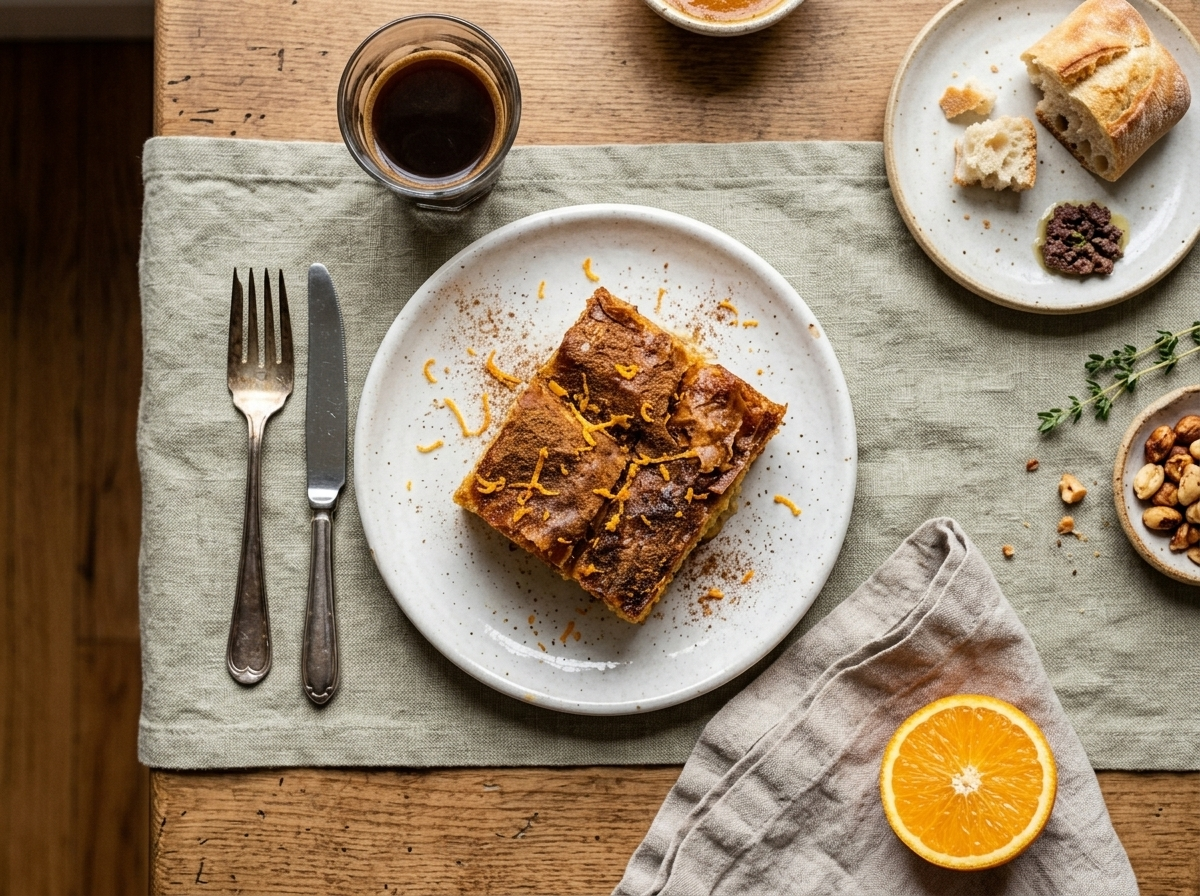
Serve at room temperature with a spoonful of thick Greek yogurt on the side. The tang cuts through the sweetness without competing with the orange syrup.
A small cup of Greek coffee or strong black tea goes well alongside a slice, and the bitterness balances the sugar in the syrup the same way it pairs with honey-sweetened pastry bites.
For a dessert table, dust the top with a light shake of cinnamon or lay a few thin orange slices over the surface before baking for a cleaner presentation.
FAQ
Why is my portokalopita soggy instead of set?
The most common cause is phyllo that wasn’t dried out before going into the batter. If the sheets are still soft and flexible, they hold moisture instead of absorbing the syrup properly. Lay the thawed sheets out for at least 45 minutes before you crumble them.
Can I use store-bought orange juice instead of fresh orange in the syrup?
You can, but the syrup will taste flatter without the zest oils from a fresh orange. If you only have carton juice, add the zest of one orange to the syrup while it simmers, then strain it out.
How do I know when portokalopita is done baking?
The top should be deep golden and firm to a light press in the center. A toothpick inserted in the middle should come out clean, with no wet batter clinging to it. The edges will pull away slightly from the pan sides.
Can I make Greek orange phyllo cake a day ahead for a party?
Yes, and it’s one of those cakes that genuinely benefits from sitting overnight. Make it the day before, leave it covered at room temperature, and slice it just before serving. The texture tightens up and the syrup distributes more evenly.
Is portokalopita the same as galaktoboureko?
No, they’re quite different despite both using phyllo. Galaktoboureko is a layered custard pie with flat sheets of phyllo on top and bottom. Portokalopita crumbles the phyllo into a yogurt-orange batter, giving it a completely different crumb and texture.
Is Greek orange phyllo cake vegetarian?
Yes, portokalopita contains no meat or fish. It does contain eggs and dairy (Greek yogurt), so it’s not vegan. It also contains gluten from the phyllo dough.
