
Jump to Recipe
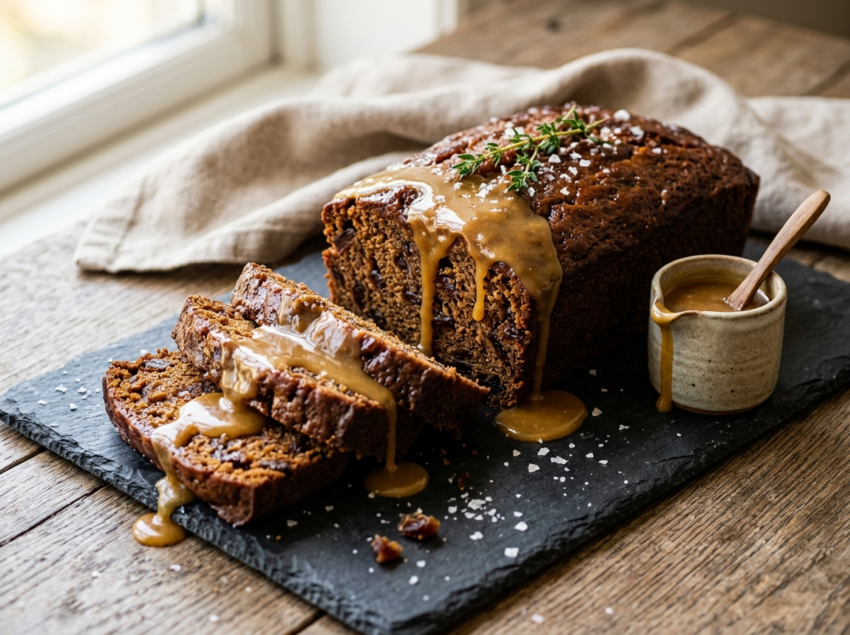
There’s something about a sticky toffee cake that feels less like dessert and more like a decision you’ll be glad you made.
This version bakes in a standard 900 g loaf tin, which keeps things straightforward. No round layers to level, no frosting to fuss with. Just one pan, one sauce, and a kitchen that smells like caramelized butter for the rest of the day.
The dates are the whole point here. Medjool dates soaked in boiling water and baking soda collapse into a soft, sticky paste that blends invisibly into the batter. Nobody knows they’re eating dates. Everyone asks for a second slice.
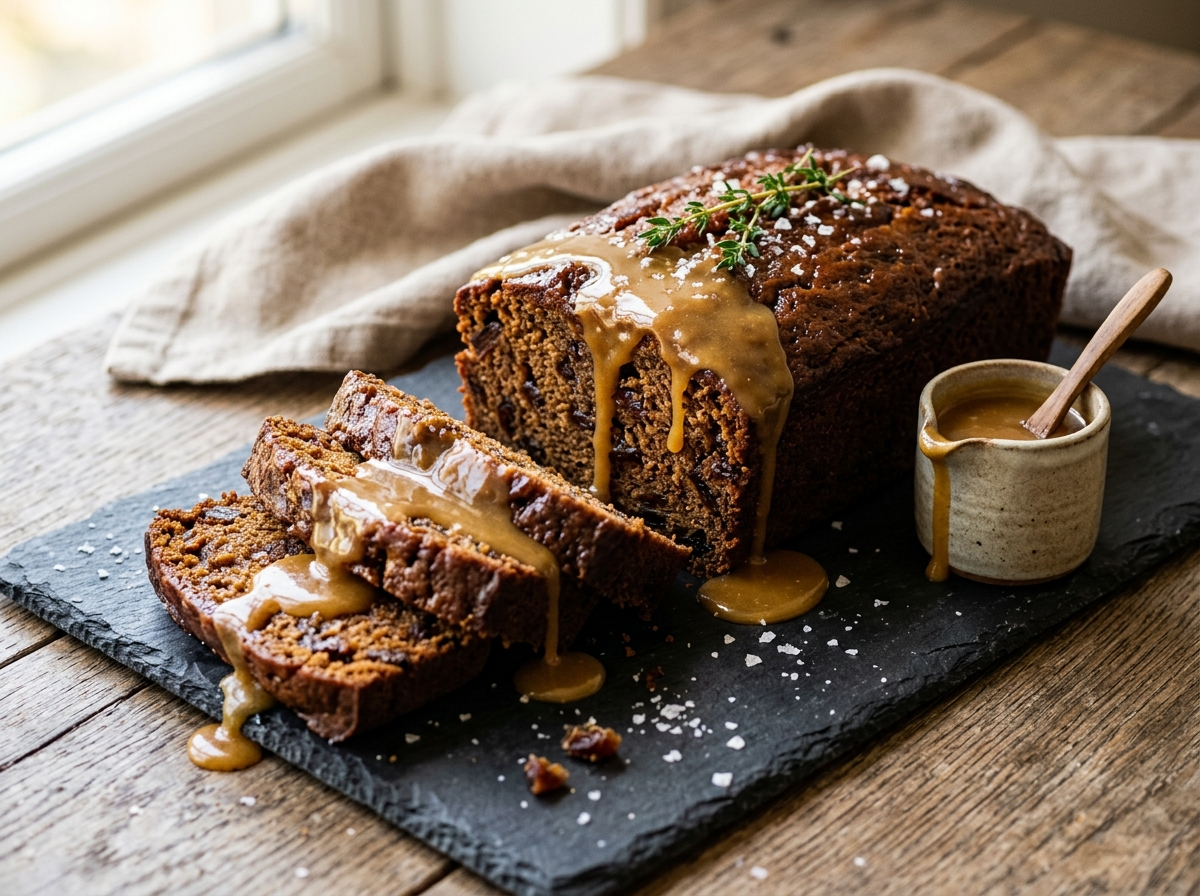
The toffee sauce is brown butter-based, which means it has a nutty depth that a plain butter-and-cream sauce doesn’t — the same principle that makes a buckwheat apple cake with brown sugar taste more complex than its ingredients suggest. It takes about five minutes on the stove and keeps in the fridge for a week.
Why You’ll Love This Recipe
- One loaf tin, minimal cleanup, maximum result.
- Medjool dates dissolve into the batter for invisible moisture.
- Brown butter toffee sauce ready in under five minutes.
- Freezes in slices for an instant dessert any night.
Ingredient Notes
- Medjool dates: Medjool dates are softer and more caramel-flavored than standard dried dates, which means they break down faster and produce a moister crumb. Deglet Noor dates work as a substitute but add an extra minute of soaking time.
- Bicarbonate of soda: Added to the hot water when soaking the dates, the bicarb reacts to soften the date skins and helps the mixture turn a deep mahogany color. Don’t substitute baking powder here – the chemistry is different.
- Dark muscovado sugar: Muscovado has a high molasses content that drives the deep toffee flavor in the crumb. Dark brown soft sugar is the closest substitute if you can’t find it.
- Double cream (heavy cream): Used in the toffee sauce for richness and a pourable consistency. Single cream or half-and-half will make a thinner sauce that won’t coat the cake as well.
- Unsalted butter: Browning the butter for the sauce is optional but adds a nutty layer that plain melted butter lacks. Use salted butter in the sauce only if you like a sharper, more contrasted sweetness.
- Self-raising flour: Common in British baking and gives just enough lift without making the loaf too airy. If using plain flour, add 1.5 tsp baking powder per 200 g flour.
Sticky Toffee Loaf Cake with Medjool Dates and Brown Butter Toffee Sauce
Ingredients
Method
- Heat the oven to 170 C / 340 F fan-assisted (or 180 C / 355 F conventional). Grease a 900 g loaf tin and line with a parchment strip that overhangs the two long sides.
- Place the chopped dates in a heatproof bowl. Pour over the boiling water, add the bicarbonate of soda, and stir once. Leave to soak for 10 to 12 minutes until the dates are completely soft.
- Mash the soaked date mixture with a fork until it forms a rough, dark paste. A few small lumps are fine.
- In a large mixing bowl, beat the softened butter and muscovado sugar together with a hand mixer or wooden spoon for 2 minutes until lightened and creamy.
- Add the eggs one at a time, beating well after each addition. Mix in the vanilla extract.
- Fold in the self-raising flour and salt with a spatula until just combined - don't overmix.
- Add the date paste and fold it through the batter until evenly distributed. The batter will turn a deep brown color and look quite loose. That's correct.
- Pour the batter into the prepared loaf tin and smooth the top with the back of a spoon.
- Bake for 50 to 55 minutes until a skewer inserted into the center comes out with moist crumbs but no wet batter. If the top is browning too fast after 40 minutes, lay a sheet of foil loosely over the tin.
- Rest the loaf in the tin for 10 minutes, then lift out using the parchment overhang and transfer to a wire rack.
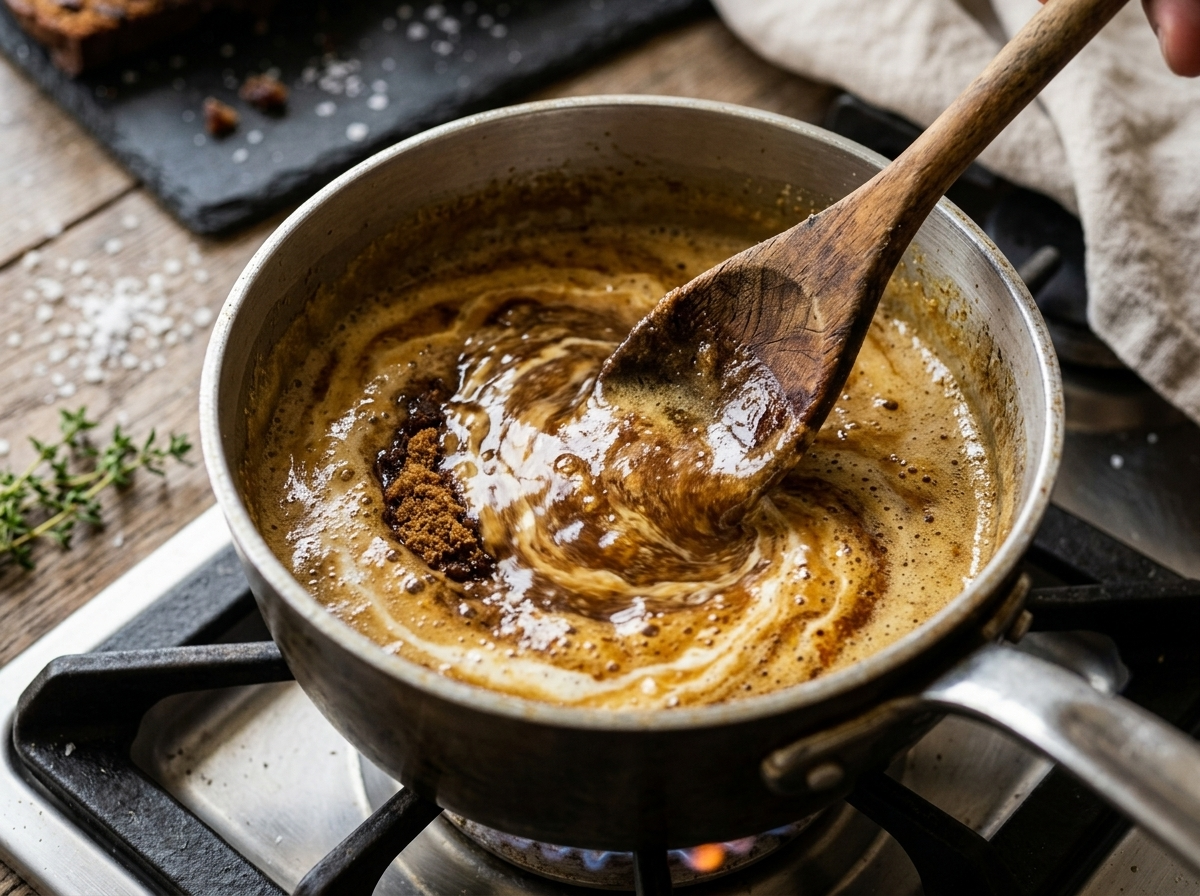
- Melt the butter in a small heavy-bottomed saucepan over medium heat. Continue cooking, swirling the pan occasionally, for 3 to 4 minutes until the butter turns golden and smells nutty. You'll see small brown specks forming on the bottom of the pan.
- Add the muscovado sugar and stir to combine. Pour in the cream and stir continuously for 2 minutes until the sugar dissolves and the sauce is smooth and glossy.
- Remove from heat, stir in the flaky salt if using, and let the sauce cool for 2 minutes before serving. It will thicken slightly as it cools.
- Slice the warm loaf and arrange on plates. Pour the toffee sauce over each slice generously. Serve with vanilla ice cream, clotted cream, or creme fraiche alongside.
Notes
Tips for Success
- Soak dates in boiling water for at least 10 minutes before mixing – they need to be fully soft.
- Mash the soaked date mixture with a fork until it resembles a rough paste before folding into batter.
- Pour toffee sauce over the cake while both are still warm so the sauce soaks into the top crust.
- Test the loaf at 50 minutes with a skewer – it should come out with moist crumbs, not wet batter.
- Brown the butter for the sauce until you see golden specks and smell a nutty aroma, then immediately add the cream.
Variations
- Stir 50 g of finely chopped walnuts into the batter for crunch against the soft date crumb.
- Add 1 tsp of ground ginger and half a tsp of cinnamon to the dry ingredients for a spiced winter version.
- Swap the toffee sauce for a salted caramel version by adding half a tsp of flaky sea salt to the finished sauce.
Storage and Reheating
Store the cooled loaf wrapped in foil or in an airtight container at room temperature for up to 3 days. Keep the toffee sauce in a sealed jar in the fridge for up to 7 days.
To freeze, slice the cooled loaf, wrap individual slices in cling film, and freeze for up to 2 months. Thaw slices at room temperature for about an hour.
Reheat slices in a microwave for 20 to 30 seconds on medium power. Warm the refrigerated toffee sauce in a small saucepan over low heat, stirring until pourable, or microwave it in 15-second bursts.
Serving Suggestions
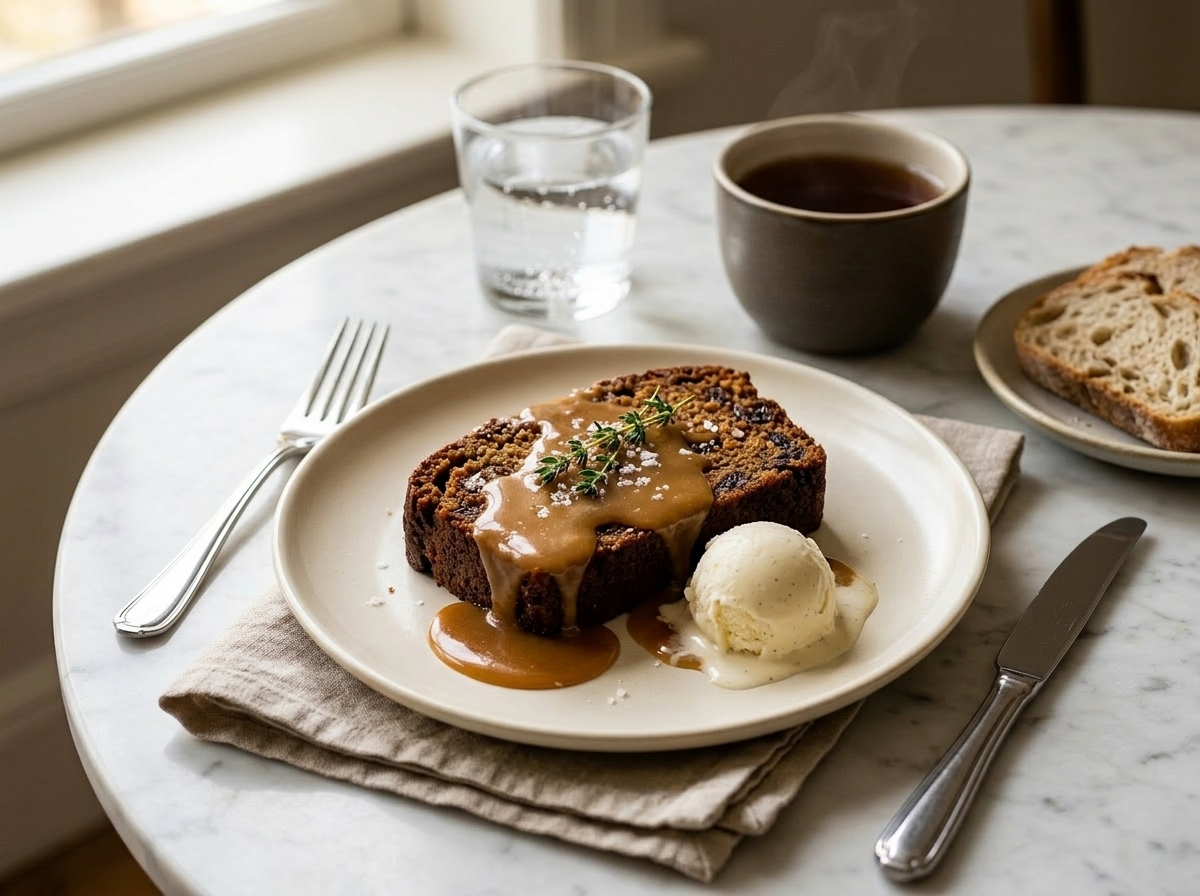
Serve warm slices with a generous pour of toffee sauce and a scoop of vanilla ice cream on the side, or alongside a creamy vanilla bean pudding if you want to lean into the custard direction. The contrast between the cold ice cream and warm sauce is the whole point.
For a more restrained option, a dollop of thick clotted cream or creme fraiche cuts through the sweetness without adding more sugar.
At room temperature the loaf is also good on its own with a cup of strong black tea or filter coffee. It’s dense enough to hold up without the sauce if you’re just after a slice mid-afternoon.
FAQ
Why is my sticky toffee loaf cake sinking in the middle?
A sunken center usually means the loaf came out of the oven too early or the oven temperature was too high. Check with a skewer at 50 minutes – if it comes out wet, give the loaf another 5 to 8 minutes. Covering loosely with foil prevents over-browning on top while the center finishes.
Can I use regular dried dates instead of Medjool dates in this loaf?
Yes, but standard dried dates are firmer and less naturally sweet, so soak them for at least 15 minutes instead of 10. The finished loaf will be slightly less rich and the date paste will be a little more textured.
Can I make the sticky toffee loaf a day ahead and still serve it with warm sauce?
The loaf actually improves overnight as the moisture from the dates settles through the crumb. Bake it the day before, wrap it tightly, and store at room temperature. Reheat slices and make the sauce fresh just before serving.
What goes well with sticky toffee loaf cake besides vanilla ice cream?
Clotted cream, creme fraiche, or a lightly whipped cream with a pinch of salt all work well alongside the toffee sauce. A strong cup of Assam tea or a double espresso balances the sweetness if you’re serving this in the afternoon.
Is sticky toffee loaf cake suitable for a gluten-free diet?
Not as written – the recipe uses self-raising flour which contains gluten. You can substitute a 1:1 gluten-free self-raising flour blend, though the crumb will be slightly more dense. Check that your baking powder is also certified gluten-free.
What’s the difference between sticky toffee pudding and sticky toffee loaf cake?
Traditional sticky toffee pudding is baked in individual ramekins or a shallow baking dish and is typically softer and more pudding-like in texture. This loaf version has a firmer, sliceable crumb that holds together at room temperature, making it easier to store, transport, and serve in clean portions.
