
Jump to Recipe
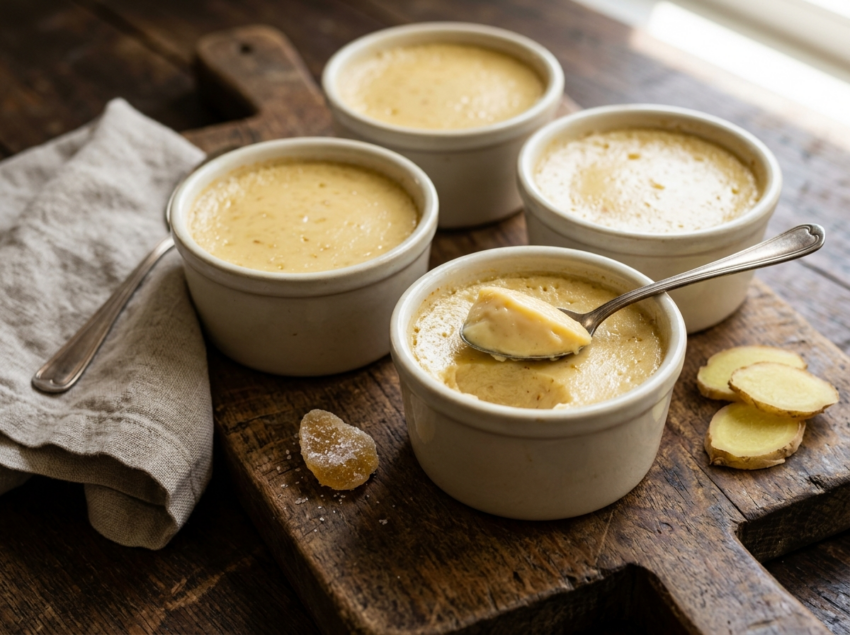
There’s something deeply satisfying about a custard that holds its shape when you cut into it but still collapses on the spoon.
This ginger coconut custard is made with full-fat coconut milk, fresh ginger, eggs, and a small amount of sugar. No cream, no cow’s milk. The coconut fat carries the custard beautifully and gives it a rich, slightly tropical flavor that pairs oddly well with the sharp heat of ginger.
I first made a version of this after eating a steamed egg custard at a Vietnamese restaurant. I wanted something in that same family as a baked coconut custard – quiet, smooth, not too sweet – but with bolder flavors.
It takes about 25 minutes to bake in a water bath and a couple of hours to chill. That’s mostly hands-off time. The active work is maybe 10 minutes.
Why You’ll Love This Recipe
- Dairy-free but still rich and creamy in texture
- Fresh ginger gives a clean heat, not artificial bite
- Minimal ingredients, almost no active cooking time
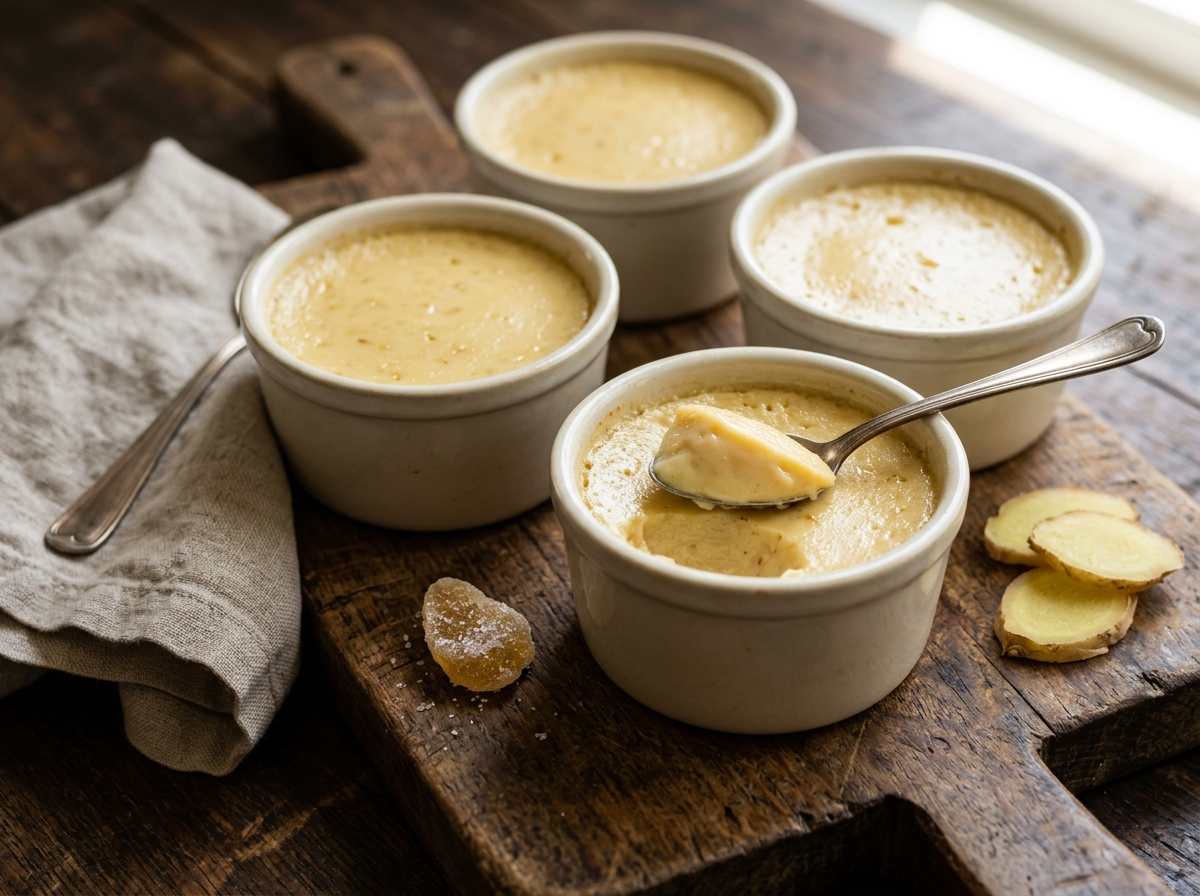
- Sets beautifully for neat slices or rustic spoonfuls
Ingredient Notes
- full-fat coconut milk: Use canned full-fat, not light or carton coconut milk. Light versions don’t have enough fat to set the custard properly.
- fresh ginger root: Fresh ginger gives a brighter, sharper heat than ground. Peel and grate finely so it infuses evenly into the warm milk – no stringy bits.
- egg yolks: Yolks only give a denser, creamier texture. If you use whole eggs, the custard will be slightly firmer and a little less silky.
- caster sugar: Caster sugar dissolves faster in warm liquid than granulated. Granulated works fine, just stir a little longer.
- vanilla extract: Optional but rounds out the ginger so it doesn’t feel one-dimensional. A small pinch of ground turmeric instead adds a subtle earthiness and a golden color.
- salt: A small pinch of salt makes the coconut flavor taste more coconut-y. Don’t skip it even though the recipe is sweet.
Ginger Coconut Custard
Ingredients
Method
- Heat the oven to 150 C / 300 F. Place 4 ramekins in a deep roasting pan and set aside.
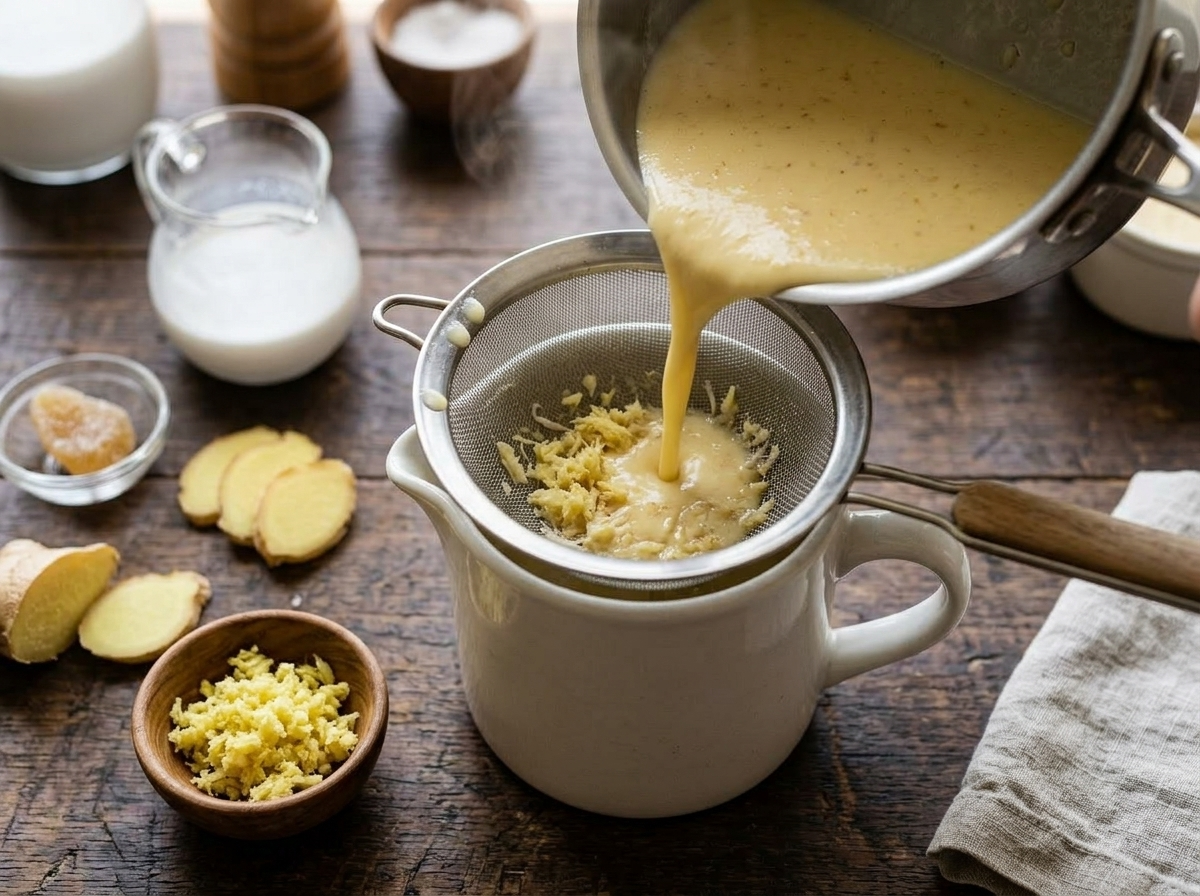
- Pour the coconut milk into a medium saucepan. Add the grated ginger and heat over low heat, stirring occasionally, until steaming but not simmering - about 5 minutes. Remove from heat and let the ginger infuse for 5 more minutes.
- Whisk the egg yolks, caster sugar, vanilla extract, and salt in a mixing bowl until the sugar dissolves and the mixture turns pale, about 2 minutes.
- Strain the warm coconut milk through a fine-mesh sieve directly into the egg mixture, discarding the ginger solids. Whisk slowly and steadily to combine without creating foam.
- Ladle the custard mixture evenly into the 4 ramekins, filling each about three-quarters full.
- Place the roasting pan in the oven, then carefully pour hot water around the ramekins until it reaches halfway up their sides. Bake for 25 minutes, until the edges are just set and the center has a slight wobble when you nudge the pan.
- Lift the ramekins out of the water bath using tongs or a folded dish towel. Let them cool to room temperature, then cover and refrigerate for at least 2 hours before serving.
Notes
Tips for Success
- Warm the coconut milk and ginger together slowly to infuse flavor before adding eggs.
- Strain the mixture through a fine-mesh sieve to remove ginger fibers and any scrambled bits.
- Pour hot water into the roasting pan after placing the ramekins inside to avoid splashing custard.
- Check doneness by jiggling the pan – the edges should be set, the very center still has a slight wobble.
- Chill the custard for at least 2 hours before serving – the texture tightens and the ginger flavor deepens.
Variations
- Swap fresh ginger for 1 tsp ground ginger plus a pinch of cardamom for a warmer, spiced custard.
- Add 2 tbsp pandan extract with the coconut milk for a green-hued Southeast Asian version.
- Stir 1 tbsp palm sugar into the custard base instead of caster sugar for a deeper, caramel-like sweetness.
Storage and Reheating
Cooled custards keep well in the fridge, covered with plastic wrap pressed directly on the surface, for up to 3 days. The ginger flavor becomes more pronounced on day two.
Don’t reheat baked custard in the microwave – it turns rubbery fast. If you prefer it warm, set the ramekin in a bowl of hot water for 5 minutes.
These don’t freeze well. The egg and coconut structure breaks down and turns grainy after thawing.
Serving Suggestions
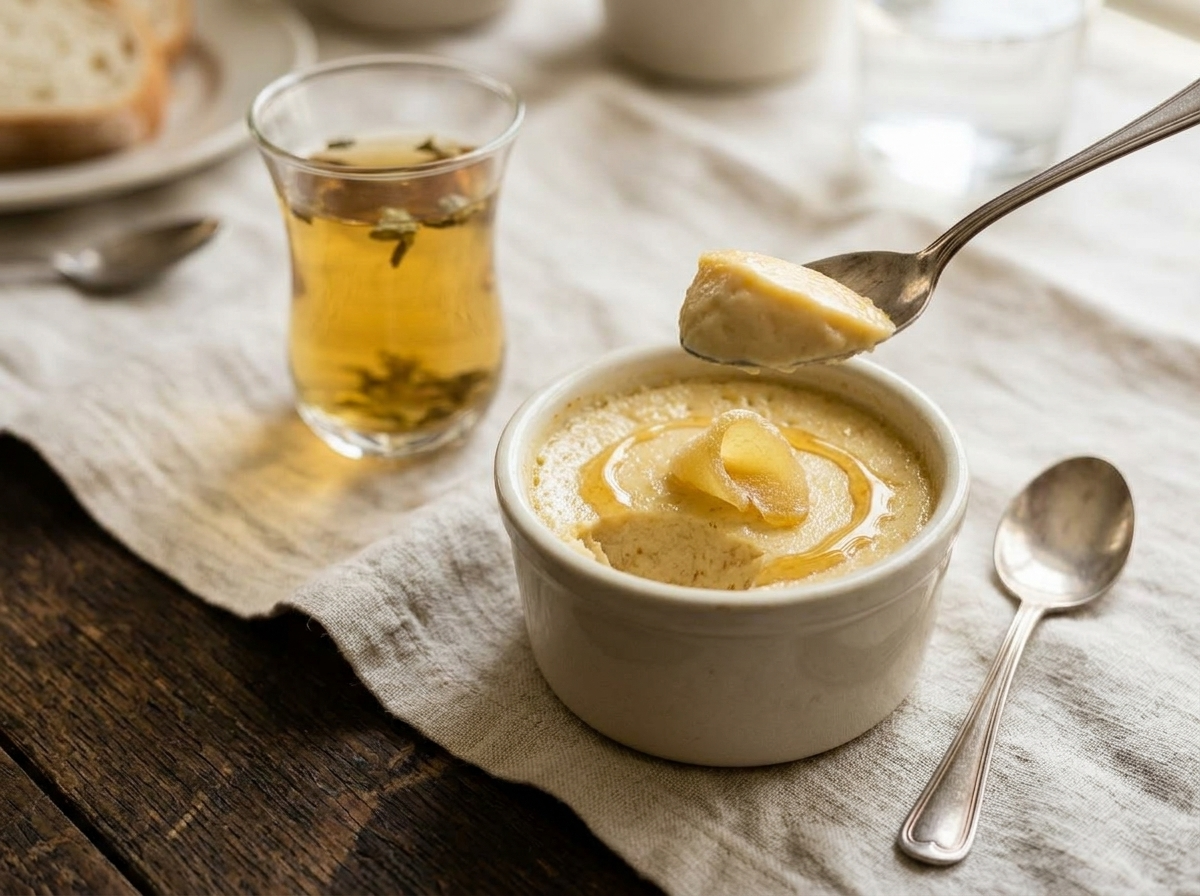
Serve chilled straight from the ramekin with a few thin slices of candied ginger on top and a drizzle of honey. The contrast between the cold custard and the chewy ginger works well.
For a more complete dessert, pair each portion with a small scoop of mango sorbet or a few fresh raspberries. The acidity cuts through the coconut richness.
If you want to unmold the custards onto a plate, run a thin knife around the edge of each ramekin and invert carefully. A light dusting of toasted coconut flakes finishes the presentation without much effort.
FAQ
Why is my ginger coconut custard watery in the middle after baking?
The center needs more time or the oven temperature was too high, which can cause the edges to overcook before the middle sets. Lower the oven to 150 C / 300 F and bake 5 to 10 minutes longer, checking for that slight wobble in the center only.
Can I use ground ginger instead of fresh ginger in this coconut custard?
Yes, use 1 teaspoon of ground ginger in place of the fresh-grated. The heat is drier and less bright, but the custard still tastes distinctly gingery. Whisk it directly into the sugar before adding to the coconut milk.
Can I make ginger coconut custard the day before a dinner party?
It’s actually better made the day before – the texture firms up overnight and the ginger flavor deepens. Keep the ramekins covered tightly in the fridge and add any toppings just before serving.
What pairs well with ginger coconut custard for a dessert plate?
Fresh mango slices, lime zest, or a small pour of passion fruit pulp all complement the coconut and ginger without competing. A sesame coconut candy slab or a ginger snap cookie on the side adds crunch.
Is ginger coconut custard gluten-free?
Yes, there’s no flour or thickener in this recipe – just eggs, coconut milk, sugar, ginger, and salt. Check that your vanilla extract is labeled gluten-free if that’s a concern.
How is this ginger coconut custard different from a Thai sankaya?
Thai sankaya is traditionally steamed inside a whole pumpkin or young coconut shell and uses palm sugar for a darker, more caramel flavor – closer in sweetness to a silky taro coconut pudding than this version. This version is oven-baked in ramekins with fresh ginger as the dominant flavor, making it sharper and less sweet.
