
Jump to Recipe
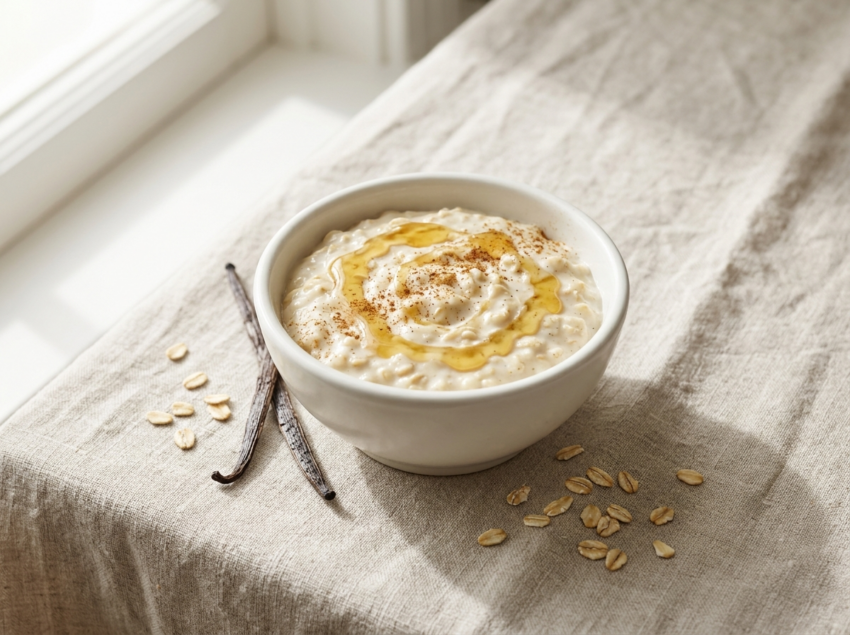
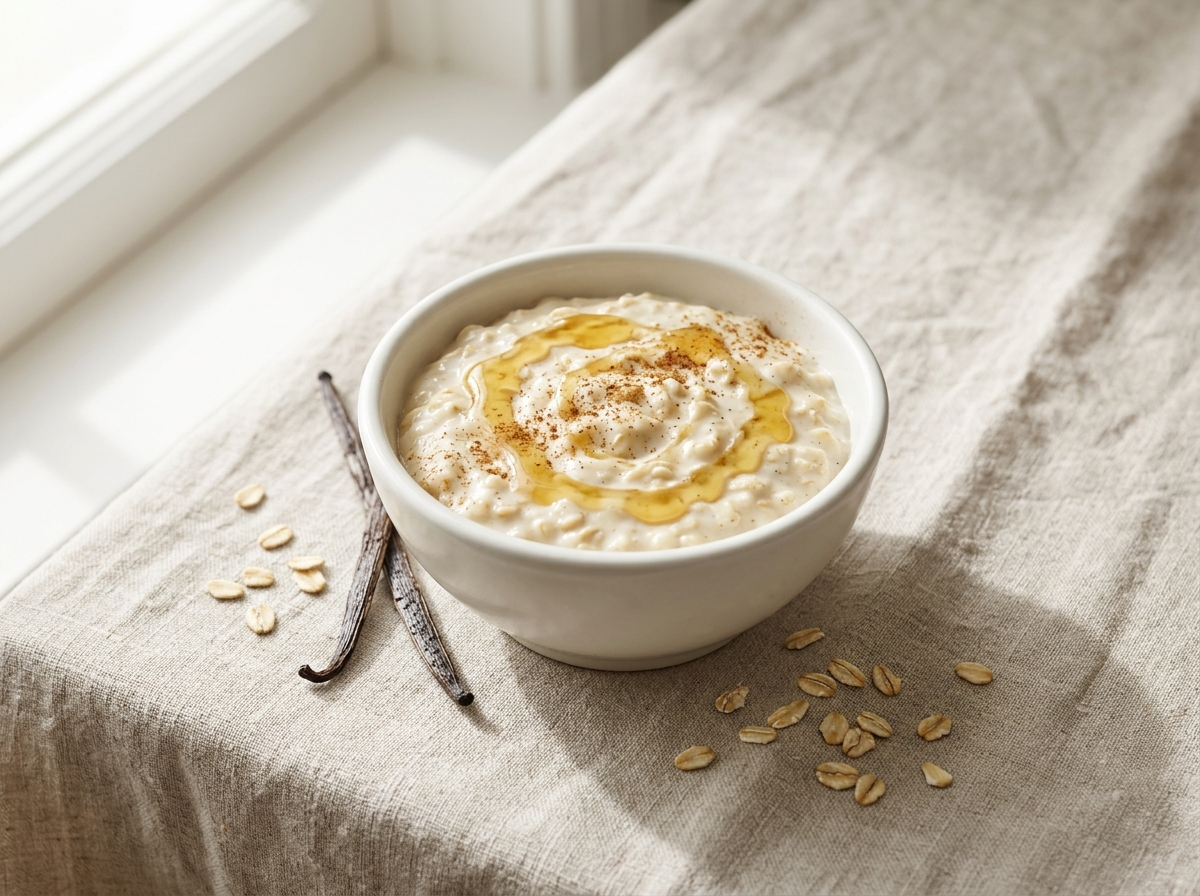
There’s something about a warm bowl of vanilla pudding that feels like a reset after a long day. This version adds rolled oats to the base, which gives it more body and a subtle nuttiness that plain dairy pudding just doesn’t have.
I started making this on quiet Sunday evenings when I wanted dessert without pulling out a mixer or turning on the oven. Five ingredients, one saucepan, twenty-five minutes.
The oats cook down into the milk until the whole thing is thick and creamy – not gluey, not grainy. Just smooth and satisfying.
It works warm, straight from the pot, or chilled and set in small glasses for a make-ahead creamy vanilla pudding that looks far more composed than the effort it takes.
Why You’ll Love This Recipe
- Ready in 25 minutes with just one saucepan
- Oats thicken naturally – no cornstarch needed
- Works warm or chilled for make-ahead ease
- Mild vanilla flavor kids and adults both enjoy
Ingredient Notes
- Rolled oats: Use old-fashioned rolled oats, not quick oats or steel-cut. Quick oats turn mushy fast; steel-cut won’t soften in time.
- Whole milk: Whole milk gives the creamiest result. You can use 2% but the pudding will be slightly thinner. For dairy-free, oat milk works well here.
- Egg yolks: Two yolks add richness and help the pudding set to a custardy consistency. Don’t skip them or the texture will be looser.
- Vanilla extract: Use pure vanilla extract, not imitation. If you have a vanilla bean, split and scrape half of it into the milk instead.
- Brown sugar: Light brown sugar adds a faint caramel note. White sugar works too if that’s what you have, but the flavor will be slightly flatter.
- Salt: A small pinch of fine salt sharpens the vanilla flavor. Don’t skip it – unsalted pudding tastes flat.
Vanilla Oat Pudding Dessert
Ingredients
Method
- Pour the milk into a 2-quart heavy-bottomed saucepan and set over medium heat. Warm until steaming and small bubbles appear at the edges, about 4 to 5 minutes. Do not let it boil.
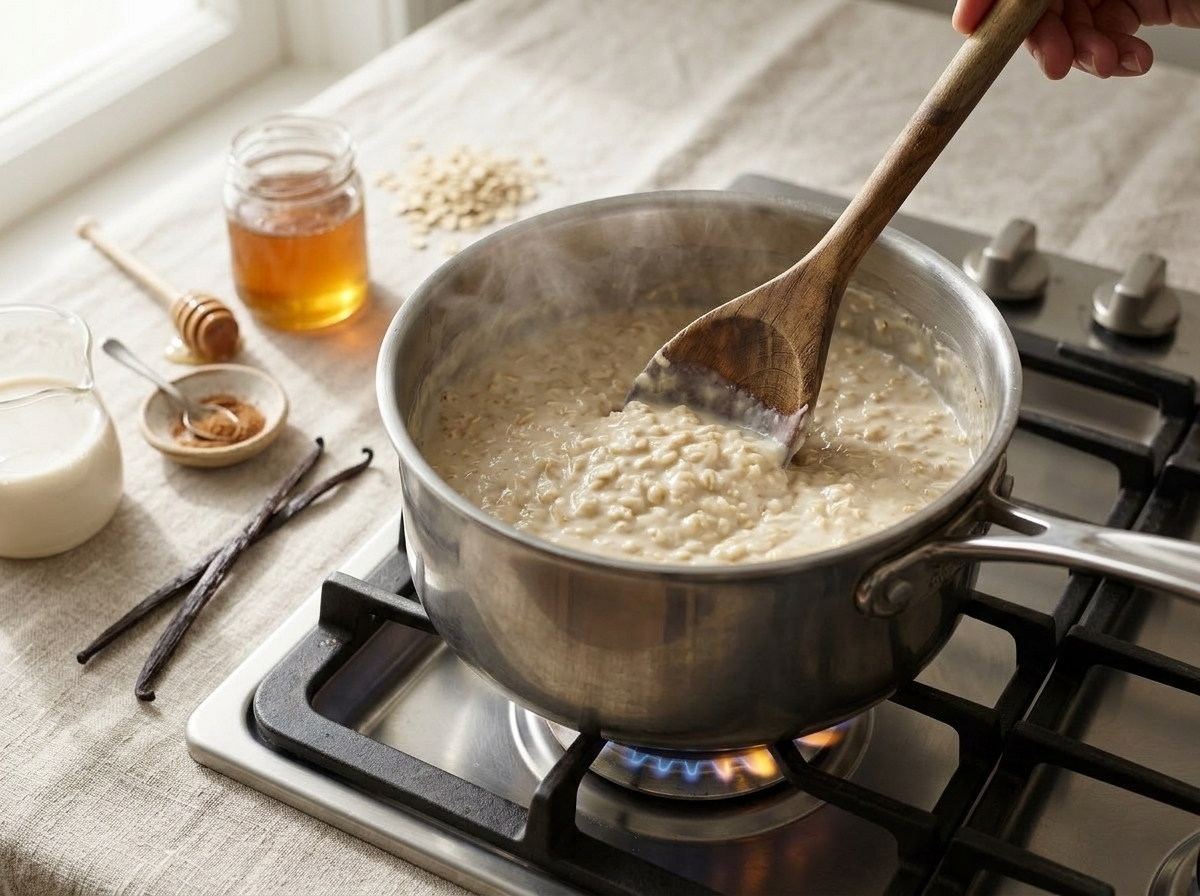
- Stir in the rolled oats and brown sugar. Reduce heat to medium-low and cook, stirring often, for 12 to 15 minutes until the oats are soft and the mixture has thickened noticeably.
- While the oats cook, whisk the egg yolks and salt together in a medium bowl until pale and slightly thickened, about 1 minute.
- Temper the yolks: ladle about 80 ml of the hot oat mixture into the yolks while whisking constantly. Then ladle in a second scoop and whisk again. This prevents scrambling.
- Pour the tempered yolk mixture back into the saucepan in a slow stream, stirring the pot constantly. Cook over medium-low heat for 3 to 4 minutes, stirring without stopping, until the pudding coats the back of a spoon and leaves a clean line when you drag your finger across it.
- Remove from heat and stir in the vanilla extract and butter, if using. Stir for 30 seconds until the butter melts and the pudding looks glossy.
- Spoon into bowls to serve warm, or pour into small glasses, press plastic wrap directly onto the surface, and refrigerate for at least 2 hours to serve chilled.
Notes
Tips for Success
- Temper the egg yolks by whisking a ladle of hot milk mixture into them before adding back to the pot.
- Stir constantly once the yolks go in to prevent scrambled egg texture at the bottom.
- Pull the pot off heat as soon as the pudding coats a spoon thickly – it firms up more as it cools.
- Press plastic wrap directly onto the pudding surface before chilling to stop a skin forming.
- Rinse the saucepan with cold water before adding milk to reduce scorching on the pan bottom.
Variations
- Stir 2 tbsp cocoa powder into the milk for a chocolate oat pudding version.
- Add a cinnamon stick to the milk while it heats, then remove before serving for spiced pudding.
- Fold in 3 tbsp peanut butter at the end for a protein-rich, nutty oat pudding variation.
Storage and Reheating
Store cooled pudding in individual airtight containers in the fridge for up to 4 days. Press plastic wrap directly onto the surface each time to keep it smooth.
To reheat, spoon into a small saucepan over low heat and stir in 1 to 2 tbsp of milk to loosen it back to a pourable consistency. Don’t rush it – low and slow keeps the texture even.
This pudding doesn’t freeze well. The oats and custard base separate when thawed, leaving a grainy texture that doesn’t recover even with stirring.
Serving Suggestions
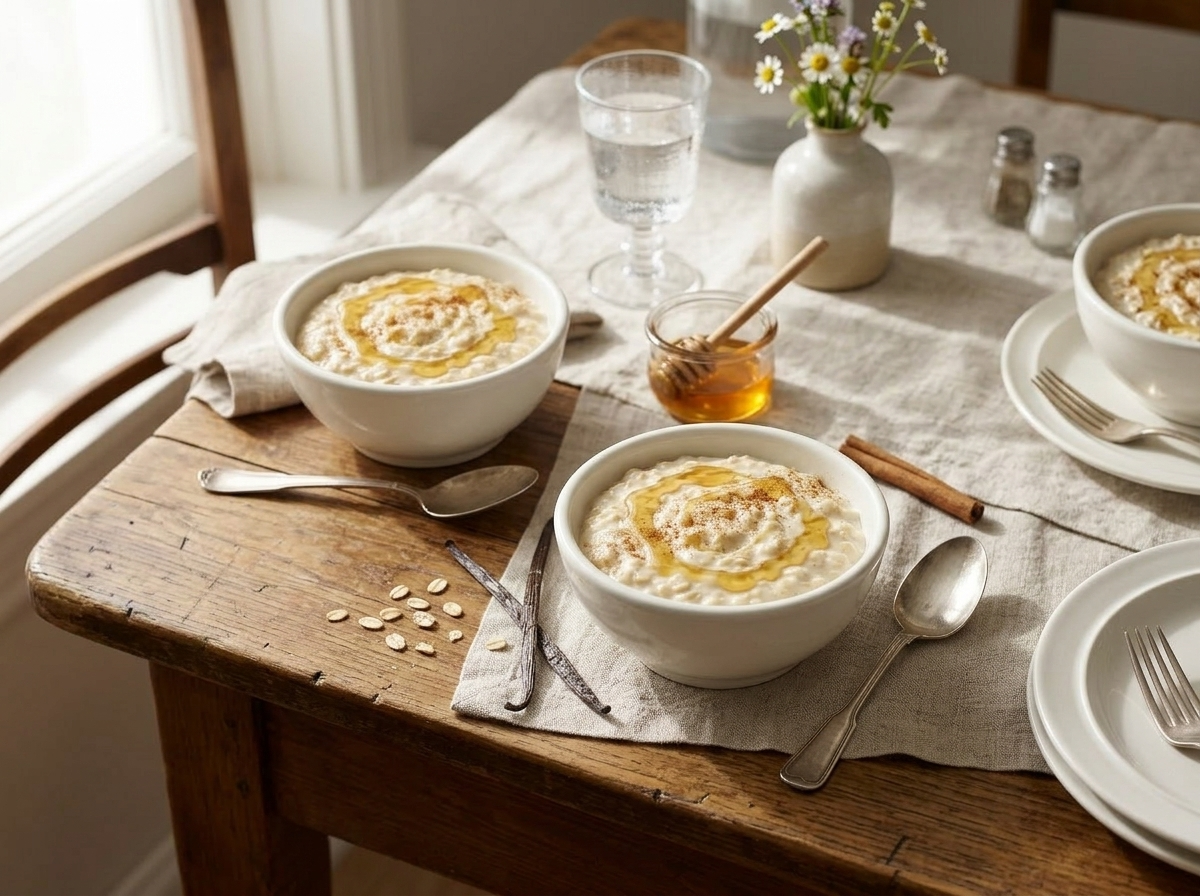
Serve warm in deep bowls with a drizzle of honey and a small handful of granola on top for crunch. A few thin apple slices or sliced banana on the side balance the sweetness.
For a chilled presentation, pour the warm pudding into small glasses or ramekins and refrigerate for at least 2 hours, much like a floral jelly set in glasses — top with whipped cream and a light dusting of cinnamon before bringing to the table.
This pudding also pairs well alongside a cup of strong black coffee or chai. The vanilla and oat base are mild enough to work with almost any warm drink.
FAQ
Why is my vanilla oat pudding lumpy instead of smooth?
Lumps usually mean the egg yolks got too hot too fast and scrambled slightly. Always temper them first by whisking a ladle of hot milk into the yolks before adding them to the pot. Stir constantly over medium-low heat and you’ll get a smooth result.
Can I use oat milk instead of whole milk in this oat pudding?
Yes, oat milk works as a swap and keeps the oat flavor consistent. The pudding will be slightly less rich and may need an extra minute of cooking to reach the same thickness.
How do I know when the vanilla oat pudding is thick enough to take off the heat?
Drag a spoon through the pudding and run your finger across the back – it should leave a clean line that holds without the pudding running back together. That’s the right consistency. It will thicken a little more as it cools.
Can I make this vanilla oat pudding the night before and serve it cold?
Absolutely. Pour into glasses or ramekins right after cooking, press plastic wrap onto the surface, and refrigerate overnight. It sets to a firm, spoonable consistency that works well as a chilled dessert.
Is vanilla oat pudding gluten-free?
Standard rolled oats contain no gluten naturally, but most are processed in facilities that also handle wheat. If you need this to be gluten-free, use oats that are labeled certified gluten-free. All other ingredients in the recipe are naturally gluten-free.
What’s the difference between vanilla oat pudding and regular rice pudding?
Rice pudding uses cooked rice as the starch base and tends to have a chewier, more grainy texture. Oat pudding cooks faster and turns silkier because the oats break down more fully into the milk. The flavor is also slightly nuttier with oats.
