
Jump to Recipe
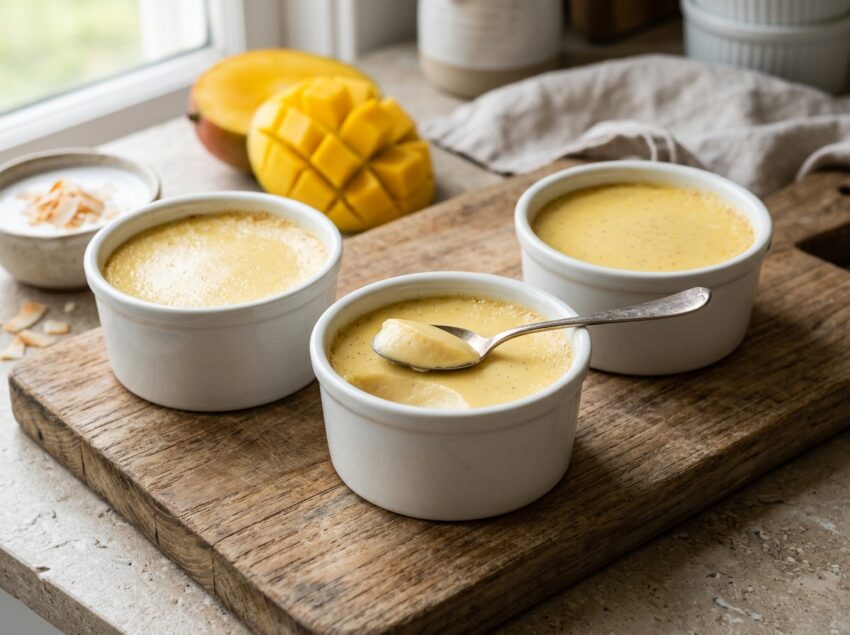
There’s something quietly satisfying about a custard that asks almost nothing of you. A few eggs, a can of coconut milk, some sugar – and forty minutes later you have a dessert that looks like you planned it.
This baked coconut custard comes from the Thai tradition of sangkaya, where coconut milk replaces dairy entirely. The result is richer than a standard egg custard, with a faint sweetness and a slightly golden top that firms as it cools.
I first had it steamed inside a small pumpkin at a Bangkok market. This oven-baked version is easier at home and just as good straight from a ramekin or turned out onto a plate.
It keeps well in the fridge and actually improves overnight, which makes it one of those rare desserts worth making the day before.
Why You’ll Love This Recipe
- Only 6 ingredients and one bowl needed
- Naturally dairy-free with full-fat coconut milk
- Firms up overnight – great for making ahead
- Slices cleanly or unmolds for a neat presentation
Ingredient Notes
- Full-fat coconut milk: Use canned, not carton. The higher fat content is what gives the custard its body. Light coconut milk will produce a looser, less creamy set.
- Palm sugar: Grated palm sugar adds a mild molasses note that white sugar can’t replicate. If you can’t find it, light brown sugar is the closest swap – use the same amount.
- Eggs: Four whole eggs at room temperature blend more evenly into the coconut milk. Cold eggs can cause the custard to curdle slightly at the edges.
- Pandan extract: Optional but traditional. Two drops add a faint floral, grassy note and a pale green tint. Vanilla extract works as a neutral substitute.
- Salt: A small pinch sharpens the coconut flavor and balances the sweetness. Don’t skip it even though the amount is tiny.
Baked Coconut Custard
Ingredients
Method
- Heat the oven to 150 C / 300 F. Place 6 ramekins inside a deep roasting pan and set aside.
- Warm the coconut milk in a saucepan over low heat until it just begins to steam, about 3 minutes. Add the grated palm sugar and salt, then stir until the sugar fully dissolves. Remove from heat.
- Crack the eggs into a mixing bowl and whisk lightly until the yolks and whites are combined but not foamy.
- Slowly pour the warm coconut milk mixture into the eggs in a thin stream, whisking constantly to prevent scrambling. Stir in the pandan or vanilla extract.
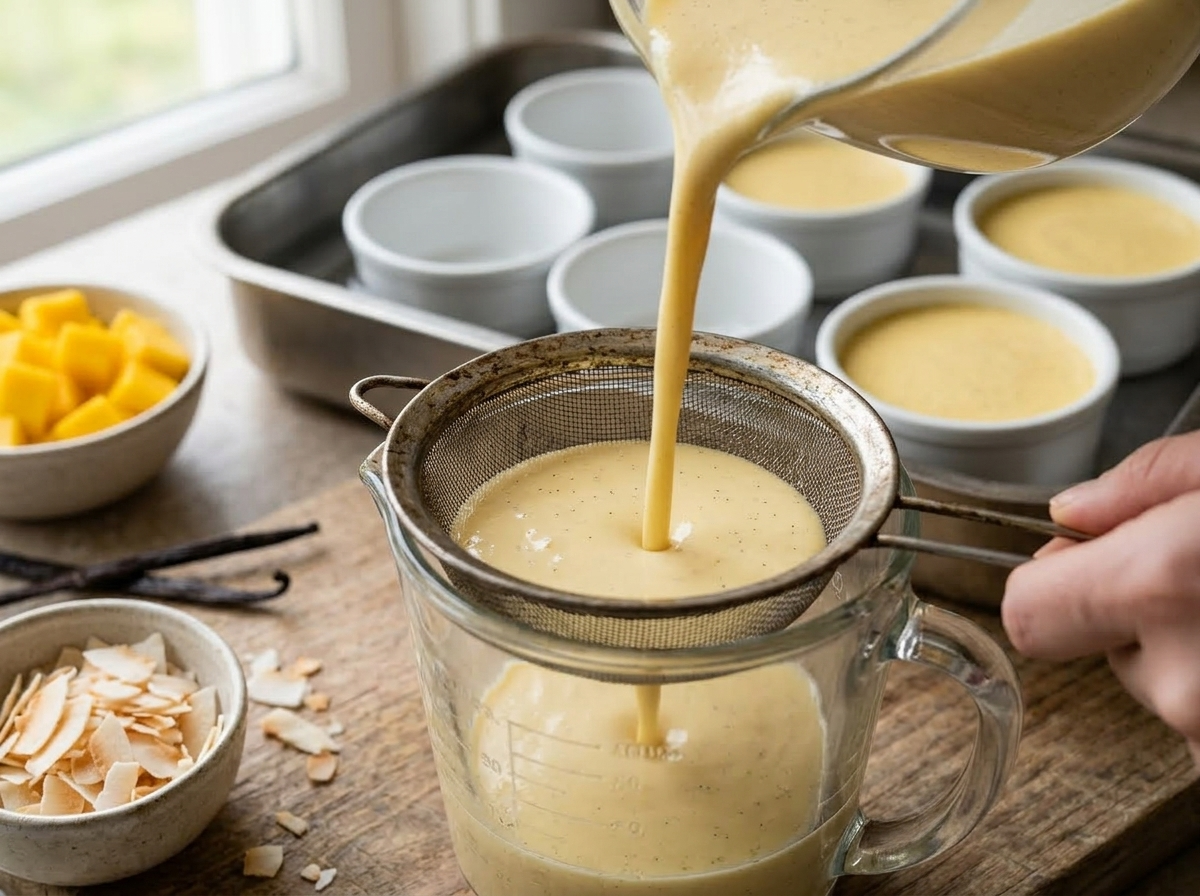
- Pour the custard through a fine-mesh sieve into a jug to remove any solids or foam.
- Divide the custard evenly among the ramekins, filling each to about 1 cm from the top.
- Pull the oven rack out slightly and place the roasting pan on it. Pour boiling water into the pan until it reaches halfway up the sides of the ramekins.
- Carefully slide the rack in and bake for 40 to 45 minutes, until the edges are set and the center has a slow, even wobble when the pan is nudged gently.
- Remove the ramekins from the water bath using tongs or a folded kitchen towel. Cool on a wire rack for 30 minutes.
- Cover each ramekin with plastic wrap and refrigerate for at least 2 hours, or overnight, before serving.
Notes
Tips for Success
- Strain the custard mixture through a fine-mesh sieve before pouring into ramekins to remove any chalazae or undissolved sugar.
- Fill the water bath pan to halfway up the sides of the ramekins – too shallow and the edges overcook before the center sets.
- Bake at 150 C / 300 F, not higher – a hot oven causes the eggs to scramble and leaves an unpleasant pitted surface.
- Check doneness by nudging the rack gently – the center should wobble like just-set jello but the edges should look firm and opaque.
- Cool ramekins on a wire rack for 30 minutes before refrigerating – moving them straight from a hot water bath to the fridge can crack the surface.
Variations
- Stir 2 tbsp pumpkin puree into the custard mix for an earthy, autumn-leaning version with a deeper color.
- Replace palm sugar with coconut sugar and add half a tsp of ground cardamom for a South Asian-inspired flavor.
- Pour the custard into a shallow pie dish, bake as a single large tart, and scatter toasted coconut flakes on top before serving.
Storage and Reheating
Cover each ramekin with plastic wrap and refrigerate for up to 4 days. The texture actually tightens and improves after the first 12 hours.
Do not freeze baked coconut custard. The egg proteins break down when frozen and thawed, leaving a grainy, separated texture that can’t be fixed.
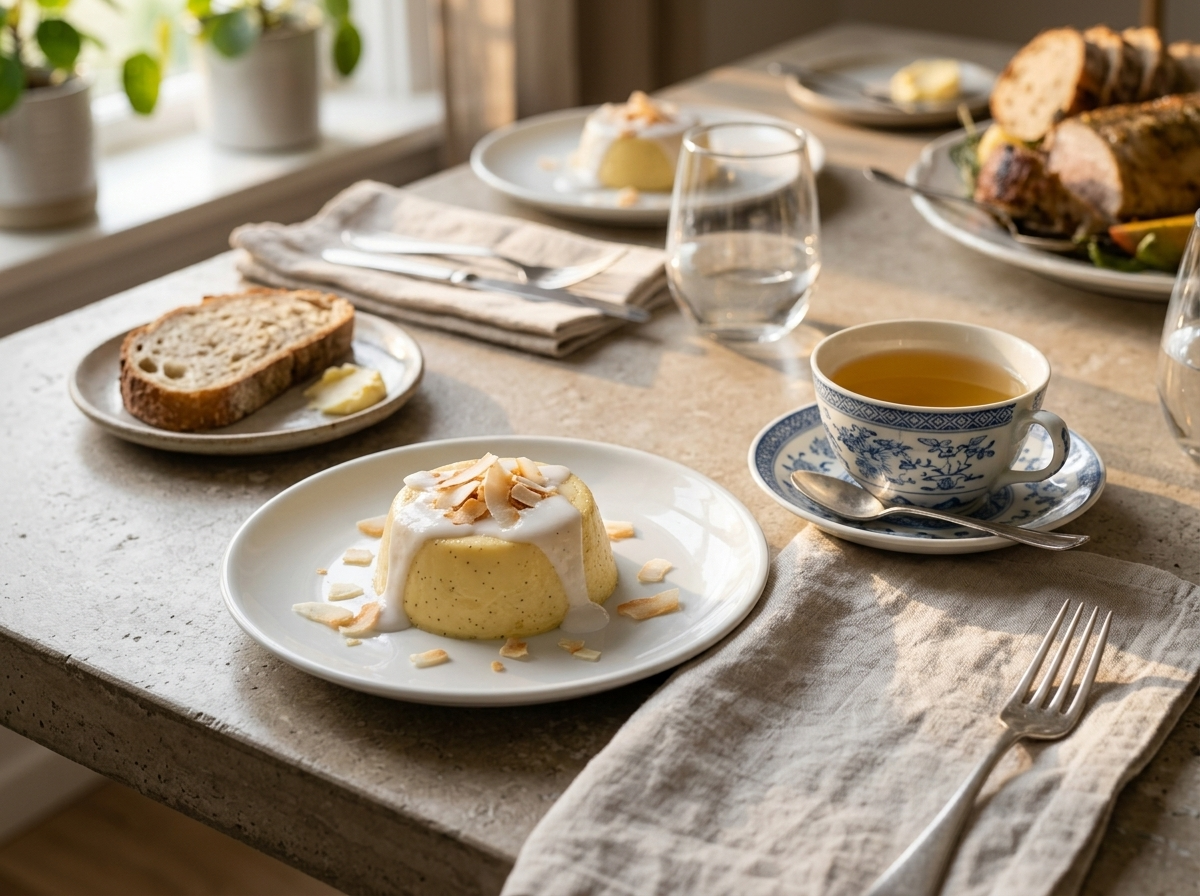
Serve cold or at room temperature – no reheating needed. If you want to unmold one, run a thin knife around the edge, place a small plate on top, and flip quickly.
Serving Suggestions
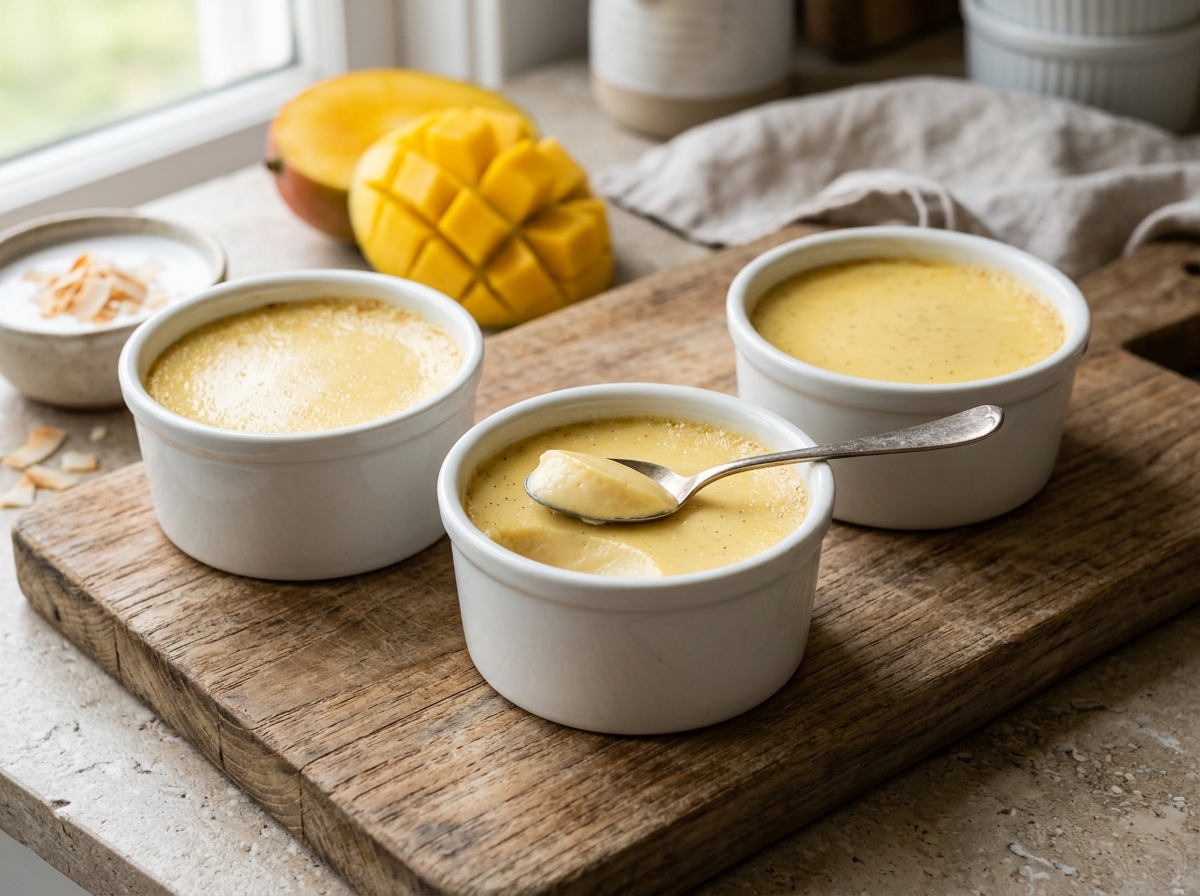
Serve each custard straight from the ramekin with a small spoon and a drizzle of coconut cream on top. A few thin slices of fresh mango alongside cut the richness nicely.
For a more composed plate, unmold the custard onto a chilled plate and add a scattering of toasted shredded coconut and a mint leaf. The contrast between the smooth custard and the crunchy coconut works well.
It also pairs cleanly with a jasmine tea dessert or a cold glass of lychee juice if you’re serving it as part of a Thai-inspired meal.
FAQ
Why is my baked coconut custard grainy or pitted on top?
That’s usually a sign the oven temperature was too high or the water bath ran dry. Egg proteins tighten and weep when they overheat, leaving a curdled texture. Keep the oven at 150 C / 300 F and check the water level halfway through baking.
Can I use coconut cream instead of coconut milk in this custard?
Yes, and it produces an even richer, denser result. Coconut cream has a higher fat content, so the custard will set slightly firmer – reduce the amount by about 30 ml and the ratio still works.
How do I know when the baked coconut custard is done without cutting into it?
Give the pan a gentle nudge – the outer edge should look set and opaque while the very center still has a slow, even wobble. If the whole surface ripples like liquid, it needs another 8 to 10 minutes.
Can I make baked coconut custard the day before serving?
It’s one of the best desserts to make a day ahead. Overnight refrigeration firms the texture and deepens the coconut flavor. Just keep the ramekins covered so the surface doesn’t dry out.
What is the difference between Thai coconut custard and regular baked custard?
Thai coconut custard uses coconut milk instead of dairy cream or milk, which gives it a lighter body and a faintly sweet, tropical flavor similar to a silky dairy-free coconut pudding. It’s also often scented with pandan, and traditionally steamed rather than baked.
Is baked coconut custard gluten-free?
Yes, this recipe contains no flour or wheat ingredients. Just check that your coconut milk brand doesn’t include any additives with hidden gluten, which some cheaper canned varieties do.
