
Jump to Recipe
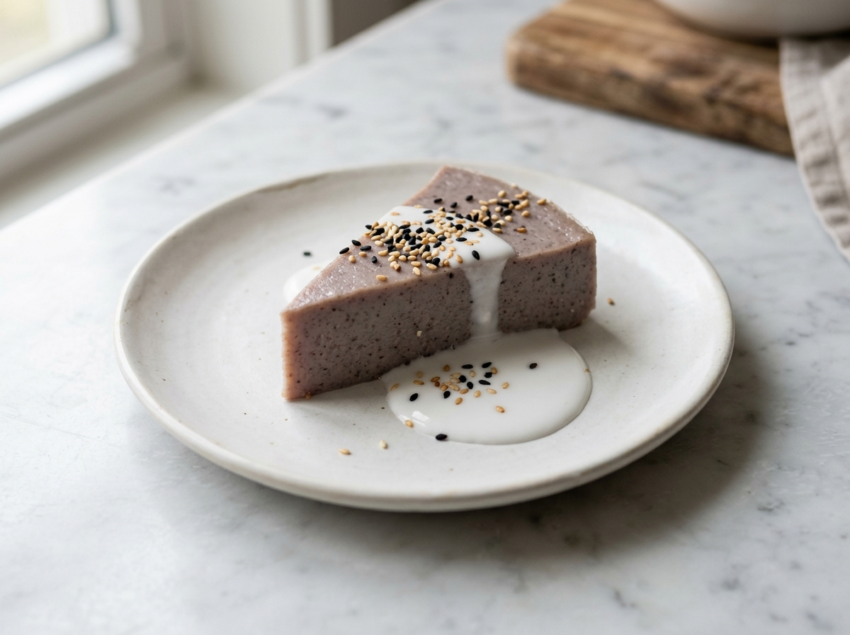
There’s something quietly satisfying about a bowl of taro coconut pudding. The color alone – that dusty, natural purple – makes people stop and look twice.
I first made this at home after eating a version at a Vietnamese bakery. The texture was halfway between a silky set panna cotta and a thick porridge. Firm enough to slice, soft enough to spoon. I’ve been chasing that texture ever since.
The ingredients are simple: taro root, coconut milk, sugar, and tapioca starch. What matters is the ratio and the order you add things. Get those right and the pudding sets cleanly with no lumps and a gentle coconut fragrance all the way through.
This is a make-ahead dessert. It actually improves after a few hours in the fridge.
Why You’ll Love This Recipe
- Naturally gluten-free and dairy-free with no substitutions
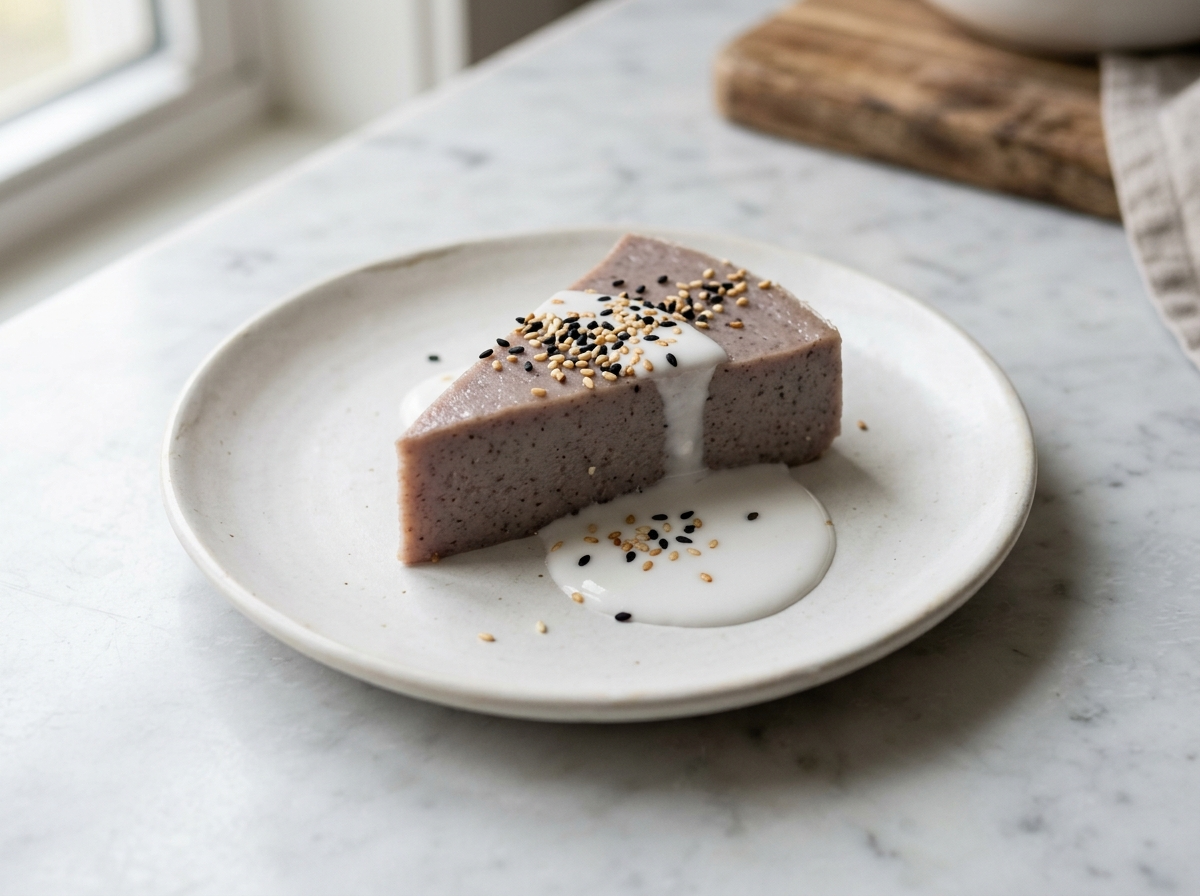
- Clean purple color from real taro, no food dye
- Sets firm enough to slice but melts on the tongue
- Made ahead and keeps well for three days chilled
Ingredient Notes
- Taro root: Use fresh taro root for the best color and starchy texture. Frozen taro works but may give a slightly paler color and softer set.
- Full-fat coconut milk: Don’t use light coconut milk here. The fat is what gives the pudding its rich mouthfeel and prevents a watery finish.
- Tapioca starch: Tapioca starch gives a glossy, slightly chewy set. Cornstarch works as a swap but produces a more opaque, matte finish.
- Pandan leaves (optional): Two knotted pandan leaves steeped in the warm coconut milk add a grassy, vanilla-adjacent fragrance that pairs well with taro. Skip if unavailable.
- Caster sugar: Caster sugar dissolves faster than granulated. Adjust the amount by up to 2 tablespoons depending on how sweet your taro is.
- Salt: A small pinch of salt sharpens the coconut flavor and keeps the pudding from tasting flat. Don’t skip it.
Taro Coconut Pudding
Ingredients
Method
- Set up a steamer over high heat. Arrange the taro cubes in a single layer in the steamer basket.
- Steam for 25 to 30 minutes until a skewer passes through each cube with no resistance.
- Transfer the hot taro to a bowl and mash until smooth with a potato masher or fork.
- Press the mashed taro through a fine-mesh sieve into a clean bowl to remove any fibrous strands. Set aside.
- In a small bowl, whisk together the tapioca starch with 3 tablespoons of the measured coconut milk until fully dissolved. Set the slurry aside.
- Pour the remaining coconut milk and the water into a medium heavy-bottomed saucepan. Add the pandan leaves if using.
- Heat over medium heat, stirring occasionally, until the mixture is just steaming - about 3 minutes. Do not boil.
- Remove the pandan leaves. Add the sugar and salt and stir until fully dissolved.
- Add the sieved taro puree and whisk until completely smooth and incorporated.
- Pour in the tapioca starch slurry while stirring constantly. Reduce heat to medium-low.
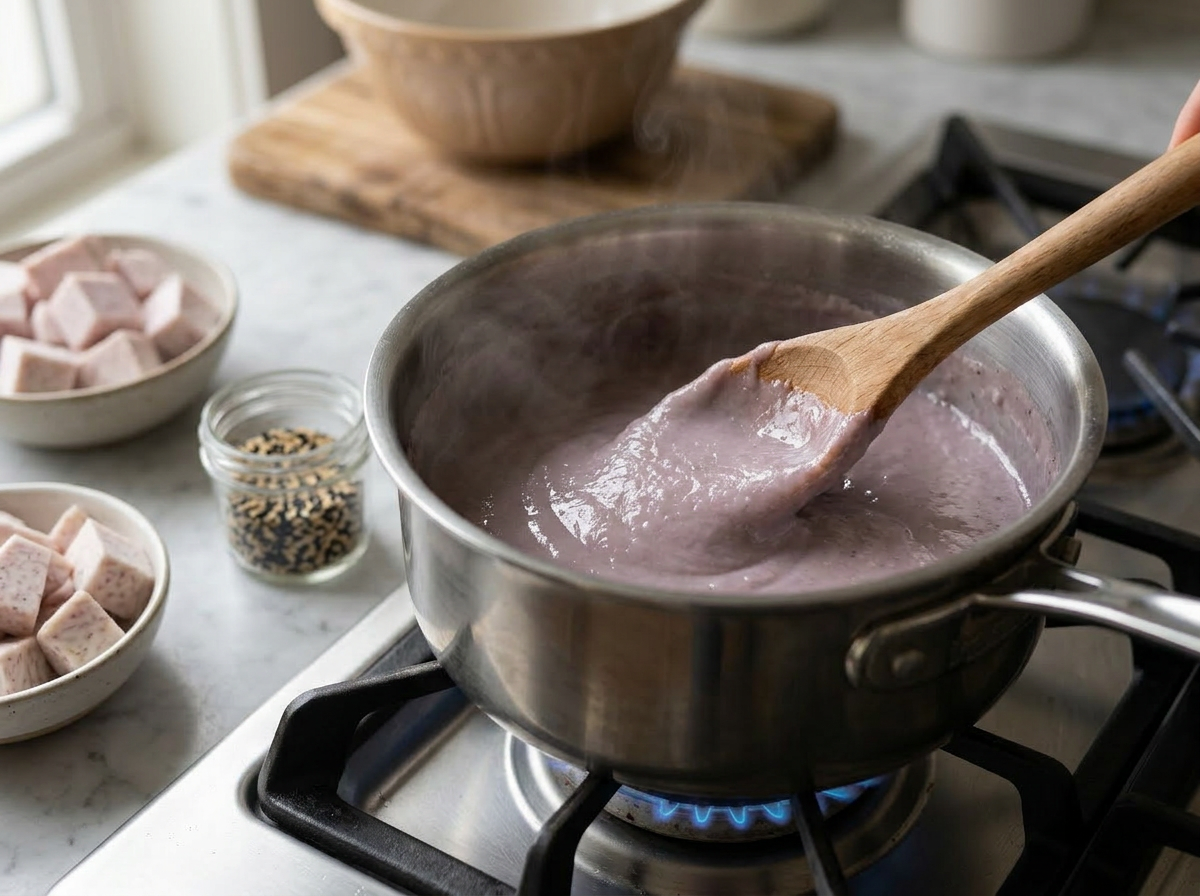
- Stir continuously for 5 to 7 minutes until the mixture thickens noticeably and coats the back of a spoon in a thick, glossy layer.
- Lightly oil a loaf tin or shallow square mold with a neutral oil. Pour the hot pudding mixture in and smooth the top with a spatula.
- Let the pudding cool at room temperature for 20 minutes uncovered, then cover with plastic wrap pressed directly onto the surface.
- Refrigerate for at least 4 hours, or overnight, until fully firm.
- Run a thin knife around the edges, place a serving plate on top of the mold, and invert to release. Slice into portions and serve chilled.
Notes
Tips for Success
- Steam taro until a skewer passes through with no resistance, about 25 minutes, before mashing.
- Sieve the mashed taro through a fine-mesh sieve to remove fibrous bits before mixing with coconut milk.
- Mix tapioca starch with 3 tablespoons of cold coconut milk first to avoid lumps when you add it to the warm pot.
- Stir the pudding mixture constantly over medium-low heat once the starch is added – it thickens fast and can scorch.
- Pour into a lightly oiled mold or dish so the set pudding releases cleanly when you flip it out.
Variations
- Layered version: pour half the pudding, chill until set, then top with a plain coconut layer made from coconut milk, tapioca starch, and sugar.
- Add 1 teaspoon of ube extract alongside the taro for a deeper purple color and more pronounced earthy flavor.
- Serve warm as a soft pudding porridge instead of chilling – reduce tapioca starch by half for a pourable consistency.
Storage and Reheating
Keep the pudding covered in the fridge for up to 3 days. The texture actually firms up a little more overnight, which makes it easier to slice cleanly.
Don’t freeze taro coconut pudding. The tapioca starch breaks down when frozen and thawed, leaving a grainy, watery texture that doesn’t recover.
To serve warm, spoon individual portions into a small saucepan and reheat gently over low heat with a splash of coconut milk, stirring until smooth. Avoid the microwave if you want to keep the texture consistent.
Serving Suggestions
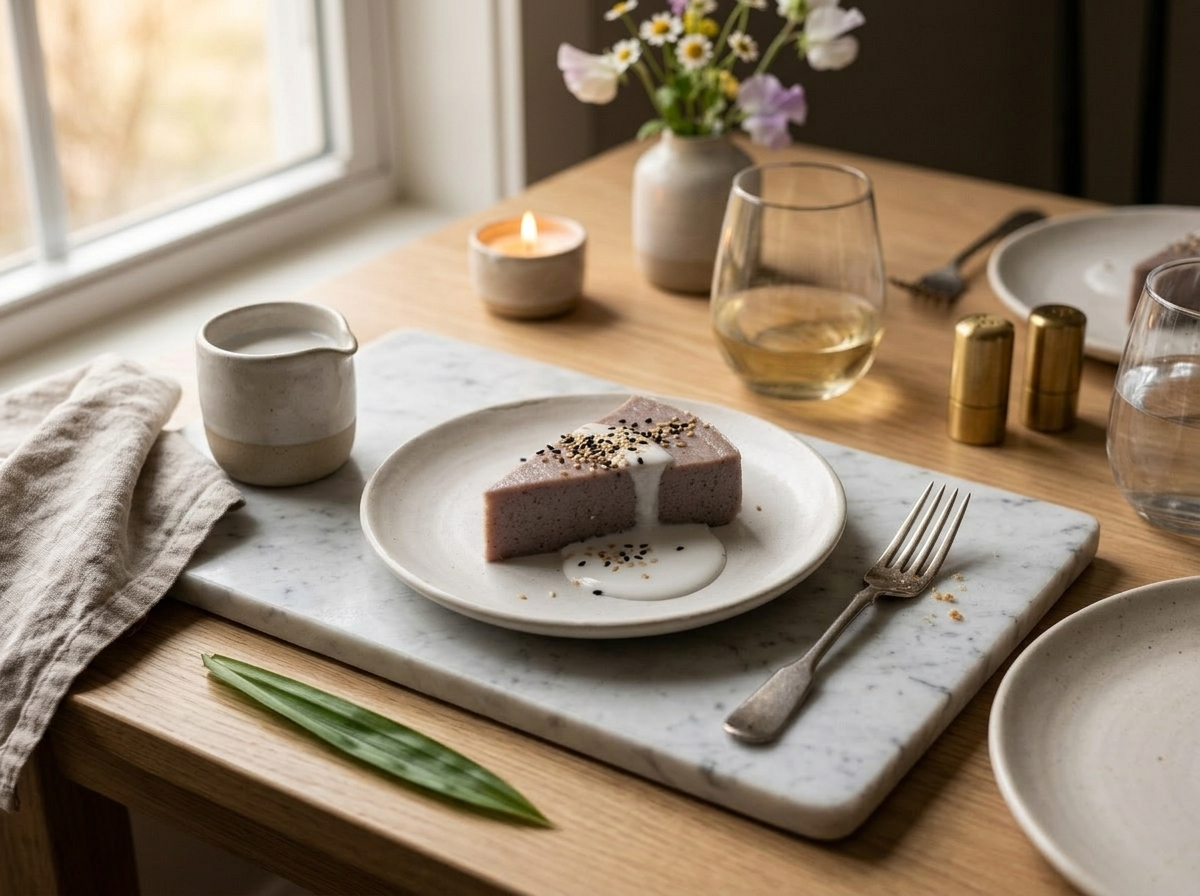
Serve chilled slices on their own or with a small pour of warm coconut cream drizzled over the top. The contrast of cold pudding and warm cream is worth the extra two minutes.
For a light dessert spread, pair the pudding with sticky rice, fresh mango slices, or a dairy-free coconut dessert alongside for contrast. The pudding holds its own but doesn’t overpower other flavors on the table.
For a more casual presentation, skip the mold and serve the pudding in small glasses or ramekins directly from the fridge, topped with a few toasted sesame seeds or shredded coconut.
FAQ
Why did my taro coconut pudding turn gray instead of purple?
Taro oxidizes quickly once cut and exposed to air, which can push the color toward gray. Work fast after peeling and steam the taro immediately. Older or less fresh taro also tends to produce a duller color.
Can I use coconut cream instead of coconut milk in this pudding?
Yes, coconut cream gives a richer, slightly denser result. Thin it down with about 60 ml of water to match the consistency of full-fat coconut milk, or the pudding may set too stiff.
How do I know when the taro pudding mixture is ready to pour into the mold?
The mixture should coat the back of a wooden spoon thickly and hold a clean line when you run your finger through it. If it still looks thin or runny, cook for another 2 to 3 minutes over medium-low heat, stirring constantly.
Can I make taro coconut pudding a day before serving?
This pudding is actually better the next day. Make it the evening before, pour into your mold, cover with plastic wrap, and refrigerate overnight. It firms up fully in about 4 hours.
Is taro coconut pudding gluten-free?
Yes, every ingredient in this recipe is naturally gluten-free. Taro, coconut milk, tapioca starch, and sugar contain no gluten. Just check that your tapioca starch is labeled gluten-free if cross-contamination is a concern.
What is the difference between taro pudding and ube pudding?
Taro and ube are different root vegetables. Taro has a mild, slightly nutty flavor and produces a lighter, more muted purple. Ube (purple yam) has a sweeter, more pronounced flavor and a vivid violet color. This recipe uses taro, not ube.
