
Jump to Recipe
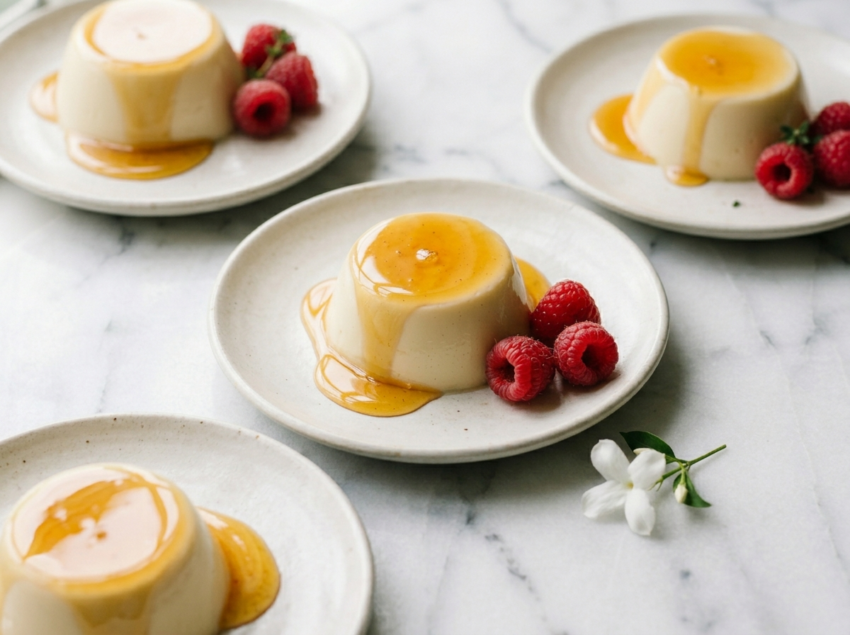
There’s something quietly stunning about a panna cotta that slips from its mold in one clean wobble.
This version steeps jasmine tea directly into the cream, so the floral note isn’t an afterthought – it runs all the way through. A spoonful of good honey replaces most of the sugar, adding depth without sweetness that feels heavy.
I first made it after coming home with a tin of loose-leaf jasmine from a tea shop in Kyoto. I wanted a dessert that tasted the way that shop smelled.
It sets overnight, which makes it the kind of dessert you can forget about until five minutes before dinner. Four ingredients do most of the work.
Why You’ll Love This Recipe
- Floral jasmine flavor infuses the cream naturally
- Honey adds rounded sweetness without refined sugar
- No baking, no water bath, no special equipment
- Make it the night before and plate in minutes
Ingredient Notes
- jasmine tea: Loose-leaf jasmine green tea gives a cleaner, stronger floral note than bags. If you only have bags, use 3 bags for this quantity.
- heavy cream: Full-fat heavy cream (35% fat or higher) is essential for the silky texture. Half-and-half will give a thinner set that may not unmold cleanly.
- whole milk: A portion of milk lightens the richness of all-cream panna cotta. Don’t swap for plant-based milk here as it changes the set.
- honey: Use a floral honey – acacia or orange blossom work especially well alongside jasmine. Avoid strong honey like buckwheat, which will overpower the tea.
- powdered gelatin: One standard 7 g sachet sets 480 ml of liquid to a soft, just-barely-holding set. For agar-agar, use 1 tsp and simmer it into the warm cream for 2 minutes.
- cold water (for blooming gelatin): Always bloom gelatin in cold water first, never warm. It only takes 5 minutes and prevents lumps in the finished cream.
Jasmine Honey Panna Cotta
Ingredients
Method
- Sprinkle the gelatin over 3 tbsp cold water in a small bowl and let it sit for 5 minutes until it blooms into a soft, spongy mass.
- Combine the heavy cream and whole milk in a small saucepan over medium-low heat. Warm until the surface just begins to steam, about 3 to 4 minutes. Do not boil.
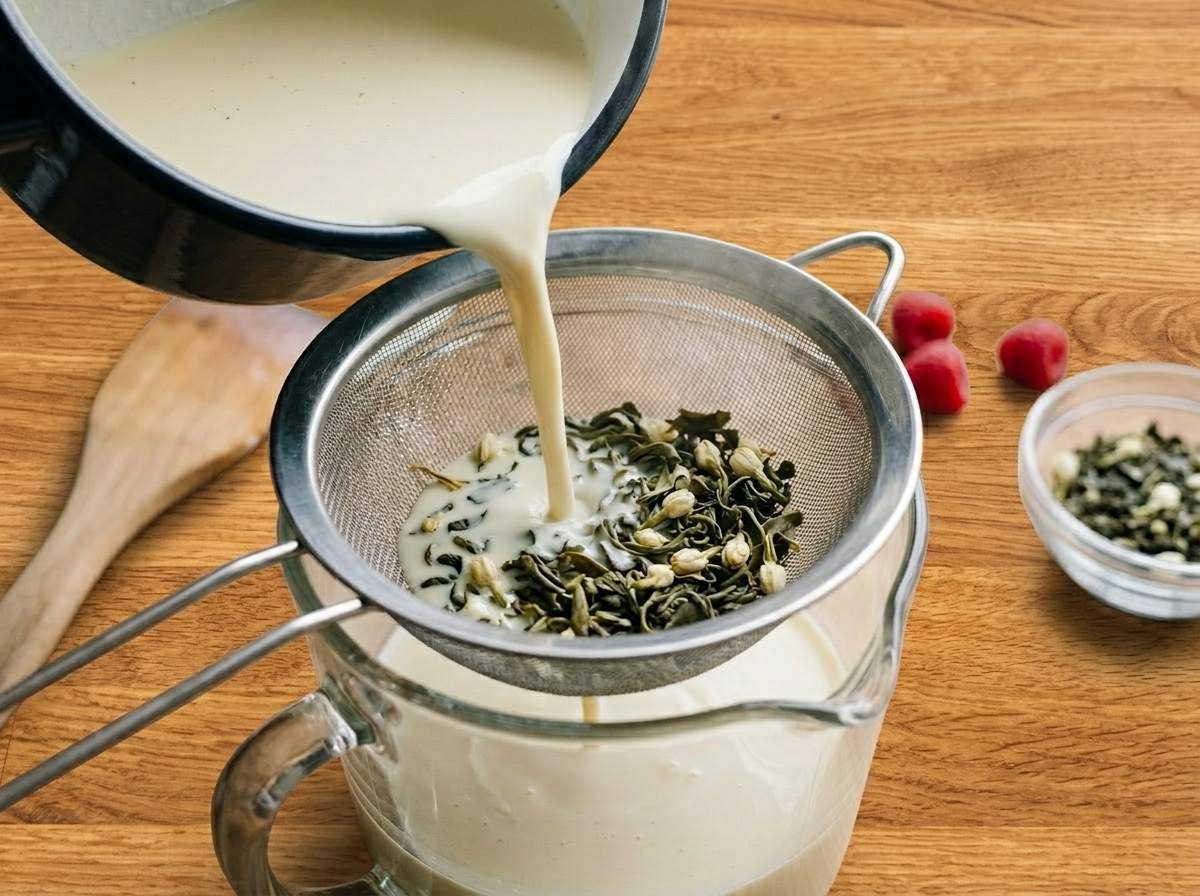
- Remove from heat, add the jasmine tea leaves, and steep for exactly 4 minutes. Strain through a fine-mesh sieve into a clean bowl or jug, pressing the leaves gently to extract flavor.
- Whisk the honey into the warm strained cream until fully dissolved.
- Add the bloomed gelatin to the warm cream mixture and whisk steadily for about 60 seconds until no lumps remain and the gelatin is fully incorporated.
- Let the mixture cool to room temperature, about 10 minutes, stirring occasionally to prevent a skin from forming.
- Lightly brush 4 small ramekins (about 120 ml each) with a neutral oil using a folded paper towel.
- Pour the cream evenly into the prepared ramekins. Cover each with plastic wrap and refrigerate for at least 4 hours, or overnight, until firmly set but still slightly wobbly at the center.
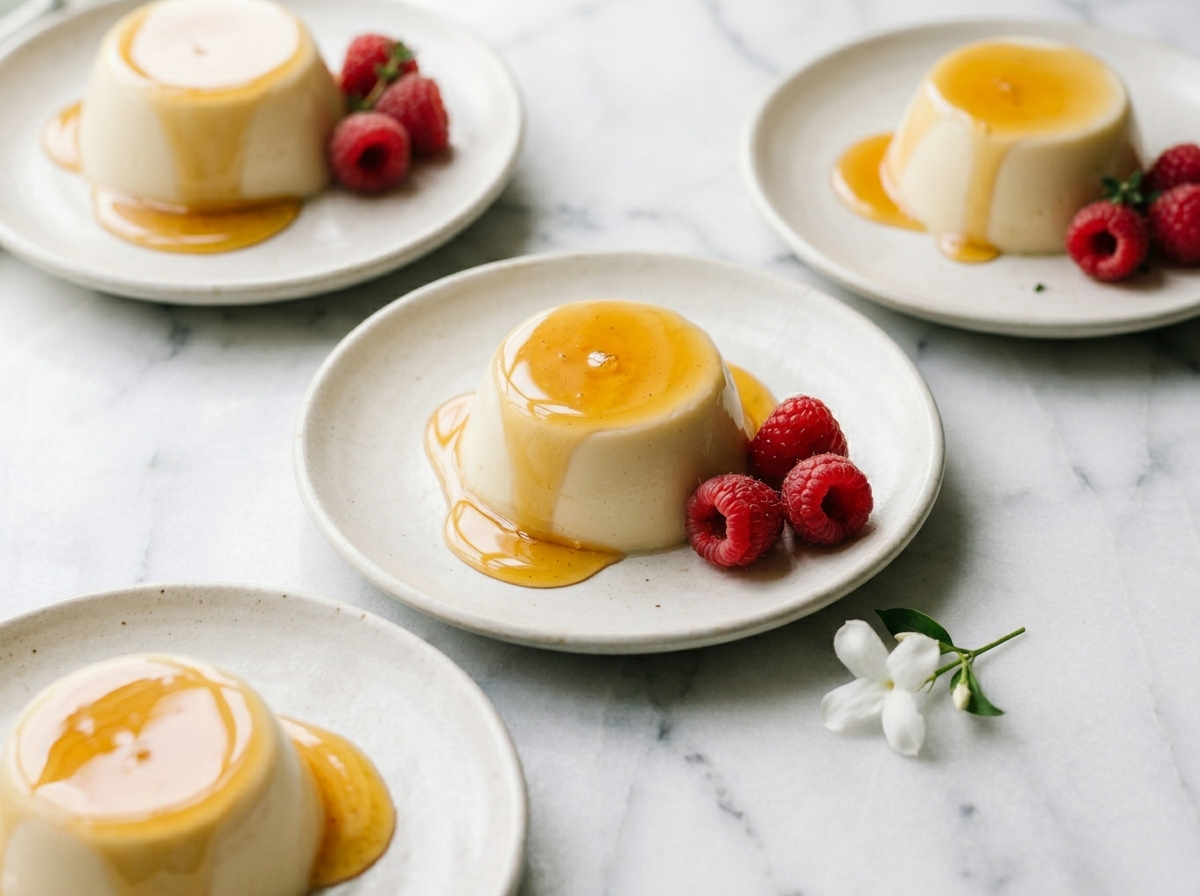
- To unmold, run a thin knife around the edge of each ramekin, place a chilled plate over the top, and flip in one confident motion. Shake gently if needed until the panna cotta releases.
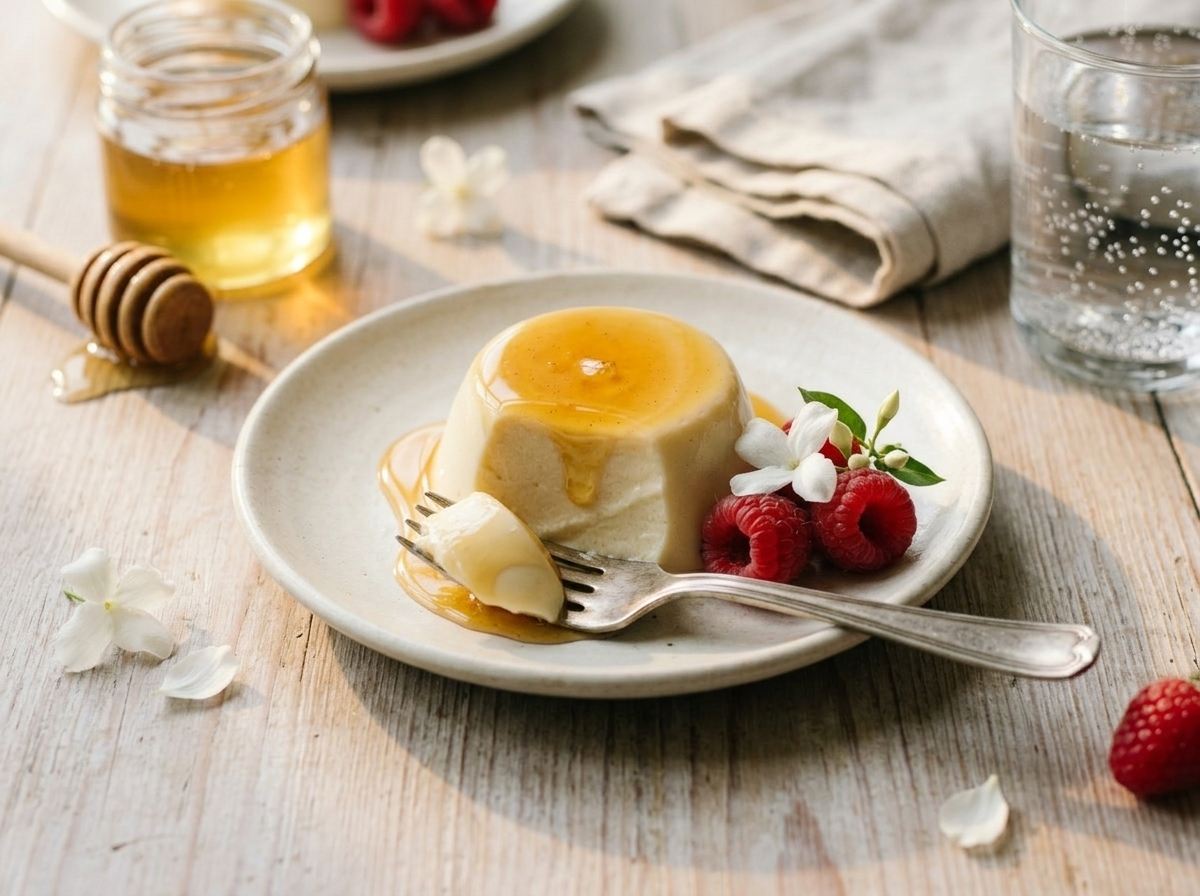
- Drizzle with a little extra honey and serve immediately with fresh berries or a light fruit compote if you like.
Notes
Tips for Success
- Steep the jasmine tea for exactly 4 minutes – longer steeping makes the cream bitter.
- Strain the cream through a fine-mesh sieve before adding gelatin to catch all tea leaves.
- Whisk the bloomed gelatin into warm, not hot, cream so it dissolves evenly without scorching.
- Lightly oil the ramekins with a neutral oil on a paper towel before filling for clean unmolding.
- Run a thin knife around the edge and shake gently before inverting onto the plate.
Variations
- Add a strip of lemon zest to the cream while steeping for a citrus-floral combination.
- Swap jasmine tea for earl grey and pair with a blackberry compote to serve.
- Use coconut cream instead of heavy cream for a dairy-free version with a tropical note.
Storage and Reheating
Store set panna cotta in the ramekins, covered with plastic wrap, in the fridge for up to 3 days. The floral jasmine note actually deepens slightly after the first night.
Don’t freeze panna cotta. The gelatin structure breaks down when frozen and thawed, leaving a grainy, weeping texture.
If you’re making these ahead for a dinner party, leave them in the ramekins until ready to plate. Unmolding more than 30 minutes before serving can cause them to slowly sag.
Serving Suggestions
Unmold each panna cotta onto a chilled plate and drizzle with a thin stream of extra honey right before serving. A few fresh raspberries or sliced strawberries on the side cut the richness well.
For a more considered presentation, make a quick syrup by simmering 2 tbsp honey with 2 tbsp water and a few jasmine petals or a squeeze of lemon, then spoon it over just before plating.
This panna cotta also works well served in small glasses without unmolding – layer a few fresh berries or a spoonful of silky berry compote in the glass before pouring in the warm cream.
FAQ
Why is my jasmine panna cotta not setting firmly enough?
The most common cause is gelatin that didn’t fully dissolve into the cream. Make sure the cream is warm (not cold) when you whisk in the bloomed gelatin, and stir for at least 60 seconds. If you’re in a very warm kitchen, chill for at least 6 hours rather than 4.
Can I use jasmine rice instead of jasmine tea to get a floral flavor?
Jasmine rice won’t give you a floral flavor – it’s named for its aroma, which doesn’t steep into cream the same way. Stick with jasmine tea leaves or jasmine-scented green tea for the flavor this recipe is built around.
How do I know when the jasmine cream is ready to pour into the ramekins?
After you strain and mix in the gelatin, the cream should coat the back of a spoon lightly and have no visible gelatin lumps. Let it cool to room temperature before pouring – if it’s too hot it can cause air bubbles in the finished panna cotta.
Can I make jasmine honey panna cotta without gelatin to keep it vegan?
Yes. Use 1 tsp agar-agar powder instead of gelatin and replace the honey with maple syrup or agave, the same swap that works well in other light jelly-style desserts. Simmer the agar-agar in the warm cream for 2 minutes and swap heavy cream for full-fat coconut cream.
What honey pairs best with jasmine tea in this panna cotta?
Acacia honey is the most complementary – it’s mild and floral without competing with the jasmine. Orange blossom honey is a close second. Avoid darker honeys like manuka or buckwheat, which have a strong mineral note that fights the delicate tea.
What’s the difference between this jasmine honey panna cotta and a regular vanilla panna cotta?
A classic vanilla panna cotta uses a vanilla pod steeped in cream and is typically sweetened with white sugar, much like the cream-forward base found in a Scandinavian lingonberry cream dessert. This version uses jasmine tea for the floral base and honey for sweetness, giving a lighter and more aromatic result without the rich vanilla warmth.
