
Jump to Recipe
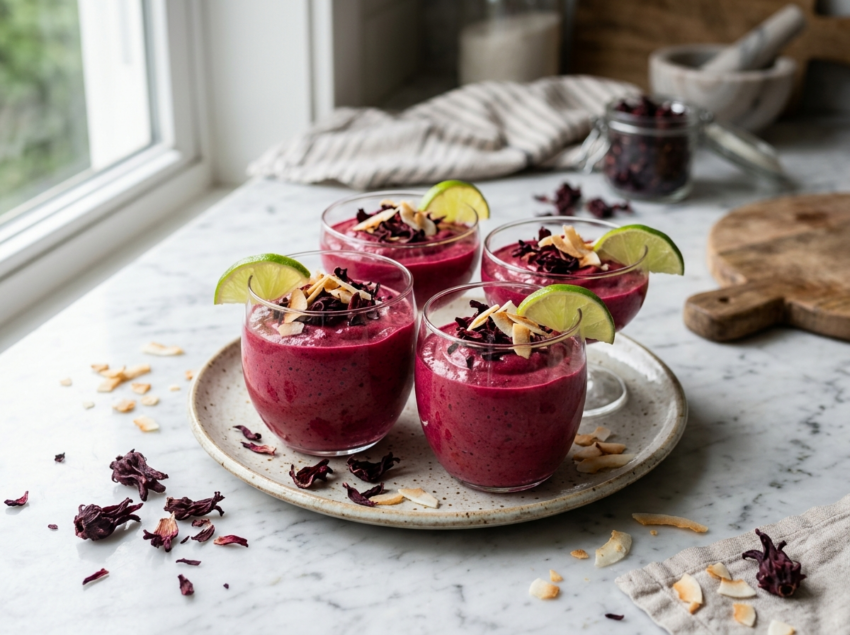
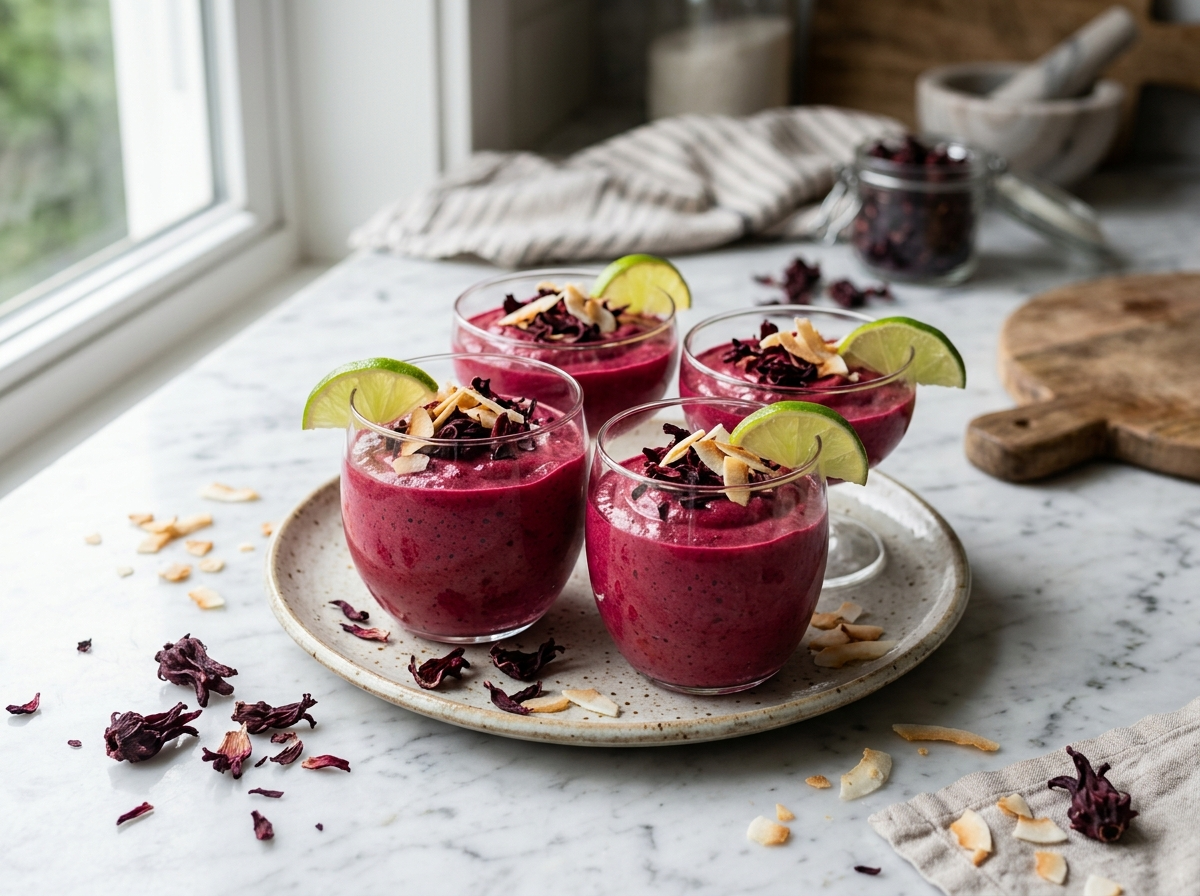
There’s something about the color of hibiscus that stops people mid-bite. That deep magenta, almost jewel-like, sitting in a glass of pale coconut mousse.
I first made this after coming home with a bag of dried hibiscus from a Mexican market. I wasn’t sure what I’d do with it. Then I steeped it in coconut milk and the whole pot turned this gorgeous deep pink, and I knew exactly where it was going.
The flavor is tart and floral, somewhere between cranberry and rose water, balanced by the richness of full-fat coconut cream. No dairy. No gelatin if you use agar. Just clean, punchy flavor in a whipped, airy texture.
It sets firm enough to hold shape but soft enough to spoon cleanly. And it looks far more involved than it actually is.
Why You’ll Love This Recipe
- Deep magenta color with no artificial dye needed
- Dairy-free and easily made vegan with agar
- Tart hibiscus flavor balanced by rich coconut cream
- Ready to pour in 20 minutes, chills hands-free
Ingredient Notes
- Dried hibiscus flowers: Look for dried jamaica (hibiscus sabdariffa) at Latin or Caribbean grocery stores, or online. Avoid hibiscus tea bags, which are weaker and sometimes sweetened.
- Full-fat coconut cream: Refrigerate your cans overnight so the cream separates and firms up. The thick solid cream on top is what you’ll whip. Light coconut milk won’t hold enough structure.
- Gelatin or agar-agar: Gelatin gives a slightly softer, creamier set. Agar-agar sets firmer and is fully plant-based. Use 1 tsp agar powder in place of 2 tsp gelatin powder.
- Coconut milk (for steeping): Use the remaining liquid from the coconut cream can, or a separate can of full-fat coconut milk. This is your steeping base for the hibiscus.
- Cane sugar: Regular white sugar works fine. Coconut sugar adds a faint caramel note but turns the mousse slightly darker and murkier.
- Lime juice: Fresh lime juice sharpens the hibiscus tartness. Lemon works too but is slightly less floral. Bottled citrus tastes flat here, so squeeze it fresh.
Hibiscus Coconut Mousse
Ingredients
Method
- Combine the dried hibiscus flowers and coconut milk in a small saucepan over medium heat. Bring to a gentle simmer, then remove from heat and steep for 10 minutes until the liquid is deep red.
- Meanwhile, sprinkle the gelatin powder over the cold water in a small bowl. Let it bloom for 5 minutes until the gelatin absorbs the water and turns spongy. If using agar-agar, skip this step.
- Strain the hibiscus steep through a fine mesh sieve into a bowl, pressing the flowers firmly to extract all the liquid. Discard the spent flowers.
- While the hibiscus liquid is still hot, stir in the sugar until dissolved. Add the lime juice and stir to combine.
- If using gelatin, add the bloomed gelatin to the warm hibiscus liquid and stir until fully dissolved, about 1 minute. If using agar-agar, whisk 1 tsp agar powder directly into the hot liquid and return to medium heat for 2 minutes, stirring constantly.
- Set the hibiscus mixture aside to cool to room temperature, about 15 to 20 minutes. Don't refrigerate it yet, or it will start to set before you can fold it.
- Scoop only the thick solid cream from the chilled coconut cream cans into a cold mixing bowl. Leave behind any watery liquid.
- Add the powdered sugar and vanilla extract. Beat with a hand mixer on medium-high speed for 2 to 3 minutes until the cream holds soft peaks. Don't overwhip to stiff peaks, or the mousse will be dense.
- Pour about one third of the cooled hibiscus base into the whipped coconut cream and fold gently with a spatula until just combined.
- Add the remaining hibiscus base and fold again in slow, wide strokes until the color is even and no white streaks remain. The mousse will be pourable with a light, airy texture.
- Pour the mousse immediately into 4 serving glasses, dividing evenly. Tap each glass gently on the counter to settle any bubbles.
- Refrigerate uncovered for at least 2 hours, or until fully set. The mousse is ready when it holds its shape when the glass is gently tilted.
- Before serving, top with a pinch of dried hibiscus petals, toasted coconut flakes, and a lime wedge if using.
Notes
Tips for Success
- Strain the hibiscus steep through a fine mesh sieve and press the flowers to extract all the color and flavor.
- Bloom your gelatin in cold water for at least 5 minutes before adding to the warm hibiscus liquid, or it won’t dissolve evenly.
- Whip the cold coconut cream in a chilled bowl until it holds soft peaks, not stiff, so the mousse stays airy after folding.
- Fold the hibiscus base into the whipped cream in two additions to keep as much volume as possible.
- Pour into glasses before it starts to set, around 10 minutes after mixing, or it becomes difficult to distribute evenly.
Variations
- Swirl in 2 tbsp mango puree before chilling for a tropical hibiscus-mango contrast.
- Add 1/4 tsp rosewater to the hibiscus steep for a more perfumed, Middle Eastern-leaning flavor.
- Layer the mousse over a thin no-bake coconut and date crust in a glass for a dessert cup with texture.
Storage and Reheating
Store the mousse covered in the fridge for up to 3 days. Individual glasses covered with plastic wrap or small lids work best to prevent the surface from drying out.
Don’t freeze this mousse. The coconut cream separates when frozen and thawed, and the texture turns grainy and watery rather than smooth.
If you notice a little liquid pooling at the base after a day or two, that’s normal condensation. Just give it a gentle scoop from top to bottom before serving.
Serving Suggestions
Serve straight from the glass, topped with a few dried hibiscus petals and a thin curl of toasted coconut. A small wedge of lime on the rim adds a pop of color and lets guests adjust the tartness themselves.
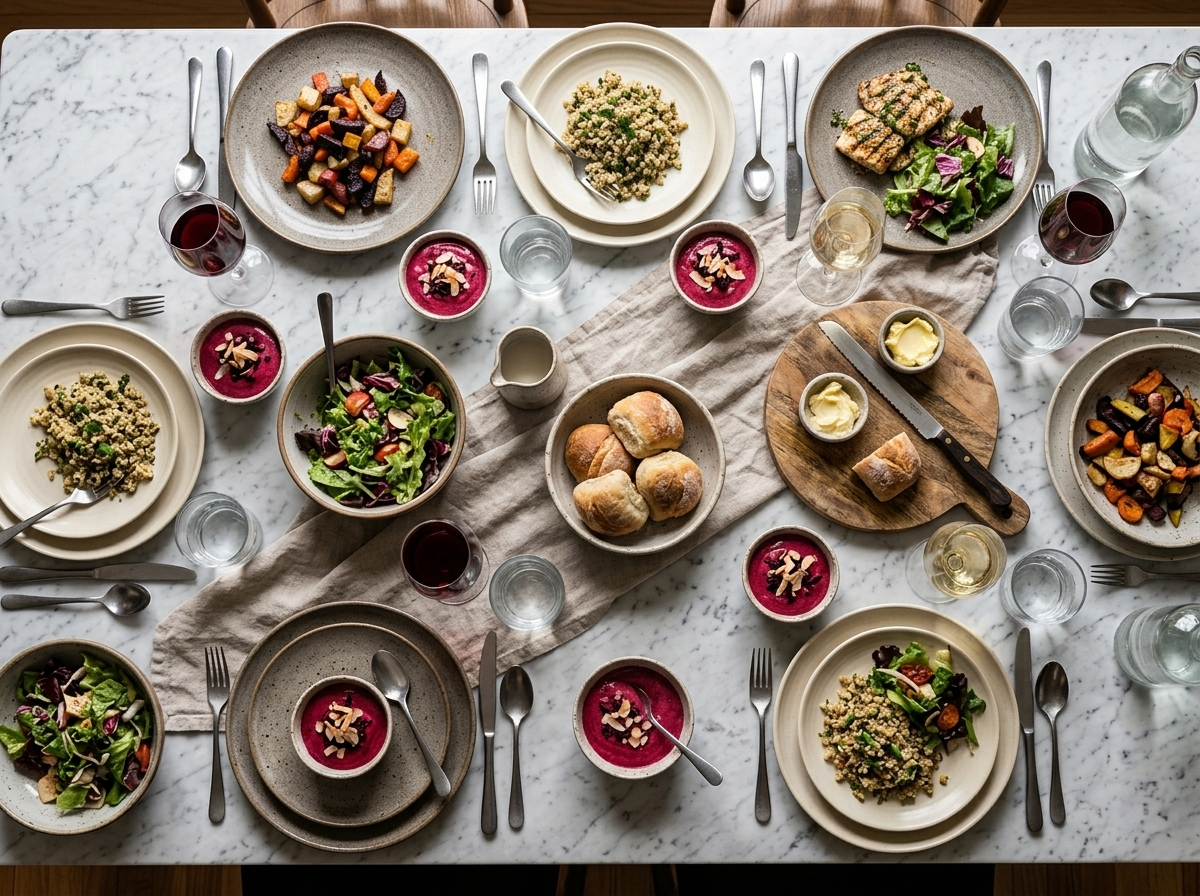
This mousse pairs well after a spiced meal. The floral tartness cuts through rich food cleanly. Think alongside Mexican mole, Caribbean jerk, or a Thai curry spread — or follow a creamy coconut dessert course for a lighter finish.
For a composed dessert plate, serve a small ramekin of mousse next to fresh sliced mango and a sesame or coconut shortbread, or alongside a light berry cream dessert for a multi-component spread. The contrast of crisp cookie against the soft mousse works well.
FAQ
Why is my hibiscus coconut mousse grainy or watery instead of smooth?
This usually happens when the coconut cream wasn’t cold enough before whipping, or when the hibiscus base was still too warm when folded in. Make sure both your bowl and cream are well chilled, and let the hibiscus mixture cool to room temperature before combining.
Can I use agar-agar instead of gelatin in this mousse?
Yes. Use 1 tsp agar powder dissolved in the warm hibiscus liquid instead of bloomed gelatin. Agar sets slightly firmer, so the final texture will be a bit more structured but still spoonable.
How far ahead can I make hibiscus coconut mousse for a dinner party?
You can make and refrigerate the mousse up to 2 days before serving. Pour it into individual glasses before it sets, cover tightly, and keep chilled until you’re ready to garnish and serve.
What garnishes actually work with the floral tartness of hibiscus mousse?
Toasted coconut flakes, fresh mango slices, or a few dried hibiscus petals all complement the flavor without competing with it. Avoid anything too sweet, like caramel or chocolate drizzle, which flattens the tartness.
Is hibiscus coconut mousse gluten-free?
Yes, this recipe is naturally gluten-free. All the core ingredients, hibiscus flowers, coconut cream, sugar, lime juice, and gelatin or agar, contain no gluten. Just check your gelatin brand if cross-contamination is a concern.
What’s the difference between hibiscus mousse and a hibiscus panna cotta?
Panna cotta is set with more gelatin and has a firm, sliceable texture with no air whipped in — closer in spirit to a rich coconut custard dessert than a mousse. This mousse is lighter and airier because whipped coconut cream is folded in, giving it a softer, foam-like set.
