
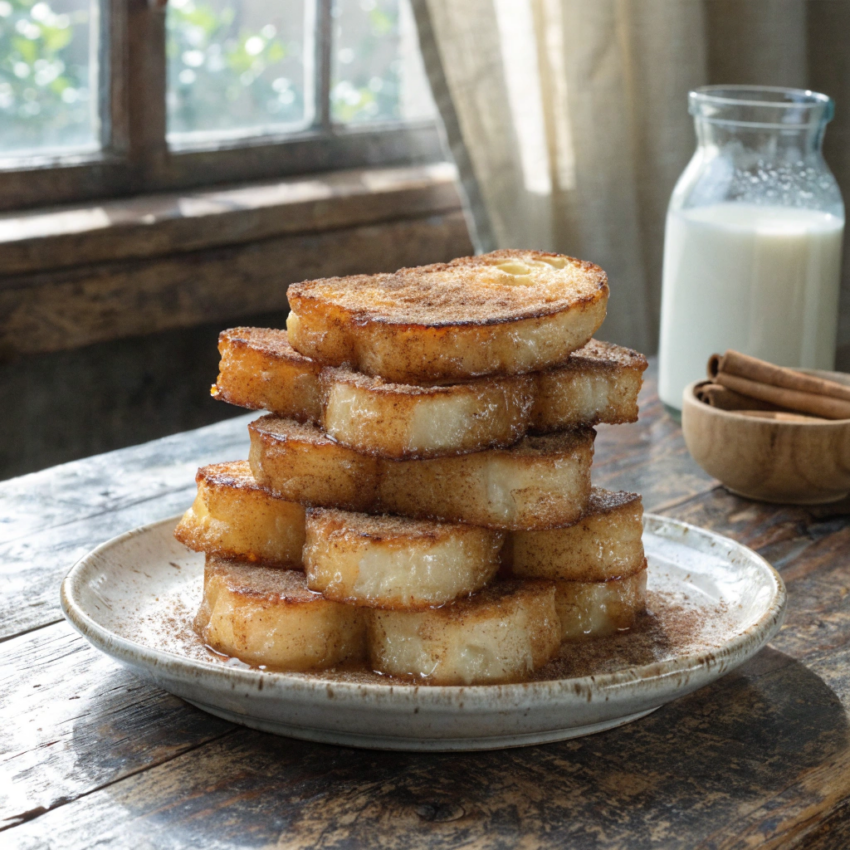
There’s something comforting about a slice of bread turning into a rich, golden dessert. That’s exactly what Spanish torrijas do. Simple ingredients. Big flavor. And a texture that feels like a warm hug.
I first tried this during a quiet weekend when I had leftover bread sitting on the counter. One pan later… I was hooked.
If you love French toast, this will feel familiar. But torrijas? They go deeper. More custardy. More aromatic. A little rustic, a little indulgent.
What Are Spanish Torrijas?
Torrijas are a traditional Spanish dessert. Think of them as a richer cousin of French toast. They’re especially popular during spring, often tied to festive seasons in Spain.
Instead of just eggs and milk, the bread soaks in infused milk. Cinnamon. Citrus peel. Sometimes vanilla. That soak changes everything.
Then comes frying. Then sugar. Sometimes syrup.
The result? Soft inside. Slightly crisp outside. Sweet, but not overwhelming.
It’s comfort food with a story.
Ingredients You’ll Need
Keep it simple. That’s the beauty of this recipe.
- 1 loaf stale bread (thick slices work best)
- 2 cups milk
- 1/2 cup sugar
- 1 cinnamon stick
- 1 strip lemon peel
- 2 eggs
- Olive oil (for frying)
- Extra cinnamon sugar (for coating)
Optional add-ons:
- Honey or syrup
- Dulce de leche
- Nutella (for stuffed torrijas)
Why Stale Bread Works Best
Fresh bread sounds nice. But here? Not ideal.
Stale bread holds its shape. It soaks the milk without falling apart. You get that soft center without a soggy mess.
If your bread is fresh, leave slices out overnight. Or lightly toast them.
Quick fix. Big difference.
Step-by-Step: How to Make Spanish Torrijas
1. Infuse the Milk
Pour milk into a saucepan. Add sugar, cinnamon stick, and lemon peel.
Heat gently. Don’t boil.
Let it simmer for a few minutes. Then turn off heat and let it cool slightly.
This step builds flavor. Don’t skip it.
2. Soak the Bread
Place your bread slices in a dish.
Pour the warm milk over them.
Let them soak. About 5–10 minutes. Flip once if needed.
You want them soft but still holding shape.
3. Dip in Egg
Beat the eggs in a bowl.
Carefully lift each slice of soaked bread and dip it into the egg.
Handle gently. They’ll be delicate.
4. Fry Until Golden
Heat olive oil in a pan over medium heat.
Place the slices in the pan. Fry until golden brown on both sides.
This takes about 2–3 minutes per side.
Transfer to paper towels to drain excess oil.
5. Coat with Cinnamon Sugar
Mix sugar and ground cinnamon.
While the torrijas are still warm, sprinkle or roll them in the mixture.
This is where the magic happens.
6. Serve Warm
Serve immediately. Or let them cool slightly.
Add a drizzle of honey or dulce de leche if you like.
What Makes Torrijas Different from French Toast?
At first glance, they look similar. But the taste tells another story.
French toast is egg-forward. Torrijas lean into milk and spice.
French toast is often served with syrup. Torrijas can stand alone.
And that infused milk? That’s the game changer.
It turns basic bread into something rich and fragrant.
Flavor Variations You Should Try
Once you’ve nailed the classic, it’s fun to experiment.
1. Dulce de Leche Torrijas
Spread dulce de leche between two slices before soaking.
Fry as usual.
You get a creamy, caramel center that melts slightly.
2. Nutella Stuffed Torrijas
Same idea. Different filling.
Nutella melts inside and creates a dessert that feels almost like a pastry.
Messy? A little. Worth it? Absolutely.
3. Honey Syrup Torrijas
Skip cinnamon sugar.
Instead, warm honey with a splash of water. Pour over fried slices.
This gives a glossy, sticky finish.
4. Cinnamon & Sugar Toast Style
Keep it simple.
Just coat generously with cinnamon sugar and serve warm.
No extras needed.
Tips for Perfect Torrijas Every Time
Use these and you’ll avoid common mistakes.
- Don’t rush the soak. Dry centers ruin the texture
- Keep oil at medium heat. Too hot burns the outside
- Use thick slices. Thin bread falls apart
- Handle gently after soaking
- Serve fresh for best texture
Small tweaks. Big payoff.
How to Store and Reheat
Got leftovers? Lucky you.
Store in an airtight container in the fridge for up to 3 days.
To reheat:
- Use a pan for best texture
- Or warm in the oven at low heat
Avoid the microwave if possible. It softens them too much.
A Quick Note on Spanish Food Culture
Torrijas aren’t fancy. They’re humble.
They come from a time when nothing was wasted. Leftover bread became dessert.
That’s something I love. It reminds me that good food doesn’t need to be complicated.
Sometimes, it’s just about making the most of what you have.
Serving Ideas
You can serve torrijas in different ways depending on mood.
- With coffee for breakfast
- As a sweet snack in the afternoon
- As dessert after a light meal
Pair with fresh fruit if you want balance.
Or just enjoy them as they are. No rules here.
FAQs About Spanish Torrijas
What bread is best for torrijas?
Use thick, sturdy bread. Brioche works well. Day-old baguette is also great.
Avoid soft sandwich bread.
Can I bake instead of fry?
Yes, but the texture changes.
You won’t get the same golden crust. Still tasty, just different.
Are torrijas very sweet?
They’re moderately sweet.
You control the sugar level with the coating or toppings.
Can I make them dairy-free?
Yes.
Use plant-based milk like almond or oat milk. The flavor shifts slightly, but it works.
What’s the difference between torrijas and rabanadas?
They’re very similar.
Rabanadas are popular in Portugal and Brazil. The method is almost identical.
Can I prepare them ahead of time?
You can soak the bread in advance.
Fry just before serving for best results.
How do I keep them from falling apart?
Use stale bread. That’s the key.
And handle gently after soaking.
Final Thoughts
Spanish torrijas prove that simple ingredients can create something special.
A slice of bread. A bit of milk. A warm pan.
That’s all it takes.
I still make these when I want something quick but comforting. No fuss. Just good food.
Try them once, and they’ll probably become part of your regular rotation too.
