
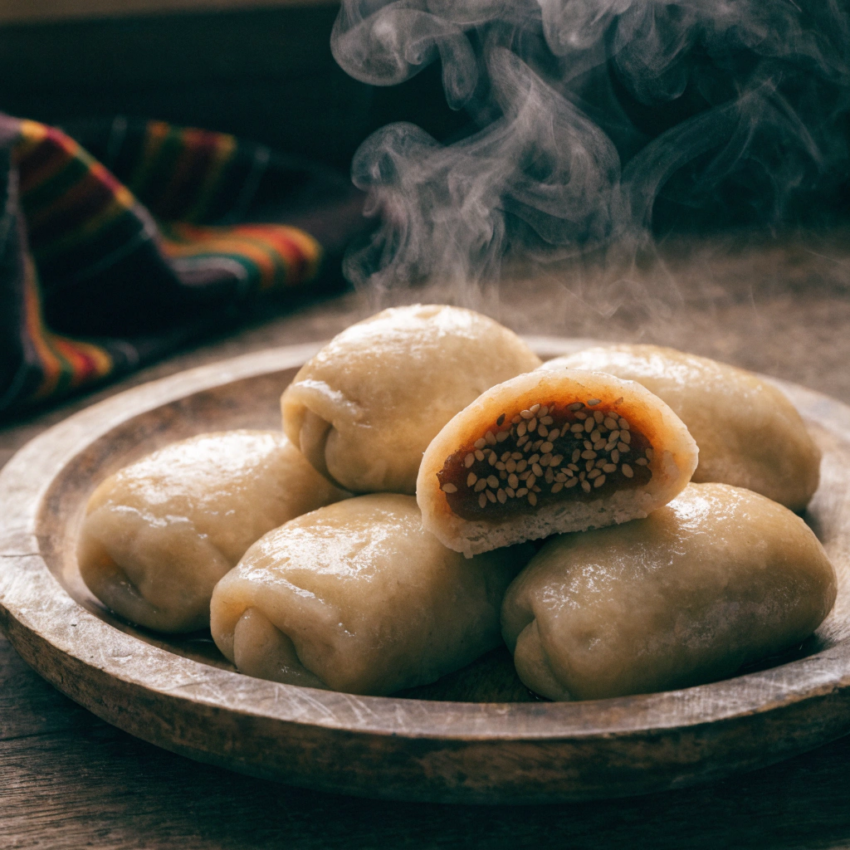
There’s something deeply comforting about warm, steamed dumplings fresh out of the pot. And if you’ve never tried Nepalese yomari sweet dumplings, you’re in for a treat.
The first time I made yomari, I was honestly surprised. Simple ingredients. Gentle steaming. And yet, the result felt so rich and satisfying. It’s the kind of dessert that tells a story with every bite.
Yomari isn’t just food. It’s part of Nepali food culture, especially celebrated during Yomari Punhi, a festival that marks the end of the rice harvest. Families gather, steam dumplings together, and share them while still warm.
What Is Yomari?
Yomari is a traditional sweet dumpling from the Newar community of Nepal. It’s made using rice flour dough and filled with a rich mixture of jaggery and sesame seeds.
The shape is what makes it stand out. A teardrop or fig-like form, carefully pinched at the top. It takes a little practice, but don’t worry—I’ll guide you.
This dish sits proudly among traditional Nepali dumplings and holds a special place in Nepalese desserts.
Why You’ll Love This Yomari Recipe
- Soft, chewy outer layer
- Warm, molten filling
- Naturally sweet and comforting
- Steamed, not fried
- A beautiful introduction to Newari food
It’s simple food, but it hits all the right notes.
Ingredients You’ll Need
For the Dough:
- 2 cups rice flour
- 1 ½ cups water
- A pinch of salt
For the Filling:
- 1 cup grated jaggery
- 2 tablespoons sesame seeds
- 1 tablespoon clarified butter (ghee)
- ½ teaspoon cardamom powder
Cooking Equipment
You don’t need fancy tools here.
- Steamer or large pot with steaming rack
- Mixing bowl
- Wooden spoon
- Clean cloth
That’s it. Keep things simple.
Step-by-Step Cooking Instructions
Step 1: Prepare the Dough
Bring water to a boil. Add a pinch of salt.
Slowly add rice flour while stirring. Keep the heat low. Stir until it forms a soft dough.
Turn off the heat. Let it cool slightly.
Once it’s warm enough to handle, knead it gently. The texture should feel smooth, not sticky.
If it cracks, add a few drops of warm water.
Step 2: Make the Filling
In a pan, melt the jaggery on low heat.
Add sesame seeds and ghee. Stir slowly.
Once it thickens slightly, add cardamom powder. Mix well and let it cool.
This mixture becomes your dumpling filling.
Step 3: Shape the Yomari
Take a small portion of dough. Roll it into a ball.
Using your thumb, press into the center to create a hollow shape.
Gently stretch the sides upward. You’re aiming for a cone or teardrop.
Add a spoonful of filling inside.
Now pinch and seal the top carefully.
Don’t stress if the shape isn’t perfect. Even imperfect yomari taste amazing.
Step 4: Steam the Dumplings
Place the dumplings in a greased steamer.
Steam for about 10–12 minutes.
You’ll notice the outer layer turns slightly glossy. That’s your sign they’re ready.
Step 5: Serve Warm
Serve immediately.
That first bite—soft shell, warm filling—is everything.
Tips for Perfect Yomari
- Work with warm dough. Cold dough cracks easily.
- Don’t overfill. It’ll burst while steaming.
- Keep dumplings covered before steaming so they don’t dry out.
- Grease your steamer lightly to prevent sticking.
A Quick Note on Nepali Dumplings
If you’ve tried Nepalese momos, you already know how comforting dumplings can be.
But yomari is different.
While momo dumplings are savory and often served with spicy sauce, yomari leans sweet. It’s closer to a dessert version of Nepali momo dish, yet it carries its own identity.
You’ll also find variations like:
- Nepali kothey momos (pan-fried dumplings)
- Traditional Nepalese momos with sauce
- Steamed vegetable or meat momos
Together, they represent the heart of Nepali cuisine.
Cultural Significance of Yomari Punhi
Yomari is deeply tied to Yomari Punhi, a full moon festival celebrated by the Newar community.
On this day, families prepare large batches of yomari. It’s a symbol of gratitude for the harvest.
There’s also a belief: the number of yomari you eat brings prosperity. Not a bad excuse to have one more, right?
Variations You Can Try
Once you’re comfortable with the classic version, experiment a little.
Chocolate Filling
Swap jaggery with melted chocolate. It’s not traditional, but it’s fun.
Coconut Jaggery Mix
Add grated coconut to the filling for extra texture.
Nutty Version
Mix crushed peanuts or cashews into the filling.
Each version still keeps the spirit of authentic Nepali food alive while adding your own twist.
Storage and Reheating
Yomari is best fresh. No debate.
But if you have leftovers:
- Store in an airtight container in the fridge
- Re-steam for a few minutes before serving
Avoid microwaving if you can. It dries out the texture.
Common Mistakes to Avoid
- Using cold dough
- Overcooking the filling
- Not sealing the dumplings properly
- Overcrowding the steamer
Keep it simple. Take your time.
Why Yomari Deserves a Spot in Your Kitchen
There’s something grounding about making dumplings by hand.
You slow down. You focus. And in the end, you get something comforting.
Yomari may look delicate, but it’s very forgiving. Once you get the hang of shaping, it becomes second nature.
And honestly? It’s one of those recipes that feels like a warm hug.
FAQs About Nepalese Yomari Sweet Dumplings
What is yomari made of?
Yomari uses rice flour dough and a filling made from jaggery, sesame seeds, and ghee.
Is yomari similar to momos?
Not quite. Nepali momos are savory dumplings, while yomari is sweet and usually served as a dessert.
Can I use sugar instead of jaggery?
You can, but jaggery gives a deeper flavor. It’s worth using if you can find it.
Why is my yomari cracking?
The dough is likely too dry or cold. Add a little warm water and knead again.
Can I freeze yomari?
Yes, but the texture changes slightly. Steam them again before serving.
What does yomari taste like?
Soft and chewy on the outside, warm and sweet inside. Slightly nutty from sesame seeds.
Is yomari healthy?
It’s steamed and uses simple ingredients, making it lighter than many desserts.
Final Thoughts
If you love exploring global sweets, this one’s worth trying.
Nepalese yomari sweet dumplings are simple, meaningful, and incredibly satisfying. No complicated steps. No fancy ingredients.
Just good food, made with care.
And once you make them, don’t be surprised if they become a regular in your kitchen.
