
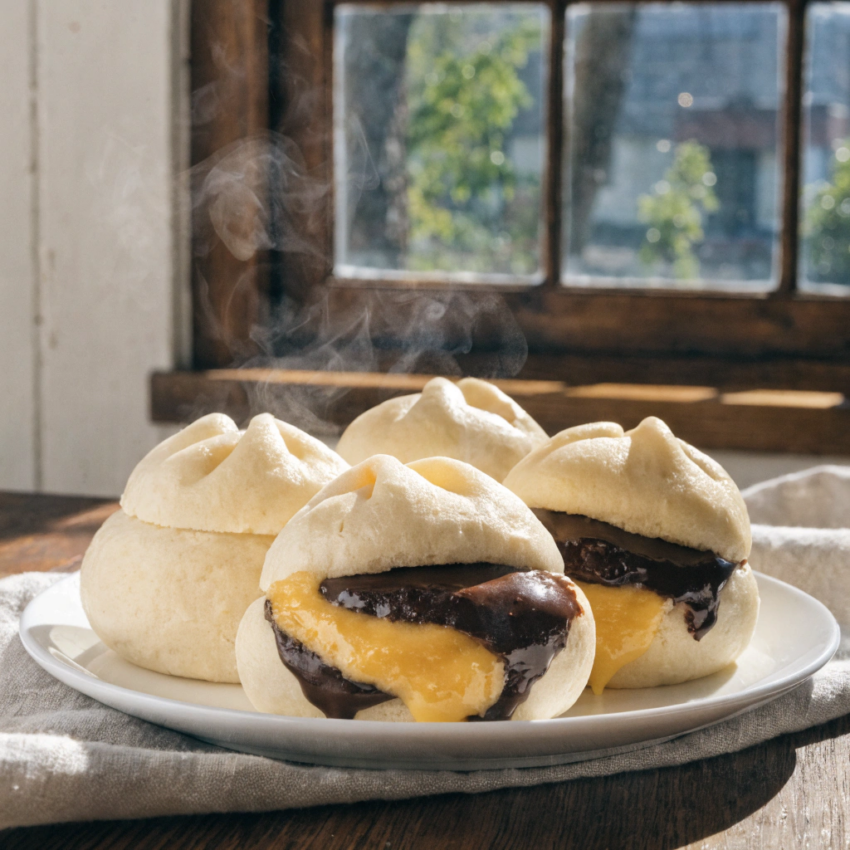
If you’ve ever bitten into a Japanese steamed bun, you know it’s like hugging a cloud. Soft, airy, and slightly sweet, these buns—often called Mushi Pan—are a treat at any time of day. Today, I’m sharing a complete guide on how to make these delightful treats at home. From classic Japanese steamed buns to savory Japanese pork buns, you’ll find all the tips, tricks, and variations to enjoy them straight from your kitchen.
What is Mushi Pan?
Mushi Pan literally means “steamed bread” in Japanese. Unlike the denser Chinese steamed buns, Mushi Pan is light, soft, and slightly sponge-like. Traditionally, they are small, single-serving cakes, but they can also be turned into savory buns filled with meat or vegetables.
I remember my first Mushi Pan experience at a little bakery in Osaka. I took a bite, and my taste buds did a happy dance. The texture is unlike any other bun—it’s fluffy yet moist, sweet but never heavy.
These buns are incredibly versatile. You can make a plain Japanese steamed cake, fill them with custard, chocolate, or even transform them into Nikuman Japanese steamed buns with pork.
Ingredients for Japanese Mushi Pan Steamed Buns
Here’s what you need to make your own Japanese steamed cupcakes at home:
- 1 cup all-purpose flour
- 1 tsp baking powder
- ½ tsp baking soda
- ¼ tsp salt
- ⅓ cup sugar (adjust to taste)
- 1 large egg
- ⅓ cup milk (or non-dairy milk)
- 2 tbsp vegetable oil
- ½ tsp vanilla extract
For savory fillings like Japanese pork buns or Nikuman, you’ll need:
- 200g ground pork
- 1 tsp soy sauce
- 1 tsp mirin
- ½ tsp sugar
- ½ tsp sesame oil
- 1 green onion, finely chopped
These ingredients are simple but magic happens when they steam together.
How to Make Japanese Steamed Cake
Making a Mushi Pan is easier than it looks. Here’s the step-by-step guide:
- Mix dry ingredients – Combine flour, baking powder, baking soda, salt, and sugar in a large bowl.
- Mix wet ingredients – In a separate bowl, whisk egg, milk, oil, and vanilla extract until smooth.
- Combine – Pour the wet mixture into the dry ingredients. Stir gently until just combined. Don’t overmix.
- Prepare your molds – Line muffin tins with cupcake liners or lightly grease them. Fill each cup ¾ full.
- Steam – Place buns in a steamer basket. Steam over medium heat for 12–15 minutes. Avoid opening the lid during cooking.
- Check doneness – Insert a toothpick; it should come out clean.
And that’s it! You’ve got soft, fluffy, lightly sweet Japanese steamed cupcakes ready to enjoy.
Savory Variations: Japanese Meat Buns & Nikuman
If you’re in the mood for something savory, try Nikuman—steamed pork buns that are a classic snack in Japan.
Nikuman Filling:
- Mix ground pork with soy sauce, mirin, sugar, sesame oil, and green onions.
- Roll your dough into small balls, flatten, and place a spoonful of filling in the center.
- Fold edges over and seal. Steam for 12–15 minutes.
These Japanese steamed pork buns are soft on the outside, juicy on the inside, and perfect for lunch or a snack.
Tips for Perfect Steamed Buns
- Do not overmix the batter: Overmixing makes buns dense.
- Steam gently: Too much heat can make buns collapse.
- Experiment with flavors: Try black sesame, chocolate, or matcha for an interesting twist.
- No steamer? Use a large pot with a steaming rack and a lid. Fill with water, but keep water below the rack.
Sweet Variations: Chocolate, Custard & Black Sesame
One of the best things about Mushi Pan is how easily it adapts. You can go classic, or play around with flavors.
- Chocolate Bao Bun – Add 1–2 tablespoons of cocoa powder to your batter for a rich chocolate flavor. You can even drop a small piece of chocolate into each bun before steaming for a gooey surprise.
- Custard Mushi Pan – Fill with a spoonful of vanilla or matcha custard for a dessert-like treat.
- Black Sesame Steamed Buns – Mix 1–2 tablespoons of black sesame paste into the dough for a nutty, slightly sweet variation. For a healthier twist, try Black Sesame Whole Wheat Bao Zi by swapping half the flour for whole wheat flour.
These sweet versions are perfect for breakfast, tea time, or as a portable snack.
How to Steam Pork Buns Without a Steamer
Not everyone has a bamboo steamer handy, but don’t worry—you can still make Japanese steamed pork buns. Here’s a simple method:
- Use a large pot or saucepan.
- Place a heatproof plate or metal rack inside. Add water, making sure it doesn’t touch the plate.
- Cover with a tight-fitting lid. Steam your buns as usual for 12–15 minutes.
- Keep an eye on the water to ensure it doesn’t boil dry.
You’ll get fluffy, soft buns even without a dedicated steamer.
Serving Suggestions
Mushi Pan is versatile, so serve them in many ways:
- Sweet buns – Dust with powdered sugar or drizzle with condensed milk. Pair with tea or coffee.
- Savory buns – Serve hot as a snack or light lunch. Add a dipping sauce like soy sauce, sesame oil, or chili paste.
- Party trays – Mini steamed buns are perfect for gatherings. Mix sweet and savory options for variety.
Pro tip: Freshly steamed buns are best enjoyed immediately, but you can also wrap them in plastic wrap and re-steam for 5 minutes later. They’ll taste almost as good as freshly made.
Frequently Asked Questions (FAQ)
Q1: Can I make Mushi Pan without eggs?
Yes! Use a flax egg (1 tbsp flaxseed + 2.5 tbsp water) or a store-bought egg replacer. The texture may be slightly less fluffy, but still soft.
Q2: How long can I store steamed buns?
Store in an airtight container at room temperature for 1–2 days. For longer storage, freeze and re-steam before serving.
Q3: Can I use whole wheat flour instead of all-purpose flour?
Absolutely! Swap half the flour for whole wheat for a healthier version. Expect slightly denser buns, but still soft.
Q4: What’s the difference between Japanese steamed buns and Chinese steamed buns?
Japanese Mushi Pan is lighter, spongier, and often slightly sweet. Chinese steamed buns, like Bao or Nikuman, are doughier and usually filled with meat or sweet pastes.
Q5: Can I make these in a microwave?
Yes, for a quick version. Fill microwave-safe cups ¾ full and cook on medium-high for 1–2 minutes, checking for doneness. Texture will be slightly different—less airy than steaming—but still delicious.
Q6: Can I make larger buns?
Yes, but increase steaming time to 18–20 minutes. Make sure they have space to rise without sticking together.
Final Thoughts
Japanese Mushi Pan steamed buns are deceptively simple but endlessly versatile. Sweet, savory, chocolate, custard, or black sesame—the options are limited only by your imagination. Whether you’re making Nikuman Japanese steamed buns for a snack, experimenting with Japanese steamed cake ingredients, or simply enjoying a quiet cup of tea with a soft bun, these treats never disappoint.
With these recipes, tips, and variations, you can bring a touch of Japan into your kitchen anytime. Don’t be afraid to experiment. Mushi Pan is forgiving, fun, and always fluffy!
Now it’s your turn—steam, bite, and enjoy the cloud-like softness of Japanese Mushi Pan.
