
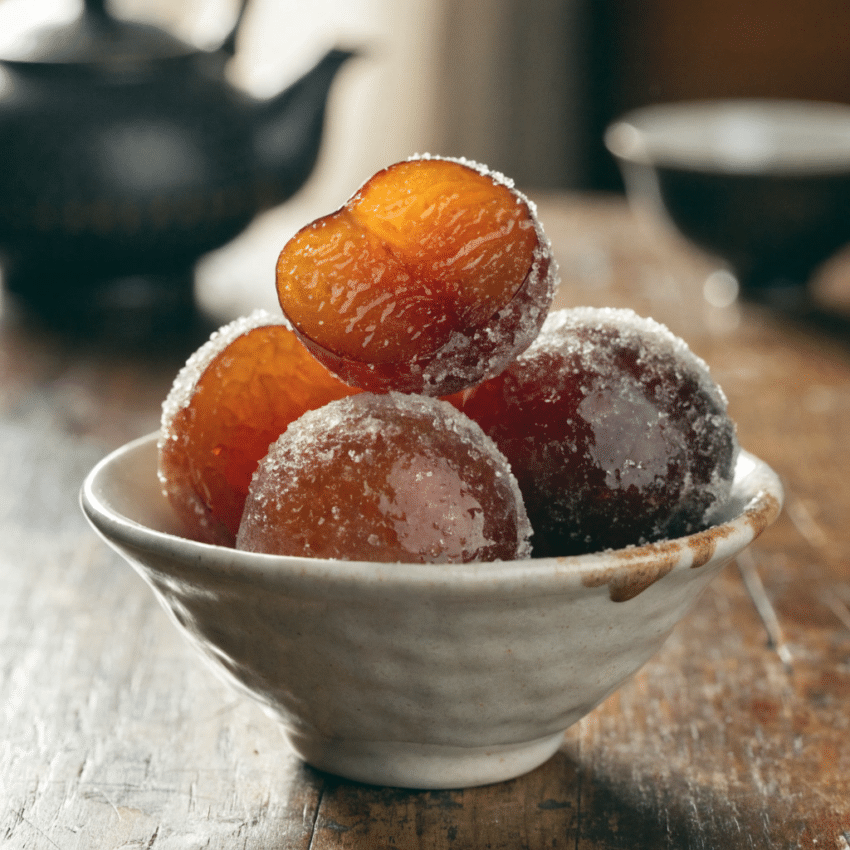
There’s something about Chinese preserved plum candy that just hooks you.
Sweet. Salty. Slightly sour. It hits every corner of your taste buds in one bite.
I still remember the first time I tried it. I expected a simple candy. What I got was a bold, punchy flavor that lingered long after it melted away.
If you’ve ever walked past a Chinese candy store and spotted those glossy, wrapped plum treats, this recipe is your chance to recreate that magic at home.
And yes—it’s easier than it sounds.
What Is Chinese Preserved Plum Candy?
At its core, this candy is made from Chinese preserved plums—plums that have been salted, dried, and sometimes sweetened.
They’re often known as:
- Chinese Plum Candy
- Prune Mui Recipe (a popular variation)
- Vietnamese Preserved Plums
- Candied Plums
The result? A chewy or hard texture depending on the method, with a flavor that balances sweet and tangy like a tightrope walk.
Some versions lean toward Chinese hard candy, while others stay soft and chewy.
Why You’ll Love This Plum Candy
- Quick prep with simple pantry ingredients
- Long shelf life
- Customizable flavor (sweet, sour, spicy)
- A fun alternative to regular Asian candies
And honestly—it feels a bit fancy without the effort.
Ingredients You’ll Need
Here’s the basic list. Nothing complicated.
- 200g dried preserved plums (seedless if possible)
- 1 cup granulated sugar
- ½ cup water
- 1 tbsp lemon juice
- ½ tsp salt
- Optional: chili powder or licorice powder
That’s it. Simple ingredients, bold result.
Step-by-Step: How to Make Chinese Preserved Plum Candy
Step 1: Prep the Plums
If your plums are very dry, soak them in warm water for 10–15 minutes.
Drain well. Pat dry.
This helps soften them and improves texture.
Step 2: Make the Syrup
In a saucepan, combine:
- Sugar
- Water
- Lemon juice
Heat on medium. Stir until sugar dissolves completely.
Let it simmer until slightly thick. Not too sticky.
Step 3: Coat the Plums
Add the plums into the syrup.
Stir gently so each piece gets coated evenly.
Let them cook for 5–7 minutes. The plums will absorb the syrup and turn glossy.
Step 4: Add Flavor
Sprinkle in salt.
If you like a kick, add a pinch of chili powder. This gives that classic street-style twist found in many Asian hard candy variations.
Mix well.
Step 5: Dry the Candy
Place the coated plums on parchment paper.
Let them air dry for several hours. Overnight is even better.
They’ll firm up into chewy, slightly sticky candies.
Step 6: Optional Sugar Coating
Roll the dried plums in sugar for a crystal-like finish.
This step gives that classic Chinese candy packaging look.
Want Hard Candy Instead?
If you prefer a crunch instead of chew:
- Cook the syrup longer until it reaches a hard crack stage
- Dip plums quickly and place on parchment
- Let them cool completely
Now you’ve got your own version of Chinese hard candy.
Taste Profile (What to Expect)
This isn’t your typical sweet candy.
It’s layered.
- First bite: sweet
- Middle: tangy
- Finish: salty with a slight umami edge
It’s the kind of flavor that makes you go, “Wait… I need another one.”
Tips That Actually Make a Difference
Use Good Quality Plums
Not all preserved plums taste the same. Some are more salty, others sweeter.
Taste one before starting. Adjust sugar accordingly.
Don’t Skip the Drying Step
This is where the texture develops.
Rush it, and you’ll end up with sticky lumps instead of proper plum candy.
Balance Is Everything
Too much sugar kills the tang.
Too little makes it overly sharp.
Taste and adjust while cooking.
Store Smart
Keep your candy in an airtight container.
It lasts up to 2 weeks at room temperature.
Variations You Can Try
1. Spicy Plum Candy
Add chili flakes or powder.
This version is popular in street-style Asian candies.
2. Honey-Coated Plums
Swap half the sugar with honey.
Gives a deeper, mellow sweetness.
3. Citrus Twist
Add orange zest or extra lemon juice.
Brightens the flavor instantly.
4. Powdered Plum Candy
Dust with ground plum powder or licorice.
Common in some Best Chinese candy assortments.
A Quick Cultural Note
Preserved plums have been enjoyed across Asia for generations.
In China, they’re often eaten as snacks or digestive aids.
In Vietnam, Vietnamese preserved plums are a staple—sometimes paired with chili and salt for an extra kick.
These candies aren’t just treats. They’re little bites of tradition.
How This Compares to Store-Bought Candy
Store-bought versions are convenient.
But homemade?
- Fresher taste
- No artificial additives
- Adjustable sweetness
And honestly, making it yourself feels satisfying.
Serving Ideas
- Pack in small jars for gifts
- Add to dessert platters
- Serve after meals as a palate cleanser
You can even include them in homemade Chinese candy packaging for a fun DIY gift set.
Common Mistakes to Avoid
- Overcooking the syrup (it turns bitter)
- Skipping the drying phase
- Using overly salty plums without adjusting sugar
- Crowding plums while drying
Keep it simple. Follow the steps. You’ll be fine.
Frequently Asked Questions
What are Chinese preserved plums made of?
They’re made from fresh plums that are salted, dried, and sometimes sweetened. This process gives them their bold flavor.
Is Chinese plum candy healthy?
It’s still candy, so enjoy in moderation. However, it often contains fewer artificial ingredients than many packaged sweets.
Can I use fresh plums?
Not for this recipe. You need already preserved plums for the right taste and texture.
Why is my candy too sticky?
It likely didn’t dry long enough. Give it more time to air dry.
Can I make this less sweet?
Yes. Reduce sugar slightly or choose sweeter preserved plums.
What does Prune Mui taste like?
It’s sweet, sour, and slightly salty. A bit intense at first, but very addictive.
Where can I buy preserved plums?
You’ll find them in Asian grocery stores or online shops that sell Asian candies.
Final Thoughts
This Chinese preserved plum candy recipe is simple, bold, and a little addictive.
It’s not your everyday candy—and that’s exactly why it stands out.
Once you try it, you’ll understand why it’s been loved across generations.
And don’t be surprised if you keep reaching for “just one more.”
