
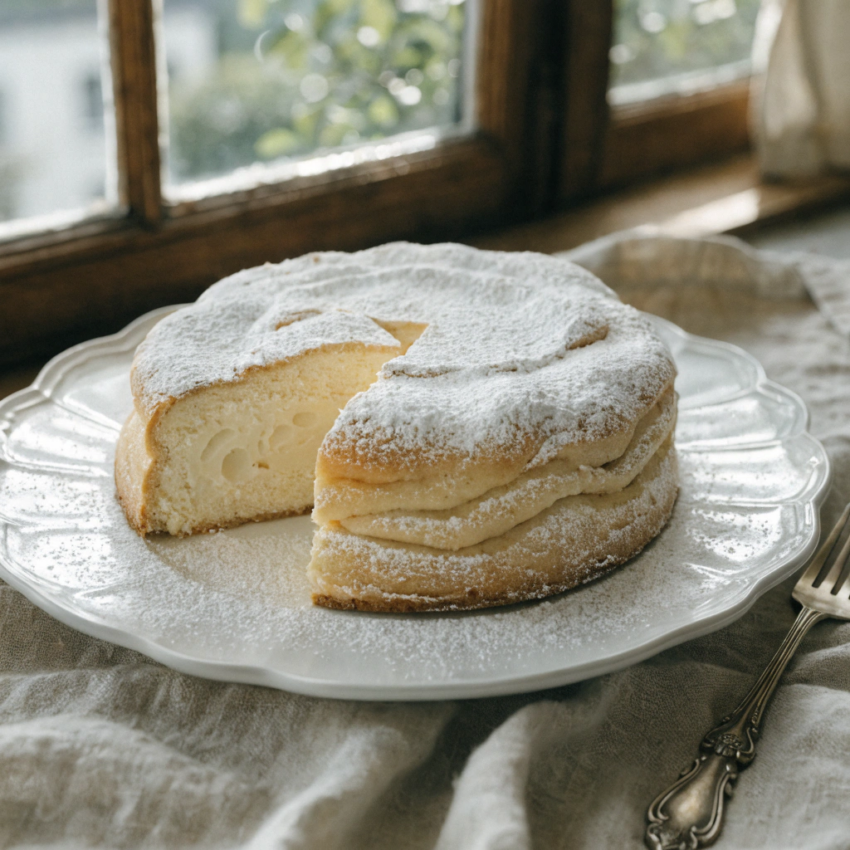
There’s something quietly comforting about a slice of German quark vanilla cake. No heavy crust. No over-the-top sweetness. Just a soft, creamy filling that melts on your tongue and leaves you reaching for another bite.
I first tried a version of this while exploring traditional German desserts, and honestly? It stuck. It’s simple. It’s honest baking. The kind that doesn’t shout—but still wins.
If you’ve been searching for a true German cheesecake recipe, this is it.
What Is German Quark Vanilla Cake?
German quark vanilla cake, often linked to German quark cheesecake, is a lighter take on classic cheesecake. It uses quark instead of cream cheese, giving it a soft texture and gentle tang.
Unlike dense American-style cheesecakes, this one feels airy. Almost like it’s floating.
In many homes across Germany, it’s a go-to dessert. You’ll also see variations like crustless German cheesecake, German cheesecake with sour cream, or even cottage cheese kuchen when quark isn’t available.
Why You’ll Love This Recipe
- Light texture. No heaviness after eating
- Simple ingredients. Nothing fancy
- Flexible. Works with quark or substitutes
- Classic flavor. Soft vanilla with a hint of tang
- Perfect for beginners
It’s also a great entry point into German desserts authentic baking.
Ingredients You’ll Need
For the Cake
- 500g quark (or substitute, see below)
- 3 large eggs
- 120g sugar
- 1 packet vanilla sugar (or 1 tsp vanilla extract)
- 100ml milk
- 100ml neutral oil (like sunflower)
- 40g cornstarch
- 1 tsp baking powder
- Pinch of salt
Optional Add-ins
- Lemon zest (adds brightness)
- Raisins (traditional touch)
- Mandarin slices (for a German mandarin orange cake twist)
What Is Quark (And Substitutes)?
Quark is a fresh dairy product. Think somewhere between yogurt and soft cheese.
If you can’t find it, don’t worry. Try this:
- Blend cottage cheese until smooth
- Or mix cream cheese + Greek yogurt (50/50)
This keeps the texture close to a traditional German cheesecake.
Step-by-Step Instructions
1. Prep Your Pan
Preheat oven to 170°C (340°F).
Line a springform pan with parchment paper.
No crust here. That’s part of the charm.
2. Mix Wet Ingredients
In a large bowl, whisk:
- Eggs
- Sugar
- Vanilla
Keep whisking until pale and slightly fluffy.
Add:
- Quark
- Milk
- Oil
Mix until smooth.
3. Add Dry Ingredients
Sift in:
- Cornstarch
- Baking powder
- Salt
Fold gently. Don’t overmix. You want a smooth batter, not dense.
4. Bake
Pour into the pan. Tap lightly to remove air bubbles.
Bake for 50–60 minutes.
The center should still jiggle slightly. That’s normal.
5. Cool Slowly
Turn off the oven. Leave the door slightly open.
Let the cake cool inside for 1 hour.
This prevents cracks.
Then chill in the fridge for at least 3 hours.
Texture & Taste (What to Expect)
This isn’t a heavy cheesecake.
It’s:
- Soft
- Slightly airy
- Gently sweet
- Creamy with a mild tang
The vanilla sits quietly in the background. It doesn’t overpower.
It’s the kind of cake you can eat after a full meal and still feel fine.
Tips That Actually Matter
- Use room temperature ingredients
- Don’t rush the cooling step
- Avoid overbaking
- Blend quark substitutes well
If your cake cracks, don’t stress. It still tastes great. Dust some powdered sugar and move on.
Variations You Can Try
1. German Cheesecake With Sour Cream
Swap 100g of quark with sour cream.
Result? Slightly richer. A bit more tang.
2. Crustless German Cheesecake
Skip the base entirely—like this recipe.
It’s lighter and faster.
3. Bavarian Cream Cake Twist
Add whipped cream after baking and chilling.
Layer it on top for a soft, mousse-like finish.
4. German Mandarin Orange Cake
Add drained mandarin slices into the batter.
Sweet citrus pockets in every bite.
Serving Ideas
- Dust with powdered sugar
- Serve with fresh berries
- Add a spoon of fruit compote
- Pair with coffee or tea
Simple works best here.
Storage Tips
- Store in the fridge (up to 4 days)
- Cover tightly to avoid drying
- Don’t freeze—it changes texture
Common Mistakes to Avoid
Overmixing the batter
Leads to dense cake.
Skipping the cooling step
Causes cracks and collapse.
Using watery substitutes
Makes the cake too loose.
Why This Recipe Works
This recipe keeps things balanced.
Cornstarch gives structure without heaviness.
Oil keeps it moist.
Quark delivers that classic German cheesecake texture.
It’s not complicated. Just smart baking.
A Quick Personal Note
I’ve made a lot of cheesecakes. Some fancy. Some overdone.
But this one? It’s the one I come back to when I want something calm. Something familiar.
It reminds me that good desserts don’t need to be loud.
FAQ
What is the difference between German cheesecake and regular cheesecake?
German cheesecake uses quark instead of cream cheese. It’s lighter, less sweet, and more delicate in texture.
Can I make this without quark?
Yes. Use blended cottage cheese or a mix of cream cheese and Greek yogurt.
It won’t be identical, but still close enough for a great German baked cheesecake.
Why is my cake cracking?
Usually from sudden temperature change or overbaking.
Let it cool slowly in the oven. That helps a lot.
Can I add a crust?
You can. A simple biscuit base works.
But traditional German quark cheesecake often skips it.
Is this the same as cottage cheese kuchen?
They’re similar. Cottage cheese kuchen uses a different cheese but follows a similar idea.
Can I make it healthier?
Yes.
- Reduce sugar slightly
- Use low-fat quark
- Skip heavy toppings
It’s already lighter than most cheesecakes.
How do I know when it’s done?
The edges should be set. The center should jiggle slightly.
It firms up as it cools.
Can I turn this into a French vanilla cake recipe style?
You can boost the vanilla flavor using vanilla bean paste.
But the texture will still stay closer to a German cheese dessert.
Final Thoughts
If you’re exploring German food authentic desserts, this is a must-try.
It’s simple. It’s comforting. And it quietly delivers every time.
No drama. Just really good cake.
