
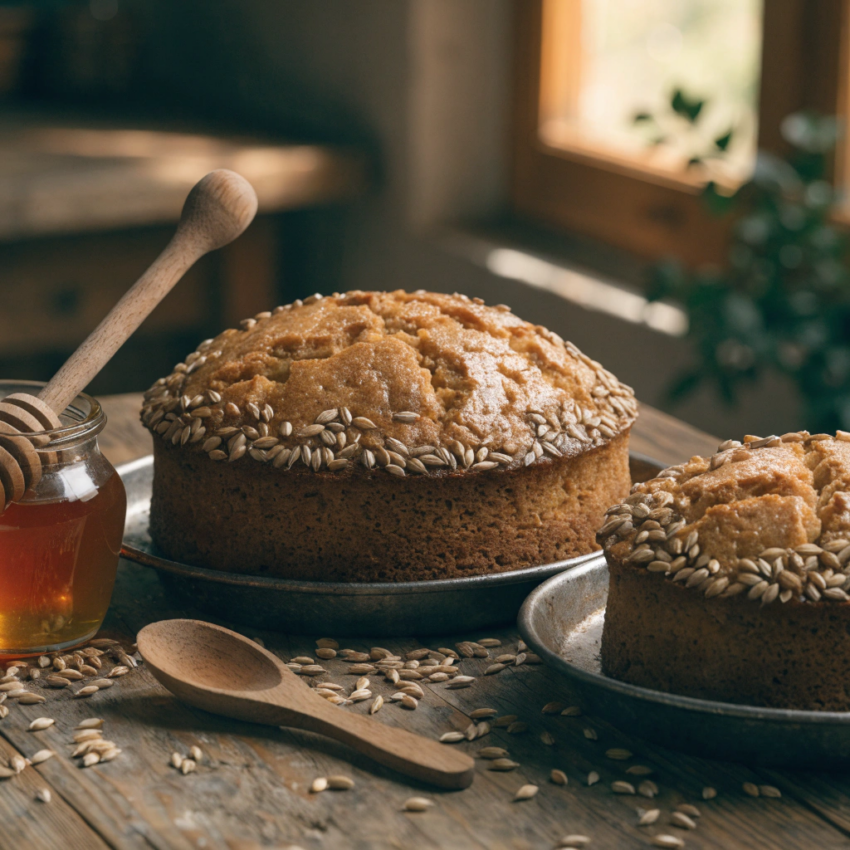
When I first came across a recipe for Viking barley honey cakes, I felt like I’d stumbled into a hidden corner of history. These cakes carry the essence of old-world kitchens, where every bite was simple, hearty, and sweetened naturally with honey. They’re not just cakes—they’re little edible time machines, taking you back to long tables in wooden halls, with the aroma of mead and roasted grains filling the air.
If you’ve ever wanted to try a honey cake that’s rustic, wholesome, and a little bit magical, you’re in the right place. I’ve adapted this recipe with some practical tweaks for modern kitchens, so you can make it in your round cake pans without breaking a sweat.
What Makes Viking Barley Honey Cakes Special?
At first glance, they might look like a simple honey cake, but there’s more to these cakes than meets the eye. Traditional Viking cakes used barley flour, giving them a nutty, earthy flavor. Honey was the main sweetener, sometimes flavored with herbs or seeds. These cakes were dense enough to last for days, which made them perfect for long journeys—think of them as the original Hobbit travel snack.
I love making them for a weekend baking session. You can cut them into small squares or rounds, perfect for sharing with friends, family, or fellow Tolkien fans who might drop by unexpectedly.
Ingredients You’ll Need
Here’s what you’ll need to make two medium-sized Viking barley honey cakes:
- 1 1/2 cups barley flour
- 1/2 cup all-purpose flour
- 1 teaspoon baking powder
- 1/2 teaspoon baking soda
- 1/2 teaspoon salt
- 1 teaspoon ground cinnamon
- 1/2 teaspoon ground ginger
- 1/4 teaspoon ground cloves
- 3/4 cup honey (preferably raw)
- 1/2 cup unsalted butter, melted
- 2 large eggs
- 1 teaspoon vanilla extract
- 1/2 cup buttermilk
- 2 tablespoons mixed seeds (optional: poppy, sunflower, pumpkin)
Step-by-Step Viking Honey Cake Recipe
1. Prep Your Pans and Oven
Preheat your oven to 350°F (175°C). Grease two round cake pans and lightly dust them with flour or line them with parchment paper. The last thing you want is a sticky Viking cake stuck to the pan!
2. Mix Dry Ingredients
In a medium bowl, combine barley flour, all-purpose flour, baking powder, baking soda, salt, and spices. Give them a quick whisk so everything’s evenly distributed. You want each bite to have a hint of spice, not a single clump of ginger.
3. Blend Wet Ingredients
In a larger bowl, whisk honey, melted butter, eggs, and vanilla extract until smooth. Slowly add the buttermilk and mix until combined. This is where the magic begins—the batter becomes golden and glossy, almost like liquid sunlight.
4. Combine Wet and Dry
Pour the dry ingredients into the wet and stir gently. Don’t overmix; you’re aiming for a thick, slightly sticky batter. Fold in the seeds if you’re using them—these give a lovely crunch reminiscent of traditional Hobbit seed cakes.
5. Bake the Cakes
Divide the batter evenly between the prepared cake pans. Bake for 25-30 minutes or until a toothpick inserted in the center comes out clean. The aroma at this stage is intoxicating, like a blend of a medieval bakery and a Hobbit feast.
6. Cool and Serve
Let the cakes cool in the pans for 10 minutes, then transfer to a wire rack. Slice them into rounds or squares. These cakes are perfect on their own, but a drizzle of extra honey or a light spread of butter elevates them even more.
Tips for Perfect Viking Honey Cakes
- Honey Choice Matters: Dark honey gives a deeper, more robust flavor, while lighter honey keeps the cake milder.
- Round Cake Pans: Using two pans ensures even baking and a lovely layered presentation if you decide to stack them.
- Seeds for Crunch: Poppy and sunflower seeds mimic the Hobbit seed cake vibe. Optional, but highly recommended.
- Storage: These cakes keep well at room temperature for 3-4 days, or in the fridge for up to a week. Perfect for meal prepping or sharing.
Hobbit and Medieval Inspirations
Viking barley honey cakes aren’t just a modern recreation—they have roots in history and literature. Think of Bilbo Baggins nibbling on a Hobbit seed cake, or a feast in a Middle Earth tavern where honey cakes were served alongside mead. Some variations even appear in Imbolc traditions, celebrating early spring with a simple honey-sweet treat.
For Tolkien enthusiasts, these cakes are more than dessert—they’re a small piece of the Shire, baked into reality. And for history lovers, they’re a nod to medieval kitchens, where sweet treats were rare luxuries and a slice of cake meant celebration.
Quick Baking Hacks
- One-Bowl Option: Mix all ingredients in one bowl if you’re short on dishes. Just start with the wet ingredients and fold in dry gradually.
- Microwave-Friendly: Slice small portions and heat for 15 seconds for a soft, warm bite.
- Flavor Variations: Add orange zest, a splash of mead, or a few chopped nuts to give your cake a personal twist.
Frequently Asked Questions (FAQ)
Q: Can I use all-purpose flour instead of barley flour?
A: Yes, but barley flour gives that distinctive nutty flavor. If you swap completely, the cake may be slightly lighter and less earthy.
Q: Can I make these gluten-free?
A: Partially! Replace barley flour with a mix of gluten-free flours like oat or rice flour. Texture changes a bit, but flavor stays lovely.
Q: How do I store Viking honey cakes?
A: Keep at room temperature in an airtight container for up to 4 days. For longer storage, refrigerate up to a week or freeze slices individually.
Q: Can I double this recipe?
A: Absolutely. Use a larger pan or bake in two batches. Baking time may increase slightly.
Q: How does this compare to a Hobbit seed cake recipe?
A: Both are sweet, hearty, and dense. Viking honey cakes use barley flour and honey primarily, while Hobbit seed cakes often include more seeds and butter.
Final Thoughts
Viking barley honey cakes are a bridge between history and imagination. They’re simple to make, satisfying, and perfect for anyone who loves a slice of something wholesome. Whether you’re a Tolkien fan, a lover of medieval cuisine, or just someone craving a rich honey cake, these cakes will hit the spot.
Next time you slice one, think of Bilbo, or a Viking settling in for a long winter’s night. It’s more than dessert—it’s a story baked into every bite.
