
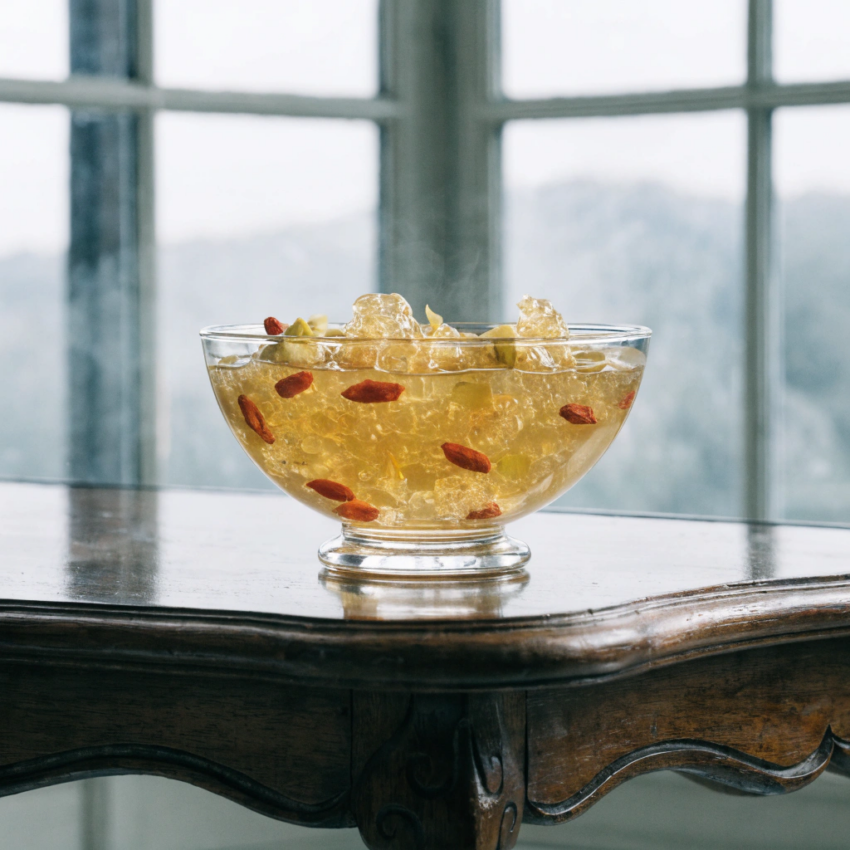
There’s something quietly magical about ancient Chinese osmanthus jelly. It’s soft, chilled, and gently fragrant. The kind of dessert that doesn’t shout—but still steals the table.
I first tried this during a late summer trip, served in a tiny bowl with golden petals floating like little suns. One bite, and I knew I had to recreate it at home.
Today, I’ll walk you through a simple, reliable version. No guesswork. No fluff. Just a clean, fragrant osmanthus jelly recipe Chinese style that works every time.
What Is Osmanthus Jelly?
Osmanthus jelly is a traditional Chinese dessert made with dried osmanthus flowers, sugar, and a gelling agent like agar agar.
It’s often served cold. Slightly sweet. Lightly floral. Think of it as a calm dessert after a heavy meal.
You’ll also find variations across Asia:
- Chinese versions often include goji berries (wolfberries)
- Japanese styles lean into agar jelly desserts with a firmer bite
- Modern recipes add coconut milk or fruit layers
At its core, though, it stays simple. And that’s the beauty.
Why You’ll Love This Recipe
- It’s light and refreshing
- No baking required
- Naturally dairy-free
- Looks elegant with minimal effort
- Works as a make-ahead dessert
And honestly? It feels fancy without trying too hard.
Ingredients You’ll Need
Here’s everything for a classic osmanthus agar agar recipe:
- 2 cups water
- 1 tbsp dried osmanthus flowers
- 2–3 tbsp sugar (adjust to taste)
- 1 tsp agar agar powder (or 5g agar strips, soaked)
- 1 tbsp goji berries (optional, for a wolfberry jelly recipe twist)
- 1 tsp honey (optional, for depth)
Optional add-ins:
- Coconut milk (for osmanthus coconut jelly)
- Lychee or longan
- A splash of osmanthus syrup
Step-by-Step: Osmanthus Jelly With Agar
1. Brew the floral base
Heat water in a small pot. Once it starts to steam, add dried osmanthus flowers.
Let it steep for 5–7 minutes.
The aroma will bloom quickly. Soft. Apricot-like.
2. Strain the liquid
Pour the tea through a fine strainer. Press gently to extract flavor.
Discard the solids or keep a few petals for garnish.
3. Add sugar and agar
Return the liquid to the pot. Add sugar and agar agar powder.
Stir well before turning on the heat.
4. Bring to a gentle boil
Heat the mixture while stirring. Agar needs a brief boil to activate.
Let it simmer for 1–2 minutes.
5. Add extras
Drop in goji berries if using.
They’ll soften and add a subtle sweetness.
6. Pour and set
Pour the liquid into molds or small bowls.
Let it cool at room temperature, then transfer to the fridge.
7. Chill until firm
It sets within 1–2 hours.
Once ready, it should feel springy but tender.
Texture Tips (This Part Matters)
Agar sets differently than gelatin.
- Too firm? Use less agar next time
- Too soft? Slightly increase agar
- Want a delicate wobble? Stay close to 1 tsp per 2 cups liquid
Also, agar sets at room temperature. So don’t wait too long before pouring.
Flavor Variations to Try
Once you’ve nailed the base, you can play around.
Osmanthus Coconut Jelly
Swap half the water with coconut milk.
The result is creamy, floral, and slightly tropical.
Osmanthus Sweet Soup Style
Serve the jelly cubes in chilled syrup or tea.
Add fruits like longan or peach.
Layered Osmanthus Pudding
Pour one layer, let it set slightly, then add another.
Try pairing with mango or milk jelly.
Osmanthus Tea Jelly
Use strong brewed osmanthus tea as your base.
Less sugar needed. More floral punch.
Can You Turn This Into Cake?
Yes—sort of.
If you’re curious about an osmanthus cake recipe easy version, you can use this jelly as a topping layer. Pour it over a sponge cake and chill.
It adds shine. Flavor. And a delicate finish.
Common Mistakes to Avoid
1. Not boiling the agar
Agar won’t set properly without heat.
Always bring it to a brief boil.
2. Adding too many flowers
More isn’t always better.
Too much osmanthus can taste bitter.
3. Skipping the strain
Leaving too many petals can affect texture.
Keep it smooth with just a few for garnish.
4. Pouring too late
Agar starts setting fast.
Pour while still hot.
Serving Ideas
Keep it simple or dress it up.
- Cut into cubes and serve chilled
- Plate with fresh fruit
- Drizzle with honey syrup
- Pair with green tea or jasmine tea
I sometimes serve it after a heavy dinner. It feels like a reset button.
Storage Tips
- Store in the fridge for up to 3 days
- Keep covered to avoid absorbing odors
- Do not freeze—it ruins the texture
A Quick Note on Osmanthus
Osmanthus flowers are tiny but powerful.
They carry a fruity, almost peach-like scent.
You’ll usually find them dried in Asian grocery stores.
Or online if needed.
They’re also used in:
- Osmanthus tea
- Syrups
- Traditional sweets
FAQ: Ancient Chinese Osmanthus Jelly
What does osmanthus jelly taste like?
It’s lightly sweet with a floral note. Think apricot meets honey, but softer.
Can I use gelatin instead of agar?
Yes, but the texture will be different. Agar gives a firmer, cleaner bite.
Is this a traditional Chinese dessert?
Yes. It has roots in Chinese cuisine and is often served during warmer months.
How do I make a Japanese agar jelly dessert version?
Use less sugar and a firmer agar ratio. Cut into precise cubes for a clean look.
Can I make this vegan?
It already is. Agar agar is plant-based.
What pairs well with osmanthus jelly?
Fresh fruits, light teas, or even a mild syrup.
Can I add milk?
Yes. For a richer version, try a layered osmanthus pudding with milk jelly.
What is a good substitute for osmanthus?
Chrysanthemum or jasmine can work, but the flavor will change.
Final Thoughts
This osmanthus jelly recipe is one of those quiet desserts that grows on you.
It doesn’t rely on heavy sugar or rich textures. Instead, it leans into clarity. Clean flavor. Gentle aroma.
If you’ve never tried an osmanthus dessert, this is the place to start.
Make it once, and you’ll come back to it—especially on warm days when you want something light but still satisfying.
