
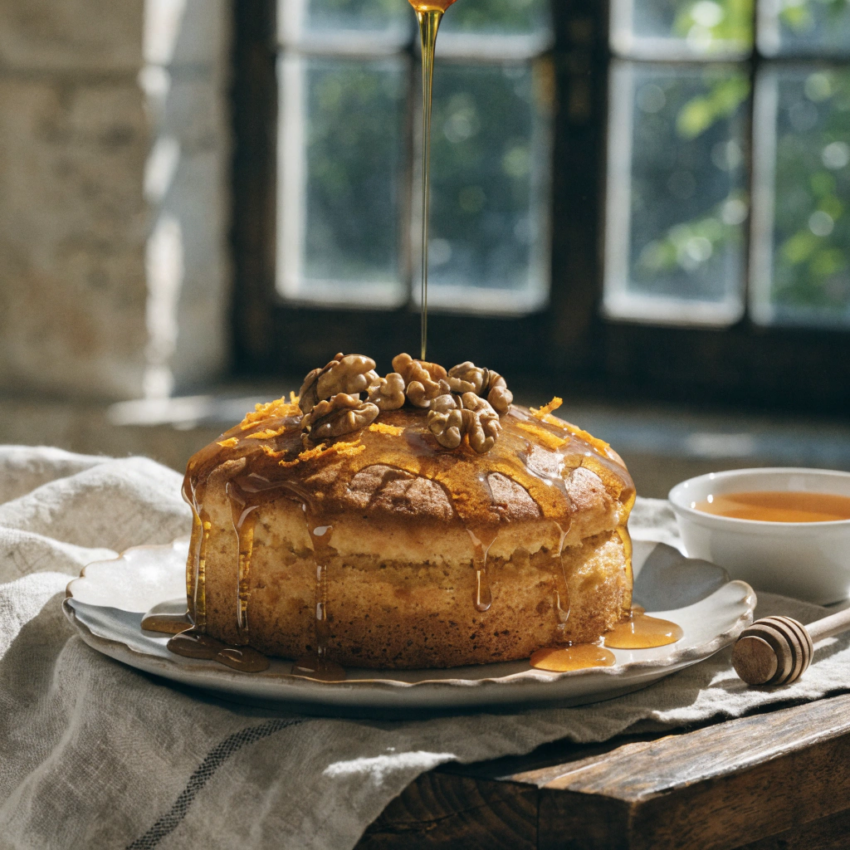
Desserts tell stories. Some whisper. Some sing. And Ancient Greek Plakous honey cake? It practically shouts across history.
Long before modern bakeries and stand mixers, Greek cooks baked simple cakes sweetened with honey. Sugar wasn’t common. Honey ruled the kitchen. The result was plakous, an early Greek honey cake recipe that blended flour, cheese, nuts, and golden honey into something deeply satisfying.
I first stumbled across this dessert while reading about ancient Greek desserts during a late-night recipe hunt. One sentence caught my eye: Greeks served honey cakes during celebrations and offerings to the gods. That was enough to send me straight into the kitchen.
And honestly? This cake deserves its place in history.
It’s simple. Fragrant. Lightly crisp at the edges. Then drenched in warm honey syrup. One bite and you understand why this dessert survived thousands of years.
What Is Ancient Greek Plakous Honey Cake?
Plakous was one of the earliest Greek cake recipes ever recorded. Ancient Greek writers described it as a layered cake made with dough, soft cheese, and honey.
Think of it as a distant cousin of modern Mediterranean honey cake.
The ingredients were humble:
- Wheat flour
- Fresh cheese
- Honey
- Olive oil
- Nuts
These ingredients were staples across Greece. Bakers shaped them into a soft cake, then poured honey over the top. No fancy frosting. Just pure flavor.
The beauty of this traditional Greek honey cake lies in its simplicity.
Modern versions adjust the method a bit. Ovens are hotter. Measurements are clearer. But the soul of the recipe remains the same.
A rustic cake. Warm honey. Simple joy.
Why You’ll Love This Greek Honey Cake
Some desserts impress with decoration. This one wins with flavor.
Here’s why this Greek dessert recipe stands out:
Deep honey flavor
Honey isn’t just sweetener here. It’s the star.
Soft texture
The cake stays tender thanks to olive oil and yogurt or cheese.
Warm spices
Cinnamon and citrus bring balance.
Perfect with tea or coffee
One slice feels cozy.
It’s also surprisingly easy. If you can mix batter and pour syrup, you’re already halfway there.
Ingredients for Ancient Greek Honey Cake
Most ingredients are pantry staples. That’s part of the charm.
For the Cake
2 cups all-purpose flour
1 teaspoon baking powder
1/2 teaspoon salt
1 teaspoon ground cinnamon
3/4 cup olive oil
1/2 cup Greek yogurt or ricotta
1/2 cup honey
2 eggs
1 teaspoon vanilla extract
Zest of 1 orange
1/2 cup chopped walnuts or almonds
For the Honey Syrup
1/2 cup honey
1/4 cup water
1 tablespoon lemon juice
These ingredients build the classic flavor profile found in many Greek desserts and Mediterranean desserts.
How To Make Greek Honey Cake
This cake comes together quickly. No complicated steps.
Step 1: Prepare the Oven
Preheat your oven to 350°F (175°C).
Grease an 8-inch cake pan or line it with parchment paper.
Step 2: Mix the Dry Ingredients
In a bowl, whisk together:
- flour
- baking powder
- salt
- cinnamon
Set the bowl aside.
Step 3: Combine the Wet Ingredients
In another bowl, whisk:
- olive oil
- honey
- eggs
- Greek yogurt
- vanilla
- orange zest
Mix until smooth.
Step 4: Build the Batter
Add the dry ingredients to the wet mixture.
Stir gently until combined.
Fold in the chopped nuts.
The batter will be thick but pourable.
Step 5: Bake the Cake
Pour the batter into the prepared pan.
Bake for 30–35 minutes.
The top should turn golden. A toothpick should come out clean.
Let the cake cool for about 10 minutes.
Step 6: Make the Honey Syrup
While the cake bakes, prepare the syrup.
In a small saucepan combine:
- honey
- water
- lemon juice
Warm it over low heat for 2–3 minutes. Stir gently.
Do not boil.
Step 7: Add the Honey Syrup
While the cake is still warm, poke small holes with a skewer.
Slowly pour the warm syrup over the cake.
Let it soak in.
This step gives the cake its signature flavor found in many Greek cake recipes.
Tips for the Best Mediterranean Honey Cake
Small adjustments make a big difference.
Use good honey
Wildflower or thyme honey works beautifully.
Don’t skip the citrus
Orange zest brightens the cake.
Pour syrup while warm
Warm cake absorbs syrup better.
Let the cake rest
Give it at least 30 minutes before slicing.
This waiting time helps the syrup spread evenly through the cake.
Serving Ideas
This Greek dessert is versatile.
Serve it warm or at room temperature.
A few favorite ways:
- with thick Greek yogurt
- with crushed pistachios
- with a drizzle of extra honey
- alongside coffee
Sometimes I add fresh figs on the side. The flavors feel straight out of the Mediterranean countryside.
A Short History of Ancient Greek Desserts
Ancient Greek cooking leaned on simple ingredients.
Sugar wasn’t widely available. Honey carried the sweetness.
Bakers created several honey-based sweets including:
- plakous
- sesame honey bars
- honey fritters
These desserts often appeared at festivals and religious ceremonies.
Honey symbolized prosperity and good fortune.
So serving ancient Greek honey cake wasn’t just about taste. It held cultural meaning.
And honestly, traditions like this make baking more fun.
Variations of Greek Honey Cake
Once you try the classic version, experiment a little.
Almond Honey Cake
Replace walnuts with ground almonds.
This gives a softer texture and delicate flavor.
Spice Honey Cake
Add:
- nutmeg
- cloves
- cardamom
These spices deepen the aroma.
Olive Oil Citrus Cake
Increase the orange zest and add lemon zest.
It turns the cake brighter and fresh.
Each version still fits comfortably within Mediterranean desserts.
Storage Tips
This cake keeps well for several days.
Room temperature:
Store in an airtight container for up to 3 days.
Refrigerator:
Keeps for about 5 days.
Freezer:
Wrap slices tightly and freeze for up to 2 months.
Warm slices slightly before serving. The honey softens again.
Why This Recipe Still Works Today
Ancient cooks didn’t rely on fancy tools.
They trusted flavor.
That’s why recipes like Ancient Greek plakous honey cake still shine today.
The ingredients are simple. The technique is straightforward. The result feels comforting.
One slice tastes rustic. The next slice tastes nostalgic.
And somewhere along the way, you realize something funny.
A dessert from 2,000 years ago still fits perfectly on a modern kitchen table.
That’s the magic of a good honey cake recipe.
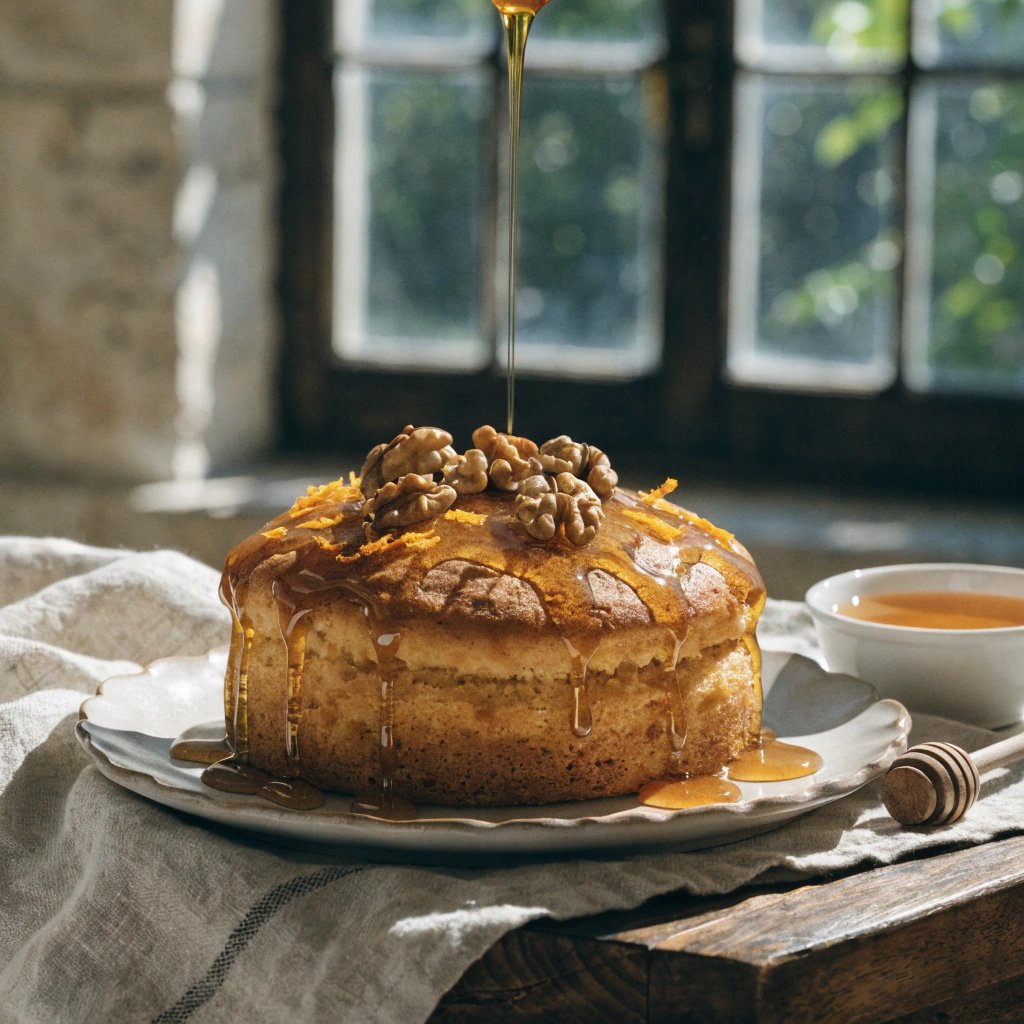
Ancient Greek Plakous Honey Cake
Ingredients
Method
- Set the oven to 350°F (175°C). Grease an 8-inch round cake pan or line it with parchment paper.
- In a medium bowl combine flour, baking powder, salt, and cinnamon. Stir well so everything is evenly mixed.
- In a larger bowl whisk olive oil, honey, eggs, Greek yogurt, vanilla extract, and orange zest until smooth.
- Add the dry ingredients into the wet mixture. Stir gently until a thick batter forms. Fold in the chopped walnuts or almonds.
- Pour the batter into the prepared cake pan and smooth the top with a spatula.
- Place the pan in the oven and bake for about 30–35 minutes. The top should turn golden brown and a toothpick inserted in the center should come out clean.
- While the cake is baking, combine honey, water, and lemon juice in a small saucepan. Warm on low heat for 2–3 minutes while stirring gently. Do not boil.
- Once the cake is baked, let it cool for about 10 minutes. Use a skewer to poke small holes in the surface. Slowly pour the warm honey syrup over the cake so it soaks in.
- Let the cake sit for at least 20–30 minutes. Slice and serve. Add extra honey or nuts on top if you like.
Notes
FAQ About Ancient Greek Honey Cake
What is plakous in ancient Greek cooking?
Plakous was a honey cake made with wheat flour, cheese, and nuts. Ancient Greeks baked it for celebrations and religious offerings.
Is Greek honey cake the same as baklava?
No. Baklava uses layers of phyllo dough and nuts soaked in syrup. Greek honey cake is a soft baked cake with honey syrup poured over it.
What type of honey works best for honey cake?
Thyme honey, wildflower honey, or orange blossom honey all work well. Each adds slightly different flavor notes.
Can I make this honey cake gluten-free?
Yes. Replace all-purpose flour with a gluten-free baking blend designed for cakes.
Why is syrup poured over the cake?
The syrup keeps the cake moist and adds intense honey flavor. This method appears in many Greek dessert recipes.
How do you know when the cake is done baking?
Insert a toothpick into the center. If it comes out clean, the cake is ready.
Can I add fruit to the recipe?
Yes. Fresh figs, chopped dates, or raisins pair nicely with the honey flavor.
