
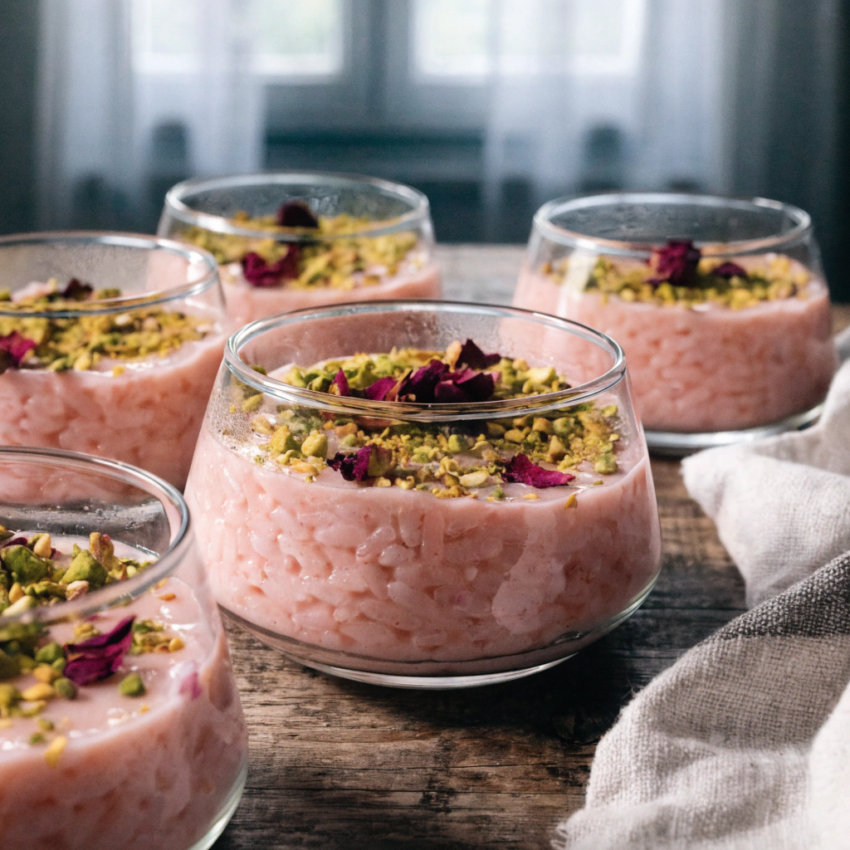
If you’ve ever tasted rose Turkish delight and thought, “I wish this flavor came in a creamy dessert,” this is for you.
Ottoman rosewater pudding is soft, fragrant, and gently sweet. It’s a classic Turkish rice pudding infused with rose water, inspired by palace kitchens of the Ottoman era. Simple ingredients. Big character.
I love making this when I want something comforting but a little romantic. It feels old-fashioned in the best way.
What Is Ottoman Rosewater Pudding?
Ottoman rosewater pudding is a variation of Turkish rice pudding, often compared to Middle Eastern rice pudding or even a Persian dessert with rose water. The base is rice, milk, and sugar. The magic is in the rose water.
Think of it as a cousin to malabi dessert recipe traditions, but thicker and more rice-forward. It’s creamy without being heavy. Floral but not soapy. Light pink if you choose to tint it.
It’s also one of those rose water recipes food lovers appreciate in spring. Delicate. Calm. Nostalgic.
Ingredients You’ll Need
This is a pantry-friendly rice pudding recipe.
- 1/2 cup short-grain rice
- 3 cups whole milk
- 1 cup water
- 1/3 to 1/2 cup sugar (adjust to taste)
- 1 1/2 tablespoons rose water
- 1 tablespoon cornstarch (optional, for thicker texture)
- 2 tablespoons milk (to mix with cornstarch)
- Pinch of salt
- Optional: 1–2 drops natural pink coloring
- Garnish: crushed pistachios, dried rose petals
Short-grain rice gives that classic Turkish rice texture. Creamy but still structured.
How To Make Rice Pudding With Rose Water
Step 1: Cook the Rice
Rinse the rice under cold water until the water runs clear. This removes excess starch and prevents clumping.
In a medium saucepan, combine rice and water. Bring to a gentle boil. Lower the heat and simmer until the water is mostly absorbed and the rice is soft. About 10–12 minutes.
Don’t rush this stage. Properly cooked rice makes the difference.
Step 2: Add Milk and Simmer
Pour in the milk and add a pinch of salt. Stir.
Bring to a soft simmer over medium-low heat. Stir frequently to prevent sticking. Let it cook for 20–25 minutes until the mixture thickens and becomes creamy.
If you want a thicker Turkish rice pudding recipe texture, mix cornstarch with 2 tablespoons milk. Add it in. Stir constantly for 2–3 minutes.
The pudding should coat the back of a spoon.
Step 3: Sweeten and Flavor
Add sugar. Stir until dissolved.
Turn off the heat. Now add rose water. Start with 1 tablespoon. Taste. Add more if needed.
Rose water is powerful. A heavy hand can turn your rose water rice pudding into perfume. We want floral, not cosmetic counter.
If using pink coloring, add a tiny drop and stir gently.
Step 4: Pour and Chill
Pour into small bowls or glasses.
Let cool at room temperature for 20 minutes. Then refrigerate for at least 2 hours.
It thickens more as it chills.
Before serving, garnish with pistachios and rose petals.
That’s it. That’s how to make rose pudding the Ottoman way.
Texture Tips for Perfect Creamy Desserts
Rice pudding has moods. Sometimes it’s too thick. Sometimes it’s too loose.
Here’s how to control it:
- Too thick? Stir in warm milk before serving.
- Too thin? Simmer longer or add a cornstarch slurry.
- Grainy texture? Cook longer on low heat and stir more often.
Creamy desserts need patience. Gentle heat wins every time.
Is This Like Turkish Rice Pudding (Sütlaç)?
Yes and no.
Classic Turkish rice pudding, also known as sütlaç, often skips rose water and sometimes gets baked with a caramelized top. Ottoman rosewater pudding stays stovetop and floral.
Both fall under the Turkish desert category. Both are comfort food.
If you love Turkish rice, you’ll love this variation.
How This Connects to Rose Turkish Delight
If you grew up reading The Chronicles of Narnia, you probably remember that famous scene with Turkish delight. Many people search for homemade pink Turkish delight or how to make Turkish delight from Narnia.
Rose Turkish delight recipe versions use similar floral notes. The difference?
Turkish delight is chewy and gelatin-based. Ottoman rosewater pudding is spoonable and soft.
Still, the flavor family overlaps. If you enjoy a Narnia Turkish delight recipe, this pudding will feel familiar.
And honestly, it’s easier than an easy Turkish delight recipe.
Variations You Can Try
Once you master the base, play with it.
1. Almond Rose Version
Add 1/4 teaspoon almond extract with the rose water. It adds depth.
2. Coconut Rose
Replace 1 cup milk with coconut milk. A gentle tropical hint.
3. Saffron Rose
Soak a pinch of saffron in warm milk and add during cooking. Color and aroma become richer.
4. Layered Malabi Style
Pour half the pudding into glasses. Add a thin layer of berry sauce. Top with remaining pudding. Chill.
This leans into malabi dessert recipe territory while keeping the rice base.
Serving Ideas for Spring
This is one of my favorite spring recipes.
Serve it:
- After a light dinner
- At a brunch table
- During Ramadan gatherings
- As a sweet finish to a Middle Eastern rice pudding spread
Pair it with fresh berries. Or strong Turkish coffee.
Floral meets bitter. Perfect balance.
Storing and Make-Ahead Tips
Store covered in the fridge for up to 3 days.
It thickens over time. Stir in a splash of milk before serving if needed.
You can make it a day in advance for gatherings. It holds well and tastes even better once chilled.
Choosing the Right Rose Water
All rose water isn’t equal.
Look for food-grade rose water with minimal additives. Persian or Turkish brands usually deliver clean flavor.
Smell it before using. It should be fresh and floral, not sharp.
Recipes using rose water demand restraint. Add slowly. Taste. Adjust.
Why This Recipe Works
- Simple ingredients
- Gentle technique
- Balanced sweetness
- Clear rose flavor without overpowering
It’s comforting and slightly elegant at the same time.
This rosewater dessert doesn’t need complicated steps. It relies on tradition and attention.
Sometimes that’s enough.
Frequently Asked Questions
1. Can I make this dairy-free?
Yes. Replace milk with almond milk or coconut milk. Texture may be lighter, but flavor stays lovely.
2. What type of rice is best?
Short-grain rice works best for Turkish rice pudding recipe texture. It releases starch and creates creaminess.
Avoid long-grain rice. It stays separate and less creamy.
3. Can I bake this like traditional Turkish rice pudding?
You can. Pour into oven-safe dishes and bake at 180°C (350°F) until the top browns slightly. It changes texture and adds caramelized flavor.
4. How much rose water should I use?
Start with 1 tablespoon per batch. Increase slowly. Too much rose water overpowers the pudding.
5. Is this similar to Persian dessert with rose water?
Very similar in flavor direction. Persian versions may include cardamom or nuts more prominently.
6. Can I make it less sweet?
Absolutely. Reduce sugar by 2–3 tablespoons. Taste and adjust.
7. How is this different from malabi dessert recipe?
Malabi usually uses milk thickened with cornstarch and no rice. This pudding uses rice as the main thickener.
8. Can I turn this into a layered dessert?
Yes. Layer with berry compote or crushed pistachios for presentation. It works well in glasses for parties.
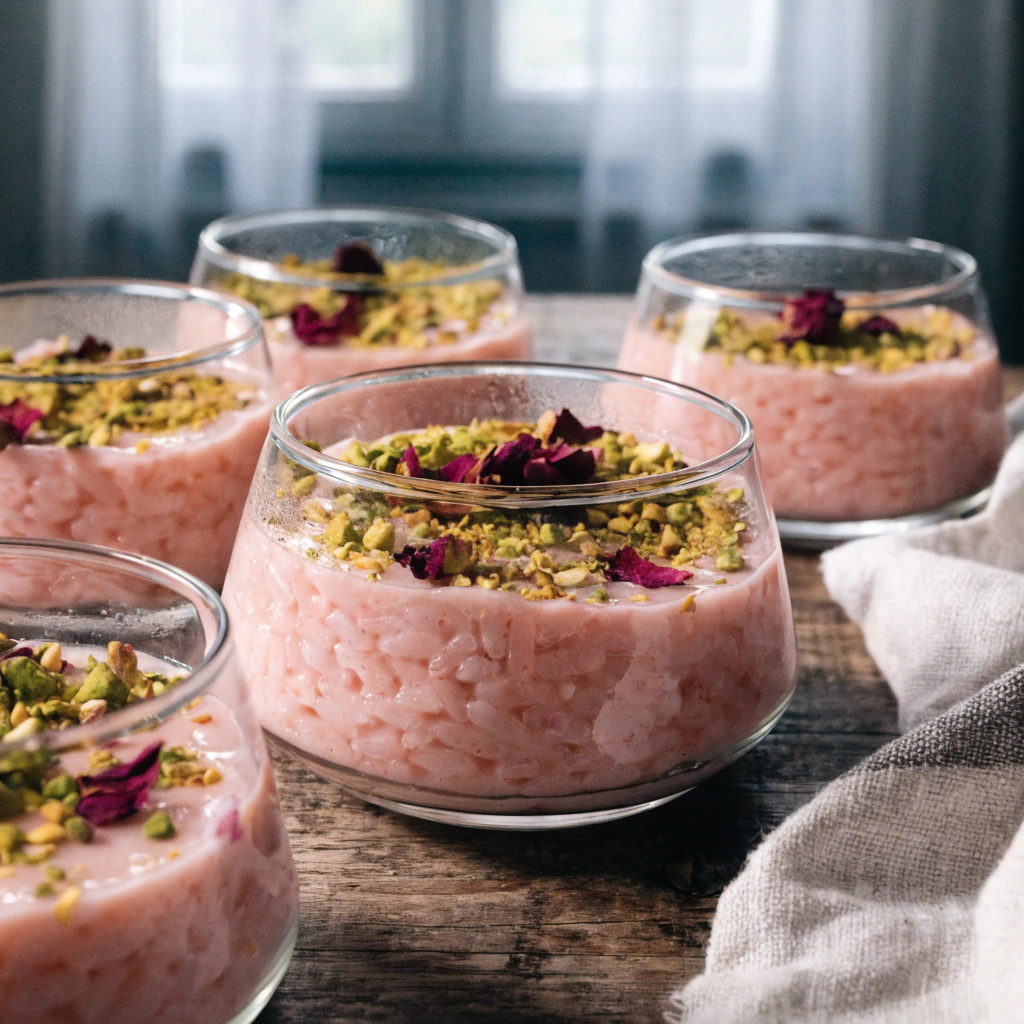
Ottoman Rosewater Pudding
Ingredients
Method
- Rinse the rice under cold water until the water runs mostly clear. This keeps the pudding smooth.
- In a saucepan, combine rice and 1 cup water. Bring to a gentle boil. Lower heat and simmer for about 10–12 minutes, until the rice is soft and most of the water is absorbed.
- Pour in the 3 cups of milk and add a pinch of salt. Stir well.
- Simmer on low heat for 20–25 minutes. Stir often so it doesn’t stick to the bottom.
- If you want it thicker, mix 1 tablespoon cornstarch with 2 tablespoons milk. Stir it into the pot. Cook 2–3 more minutes until it thickens.
- Stir in the sugar. Let it dissolve fully.
- Turn off the heat. Stir in 1 to 1 1/2 tablespoons rose water. Taste before adding more.
- Add 1–2 drops pink coloring if you want a soft blush color.
- Pour into small serving bowls or glasses.
- Let cool at room temperature for 20 minutes.
- Refrigerate at least 2 hours before serving.
- Top with crushed pistachios and dried rose petals before serving.
Notes
- Don’t add too much rose water at once. It’s strong. Start small.
- Stir often while cooking. Milk can burn quickly.
- The pudding thickens more after chilling.
- If it becomes too thick in the fridge, stir in a splash of cold milk before serving.
- Whole milk gives the creamiest texture. Lower-fat milk works but will be lighter.
Final Thoughts
Ottoman rosewater pudding is simple but expressive. It carries history in a spoonful.
If you love rose water desserts, this one deserves a place in your kitchen. It’s comforting. It’s floral. It feels like something you’d find in a quiet Istanbul café.
Make it once. Adjust it to your taste. Then make it again.
That’s how family favorites are born.
