
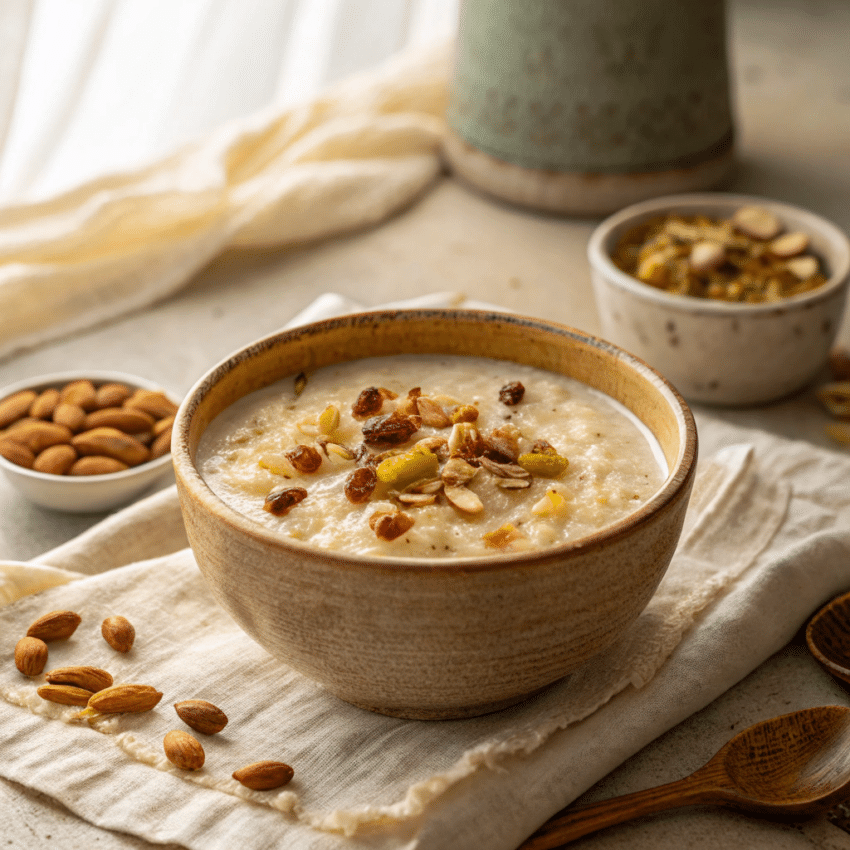
Nepalese kheer rice pudding is comfort in a bowl.
Warm. Milky. Lightly spiced.
It’s the kind of dessert that doesn’t shout for attention but quietly wins your heart.
I first learned about kheer while exploring South Asian sweets, and it instantly reminded me why simple desserts stick around for centuries. This Nepali rice pudding shows up at festivals, family gatherings, and everyday meals. It’s humble. It’s nostalgic. And it’s deeply satisfying.
If you enjoy Indian rice dessert traditions, you’ll feel right at home here. Nepali kheer shares roots with Indian rice pudding, yet it carries its own rhythm, flavor balance, and charm.
What Is Nepalese Kheer Rice Pudding?
Nepalese kheer rice pudding is a classic Nepali sweet dish made by simmering rice in milk until thick and creamy. Sugar or jaggery sweetens it. Cardamom adds warmth. Nuts finish it off.
That’s it.
No complicated steps.
No fancy equipment.
It’s part of a wider family of rice kheer found across South Asia, including Indian rice pudding and rice pudding Indian variations. What sets Nepali rice pudding apart is its lighter sweetness and softer spice profile.
It’s gentle.
Balanced.
Never overpowering.
Why This Nepali Dessert Deserves a Spot on Your Table
Some desserts feel heavy after a few bites. This one doesn’t.
Nepalese desserts often focus on texture and calm sweetness. Kheer fits that mindset perfectly. It’s rich but not cloying. Creamy without being dense.
People serve it warm in winter.
Chilled in summer.
Plain or dressed up for celebrations.
That flexibility is why it’s still loved today.
Ingredients for Nepalese Kheer Rice Pudding
This recipe sticks close to tradition while staying friendly for home kitchens.
You’ll need:
- 1/4 cup basmati rice (or any Indian rice with aroma)
- 4 cups whole milk
- 3–4 tablespoons sugar or grated jaggery
- 1/2 teaspoon ground cardamom
- 2 tablespoons chopped nuts (cashews, almonds, pistachios)
- 1 tablespoon raisins (optional)
- 1 teaspoon ghee (optional but lovely)
For a vegan kheer, swap dairy milk for coconut milk or almond milk.
How to Make Nepalese Kheer Rice Pudding
This is a slow dessert.
Don’t rush it.
Let the pot do the talking.
Step 1: Rinse the Rice
Wash the rice until the water runs mostly clear. This removes surface starch and helps the pudding stay creamy, not gummy.
Step 2: Start the Milk
Pour milk into a heavy-bottomed pot. Bring it to a gentle simmer over medium heat. Stir often so it doesn’t scorch.
Milk burns fast when ignored. Ask me how I know.
Step 3: Add the Rice
Add the rinsed rice to the simmering milk. Lower the heat. Cook uncovered.
Stir every few minutes. The rice slowly swells and releases starch, thickening the pudding naturally.
Step 4: Sweeten It
Once the rice is soft, add sugar or jaggery. If using jaggery, grate it finely so it melts cleanly.
Taste as you go. Sweetness should feel calm, not loud.
Step 5: Spice and Finish
Add cardamom. Stir in nuts and raisins. A spoon of ghee adds silkiness, but it’s optional.
Cook until the kheer reaches your preferred thickness. It will thicken more as it cools.
Turn off the heat. Rest it for five minutes.
Texture Tips for Creamy Rice Pudding
Everyone likes their rice pudding a little different.
- Thicker kheer: Cook longer. Stir more often.
- Looser pudding: Add a splash of warm milk at the end.
- Extra creaminess: Mash a few rice grains against the pot while stirring.
Rice pudding flavors deepen as it sits. Leftovers taste even better the next day.
Using Jaggery Instead of Sugar
Rice pudding recipe with jaggery feels earthier and deeper. Jaggery brings hints of caramel and smoke.
One tip:
Always add jaggery after the rice softens. If added too early, milk can split.
This version fits beautifully into Indian dessert recipes and Nepali dessert ideas alike.
Vegan Kheer Variation
Vegan kheer works surprisingly well.
Use coconut milk for richness or almond milk for a lighter finish. Oat milk also behaves nicely.
Skip the ghee. Toast nuts dry instead.
You’ll still get a creamy rice pudding that feels comforting and familiar.
Common Flavor Add-Ins
Traditional Nepali desserts keep flavors simple, but you can experiment.
- A few strands of saffron for warmth
- Rose water for fragrance
- Cinnamon stick during simmering
- Orange zest for a modern twist
Just don’t overcrowd it. Kheer likes space.
How This Compares to Indian Rice Pudding
Indian rice pudding kheer often leans richer and sweeter. Some versions use condensed milk or heavy cream.
Nepali rice pudding stays lighter. The milk reduces slowly. The sweetness stays measured.
Both belong to the same family.
They just speak different dialects.
When to Serve Nepali Kheer
This dessert doesn’t need a reason.
Serve it:
- After spicy Indian food dessert spreads
- As part of traditional Nepali desserts during festivals
- As a quiet weekday treat
- As a make-ahead dessert for guests
Warm or cold, it shows up politely and leaves everyone content.
Storage and Reheating
Store kheer in the fridge for up to three days.
Reheat gently on the stove or microwave. Add milk if it thickens too much.
Stir well. Always.
Why I Keep Coming Back to This Recipe
Some recipes feel like old friends. This is one of them.
Nepalese kheer rice pudding doesn’t try to impress. It just works. Every time.
It reminds me that desserts don’t need drama to feel special. Sometimes, a bowl, a spoon, and a quiet moment are enough.
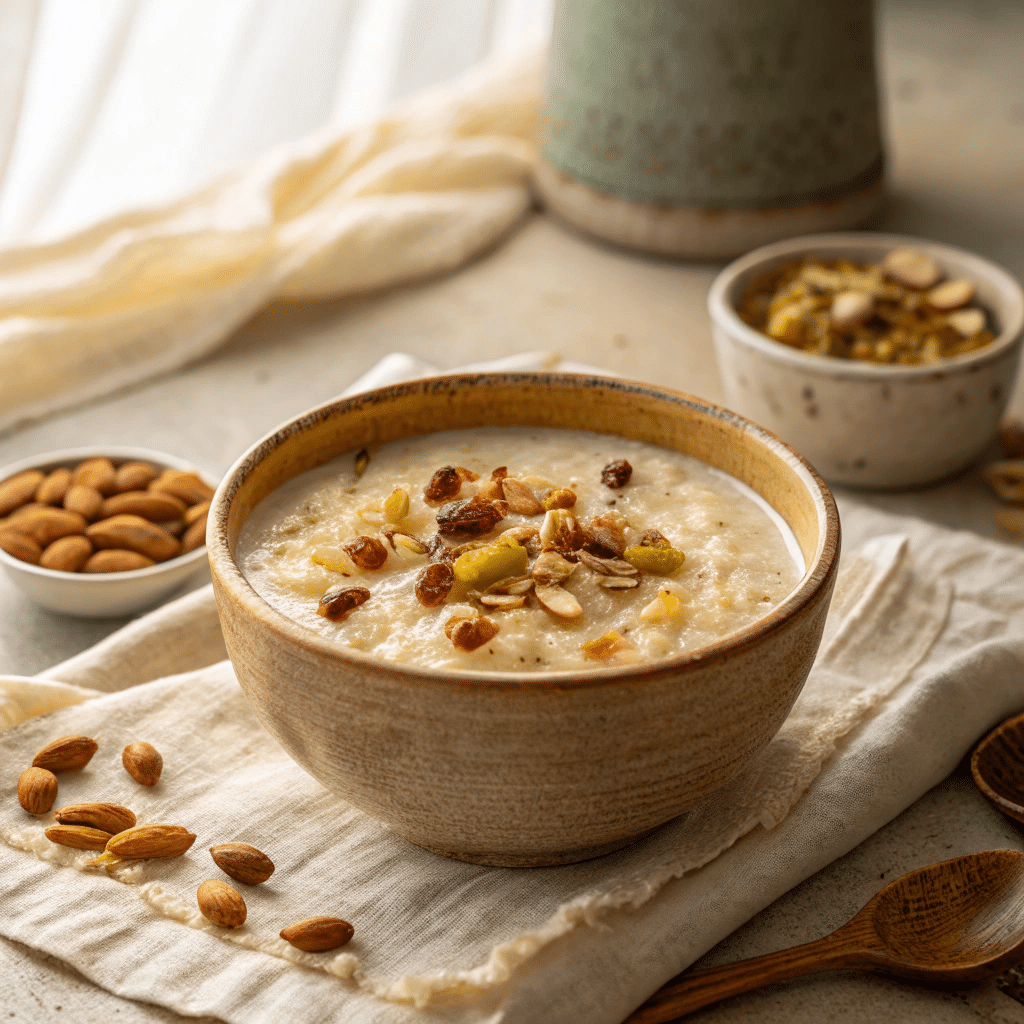
Nepalese Kheer Rice Pudding
Ingredients
Method
- Rinse the rice under running water until the water looks mostly clear. Set aside.
- Pour the milk into a heavy-bottom pot and bring it to a gentle simmer over medium heat.
- Add the rice to the milk. Lower the heat and cook uncovered.
- Stir every few minutes so the milk doesn’t stick to the bottom.
- Cook until the rice turns soft and the milk thickens, about 25–30 minutes.
- Add sugar or jaggery and stir well until fully dissolved.
- Add cardamom, nuts, raisins, and ghee if using.
- Cook for another 5 minutes, then turn off the heat.
- Let it rest for 5 minutes before serving.
- Serve warm or chilled.
Notes
- Stir often. Milk burns fast if left alone.
- Kheer thickens as it cools, so don’t overcook it.
- For a vegan version, use coconut milk or almond milk and skip the ghee.
- This pudding tastes even better the next day.
Frequently Asked Questions
Is Nepalese kheer the same as Indian rice pudding?
They’re closely related. Both use rice, milk, and cardamom. Nepali rice pudding usually tastes lighter and less sweet than many Indian rice pudding recipes.
Can I make this kheer ahead of time?
Yes. It keeps well in the fridge for up to three days. The flavor improves as it rests.
Which rice works best?
Basmati rice is ideal due to its aroma. Any Indian rice with medium grains also works.
How do I make quick rice kheer recipe versions?
Use pre-soaked rice and warm milk. Cook on medium heat while stirring often. It still needs patience, just less of it.
Can I freeze rice pudding?
Freezing isn’t recommended. The texture changes once thawed, and creaminess suffers.
Is this recipe gluten-free?
Yes. Rice kheer contains no gluten.
Can I reduce the sugar?
Absolutely. This rice pudding recipe easy adapts to taste. Start low. Add gradually.
