Ingredients
Method
Make the gyuhi
- In a heatproof bowl, whisk the shiratamako, sugar, and water together until smooth with no lumps.
- Set the bowl over a 1.5-quart / 1.4 L saucepan of gently simmering water. Stir constantly with a silicone spatula for 5 to 6 minutes, until the cloudy mixture turns glossy, translucent, and pulls together into a soft, sticky mass.
- Remove from the heat and let it cool for 2 to 3 minutes, until warm but safe to handle.
Make the nerikiri dough
- Add the shiro-an to the warm gyuhi in the same bowl. Knead with the spatula, then with cornstarch-dusted hands, for 3 to 4 minutes until the two doughs merge into one smooth, pliable paste that doesn't stick to your fingers.
- Divide the dough into portions for coloring. Keep one portion white, and knead a few drops of natural food coloring into each of the others, one color at a time, until the shade looks even.
Fill and shape
- Divide the koshi-an into 20 g balls, about 8 total, and roll each one smooth between your palms.
- Flatten a 44 g piece of colored dough into a disc in your palm. Place an anko ball in the center and stretch the dough up and around it, pinching and rotating to seal completely with no cracks.
- Roll the wrapped ball briefly between your palms to smooth the seam, keeping the seam side facing down.
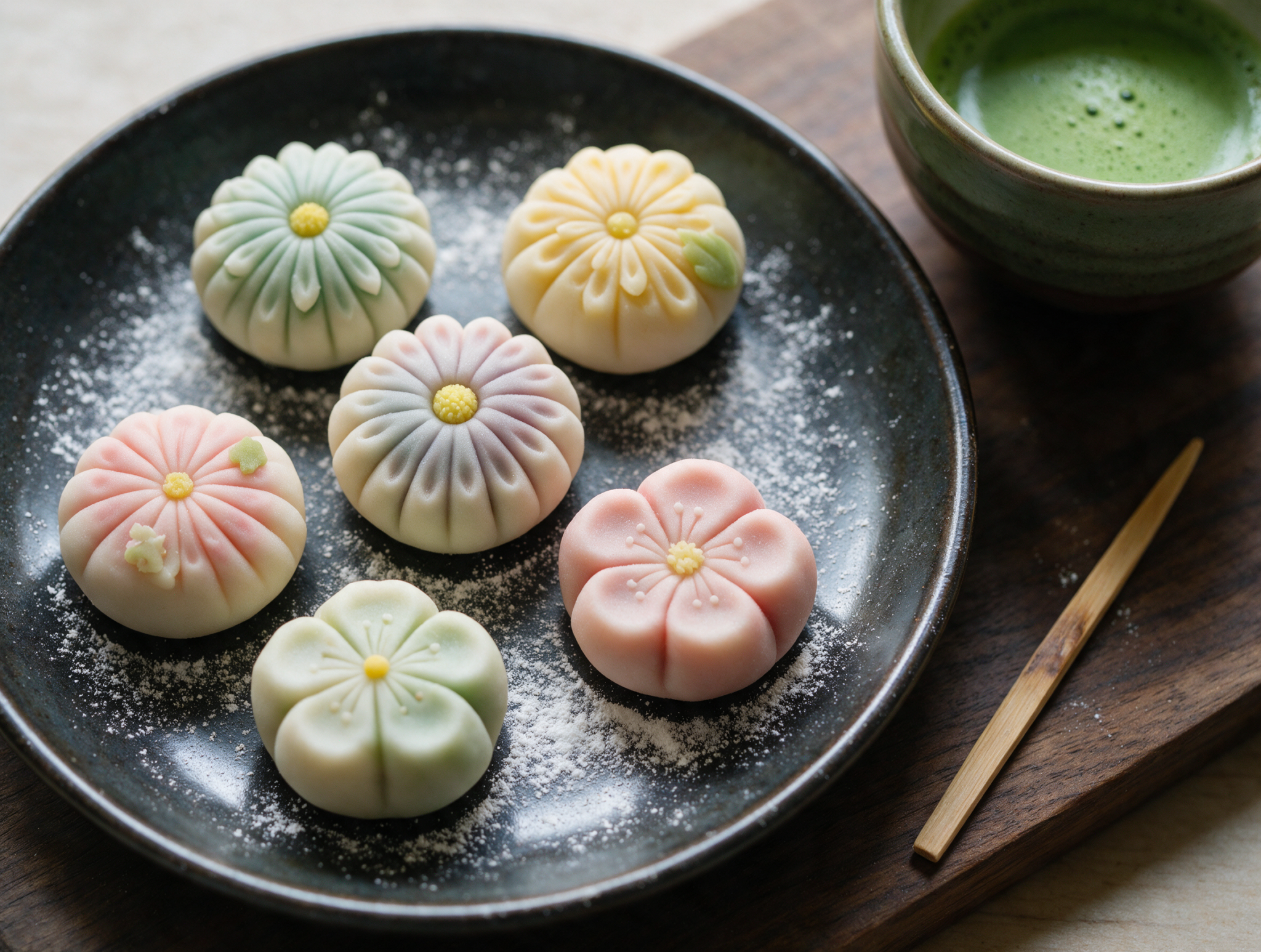
- Shape each ball into a seasonal motif. Cup it in a folded tea towel and twist gently for spiral petal lines like a chrysanthemum, or press a wooden skewer into the sides at intervals to define individual petals for a plum blossom.
- Use the tip of the skewer to add a center dimple or vein detail to each piece.
- Set the finished pieces seam-side down on a parchment-lined tray, dusting your palms and work surface with cornstarch as needed to prevent sticking, and chill for 10 minutes to firm up before serving.
Notes
- Work with cornstarch on your hands, not flour, or the dough turns pasty.
- Color dough one shade at a time to avoid muddy, overworked color mixing.
- Chill shaped pieces only 10 minutes, longer and the surface turns tacky.
- Anko balls should be fully sealed before shaping, or filling shows through.