Ingredients
Method
Make the Dough
- Whisk the flour, baking powder, and salt together in a large mixing bowl.
- Cut the cold, cubed butter into the flour with your fingertips until the mixture looks like coarse crumbs.
- Add the sugar, eggs, orange juice, and lemon zest. Mix with your hands until the dough comes together into a firm ball, then knead for 2 to 3 minutes until smooth.
- Cover the dough and let it rest at room temperature for 20 minutes.
- Divide the dough into 8 equal pieces, about 100 g each. Roll each piece on a lightly floured surface into a thin round, about 20 cm / 8 inches across and 2 mm thick.
Bake and Assemble the Layers
- Heat the oven to 190 C / 375 F and line a 13 x 18-inch / 33 x 46 cm sheet pan with parchment.
- Bake the dough rounds two at a time for 5 to 6 minutes each batch, until light golden with small brown blisters across the surface. You'll need about 4 batches for all 8 rounds. Watch closely near the end, thin dough goes from golden to burnt fast.
- Cool each baked layer completely on a wire rack, about 10 minutes, before stacking. Warm layers crack when you spread the filling.
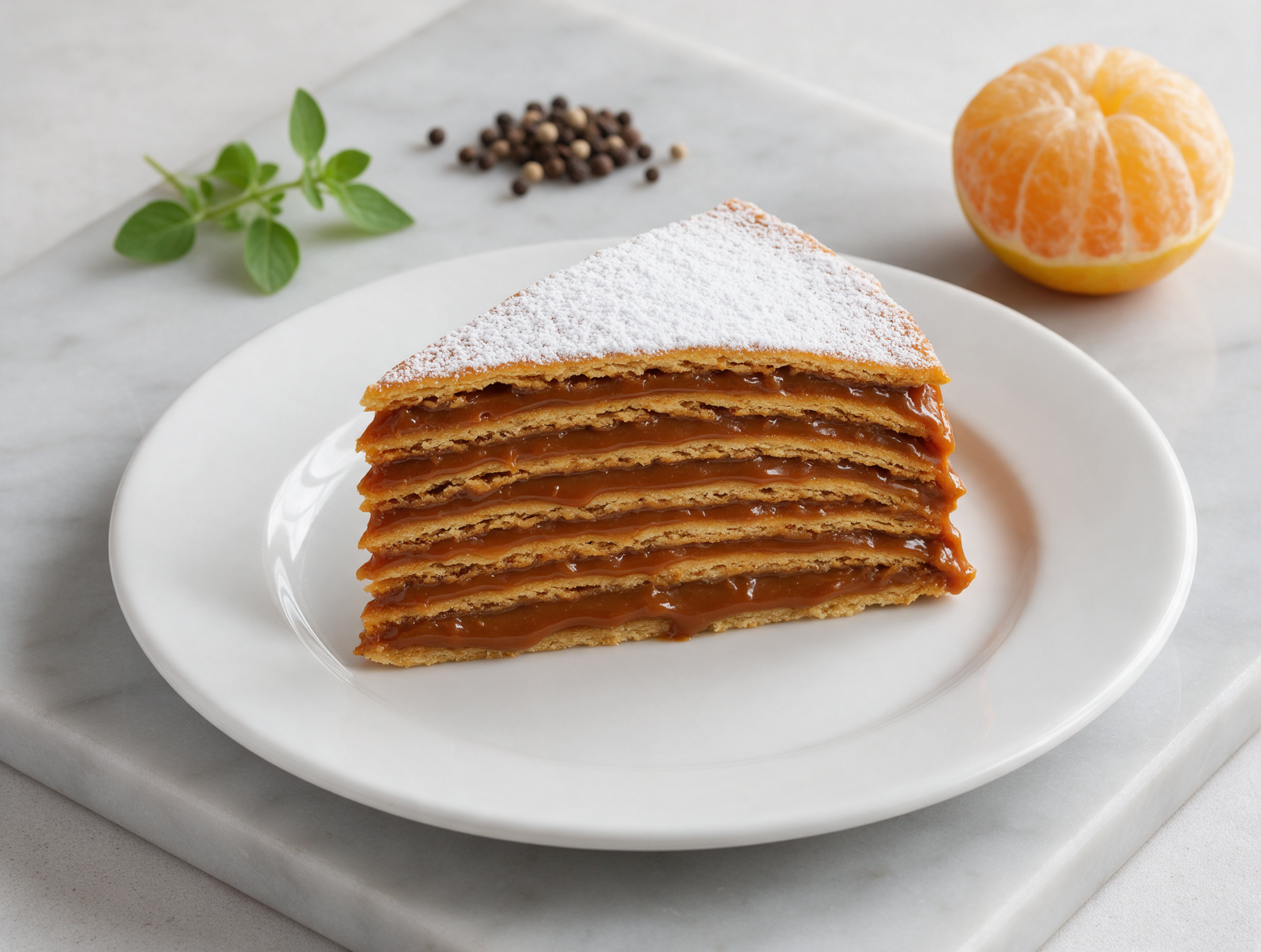
- Set one baked layer on a cake stand and spread 3 to 4 tablespoons of dulce de leche evenly to the edges. Repeat with the remaining layers, ending with a plain layer on top.
- Cover the stacked cake loosely and let it rest at room temperature for at least 4 hours, preferably overnight, so the layers soften into the filling.
- Dust the top with powdered sugar just before serving. Slice into wedges with a warm, dry knife.
Notes
- Make the dough a day ahead, it rolls out easier once fully chilled.
- Bring dulce de leche to room temperature before spreading so it doesn't tear the dough.
- Uneven dough thickness means uneven baking, roll each round with the same pressure.
- The overnight rest is not optional, it's what turns crackly layers into a proper cake.